

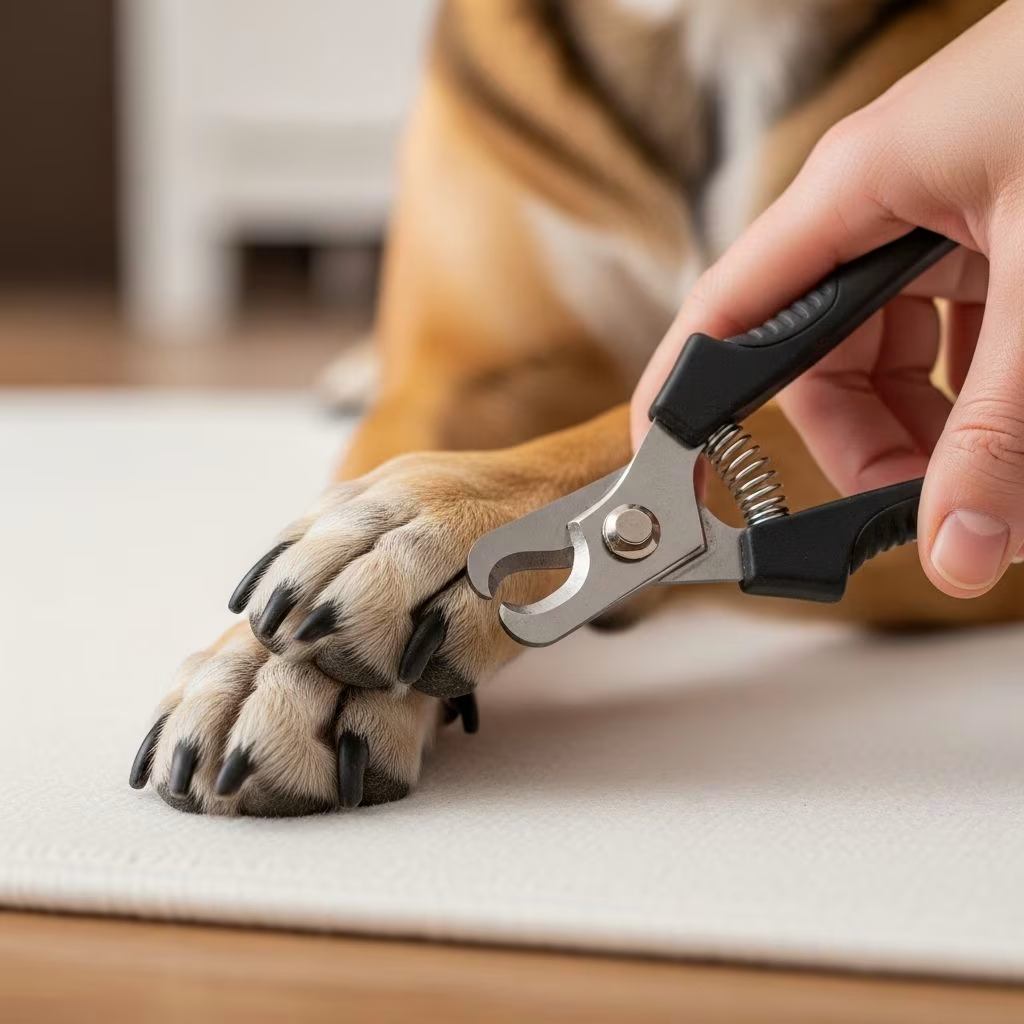
How to Trim Your Dog’s Nails: A Complete Guide
Regular nail trimming is an essential part of dog grooming and a clear sign of your dog’s good health and hygiene. Many dog owners find nail trimming intimidating, especially if their dog has dark nails or is resistant to having their paws handled. However, with the right tools, techniques, and preparation, you can safely and effectively trim your dog’s nails at home. This comprehensive guide will walk you through everything you need to know about keeping your dog’s nails healthy.
Why Regular Nail Trimming Matters
Overgrown nails can cause serious problems for your dog’s health and mobility. When nails become too long, they can grow into the paw pads, leading to infection and severe pain. Additionally, long nails can affect your dog’s gait and cause discomfort when walking. Regular nail trimming prevents these issues and contributes to your dog’s overall well-being.
Most veterinarians recommend trimming your dog’s nails every month to maintain optimal paw health. However, if you take your dog out for walks every day on pavement, you may be able to extend trims to every two months, as the friction from walking naturally wears down the nails.
Choosing the Right Tools for Nail Trimming
Before you begin trimming your dog’s nails, it’s important to select the appropriate tools. Using the correct equipment makes the process safer and more efficient for both you and your dog.
Types of Nail Clippers
There are several types of dog nail trimmers available, each with its own advantages:
- Scissor-Style Clippers: These are considered the easiest to use and provide the best visibility for seeing where you are cutting. They work similarly to regular scissors and allow for precise control.
- Guillotine-Style Clippers: These clippers have a small opening where you insert the nail, and a blade slides across to cut it. Many pet owners prefer this style for its efficiency.
- Nail Grinders: Electric or battery-operated grinders can be used to file down nails gradually, which some dogs find less intimidating than clippers. Grinders are particularly useful for dogs with long hair or those sensitive to the clipper sound.
It’s crucial to use a dog-specific nail trimmer rather than human nail clippers, as human clippers are not designed to cut through dog nails effectively.
Additional Supplies
Keep the following items on hand when trimming your dog’s nails:
- Styptic Powder or Clotting Powder: This stops bleeding if you accidentally cut the nail too short. However, be aware that styptic powder can sting.
- Cornstarch or Flour: A less painful alternative to styptic powder that can be found in most kitchens.
- Cotton Balls or Pads: For applying pressure to stop bleeding if needed.
- Treats and Praise: Positive reinforcement is essential for making the experience enjoyable for your dog.
Conditioning Your Dog to Nail Trimming
Many dogs experience anxiety during nail trimming, especially if they were not exposed to the process when young. The key to success is gradual desensitization. Starting when your puppy is young helps them become accustomed to having their paws handled and the sounds and sensations of nail trimming tools.
A Week-Long Conditioning Plan
Follow this structured approach to help your dog become comfortable with nail trimming:
Day 1: Let your dog sniff the clipper or grinder you plan to use. Give them a treat and praise afterward. This simple introduction helps your dog associate the tool with positive experiences.
Day 2: Gently touch each of your dog’s paws with the clipper or grinder without turning it on or squeezing it. Reward them with a treat and praise.
Day 3: Touch the nail clipper or grinder to each paw again, but this time squeeze the clipper so your puppy hears the sound, or turn the grinder on so they feel the vibration. Don’t actually trim any nails. Give a treat and praise.
Day 4: Repeat the previous day’s activity, touching the clipper or grinder to their feet and making the sounds. Give a treat and praise afterward.
Day 5: Try trimming off just the very tiniest tip from one front paw nail. Only trim one nail and offer lots of happy praise and a treat if your puppy allows it. Even if they seem comfortable, stick to just one nail.
Day 6: Try trimming just the tip off of two nails.
Day 7 and Beyond: Continue working your way up, trimming additional nails each day, until you’ve completed all of them and your dog doesn’t mind the process. Practice regularly, even when you don’t need to clip a nail. Going through the motions helps your dog remain comfortable with the procedure.
Step-by-Step Instructions for Trimming Your Dog’s Nails
Once your dog is comfortable with the process, follow these steps to trim their nails safely and effectively.
Positioning Your Dog
Most owners find it easiest to trim their dog’s nails with their dog facing away from them. If your dog is resistant to having their feet handled, place them on an elevated surface. This positioning helps you maintain control and see the nails more clearly.
The Trimming Process
Step 1: Pick up a paw and firmly but gently place your thumb on the pad of a toe and your forefinger on the top of the toe on the skin above the nail. Make sure none of your dog’s fur is in the way.
Step 2: Push your thumb slightly up and backward on the pad, while pushing your forefinger forward. This extends the nail outward, making it easier to see and trim.
Step 3: Clip only the tip of the nail, straight across. Position the clippers a safe distance from the quick, which is the pink area of the nail that contains blood vessels.
Step 4: For dogs with clear nails, you can cut a few millimetres ahead of the quick. For dogs with dark nails, locate the hollow area underneath the nail and position your clippers at the tip to avoid hitting the quick. If you have a dog with both clear and dark nails, use the clear nails as a rough guide to determine where the quick likely ends in the black nails.
Step 5: Don’t forget the dewclaws, which are located on the inner side of the paw like a thumb. These often need trimming as they don’t naturally wear down.
Step 6: Once you’re comfortable trimming nails, you can try making angled cuts to smooth the top and bottom of the nail for a finished appearance.
Identifying the Quick in Dark Nails
The quick is more challenging to locate in dark nails. Watch for a chalky white ring, which indicates you’re getting close to the quick. Always start by taking a very small amount of nail at a time with dark nails, and stop immediately once you see the quick.
Using a Nail Grinder as an Alternative
If you prefer to use a nail grinder instead of clippers, follow these guidelines to ensure safe and effective grinding:
- Use only a safe tool designed specifically for dogs.
- Grind only a small part of your dog’s nail at a time. Support the dog’s toe firmly but gently.
- Grind across the bottom of the nail and then carefully in from the tip of the nail, smoothing rough edges.
- For better control, hold the grinder higher up, towards the top.
- Keep your dog comfortable and take note of any sensitivities during the process.
- If your dog has long hair, make sure to keep it back from the grinding tool so it doesn’t get caught.
What to Do If You Cut the Quick
Accidentally cutting the quick is a common concern, but don’t panic if it happens. The quick contains blood vessels, so cutting it will cause bleeding and pain. Here’s how to handle it:
- Apply styptic powder or quick-stop solution to the nail to stop the bleeding. This is commonly used at veterinary clinics and grooming salons.
- If you don’t have styptic powder available, use cornstarch or flour as a less painful alternative.
- Take a wet cotton ball and apply pressure to the nail for a few seconds to stop the bleeding.
- Once you’ve removed excess blood, dip your finger into cornstarch and apply it directly to the nail.
If bleeding doesn’t stop after several minutes or your dog seems to be in significant pain, contact your veterinarian.
Tips for a Successful Nail Trimming Experience
To ensure nail trimming goes smoothly, keep these practical tips in mind:
- Take Your Time: If your dog is not particularly fond of nail trims, only trim a couple of nails at a time. It’s better to do just a few nails and keep your dog happy than to force them through a full trim and have them resist the process in the future.
- Watch for Stress: If your dog is stressed, do not proceed with the nail trim. Continue working on desensitization so they can have a positive experience.
- Get Professional Help: If you’ve never clipped a dog’s nails before, you may want to have your veterinarian or veterinary technician give you a lesson on how to do it.
- Practice Regularly: Even if you don’t need to clip nails, practice the motions regularly to keep your dog accustomed to the process.
Frequently Asked Questions
Q: How often should I trim my dog’s nails?
A: Most dogs need their nails trimmed every month to maintain optimal paw health. If your dog walks on pavement daily, you may extend this to every two months.
Q: Can I use human nail clippers on my dog?
A: No, you should always use dog-specific nail clippers. Human nail clippers are not designed to cut through dog nails effectively.
Q: What is the quick, and why is it important?
A: The quick is the pink area inside the nail that contains blood vessels and nerves. Cutting into the quick causes pain and bleeding, so you must avoid it when trimming.
Q: Why should I condition my dog to nail trimming?
A: Conditioning your dog gradually helps them become comfortable with having their paws handled and the sounds and sensations of trimming tools, reducing anxiety and making future trims easier.
Q: What should I do if I accidentally cut the quick?
A: Apply styptic powder, quick-stop solution, or cornstarch to stop the bleeding. Apply pressure with a wet cotton ball for a few seconds, then apply cornstarch to the nail.
Q: Is a nail grinder better than clippers?
A: Both tools can be effective. Some dogs prefer grinders because they may find them less intimidating than the sound of clippers. Choose the tool that works best for you and your dog.
References
- How to Trim Dogs Nails Safely — American Kennel Club. 2024. https://www.akc.org/expert-advice/health/how-to-trim-dogs-nails-safely/
- How to Trim Dog Nails: Tips & Tricks — Benson’s Pet Center. 2024. https://www.bensonspet.com/resources-for-dog-owners/how-to-trim-dog-nails/
- How To Trim Dog Nails Safely — YouTube. Accessed 2024. https://www.youtube.com/watch?v=VnJafu_NMoQ
- How to Clip Dog Nails — Dr. Chuck Books. 2024. https://drchuckbooks.com/pet-information-sheets/how-to-clip-dog-nails
- ASPCA Grooming 101 – Trimming Nails for Dogs — YouTube. Accessed 2024. https://www.youtube.com/watch?v=sccDR8n3yOY



