

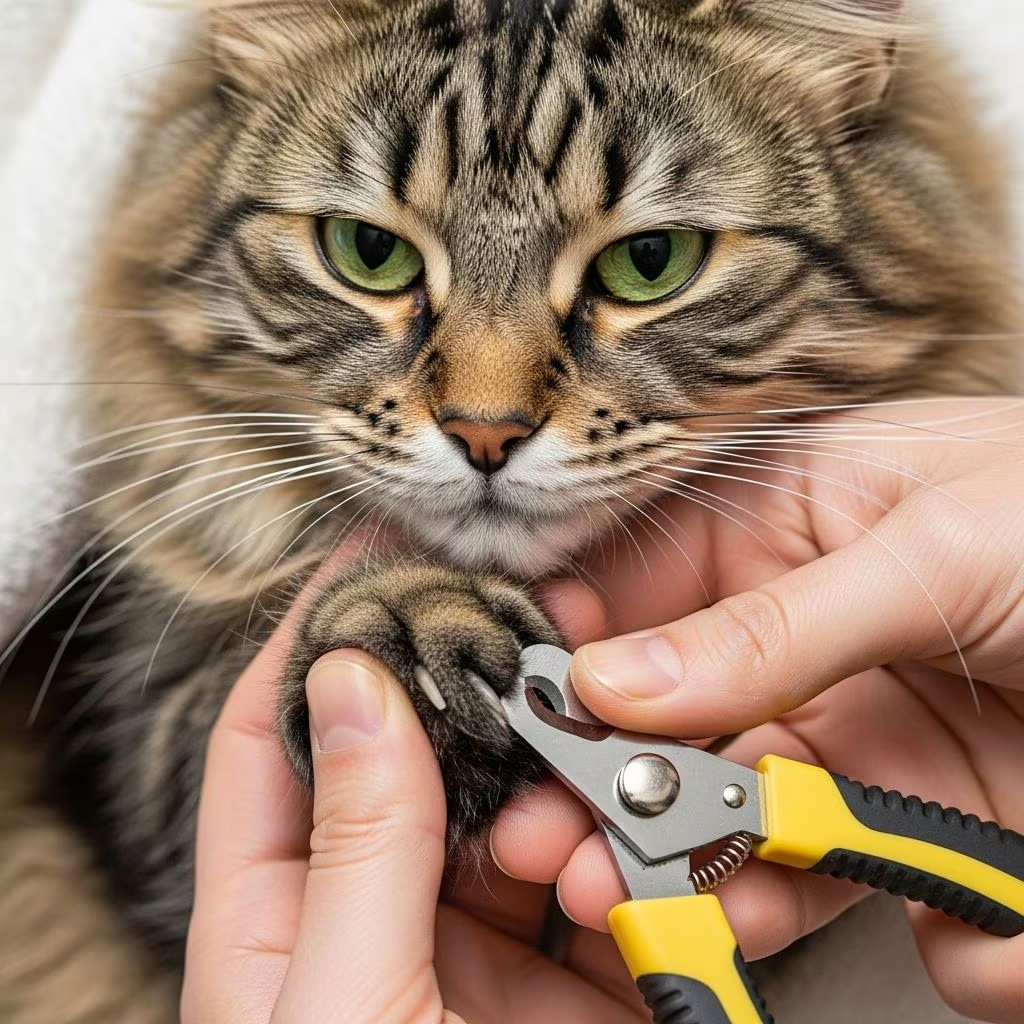
How to Trim a Cat’s Nails That Won’t Let You
Trimming your cat’s nails can be a challenging task, especially if your feline friend is uncooperative, anxious, or aggressive during grooming sessions. Many cat owners struggle with resistant cats that scratch, hiss, or attempt to escape when nail clippers come out. However, with the right techniques, patience, and understanding of feline behavior, you can successfully trim even the most difficult cat’s nails while maintaining a positive relationship with your pet.
Understanding Why Cats Resist Nail Trimming
Before learning how to trim your cat’s nails, it’s important to understand why cats often resist this grooming task. Cats are sensitive animals that value control over their bodies. When you attempt to restrain or handle their paws without prior conditioning, they may perceive it as a threat. Additionally, the sound and sensation of nail clippers can startle cats unfamiliar with the tool, triggering a defensive response. Some cats may have had negative experiences with nail trimming in the past, making them even more resistant to future attempts.
Step 1: Building Tolerance Through Paw Handling
The foundation of successful nail trimming begins with desensitizing your cat to paw handling. This initial step is crucial and requires patience and consistency.
Start slowly and gently: If your cat already tolerates paw touching without a negative reaction, you’re ahead of the game. If not, begin by simply touching your cat’s leg during calm moments. Use positive reinforcement immediately—say “good” and offer a small morsel of food as a reward. Repeat this once or twice per session if your cat appears content.
Watch for signs of discomfort: Pay close attention to your cat’s body language. If your cat flinches at any point, immediately remove your hand from his leg and wait for him to relax. Do not force continued contact. Once he settles, try again but stop your hand short of the spot that caused the flinch. This gradual approach prevents negative associations with paw handling.
Perform daily short sessions: Consistency is key. Work with your cat for just one minute or less each day until you can touch his paw pad and receive no reaction whatsoever. This process may take days or weeks depending on your cat’s sensitivity, but rushing will only set back your progress.
Step 2: Exposing and Pressing Out the Claws
Once your cat is comfortable with you holding his paw pad, the next step involves gently pressing the pad to expose the claws.
Apply gentle pressure gradually: When your cat is relaxed and you’re holding his paw pad, gently press it and immediately say “good” while dropping a food morsel. This pairs the pressure sensation with a positive reward. Continue to monitor his body language closely—stop before he flinches or shows signs of discomfort.
Increase pressure incrementally: At each training session, slightly increase the pressure on his paw pad until his claws are fully extended. Release the pad as soon as the claws emerge and reward him immediately. This teaches your cat that extending his claws leads to positive outcomes.
Build duration: Slowly increase the length of time you can hold his paw with enough firmness to keep the claws exposed. This builds your cat’s tolerance for the handling required during actual nail trimming. Never rush this process—patience prevents setbacks.
Step 3: Introducing the Nail Clippers
Familiarizing your cat with nail clippers is essential before attempting to use them on his nails.
Let him examine the tool: Allow your cat to investigate the clippers on his own terms. When he sniffs or examines them calmly, say “good” and offer a food reward. Sniffing is a positive sign that he’s becoming comfortable with the tool. Never force interaction—let his curiosity drive the process.
Introduce the sound: Hold the clippers and work them in the air as if cutting, so your cat becomes accustomed to the clicking sound. Reward him for remaining calm during this demonstration. Once he’s comfortable, use the clippers to cut a piece of raw spaghetti—the crunch sound mimics the sound of cutting a nail but is less alarming to many cats. Continue rewarding calm behavior.
Step 4: The First Nail Trim
When your cat is comfortable with paw handling, claw exposure, and the sound of clippers, you’re ready for the first actual trim.
Start conservatively: Trim only a tiny bit off one nail during the first session. If it goes well, you can cut another nail the next day. Say “good” and reward your cat with food immediately after the trim. If he was startled, return to practicing the clipper sound near his claw for the next day or two before attempting another trim.
Maintain a slow pace: Do not cut more than one claw per day until your cat is very comfortable with the procedure. Some cats may take ten days or more to have all front claws trimmed, and that’s perfectly acceptable. The goal is to build positive associations, not to rush through the process.
Adjust frequency as tolerance improves: After completing the front claws once, wait for them to grow in and repeat the process. During subsequent trimming rounds, if your cat seems comfortable after a few days, you may gradually increase to trimming two claws in one session before providing a food reward. However, many cats do best when only one paw is trimmed per day, and this approach is completely appropriate.
Step 5: Addressing Hind Claw Trimming
Hind claws present a different challenge than front claws and should be addressed only after your cat masters front claw trimming.
Wait until front claws are mastered: It’s best to delay hind claw trim training until your cat is very comfortable having front claws trimmed. Hind claws are thicker and often cause more discomfort when trimmed, making cats more resistant.
Remember they need less frequent trimming: Fortunately, hind claws don’t require trimming nearly as often as front claws. Don’t risk turning your cat against the entire nail trimming process by pushing too quickly into hind claw work. Patience here prevents long-term grooming difficulties.
The Kitty Burrito Method for Difficult Cats
For cats that remain resistant to handling even after training, the “kitty burrito” technique provides a safe restraint method that protects both you and your cat during nail trimming.
Materials needed: Use a thick bath towel or heavy blanket. Avoid thin materials that offer insufficient restraint or comfort.
Wrapping technique: Spread the towel or blanket on a table. Place your cat toward the edge of the table. Gently tuck one part of the blanket over your cat’s feet. Take one end of the blanket and wrap it firmly but not tightly around your cat’s body, tucking it underneath. Repeat with the other end, wrapping it securely around his body again and underneath, creating a burrito-like bundle that immobilizes the limbs while allowing access to one paw at a time.
Trimming procedure: With your cat wrapped, gently pull out one paw at a time. Using nail clippers, trim the very tip of the nail, stopping just before the pink quick. Work efficiently—the faster you proceed, the better, as wrapped cats may become increasingly agitated over time.
Taking breaks: If your cat becomes very angry or stressed during front paw trimming, pause and allow him to rest before attempting the hind paws. This prevents excessive stress and may make the second half of the trimming easier.
Professional Restraint Techniques
When cats are particularly fractious or aggressive, professional restraint techniques can help ensure safety for both the cat and groomer.
Back leg handling: Back legs are generally easier to control than front legs. Cats tend to be faster and more defensive with their front paws. When trimming back claws, you can pin your cat down gently from the back, working one leg at a time. This position gives you better control and allows you to access the claws more safely.
Seek professional help when needed: If you’re unable to safely trim your cat’s nails despite multiple approaches, don’t hesitate to contact a professional groomer or veterinarian. Many veterinary clinics offer nail trimming services, and some cats do better with professional handling, especially if they’ve developed strong negative associations with home trimming attempts.
Important Safety Considerations
Avoid the quick: The quick is the pink blood vessel visible inside the nail. Cutting into the quick causes pain and bleeding. Always trim only the clear or white portion of the nail, stopping just before the pink begins.
Use appropriate clippers: Ensure you’re using cat-specific nail clippers, not human nail files or dog clippers. Proper tools make trimming easier and safer.
Monitor stress levels: When your cat appears stressed during trimming, pause immediately. Excessive stress can harm your relationship with your pet and create lasting negative associations with grooming.
Building Long-Term Success
The key to successfully trimming difficult cat nails lies in consistency, patience, and positive reinforcement. Rather than viewing nail trimming as a battle, approach it as a training opportunity where your cat learns that cooperation leads to rewards. Many cats that initially seem “impossible” to groom become cooperative once they understand that the process brings treats and praise rather than stress and restraint.
Remember that every cat is unique. Some will progress quickly through the training steps, while others may need significantly more time. There’s no fixed timeline—your cat’s comfort and your patience should guide the pace.
Frequently Asked Questions
Q: How often should I trim my cat’s nails?
A: Most cats need front nail trims every 2–4 weeks, while hind claws require trimming less frequently—typically every 4–6 weeks or as needed. Indoor cats may need more frequent trims than outdoor cats.
Q: What if I accidentally cut the quick?
A: If you cut the quick and it bleeds, apply gentle pressure with a clean cloth. The bleeding typically stops within a few minutes. Styptic powder or cornstarch can help stop bleeding if it continues. Contact your veterinarian if bleeding is heavy or won’t stop.
Q: Can I use human nail clippers on my cat?
A: No. Human nail clippers are not designed for cat claws and can crush the nail rather than cutting cleanly, causing pain and potential damage. Always use cat-specific nail clippers.
Q: How do I know if my cat’s nails need trimming?
A: If your cat’s nails are visibly long, curling, or your cat is leaving marks on furniture or skin, it’s time for a trim. You should also be able to press your cat’s paw pad and see the claws extend—if they don’t, they may be overgrown.
Q: Is it normal for cats to resist nail trimming?
A: Yes, many cats resist nail trimming due to loss of control, unfamiliarity with the sensation, or past negative experiences. This resistance can be addressed through gradual desensitization and positive reinforcement training.
Q: Should I trim all nails in one session?
A: Not necessarily. For difficult cats, trimming one nail or even one paw per session is perfectly acceptable and often more effective for building tolerance and maintaining a positive relationship with your cat.
References
- Training Your Cat to Tolerate Nail Trims — Patience for Cats. Accessed January 14, 2026. https://patienceforcats.com/cat-nail-trims/
- How to Trim the Nails of a “Difficult” Cat (Kitty Burrito Method) — Gahanna Animal Hospital. September 26, 2018. https://www.youtube.com/watch?v=8BbqLlWuW68
- How To Restrain a Fractious Cat and Trim Cat Nails — YouTube. https://www.youtube.com/watch?v=q4Al9MYvijk



