

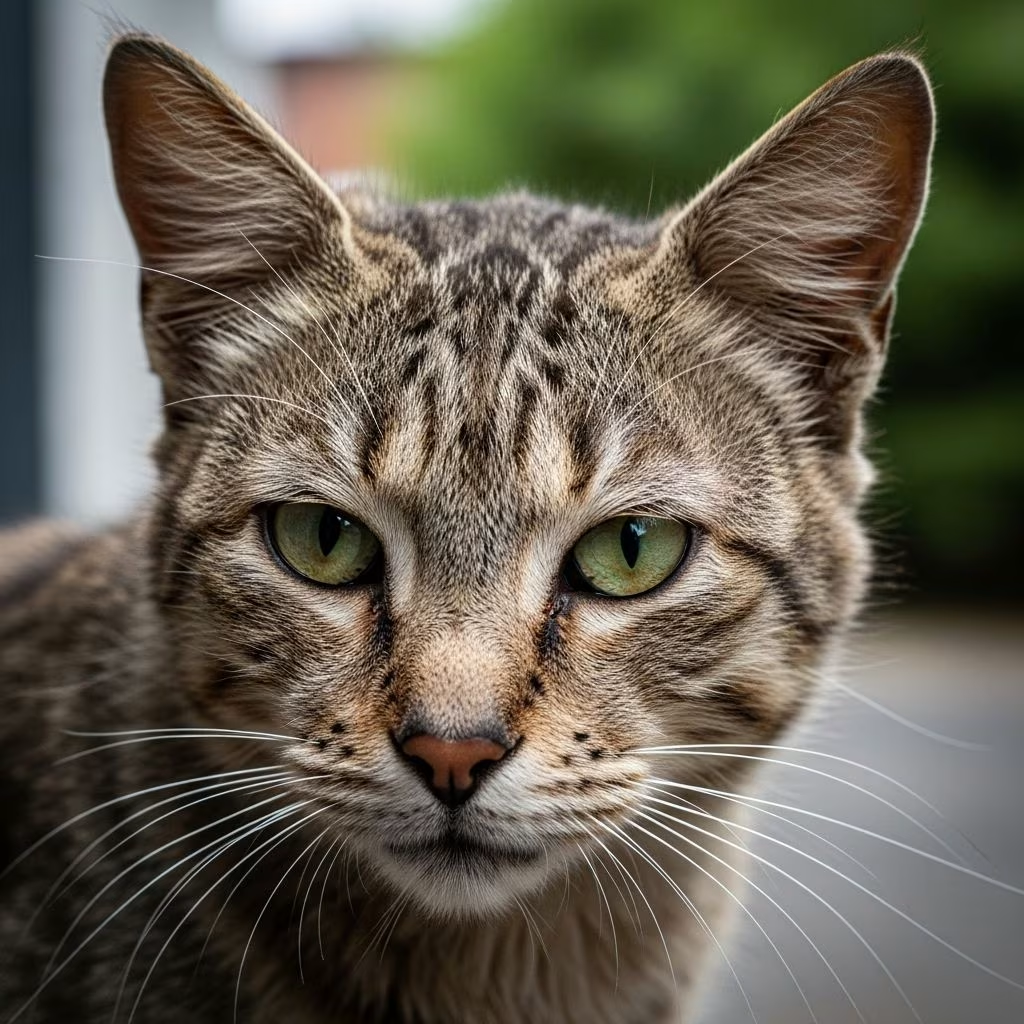
Treating mange in feral cats presents unique challenges due to their aversion to handling, yet effective management is possible with strategic approaches. Mange, caused by mites like those leading to notoedric mange or ear mites, spreads rapidly in colonies, requiring prompt intervention to prevent widespread infection.
This guide outlines proven methods to control and eradicate mange while minimizing stress on feral populations. Drawing from veterinary recommendations, it emphasizes prescription treatments, supportive care, and prevention to restore colony health.
What Is Mange?
Mange in cats results from parasitic mite infestations that burrow into the skin, causing intense itching, hair loss, crusty lesions, and secondary infections. Common types include notoedric mange (feline scabies from Notoedres cati mites), cheyletiellosis (walking dandruff from Cheyletiella mites), ear mites (Otodectes cynotis), and chorioptic or demodectic mange.
Symptoms often start around the head and ears, spreading to the body with thickened, scaly skin and alopecia. Feral cats, living in close quarters, face higher risks due to weakened immunity from stress, poor nutrition, or co-infections. Early detection through signs like excessive scratching or visible dandruff is crucial for containment.
How Is Mange Spread?
Mites transmit via direct contact between cats or indirectly through shared bedding and grooming. Feline scabies mites are highly contagious, spreading rapidly in colonies within days. Ear mites spread similarly, often via head rubbing.
Environmental survival is limited—mites die off-host within 2-4 days—but contaminated bedding perpetuates cycles. Feral lifestyles increase exposure through fighting, mating, and communal resting.
How Is Mange Diagnosed?
Diagnosis requires veterinary confirmation via skin scrapings, tape tests, or ear swabs to identify mites under microscopy. Visual signs alone can mimic allergies or fungal infections, so professional exams prevent mis-treatment. For ferals, caretakers describe symptoms for initial guidance, but prescriptions demand exams.
How Is Mange Treated?
Effective treatments target mites with prescription parasiticide topicals like selamectin (Revolution Plus), fluralaner (Bravecto), moxidectin (Advantage Multi), or isoxazolines. These kill mites systemically or topically, often requiring 2-3 applications 2-4 weeks apart.
Ear mites need specific drops alongside topicals. Secondary bacterial infections may require antibiotics. Recovery shows reduced itching in 1 week, with full hair regrowth in 4-8 weeks. Never use over-the-counter remedies alone, as they fail against true mange mites.
| Treatment | Efficacy | Safety | Side Effects | Expense | Time to Work | Type | Vet Required? |
|---|---|---|---|---|---|---|---|
| Ivermectin | Effective for cheyletiellosis and notoedric mange | Very safe at correct dose | Lethargy, vomiting (rare) | Affordable | Several weeks | Oral | Yes |
| Isoxazolines (Bravecto, Revolution Plus) | Up to 100% with 2 doses | High safety margin | Vomiting, itching (rare) | Moderate | 48 hours for ear mites; weeks for skin | Topical | Yes |
| Selamectin | Highly effective | Wide safety margin | Neurological symptoms rare | Affordable | 4-7 weeks | Topical | Yes |
| Lime Sulfur Dips | Highly effective | Safe if diluted | Skin irritation | Affordable | 4-8 weeks | Topical | Yes, not common for ferals |
Note: Dosages must be vet-prescribed; off-label use common in cats.
8 Tips for Treating Mange in Feral Cats
Managing feral cats demands non-invasive methods. Here are 8 vet-recommended strategies.
1. Isolate the Affected Cats
Separate symptomatic cats to curb spread. Use separate feeding stations or humane traps for temporary housing. This limits colony exposure, especially early when mites are most transmissible.
2. Visit Your Vet
Schedule exams for diagnosis and prescriptions. Vets may assist with trapping or provide off-label protocols for ferals. Confirm scabies vs. ear mites to select Revolution Plus or Bravecto.
3. Treat All Cats if Possible
Treat entire colonies to break reinfection cycles. Apply topicals to all via dropper or food-mixed options if available. This proactive approach saves long-term costs and lives.
4. Soothe Inflamed Skin
Use vet-safe sprays like those with natural anti-inflammatories to ease itching without bathing. Avoid forcing topicals on resistant cats; focus on accessible application.
5. Treat Bedding Items
Wash blankets in hot water and dry on high heat to kill mites. Discard worn items. No broad environmental treatment needed, as mites perish quickly off-host.
6. Monitor Progress Closely
Observe daily for reduced scratching and lesion healing. Re-treat as prescribed. Note secondary infections needing antibiotics.
7. Stay on Top of External Parasite Prevention
Post-treatment, apply monthly preventives like selamectin to block recurrence. Consistent use protects outdoor ferals from mites, fleas, and ticks.
8. Add Supplements for Healthy Skin
Spike food with fish oil or omega-3 supplements to bolster immunity and skin barrier. These aid recovery and resistance without handling.
Frequently Asked Questions (FAQs)
Q: Can I treat mange in feral cats without a vet?
A: No, effective treatments like Revolution Plus or Bravecto require prescriptions. OTC products fail against mites; vet involvement ensures safety and success.
Q: How long does mange treatment take in cats?
A: Itching improves in 1 week; full recovery takes 4-8 weeks with repeated doses. Monitor for reinfection.
Q: Are home remedies effective for feral cat mange?
A: Remedies like apple cider vinegar or honey soothe but don’t eradicate mites. Use alongside prescriptions only.
Q: Can mange spread to pet cats from ferals?
A: Yes, keep pets separated and use preventives. Avoid contact with strays.
Q: What’s the best preventive for feral colonies?
A: Monthly topical parasiticide applications to all cats, plus clean bedding and nutrition.
References
- Mange in Cats — PetMD. 2023. https://www.petmd.com/cat/conditions/infectious-parasitic/mange-cats
- How to Treat Mange in Feral Cats: Our Vet Gives 8 Tips — Catster. 2023. https://www.catster.com/cat-health-care/how-to-treat-mange-in-feral-cats/
- Mange in Cats: Symptoms, Causes, and Treatment — Rover. 2023. https://www.rover.com/uk/blog/mange-in-cats/
- The Best Home Remedies for Mange in Cats — Holistapet. 2023. https://www.holistapet.com/blogs/home-remedies-for-cats/mange
- Mange in Cats — Joiipetcare. 2023. https://www.joiipetcare.com/blogs/infections-and-parasites/mange-in-cats



