

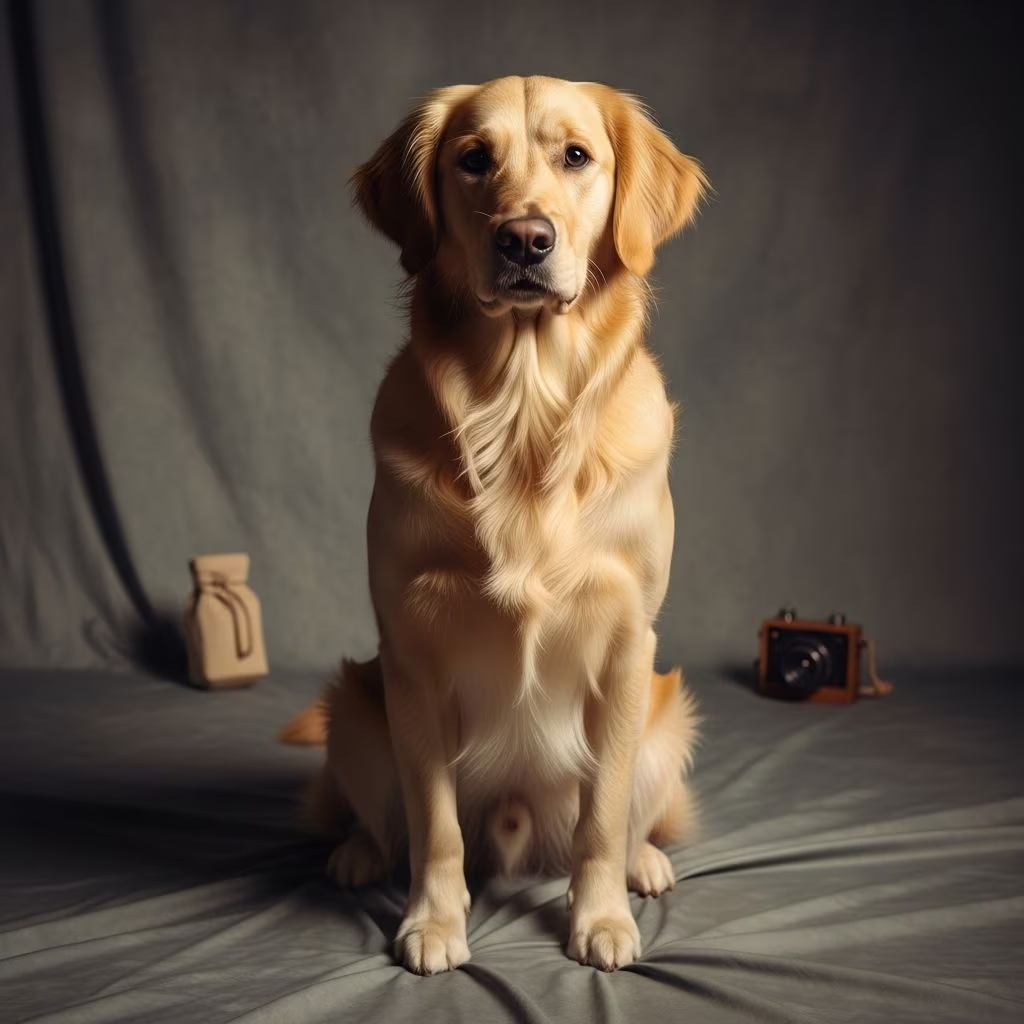
Capturing a clear, flattering, personality-filled photo of your dog can feel like a small miracle. Between wiggly bodies, curious noses, and short attention spans, getting a still, focused pose takes more than luck. With a mix of smart camera habits and positive training techniques, you can turn photo time into a fun routine your dog understands and enjoys.
This guide follows the same core topics often used by professional trainers and pet photographers:
- Setting up your camera, background, and lighting to flatter your dog
- Teaching your dog to look toward the camera
- Getting that irresistible head tilt on cue
- Using simple training to keep your dog in place and engaged
- Making every photo session positive and low-stress
- Embracing the funny, imperfect blooper shots
Technical vs. Behavioral: The Two Keys to Great Dog Photos
Excellent dog photos depend on two pillars: technical choices (camera, background, light) and behavioral skills (what your dog understands and is comfortable doing). Addressing both makes a bigger difference than expensive gear or complicated tricks.
| Technical Factors | Behavioral Factors |
|---|---|
| Background, lighting, lens, and focus | Training, comfort level, attention, and motivation |
| Camera settings to avoid blur and bad exposure | Ability to sit, stay, and look toward camera |
| Perspective and distance from your dog | Positive associations with camera and posing |
Choose Backgrounds and Lighting That Work for You
Before involving your dog, set up the scene so the camera is doing as much of the work as possible:
- Pick a simple background: a plain wall, a bed, a couch, or a patch of grass can help your dog stand out instead of disappearing in clutter.
- Use soft, even light: natural window light or open shade outside usually looks better than direct midday sun, which can cause squinting and harsh shadows.
- Avoid backlighting unless you know how to expose correctly, because a bright background can turn your dog into a silhouette.
Mind Your Perspective and Lens
Where you place yourself relative to your dog changes the feeling of the photo dramatically.
- Get to eye level: kneel, sit, or lie down so the camera is roughly at your dog’s eye height. This usually feels more intimate and flattering.
- Step back a bit and use a longer focal length if possible. A longer lens (or zoom) lets you keep some distance, which many dogs find less intimidating than a phone held right in their face.
- Focus on the eyes: even if the tail blurs from wagging, a sharp gaze makes the image feel alive. Portrait photography guidelines in humans and animals consistently emphasize eyes as the critical focus point.
1. Get Your Dog to Look at the Camera
From your dog’s point of view, a camera or phone can look like a big staring eye. Because direct, unbroken staring can feel rude or even threatening to dogs, it is normal if they glance away instead of locking onto the lens.
Your goal is not to force eye contact, but to teach that looking toward the camera predicts good things. This turns a slightly weird object into a familiar, rewarding part of the routine.
Step-by-Step: Teaching Camera Focus
- Start at home with no pressure.
Sit in a quiet space. Hold your phone or camera at your side, not in front of your face. - Mark and reward glances.
The moment your dog looks toward the camera, say a marker word like “yes” (or use a clicker), then give a treat. This clicker-based approach is supported by learning theory research showing that immediate reinforcement strengthens specific behaviors. - Repeat in short bursts.
Over many repetitions, your dog starts to understand that glancing at that object brings good things. - Gradually move the camera.
Shift the camera closer to your face in small steps, always marking and treating when your dog looks toward it. - Add a cue if you like.
Once your dog consistently looks at the lens, you can softly say a word like “look” just before you expect the behavior, and continue to reward.
Keep sessions brief (1–3 minutes) and highly rewarding. Modern guidelines on humane dog training emphasize using positive reinforcement and avoiding force or intimidation, which improves learning and reduces stress.
Tips if Your Dog Finds the Camera Weird
- Use distance: hold the camera farther away or to the side so it feels less like direct staring.
- Pair it with fun: bring out the camera before play or mealtime so it predicts good experiences.
- Avoid sudden flashes: many dogs dislike bright, unexpected light. Continuous natural light is usually friendlier.
2. Go for the Adorable Head Tilt
The classic dog head tilt instantly makes photos more expressive. It often happens naturally when a dog hears an interesting or unfamiliar sound. Dogs adjust their ear and head position to better detect and locate sounds, and may tilt to improve how they process what they hear.
Use Sound to Trigger the Tilt
To encourage a tilt on cue while your dog is sitting or standing in position, try gentle, non-threatening noises:
- Kissing or smooching sounds
- Tongue clicks
- Soft, high-pitched “woop, woop” or playful words
- Quiet whistling or humming
- A squeaky toy held near (but not in) the frame
Many dogs will momentarily freeze and tilt their head to investigate the strange sound. Because the tilt may last only a second, keep your finger ready on the shutter so you do not miss it.
Polishing the Head Tilt as a Trick
If your dog frequently offers a head tilt, you can turn it into a more reliable trick:
- Make the sound that usually causes a tilt.
- The instant your dog tilts, mark with “yes” or a click and reward.
- Repeat over several short sessions until your dog offers the tilt quickly.
- Begin adding a word cue (such as “what?”) right before making the sound.
- Gradually fade out the sound so the cue alone predicts the behavior.
This type of trick-based training is not only cute for photos; research suggests that teaching dogs new, low-pressure behaviors can improve their welfare by adding mental stimulation and positive interaction with their humans.
3. Use Training to Direct Attention and Positioning
You do not need a perfectly trained dog for great photos, but a few basic behaviors make things much easier. Think of these as “photo helper” skills: simple sits, stays, and focus cues that you use only long enough to get the shot.
Build a Reliable Sit–Stay for Photos
A calm sit–stay is often the foundation of posed pictures. To practice outside of photo sessions:
- Start close: ask for a sit, mark and treat several times while your dog holds the sit.
- Add micro-duration: delay the treat by a second or two, then gradually lengthen the time as your dog stays successful.
- Introduce a release word such as “okay” so your dog learns when they are free to move.
- Add distance gradually: take one step back, return, reward, then build up to several steps.
Once your dog understands the idea of staying for short periods, you can use it during photo sessions in very small doses, always supporting them with plenty of rewards.
Use Motion to Your Advantage
Many dogs are more interested in moving things than in static poses. You can use this to hold their attention where you want it:
- Wiggle your fingers near the lens to draw their gaze toward the camera.
- Gently wave a toy or treat just above the camera so they look up without jumping.
- Move your hand slowly rather than fast, so your dog can stay seated and focused.
Because dogs are naturally attracted to movement, this strategy helps keep them engaged long enough for a photo without requiring a rock-solid formal stay.
Let Your Body Language Support the Stay
Dogs read human body language extremely well. You can subtly encourage them to hold position through how you move:
- Back away instead of turning your back: many dogs instinctively follow a person who turns and walks away. By stepping backward while facing your dog, you are more likely to keep them in place.
- Lean slightly forward: a small forward lean can communicate focus and interest, helping some dogs understand they should stay engaged.
- Stay calm and relaxed: quick, jerky movements can excite your dog and break the pose.
Make Photo Sessions Fun and Rewarding
To keep your dog happy and cooperative, treat photo time like a brief training game, not a test they can fail:
- Use high-value treats your dog loves to build a strong positive association.
- Keep sessions short: a few minutes at a time is plenty, especially for puppies or easily distracted dogs. Short, frequent sessions fit well with best-practice training guidelines.
- Incorporate favorite toys or games—for example, ask for a quick pose and then toss a ball or start a tug game as a reward.
- Watch for stress signals such as lip licking, yawning, turning away, or avoiding the camera. If you see these, give your dog a break and make the next session easier.
4. Embrace the Bloopers
Not every shot will be perfectly composed or sharply focused—and that is okay. Some of the most cherished dog photos are the unplanned moments:
- A tongue mid-lick
- A paw raised halfway through a wave
- A zoomies blur racing out of frame
- A goofy expression when they are chewing a treat
These images capture your dog’s real personality. Instead of chasing only the flawless, posed portrait, celebrate the funny, messy in-between frames. They tell the story of your relationship just as clearly as any perfectly staged shot.
Extra Tips for Easier Dog Photo Sessions
Once you have the basics down, a few more habits can make every session smoother and more enjoyable.
Plan Around Your Dog’s Energy
- Avoid high-energy moments right after long naps if your dog tends to explode with excitement.
- Consider a short walk or gentle play before posing so your dog can burn off the edge of their energy.
- Skip sessions when your dog is overtired, sick, or not in the mood; listening to their needs supports welfare and avoids creating negative associations.
Use Safety and Comfort as Non-Negotiables
- Do not place your dog on unstable surfaces where they could slip or fall.
- Avoid costumes or accessories that limit movement, vision, or breathing; if you use clothing, introduce it gradually with treats and monitor your dog closely.
- Keep outdoor photo sessions weather-appropriate, watching for signs of overheating or cold stress.
Frequently Asked Questions (FAQs)
Q: My dog will not sit still. Can I still get good photos?
Yes. Focus on very short poses (1–2 seconds) and reward generously. Use movement-based shots—like capturing your dog looking up at you during a walk—rather than trying to force long, formal stays.
Q: Is it okay to use a flash when photographing my dog?
Occasional, low-power flash is not usually harmful, but many dogs dislike sudden bright light. Natural or continuous light is typically more comfortable and helps prevent startle responses.
Q: How long should a dog photo session last?
For most dogs, several sessions of 3–5 minutes with breaks work better than one long session. Short, focused training blocks are shown to improve learning and reduce frustration.
Q: What if my dog is nervous around the camera?
Move more slowly, increase distance, and pair the camera with treats and play. Start by simply placing the camera nearby and rewarding your dog for relaxed behavior before ever trying to pose them.
Q: Do I need professional equipment to take great dog photos?
No. Modern smartphones can produce excellent results. Getting to eye level, using good light, and training your dog to look toward the camera matter far more than owning a professional camera body or lens.
References
- Pet Photography: Technical and Creative Tips. — Nikon USA (education article). 2023-05-10. https://www.nikonusa.com/en/learn-and-explore/a/tips-and-techniques/pet-photography.html
- ISAE Position Statement on the Use of Aversive Training Methods in Dogs. — International Society for Applied Ethology. 2020-07-01. https://www.applied-ethology.org/resource/ISAE_position_statement_dog_training_methods.pdf
- WSAVA Global Guidelines for the Behavior Management of Pets. — World Small Animal Veterinary Association. 2023-02-01. https://wsava.org/global-guidelines/global-guidelines-for-the-behavioral-management-of-dogs-and-cats/
- The Mystery of the Dog’s Head Tilt. — Psychology Today / S. Coren. 2013-11-28. https://www.psychologytoday.com/us/blog/canine-corner/201311/the-mystery-the-dogs-head-tilt
- Guidelines for Responsible Pet Photography. — American Veterinary Medical Association (AVMA). 2022-06-15. https://www.avma.org/resources-tools/avma-policies/model-animal-welfare-act-and-guidelines



