

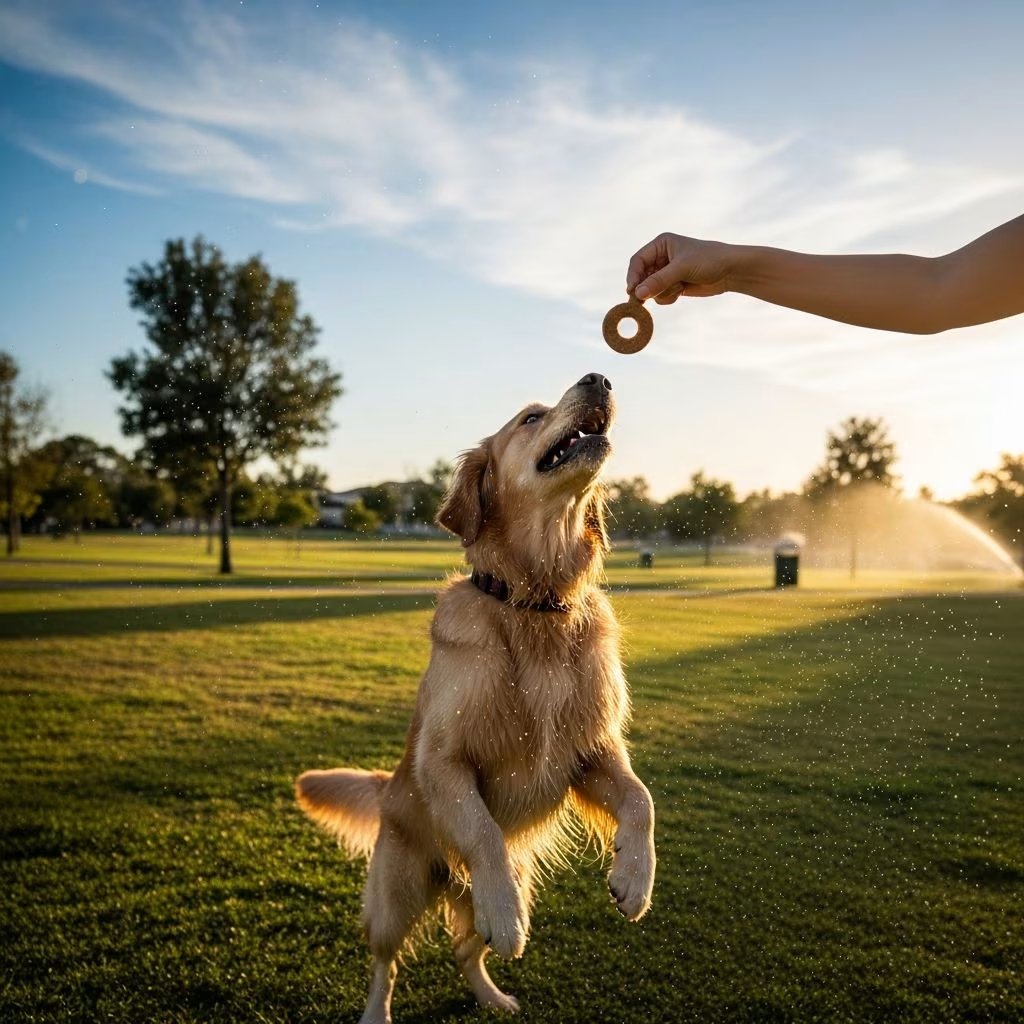
Training your dog is one of the most rewarding experiences you can have as a pet owner. It strengthens the bond between you and your furry companion while establishing important boundaries and safety protocols. Whether you have a young puppy or an adult dog, a structured training approach can transform your dog’s behavior and enhance your relationship. This comprehensive guide covers everything you need to know about dog training, from foundational principles to advanced techniques.
Understanding the Benefits of Dog Training
Dog training goes far beyond teaching tricks or commands. A well-trained dog is a happy dog, and the training process itself provides mental stimulation that keeps your pet engaged and content. Training creates a clear communication system between you and your dog, helping them understand what behaviors are acceptable and which are not. Perhaps most importantly, training can be life-saving, allowing you to maintain control in potentially dangerous situations such as when your dog approaches a busy road or picks up something toxic.
The benefits extend to your entire household. A trained dog is more welcome in social situations, can accompany you to more places, and experiences less anxiety because they know what to expect. Training also prevents destructive behaviors and excessive barking, making for a more harmonious living environment. Additionally, the training process itself is an excellent bonding opportunity that deepens the connection between you and your pet.
Top Training Tips for Success
Before diving into specific commands and techniques, it’s essential to understand the foundational principles that make training effective:
Minimize Distractions
When introducing new commands or tricks, always start in a quiet, familiar environment such as a room in your home. External stimuli like other dogs, people, or loud noises can interfere with your dog’s ability to focus on learning. Once your dog has mastered a command in a controlled environment, you can gradually introduce it in more distracting settings. This step-by-step progression ensures success and prevents confusion.
Keep Sessions Short and Regular
Dogs have limited attention spans, and marathon training sessions are counterproductive. Instead, conduct multiple short sessions throughout the day, each lasting just 5-10 minutes. This approach prevents overwhelming your dog and maintains their enthusiasm for training. Regular, consistent practice is far more effective than occasional lengthy sessions. Short, frequent interactions also fit more easily into your daily routine, making training sustainable long-term.
Practice Patience
Just like humans, every dog learns at their own pace. Some dogs pick up new commands within days, while others may need weeks of practice. Patience is crucial during this process. Frustration or impatience can damage your dog’s confidence and create negative associations with training. Remember that consistency and gentle persistence yield far better results than pushing too hard or expecting immediate perfection.
End on a Positive Note
Always conclude your training sessions with a command or behavior your dog already knows well. This ensures the session ends positively and leaves your dog feeling successful and confident. It also maintains their enthusiasm for future training sessions. This simple practice significantly impacts your dog’s long-term willingness to engage in training.
Make Training Fun
Training should be an enjoyable experience for both you and your dog. Approach it with enthusiasm and playfulness rather than treating it as a chore. Your dog responds to your energy, and when you’re having fun, your dog will be more engaged and motivated. Training is an excellent opportunity to strengthen your bond and create positive memories together.
Getting Started with Professional Support
While this guide provides comprehensive information about training techniques, professional support can be invaluable, especially for advanced methods like clicker training or addressing specific behavioral issues. Dog training classes offer several advantages: they provide structured learning, expose your dog to other dogs in a controlled setting, and give you access to expert guidance.
If you encounter specific behavioral challenges such as excessive barking, aggression, destructiveness, or phobias, consulting with a qualified animal behaviorist is highly recommended. These professionals specialize in understanding the root causes of behavioral issues and developing tailored solutions. A dog training instructor can also provide valuable one-on-one assistance if you need extra help with particular commands or techniques.
Mastering the Basic Commands
Teaching Your Dog to Sit
The ‘sit’ command is an excellent starting point for dog training. It’s relatively simple to teach and provides a foundation for more advanced commands. To teach your dog to sit, hold a treat close to your dog’s nose and slowly move your hand upward. As your dog’s head follows the treat, their bottom will naturally lower to the ground. The moment their rear end touches the floor, use your marker word (such as “Yes!” or a clicker), immediately give them the treat, and offer verbal praise.
Practice this sequence multiple times in short sessions. Gradually introduce the verbal cue “sit” just before luring them into position. After several repetitions, your dog will begin to anticipate the command and sit in response to the verbal cue alone. Once they’re consistently sitting on command, you can reduce your reliance on the treat lure. Always remember to give an “okay” cue to signal when the training session has ended, allowing your dog to move freely.
Teaching Your Dog to Stay
Training your dog to stay or wait is an essential command that can keep your dog safe in potentially dangerous situations, such as preventing them from jumping out of a car before you’ve secured their lead. Before attempting to teach ‘stay’, your dog should already be comfortable lying down on command, as this position provides stability for the stay behavior.
Begin by asking your dog to lie down. Once they’re in position, give a clear hand signal (such as a ‘stop’ sign with your palm facing your dog) while saying “stay.” Initially, maintain the stay for just a few seconds. Look for signs that your dog is about to break position and reward them before they do—this sets them up to succeed rather than fail. Gradually extend the duration by a few seconds with each repetition.
You can also teach your dog to stay in a sitting position using the same technique. The key to success is consistent, gradual progression and regular practice. As your dog improves, introduce brief distractions or move slightly farther away, always ensuring they can succeed at their current level before advancing further.
Teaching Your Dog to Come When Called
Reliable recall—getting your dog to come when called—is one of the most important commands for your dog’s safety. This command can prevent your dog from running into traffic, approaching dangerous animals, or getting lost. Start practicing recall in a confined, distraction-free space such as your garden or a living room.
Begin with your dog at a short distance away. Use an exciting, happy tone and call their name followed by the command “come,” then immediately reward them enthusiastically when they reach you. Make coming to you more rewarding than anything else in their environment. Use high-value treats or toys, and always make a big celebration when they arrive. Never call your dog to come for something unpleasant (such as a bath or nail trimming), as this creates negative associations with the recall command.
As your dog becomes more reliable, gradually increase the distance and introduce minor distractions. Practice in different environments so your dog learns that the recall command applies everywhere. Keep practice sessions short and fun, and always reward generously when your dog responds.
Teaching Your Dog to Walk Nicely on the Lead
Walking on a loose lead without pulling is a crucial skill that makes outings more enjoyable for both you and your dog. Begin lead training indoors or in a quiet garden before venturing onto busier streets. Start with short distances and gradually build duration as your dog improves.
When teaching lead walking, establish a clear expectation: pulling should not be rewarded with forward movement. When your dog pulls, stop moving immediately. Only resume walking when the lead becomes slack and your dog is walking beside you. Reward frequently during moments of calm, loose-lead walking. Most dogs learn remarkably quickly that pulling doesn’t work, while loose-lead walking results in progress and rewards.
Use high-value treats to reinforce the desired behavior. Hold treats at your side at your dog’s nose level to encourage them to walk in the correct position beside you. Practice turns and changes of direction to maintain engagement and demonstrate that walking beside you is rewarding. Be patient, as some dogs need more time to understand this concept than others.
Advanced Training Techniques
The Leave It and Drop Commands
These life-saving commands deserve special attention. The “leave it” command teaches your dog to walk away from something without touching it, while “drop” instructs your dog to release something already in their mouth. These commands are critically important for preventing your dog from ingesting toxins or dangerous objects.
When teaching “leave it,” always practice with items your dog doesn’t receive after training, otherwise you teach them that “leave it” means “you can have it in a minute.” Start with both hands behind your back—one holding the forbidden item and the other holding treats. Ask your dog to sit in front of you, then bring out the hand with the forbidden item held up near your head. Wait patiently until your dog looks away from the item, then immediately use your marker word, reward from the other hand, and hide both hands behind your back. Repeat this process at least five times before moving to the next step.
Once your dog consistently looks away from the item, add the verbal cue “leave it” just before showing the forbidden item. Gradually lower your hand toward the floor over several sessions, moving down just a few inches for at least five repetitions before lowering further. Eventually, you can drop the item on the floor and ask your dog to leave it, simulating real-life scenarios like food dropped during cooking.
Teaching “drop” involves a technique called capturing—waiting for your dog to offer the desired behavior and then naming and rewarding it. Use two identical toys: engage your dog in play with one toy, and when they’re engaged, bring out the second identical toy. In most cases, your dog will drop the first toy to investigate the new one. The moment they do, use your marker word and reward them enthusiastically. With repetition, your dog learns that dropping items results in positive outcomes.
Crate Training
Crate training is an effective tool for both puppies and adult dogs, providing a safe space and facilitating housetraining. The key is making the crate a positive, voluntary space rather than a punishment area. Start by leaving the crate door open and placing treats inside to encourage exploration. Never force your dog into the crate.
Feed your dog regular meals inside the crate with the door open initially. Use a command such as “crate” or “bed” to encourage your dog to enter voluntarily. Once your dog enters readily for meals, close the door for short periods while they eat. Gradually increase the duration with the door closed. If your dog whines, ignore this behavior and only reward when they’re settled and calm.
Frequently Asked Questions
Q: At what age should I start training my dog?
A: You can begin basic training with puppies as early as 8 weeks old. Young puppies have shorter attention spans, so keep sessions very brief (2-5 minutes). Adult dogs can learn just as effectively as puppies, so it’s never too late to start training.
Q: What should I use as rewards during training?
A: Use high-value rewards that your dog loves. These might include small pieces of chicken, cheese, commercial dog treats, or favorite toys. The reward should be something your dog is willing to work for. Vary rewards to maintain your dog’s interest and enthusiasm.
Q: How often should I train my dog?
A: Multiple short sessions throughout the day are most effective. Aim for 3-5 sessions daily, each lasting 5-10 minutes. This frequency provides sufficient practice without overwhelming your dog or causing training fatigue.
Q: What if my dog isn’t responding to training?
A: First, ensure you’re using rewards your dog genuinely values. Second, check that your training environment is appropriate for your dog’s learning level—it may be too distracting. Finally, be patient and consistent. If problems persist, consult a professional dog trainer or behaviorist for personalized guidance.
Q: Can I train an older dog?
A: Absolutely. Older dogs can learn new commands just as effectively as younger dogs. The same training principles apply regardless of age. You may notice that senior dogs tire more easily, so keep sessions even shorter and provide extra breaks.
Q: Should I use punishment in dog training?
A: Modern, science-based dog training relies on positive reinforcement rather than punishment. Punishment can damage your relationship with your dog and create fear or anxiety. Reward-based training is more effective, creates a stronger bond, and results in better long-term behavioral outcomes.
Training Different Life Stages
Training needs vary throughout your dog’s life. Puppies require foundation training in basic commands, housetraining, and socialization with other dogs and people. Young adult dogs benefit from reinforcing basic commands and introducing more advanced training. Senior dogs may need gentler approaches but respond well to continued mental stimulation through training and practice of established commands.
Adjust your expectations and training intensity based on your dog’s age, energy level, and physical condition. Puppies have shorter attention spans and tire quickly physically. Adult dogs typically have the focus and energy for more extensive training. Senior dogs benefit from shorter sessions and may need more recovery time between sessions.
Creating a Training Plan
Success in dog training comes from having a structured plan. Identify which behaviors you want to teach, prioritizing commands that enhance safety and daily life. Start with basic commands before moving to advanced techniques. Write down your training goals and track your dog’s progress. Celebrate small victories along the way, as these maintain motivation for both you and your dog.
Consistency is crucial—ensure all family members use the same commands and reward procedures. When everyone applies the same training principles, your dog learns more quickly and reliably. Inconsistency confuses dogs and slows progress.
Troubleshooting Common Training Challenges
If your dog struggles with particular commands, take a step back and break the behavior into smaller components. Practice each piece individually before combining them. If your dog seems unmotivated, your chosen rewards may not be valuable enough—experiment with different treats or toys. If training sessions become frustrating, take a break and return to a command your dog knows well to rebuild confidence.
Remember that every dog is an individual with unique learning styles and motivations. What works brilliantly for one dog may need adjustment for another. Stay flexible, patient, and committed to finding the approach that works best for your specific dog.
References
- How to Train Your Dog & Top Training Tips — RSPCA. 2025. https://www.rspca.org.uk/adviceandwelfare/pets/dogs/training
- Train Your Dog To Stay — RSPCA. 2025. https://www.rspca.org.uk/adviceandwelfare/pets/dogs/training/stay
- Learn How To Train Your Dog To Sit — RSPCA. 2025. https://www.rspca.org.uk/adviceandwelfare/pets/dogs/training/sit
- Teaching your dog to ‘Leave It!’ and ‘Drop!’ — RSPCA Brighton. 2025. https://rspca-brighton.org.uk/teaching-your-dog-to-leave-it-and-drop/
- Crate Train Your Dog – How To — RSPCA Victoria. 2025. https://rspcavic.org/learn/crate-training-your-dog/
- RSPCA Complete Dog Training Manual — Bruce Fogle. 2009. https://www.abebooks.com/9780751300758/



