

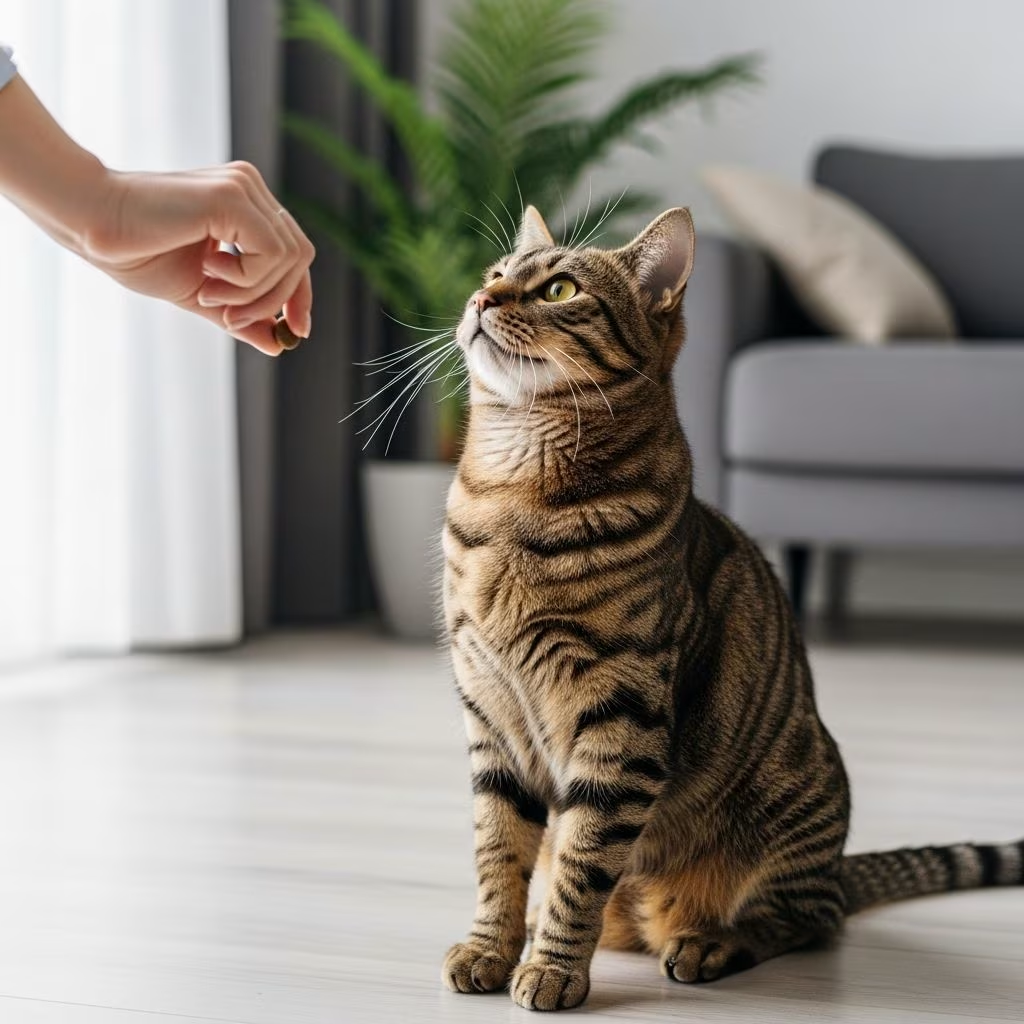
Training a cat might seem like a daunting task, but with the right approach, it’s entirely achievable and rewarding. Cats, including kittens, respond exceptionally well to positive reinforcement techniques that make learning fun and stress-free. This comprehensive guide covers everything from foundational principles to specific cues, helping you build a stronger bond with your feline friend while addressing common behavioral challenges.
Kitten Training 101
Embarking on kitten training requires setting realistic expectations from the outset. Cats are driven by instincts such as hunting for food or scratching to mark territory and maintain claw health—these cannot be trained away entirely. However, training excels at encouraging desirable behaviors, facilitating cooperative care like nail trimming or medication administration, and even teaching entertaining tricks like high-fives or bell-ringing.
The foundation of successful cat training lies in understanding your pet’s motivations. Cats are natural barterers; they perform actions in exchange for rewards that hold value to them, whether it’s a tasty treat, affectionate pets, verbal praise, or a playful toy toss. If the reward doesn’t outweigh the effort or if the task is too complex, progress stalls. Simplify sessions, ensure clear communication, and always provide alternatives for instinctual needs—like a proper scratching post—to see results.
Are Kittens Easy to Train?
Yes, kittens are particularly receptive to training due to their curiosity and playfulness, but adult cats can learn just as effectively with patience. The key is motivation: identify what excites your cat most. Short, frequent sessions—ideally 3-5 minutes daily—keep engagement high without overwhelming them. Consistency across family members ensures the cat doesn’t get confused by mixed signals.
Training isn’t about dominance; it’s a partnership. Cats thrive when they feel in control, which is why methods emphasizing choice and reward work best. Over time, this builds trust, reduces stress during handling, and enriches their environment, leading to a happier, more well-adjusted pet.
Positive Reinforcement
**Positive reinforcement** is the cornerstone of ethical and effective cat training. This method involves rewarding behaviors you want to see repeated, immediately after they occur. Whether during a structured session or spontaneously catching your cat using the scratching post instead of furniture, a prompt reward cements the association.
Rewards should be tailored: high-value treats like bits of tuna or chicken for tough tasks, play sessions for energetic cats, or gentle strokes for affection-seekers. Timing is crucial—delay even by a few seconds, and your cat may link the reward to the wrong action. Verbal markers like “yes!” or a clicker bridge the gap, pinpointing the exact moment of success.
- Benefits: Increases repetition of good behaviors, boosts confidence, and strengthens your bond without fear or punishment.
- Catch Them Being Good: Praise lavishly when your cat naturally performs desired actions, like sitting calmly or using the litter box perfectly.
- Avoid Punishment: Scolding or physical corrections create fear and confusion, worsening issues like furniture scratching.
In practice, if your kitten scratches the couch, calmly redirect to a post and reward use. This barter system teaches them the profitable choice, reducing unwanted habits over time.
Clicker Training
Clicker training revolutionizes cat training by providing a precise, consistent “bridge” signal that marks perfect behavior timing. Developed from principles in Karen Pryor’s work, it leverages cats’ love for games and challenges, making you an intriguing partner rather than just a food dispenser.
How to Get Started with Clicker Training Your Cat
Begin with “charging the clicker”: In a quiet space, click and immediately offer a treat (no behavior required). Repeat 10-20 times per session over a few days until your cat perks up at the sound, anticipating reward. This pairs the click with positivity.
Next, introduce behaviors. Start simple: present a target (like a chopstick or your finger) near their nose. Click and treat the instant they touch it. Gradually increase distance and add a verbal cue like “touch.” Timing is paramount—click must coincide exactly with the desired action.
- Charge the Clicker: Click + treat repeatedly until anticipation is clear.
- Teach Targeting: Nose-touch a target; click + treat. Fade the target as they master it.
- Build Behaviors: Use targeting to guide to carrier, perch, or tricks like spinning.
- Short Sessions: 3-4 minutes daily prevents frustration.
Clicker training suits all ages, enhancing communication, offering enrichment, and fostering agency—your cat learns they control the clicks!
Benefits of Clicker Training
- Precision: Marks exact behaviors, unlike vague praise.
- Fun Enrichment: Turns training into play, combating boredom.
- Better Relationship: Builds trust through positive shared experiences.
- Versatile: Teaches tricks (retrieve, sit), practical skills (carrier entry), and fixes issues (counter jumping).
As Pryor notes, it evolves from reinforcement to communication and ultimately deepens your connection with your cat.
How to Train Your Kitten to Look at Me
The “Look at Me” cue grabs attention reliably, essential for grooming, vet visits, or redirecting mischief. It captures a natural behavior: kittens frequently glance at sounds or movements.
Step-by-Step:
- Make a novel sound (kiss lips, tongue click) or motion to draw eyes.
- Instantly they look: click (or say “yes!”) + reward.
- Repeat 10-15 times.
- Add verbal cue: Sound + “Look at me!” → click + treat on eye contact.
- Fade sound: Just “Look at me!” → reward if successful. Backtrack if needed.
Practice in low-distraction areas first, gradually adding challenges. Soon, your cat will snap to attention on cue, improving focus and cooperation.
Teach the “Touch” Cue
The “Touch” cue builds on targeting, teaching nose-to-object contact. It’s a gateway to advanced tricks and stress-free handling.
Training Steps:
- Hold target (finger/paintstick) near nose; click + treat voluntary touches.
- Move slightly away; reward stronger touches.
- Say “Touch” just before contact; click + treat.
- Vary locations: guide to mat, carrier, or hoop for jumping.
This cue empowers cats, reducing pick-up stress and enabling fun games like hoop-jumping or retrieve.
Make Training Fun
Infuse play into sessions to sustain interest. Use wand toys post-reward or incorporate tricks into hunt games. End on highs to build eagerness for next time. Fun training prevents burnout, making your cat an enthusiastic learner.
Redirect Unwanted Behaviors
Never punish—redirect instead. For scratching: Interrupt gently, provide post, reward use. For jumping: Lure down with target, reward. Consistency + alternatives satisfy instincts positively.
Advanced Tricks and Behaviors
Once basics are solid, progress to sit (lure with treat overhead), come when called (name + click for approach), high-five (touch paw), or twirl (lure in circle). Limitless potential exists within your cat’s comfort.
| Behavior | Difficulty | Use Case |
|---|---|---|
| Look at Me | Beginner | Attention, grooming |
| Touch/Target | Beginner | Tricks, carrier training |
| High-Five | Intermediate | Fun, bonding |
| Retrieve | Advanced | Enrichment |
Frequently Asked Questions (FAQs)
Q: Are kittens easy to train?
A: Yes, motivated kittens train easily with rewards, but keep sessions short and simple for best results.
Q: Is clicker training effective for cats?
A: Absolutely—it’s highly effective for skills, tricks, and relationship-building due to precise marking.
Q: What behaviors can I teach my cat with clicker training?
A: Tricks like twirl, retrieve; practical ones like stationing, targeting, or coming when called.
Q: Can adult cats be trained?
A: Yes, clicker training works for all ages, improving communication and fun.
Q: How long do training sessions last?
A: 3-5 minutes, 1-3 times daily to maintain engagement.
References
- How to Train Your Kitten (Yes, It’s Possible!) — Kinship YouTube. 2023. https://www.youtube.com/watch?v=X77C2_H3mqs
- A Step by Step Guide on How to Clicker Train Your Cat — Kinship. Accessed 2026. https://www.kinship.com/cat-behavior/clicker-training-for-cats
- How to Train Your Cat: Tips and Cues for Kittens — Kinship. Accessed 2026. https://www.kinship.com/cat-behavior/how-to-train-your-cat



