

How to Train Your Cat: Vet-Approved Guide
Cats have long held a reputation for being independent, headstrong, and untrainable compared to their canine counterparts. However, this common misconception couldn’t be further from the truth. Cats are absolutely capable of behavioral training and learning new skills—they simply require a different approach than dogs. While even the most affectionate and “dog-like” cats can display stubborn tendencies, their intelligence and cognitive abilities are remarkable. The key to successful cat training lies in understanding your feline’s unique personality and using methods specifically designed for how cats think and respond to incentives.
The primary challenge in training cats is that they are intrinsically motivated by their own agenda rather than an external authority figure. Unlike dogs, which are pack animals with a natural desire to please their owners, cats are solitary hunters with independent decision-making processes. This doesn’t mean they are less intelligent—it simply means they require training strategies that align with their natural instincts and behavioral patterns. With patience, consistency, and the right techniques, you can teach your cat almost anything, from basic litter box use to impressive tricks and behavioral modifications.
Litter Training Your Kitten
Starting Early Makes Training Easier
One of the most important training milestones for any cat owner is litter box training. The good news is that litter training is often the easiest behavior to teach cats because it aligns with their natural instincts. Kittens can begin learning litter box use as early as 3 weeks of age, and by the time they reach their forever homes at 8 weeks old, most kittens will already understand the concept. This is because cats have an instinctual drive to cover their feces and urine, making litter box training a straightforward process when approached correctly.
The Step-by-Step Litter Training Process
To successfully litter train your kitten, follow these essential steps:
- Keep the kitten in a small room or kennel initially, with only their food dishes and litter box present. This limited space helps them understand where their bathroom facilities are located.
- Show the kitten the litter box and allow them to sniff around and explore it. Familiarization is crucial to helping them understand the box’s purpose.
- Reintroduce the litter box after every meal and nap, as kittens typically need to eliminate shortly after eating or sleeping.
- Each time the kitten eliminates in the litter box, leave the waste there until they use it again. The scent serves as a powerful reminder of where they’re supposed to go.
- Never punish the kitten for accidents. Instead, simply reintroduce them to the litter box each time. Punishment can create negative associations with the box.
- Once your kitten demonstrates understanding of the concept, gradually expand their roaming space to other areas of the home.
This process typically takes only a few weeks to complete. Some kittens catch on after their first use simply because of their built-in biological desire to cover their waste. Patience during this phase sets the foundation for a lifetime of proper bathroom habits.
Understanding Unwanted Behavior in Cats
Cats engage in many behaviors that owners may find undesirable or problematic. The challenge in addressing unwanted behaviors is remembering that cats are an entirely different species from dogs and require specific training methods tailored to feline psychology. What works with a dog simply won’t work with a cat, and understanding this fundamental difference is crucial to successful behavior modification.
Tearing or Scratching Furniture
One of the most common complaints from cat owners is furniture destruction through scratching and clawing. Claw sharpening is a completely natural and necessary behavior for cats—they use it for territorial marking, stretching their muscles, and maintaining their claws. Rather than attempting to eliminate this behavior entirely, the goal should be redirecting it to appropriate surfaces.
Solutions for Destructive Scratching:
- Provide multiple scratch posts with different textures. Cats have preferences for various scratching surfaces, so offering options increases the likelihood they’ll use them.
- Place scratch posts in areas where your cat naturally scratches. This strategic placement makes the desired alternative more convenient than furniture.
- Use plastic nail caps as a temporary protective measure. These caps fit over your cat’s claws and prevent damage while you work on redirecting their scratching behavior.
- Maintain regular nail clippings to keep your cat’s claws trimmed and reduce their destructive potential.
- Keep scratch posts interesting and engaging by rotating them or using catnip to maintain your cat’s interest.
The Critical Importance of Positive Reinforcement
Why Punishment Fails with Cats
A fundamental principle in cat training is that cats do not respond well to harsh discipline or punishment. In fact, punishment often produces the opposite of the desired result, potentially causing your cat to develop even worse behaviors. When you hit, yell at, or use aggressive methods with your cat, they don’t associate these actions with their bad behavior. Instead, they develop negative feelings toward you and may become fearful or aggressive in return.
This disconnect between action and consequence is crucial to understand. Cats don’t have the same capacity as dogs to understand that punishment is related to a previous behavior. A cat may remember that you were aggressive when they did something, but they’re unlikely to connect the punishment to the specific action. This can severely damage your relationship with your feline companion and make future training exponentially more difficult.
How Positive Reinforcement Works
Positive reinforcement training is the most effective approach for cats because it leverages their natural motivations. Cats are highly food-motivated creatures, and using their favorite treats as rewards creates a clear, positive association with desired behaviors. Every time your cat performs a behavior you want to encourage, immediately reward them with a delicious treat or praise.
This method works because cats quickly learn to associate good behavior with positive outcomes. They begin to repeat behaviors that result in rewards, making training remarkably efficient. The key is timing—the reward must come immediately after the desired behavior occurs, so your cat makes the connection between their action and the positive consequence. With consistent positive reinforcement, your cat will develop a strong motivation to repeat the desired behavior in hopes of receiving another reward.
Clicker Training: A Precision Training Tool
What is Clicker Training?
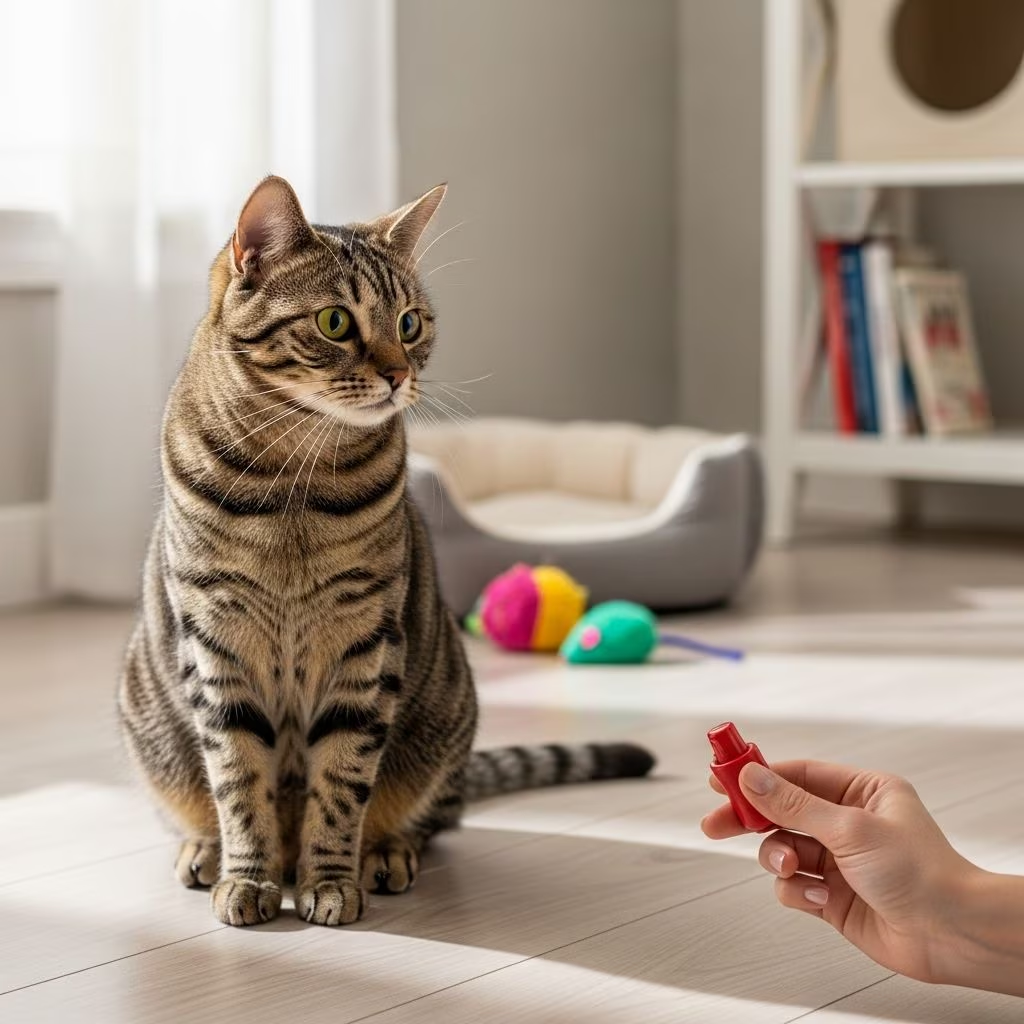
Clicker training is an exceptionally useful training method that establishes a clear, unmistakable communication channel between you and your cat. A clicker is a small handheld device that produces a distinct “clicking” sound. This sound serves as a bridge between the exact moment your cat performs a desired behavior and the delivery of a reward. The clicker acts as a marker, telling your cat precisely what behavior earned them the reward.
How to Introduce the Clicker
Initially, the clicking sound means nothing to your cat. The goal is to teach them that the click sound is always followed by something good—a treat. To introduce the clicker:
- Click the device and immediately give your cat a treat. Repeat this process numerous times over several training sessions.
- Your cat will quickly learn to associate the clicking sound with an impending reward.
- Once your cat has made this association, you can begin using the clicker as a training tool to mark exact behaviors.
Advanced Applications of Clicker Training
Once your cat understands that the clicker predicts a reward, you can use it to pinpoint exact behavioral moments when training for tricks and advanced actions. For example, you can use the clicker to mark the precise apex of a vertical jump, the exact moment your cat crosses under a fence, or when they perform a paw shake. This precision helps your cat understand exactly what specific action you’re rewarding, making learning faster and more efficient.
Clicker training is particularly valuable because it eliminates confusion about which behavior earned the reward. Instead of rewarding your cat sometime after they perform an action, the click instantly marks the correct behavior, creating crystal-clear communication.
Building a Strong Training Foundation
The Role of Patience in Cat Training
Patience is perhaps the single most important attribute you can bring to cat training. Unlike dogs, which have been domesticated to seek human approval, cats maintain their independent nature. They require time, consistency, and understanding to learn new behaviors. Rushing the process or expecting immediate results will only frustrate you and confuse your cat.
Training your cat is an investment in your relationship with your feline companion. It creates a well-balanced partnership where both you and your cat benefit from improved communication and understanding. Even though cats aren’t as dependent on your support and approval as dogs, they are absolutely capable of learning concepts and forming positive associations with their owners.
Consistency and Routine
Consistency is equally crucial to successful cat training. Establish a regular training routine and stick to it. Training sessions don’t need to be long—even 5-10 minute sessions several times a day can be highly effective. The important thing is maintaining consistency so your cat learns to expect and anticipate training time, making them more receptive to learning.
Frequently Asked Questions About Cat Training
Q: At what age can I start training my cat?
A: You can begin training kittens as early as 3 weeks old. Litter training can start at this age, and most kittens grasp the concept by 8 weeks. Older cats can also be trained, though they may require more patience and time to unlearn previous habits.
Q: Why doesn’t my cat respond to punishment?
A: Cats don’t associate punishment with their previous behavior the way dogs do. Punishment creates fear and negative associations with you rather than teaching them the desired behavior. Positive reinforcement is always more effective with cats.
Q: How long does cat training typically take?
A: Litter training usually takes a few weeks. Behavior modification and trick training timelines vary depending on the complexity of the behavior and your cat’s individual personality, but consistent daily practice yields the best results.
Q: Can adult cats be trained?
A: Absolutely. While kittens may learn more quickly, adult cats are fully capable of learning new behaviors and tricks. Adult cats may require more patience and time, but they can definitely be trained successfully.
Q: What’s the best reward for training my cat?
A: High-value treats that your cat loves are typically the most effective rewards. You can also use favorite toys or verbal praise, but food rewards are usually most motivating for cats.
Q: How do I choose the right scratching posts?
A: Offer multiple scratching posts with different textures—some cats prefer sisal rope, others prefer cardboard or carpet. Observe your cat’s natural scratching preferences and select posts that match those preferences.
References
- How to Train Your Cat: Vet-Approved Cat Training Guide — Catster. Retrieved from https://www.catster.com/cat-health-care/how-to-train-your-cat/
- How to Clicker Train a Cat: 4 Vet-Approved Steps — Catster. Retrieved from https://www.catster.com/cat-behavior/how-to-clicker-train-a-cat/



