

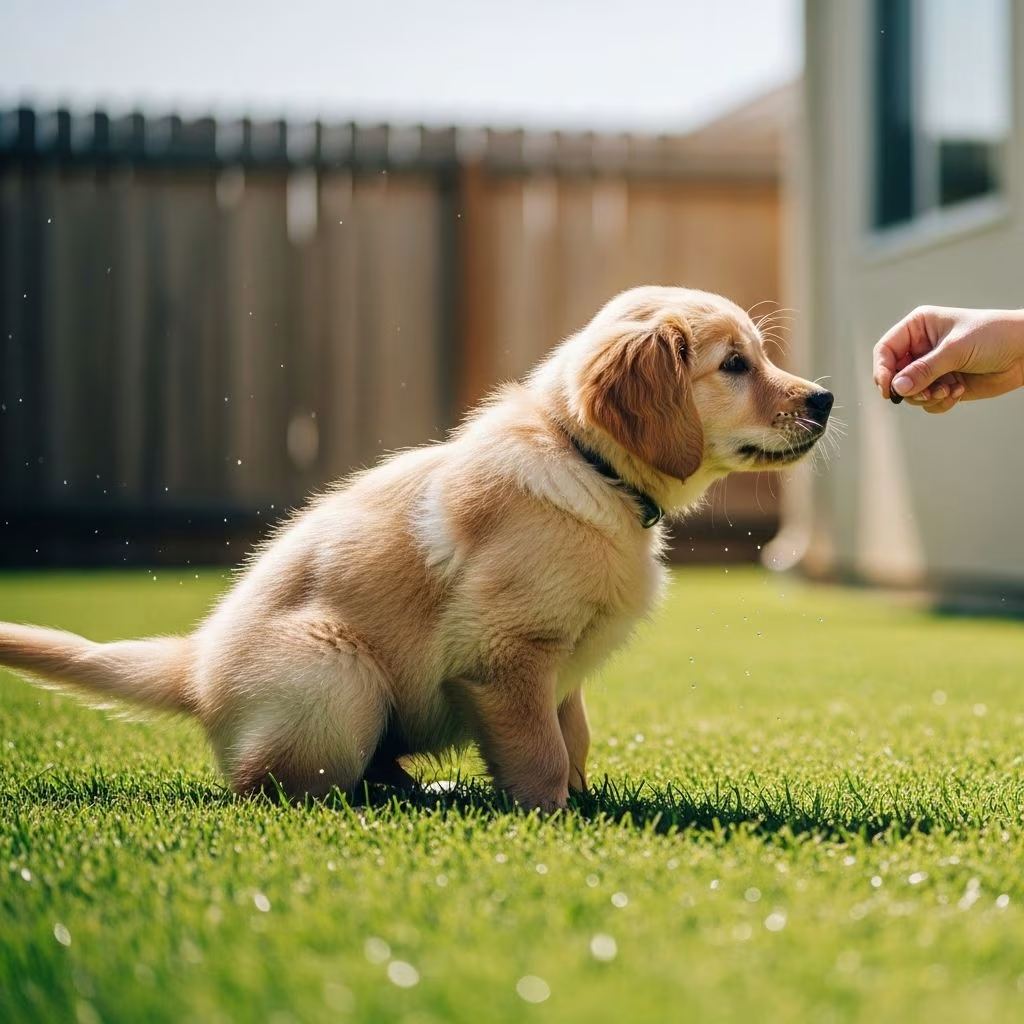
Potty training your puppy is one of the most important responsibilities of pet ownership, and while it may seem challenging at first, understanding the fundamentals can set you and your puppy up for success. Training your puppy to pee outside requires consistency, patience, and positive reinforcement—three pillars that will transform those early accidents into reliable outdoor bathroom habits. The good news is that most puppies will eventually understand where and when they should relieve themselves, but the timeline and ease of training depend on your dedication to a structured approach.
When you bring your new puppy home, they haven’t yet learned where the appropriate place to pee is. Your role is to guide them through this learning process by creating clear associations between outdoor spaces and bathroom time. By establishing predictable routines and rewarding desired behaviors, your puppy will gradually connect the dots and develop reliable potty habits.
Understanding Your Puppy’s Age and Bladder Control
One of the most critical factors in successful potty training is understanding your puppy’s physical capabilities at different ages. Puppies under 10 weeks old cannot typically hold their bladder for longer than 30 minutes, which means they need frequent bathroom breaks throughout the day and night. This biological limitation is not something your puppy can control—it’s simply how their developing bodies work.
As your puppy grows, their bladder capacity increases. A helpful general guideline is that puppies can hold their urine for approximately one hour per month of age, up to a maximum of about eight hours for adult dogs. This means a three-month-old puppy should be taken out every three hours, while a six-month-old can manage longer intervals. Understanding these developmental stages helps you set realistic expectations and avoid frustration when your young puppy cannot hold it as long as you might hope.
Creating a Potty Training Schedule
Consistency is the foundation of successful potty training, and a structured schedule is your most powerful tool. Puppies thrive on predictability, and knowing when to expect bathroom breaks helps them develop reliable habits. Your schedule should revolve around your puppy’s daily activities and their biological needs.
Key Timing for Bathroom Trips
Certain times throughout the day trigger your puppy’s need to pee or poop. By recognizing these natural moments and taking your puppy outside at these times, you significantly increase the likelihood of successful outdoor elimination:
- Immediately after waking up (morning, naps, or any sleep period)
- Within 15-30 minutes after meals
- After drinking water
- After playtime or exercise sessions
- Before bedtime
- During midday breaks if you’re home
For puppies in their earliest weeks, you may need to take them outside as frequently as every hour to catch those elimination moments. As suggested by training experts, taking your puppies to the bathroom spot every hour for the first few days helps cement the process. Once your puppy starts showing signs of understanding the routine, you can gradually extend the time between bathroom breaks as your dog gets the hang of it.
Selecting a Designated Potty Spot
Choosing a specific potty spot is one of the most underrated yet important aspects of puppy training. When you select a particular area in your yard for bathroom breaks, you create a powerful association in your puppy’s mind: “When my parents bring me here, I need to pee.” This consistency prevents your puppy from spending excessive time searching for the “perfect spot,” which can be frustrating when you’re in a hurry.
If you allow your puppy to choose their own spot each time you go outside, you encourage them to take a long time to find the right place, which can create problems when you need to leave quickly. By controlling the location, you maintain control over the training process and set clear expectations. Once your puppy understands that this specific spot is where bathroom time happens, they’ll naturally head there when taken outside, making the entire process more efficient.
Recognizing Your Puppy’s Bathroom Signals
As you spend time with your puppy, you’ll begin to notice patterns in their behavior right before they need to eliminate. Learning to recognize these “tells” allows you to proactively take them outside before accidents happen, dramatically improving your training success rate. Every puppy has slightly different signals, so pay close attention to your individual pup’s behaviors.
Common signs that your puppy needs to go outside include:
- Sniffing the floor or ground intensely
- Whining or vocalizing
- Walking in circles repeatedly
- Hiding or sneaking off out of view
- Appearing restless or agitated
- Scratching at the door
- Barking or making noise at the door
The moment you notice any of these signals, carry or lead your puppy directly to their designated potty spot. This proactive approach prevents accidents and maximizes your opportunities to reward successful outdoor elimination.
Using Verbal Cues and Commands
Teaching your puppy to respond to a specific potty command is a powerful training technique that gives you additional control over when your puppy eliminates. Each time your puppy begins to pee, say a consistent cue such as “Go potty” or “Do your business.” Repeat this cue several times while they are actively eliminating, and continue this practice for several weeks until the association becomes strong.
Over time, as you learn the precursor signals your puppy displays before elimination, you can begin saying the cue before they start rather than during. Eventually, you’ll reach a point where you can simply walk to the potty spot, say your command, and your puppy will automatically eliminate on cue. This skill is invaluable for managing your puppy’s bathroom schedule and is particularly helpful when traveling or in situations where you need your puppy to go quickly.
Positive Reinforcement and Rewards
Positive reinforcement is the most effective training method for puppies and is far superior to punishment-based approaches. Whenever your puppy successfully pees or poops outside, immediately praise them enthusiastically and offer a high-value treat. This immediate reward creates a strong positive association with outdoor elimination and motivates your puppy to repeat the behavior.
The timing of your reward is crucial—it should come within seconds of your puppy finishing, not minutes later. Your puppy needs to clearly connect the behavior (eliminating outside) with the reward (praise and treats). This immediate feedback helps them understand that they’ve done exactly what you wanted them to do.
Consistency in rewards is also important. During the early stages of training, you might reward every successful outdoor elimination. As training progresses, you can gradually reduce the frequency of treats while maintaining verbal praise and affection. Never underestimate the power of genuine enthusiasm and celebratory language when your puppy succeeds.
Why Punishment Doesn’t Work
One of the most important concepts to understand is why punishment-based approaches fail in potty training. When puppies are punished for accidents, they don’t learn that eliminating indoors is wrong—instead, they learn to fear the act of elimination itself. This fear and anxiety cause puppies to associate peeing or pooping with negative consequences, leading them to hide their signals and seek out secret locations to relieve themselves.
When puppies hide their need to go to the bathroom, you miss critical opportunities to take them outside and reinforce positive behavior. This actually leads to more accidents, not fewer, creating a frustrating cycle. Yelling at your puppy, rubbing their nose in accidents, or otherwise punishing them is not only ineffective but can damage your relationship and create behavioral problems. Focus instead on prevention through frequent outdoor breaks and immediate positive reinforcement of desired behavior.
Bell Training for Communication
An advanced training technique that many successful puppy owners use is bell training, which gives your puppy a way to communicate their need for bathroom breaks. To implement bell training, hang a bell by the door leading to the outdoor potty area. Initially, you ring the bell yourself each time you take your puppy outside for a bathroom break to create an association between the sound and potty time.
Over time, encourage your puppy to touch the bell with their nose or paw before going outside. When they do, immediately celebrate and take them out for their bathroom break. Eventually, your puppy will learn to ring the bell independently when they need to go outside. This provides a clear and consistent way for them to communicate their bathroom needs, reducing accidents and giving your puppy agency in their training.
Adapting Training for Apartment Living
Apartment dwellers face unique challenges in potty training since accessing outdoor areas may require waiting for elevators or climbing multiple flights of stairs. When your puppy needs to go urgently and can’t wait to get all the way outside, more accidents are likely to occur in the early stages of training. However, this is a temporary situation that improves as your puppy gains better bladder control.
For apartment living, several strategies can help. First, maintain your commitment to frequent outdoor breaks as your puppy matures. Second, consider having puppy pads available as a safety net for accidents, though they shouldn’t replace regular outdoor training. Third, for smaller dog breeds, you might use puppy potty grass products as an intermediate solution. Once your puppy is trained to use their designated indoor spot and is old enough to hold their bladder longer, you can transition fully to outdoor potty training.
Puppy Pad Training as a Transition Tool
If you’re using puppy pads as a temporary or long-term solution, apply the same training principles as outdoor training. Place your puppy on the pee pad routinely according to your established schedule. You may want to put their leash on during these sessions to serve as a cue that it’s potty time and to help them stay in place on the pad. Reward them enthusiastically for using the bathroom on the pee pad, just as you would for outdoor elimination.
Once your puppy is consistently using the pee pad and is old enough to hold their urine for longer periods, you can begin transitioning them to outdoor potty training. Gradually move the pad closer to the door and eventually outside, allowing your puppy to adapt to eliminating in the designated outdoor spot.
Timeline and Expectations
Potty training a puppy typically takes between four to six months, though some puppies may take up to a year to be fully trained. This timeline can vary based on your puppy’s age when you start training, their individual temperament, and the consistency of your training approach. Even if your timeline extends beyond six months, remember that every puppy eventually learns, and your consistent efforts will pay off.
During the training period, you’ll likely experience setbacks and occasional accidents—this is completely normal and doesn’t mean your puppy is failing or that your training approach is wrong. Each accident is simply an opportunity to reinforce the correct behavior by immediately taking your puppy outside. The moment you see consistency developing, you’ll understand why pet owners say that potty training finally “clicks” after weeks of patience and effort.
Frequently Asked Questions
When should I start potty training my puppy?
You should start unofficially potty training your puppy as soon as you bring them home, regardless of age. Even very young puppies can begin learning the concept of where they should eliminate, though their physical bladder control develops gradually over months.
How often should I take my puppy outside?
Puppies need to be taken out more frequently than adult dogs—about every one to three hours, though some puppies may do better with even more frequent outings every 20 minutes, depending on their age, health, food and water intake, and activity level. Puppies under 10 weeks old typically cannot hold their bladder longer than 30 minutes.
What should I do if my puppy has an accident indoors?
If you catch your puppy in the act of peeing or pooping indoors, firmly say “No” but don’t yell. Immediately take them to their designated bathroom spot outside and reward them if they continue eliminating there. Never punish or shame your puppy, as this creates fear and anxiety around elimination.
Why isn’t my puppy learning despite consistent training?
If your puppy continues having accidents despite consistent training, consult your veterinarian to rule out medical issues such as urinary tract infections or other health problems that may be interfering with their ability to control elimination.
Can I use both puppy pads and outdoor training?
Yes, puppy pads can serve as a safety net during the training process, especially in apartments or homes where accessing outdoor areas is challenging. Use them alongside regular outdoor potty training to maximize opportunities for success.
References
- How to Potty Train a Puppy: Tips and Techniques — Kinship. 2025. https://www.kinship.com/dog-behavior/potty-train-a-puppy
- House Training: Housetraining Your Puppy — Adopt a Pet. 2025. https://www.adoptapet.com/blog/behavior-training/how-to-house-train-puppy
- How Long Does it Take to Potty Train a Puppy? — Kinship. 2025. https://www.kinship.com/dog-behavior/how-long-does-it-take-to-potty-train-a-puppy



