

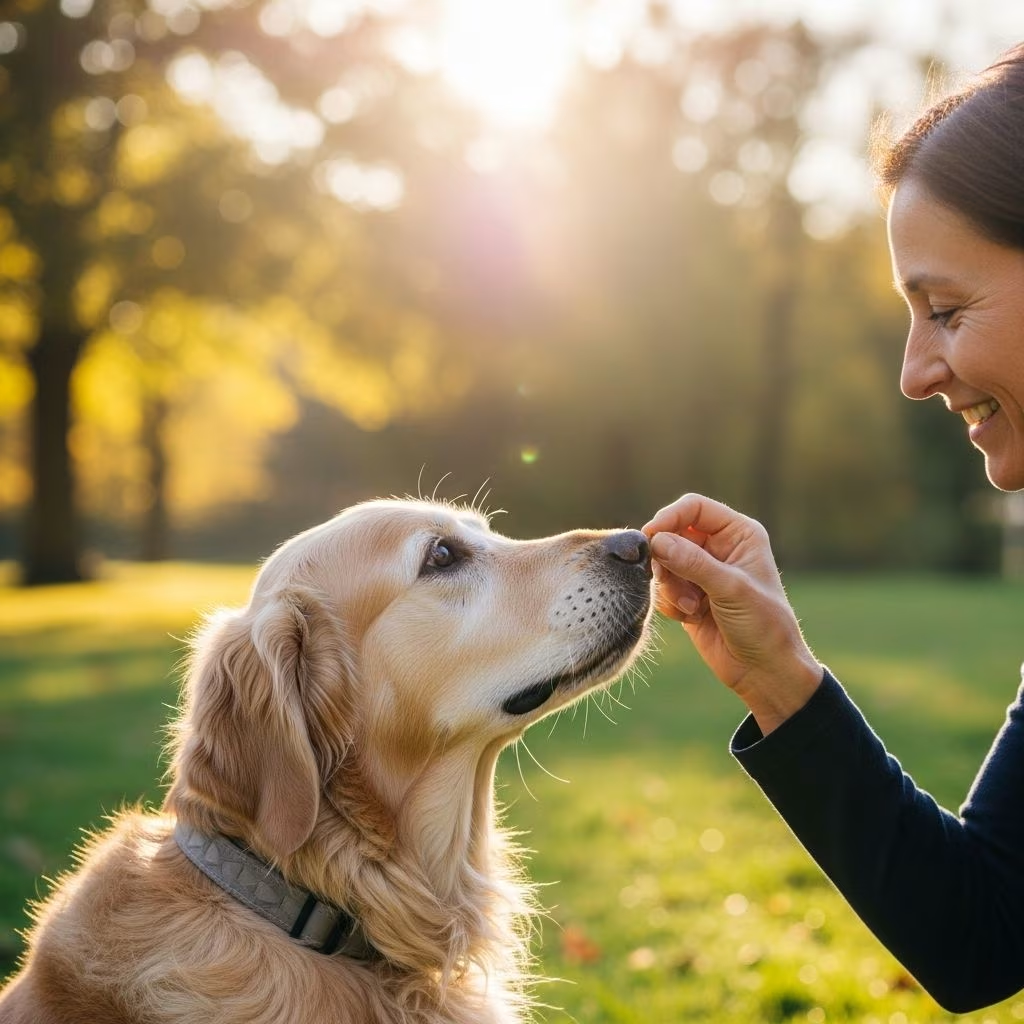
Training an older dog is entirely possible and rewarding. Contrary to the saying “you can’t teach an old dog new tricks,” senior dogs can learn new behaviors, refine existing skills, and overcome ingrained habits with the right approach. Older dogs often bring experience, calmer demeanors, and strong motivation for rewards, making them excellent students when trained using positive reinforcement, patience, and short, consistent sessions.
This guide covers everything from preparing your senior dog for training to teaching basics, new tricks, fixing common problems, and maintaining mental sharpness. By focusing on their physical limitations, health considerations, and preferences, you’ll build a stronger bond while improving their quality of life.
Can You Train an Older Dog?
Yes, older dogs can absolutely learn new things. While puppies have boundless energy, seniors benefit from established focus and less distractibility. Challenges like arthritis, hearing loss, or cognitive decline (canine cognitive dysfunction) may slow progress, but adaptations like hand signals or high-value treats overcome these. Research from veterinary behaviorists shows positive reinforcement works across all ages, with older dogs often mastering commands faster due to prior life experience.
Key benefits include:
- Improved mental stimulation to combat dementia-like symptoms.
- Stronger owner-pet bond through shared achievements.
- Better behavior management for adopted seniors with unknown histories.
- Enhanced physical health via gentle exercise integrated into sessions.
Start by consulting a vet to rule out medical issues mimicking behavioral problems, such as pain causing irritability.
Preparing to Train Your Older Dog
Success begins with preparation. Assess what your dog already knows—many seniors have basic obedience from past training. Figure this out by testing commands in a low-distraction environment.
Choose a quiet, enclosed space free from distractions to build focus. Fenced yards or indoor rooms work best for escape-prone dogs. Establish a daily schedule: short 5-10 minute sessions 2-3 times daily, tied to meals for predictability. Set meal times twice a day to predict potty needs, aiding house training.
Gather tools:
- High-value treats (soft, smelly like liver or cheese for quick eating).
- Clicker or marker word (“yes!”) for precise timing.
- Leash, collar, and crate if needed.
- Toys for play-based rewards.
Health check: Ensure no pain or sensory loss hinders learning. Use larger hand signals if vision fades, verbal cues if hearing is intact. Patience is crucial—older dogs tire faster, so end on successes.
Basic Obedience Training for Older Dogs
Refresh or teach fundamentals first: sit, down, stay, come, and heel. These build confidence and form the foundation for advanced skills. Keep sessions brief to match their energy.
How to Teach “Sit”
- Hold a treat above their nose, move it back over their head.
- As rear drops, say “yes!” and treat.
- Add cue “Sit” before motion; fade lure over time.
Practice 5 reps per session. Praise calmly to avoid overexcitement.
How to Teach “Down”
- From sit, lure treat to ground between paws.
- Follow to elbows, mark and reward when prone.
- Build duration before adding verbal cue.
How to Teach “Stay”
- Dog in sit/down, say “Stay,” take one step back.
- Return, reward if held; increase steps gradually.
- Use release word like “Free” to end.
Heel and Loose Leash Walking
Allow sniffing collar/leash first. Lure to your left side with treat at hip, walk praising position. Stop if pulling; resume when slack. Short sessions prevent fatigue.
Pro Tip: Daily practice yields results in weeks. Use 80% known skills, 20% new for momentum.
House Training an Older Dog
Accidents happen due to incontinence, confusion, or poor schedules. Consistency fixes this quickly.
- Set Schedule: Potty after meals, wakes, play. Praise outdoor elimination lavishly.
- Crate Training: Proper size crate; feed inside, close door gradually up to 6 hours max with breaks. Let sniff first, lure with treats.
- Cleanup: Enzyme cleaners erase scents preventing repeats.
- If accident occurs, interrupt neutrally and rush outside—no punishment.
Twice-daily meals make potty predictable. Adopted dogs respond fastest to routine.
Training Older Dogs to Do Tricks
Tricks stimulate minds and bodies gently. Build on basics with sequencing.
- Spin: Lure circle with treat, add cue.
- Paw: From sit, tap paw, reward lifts.
- Dance Between Legs: Lure through one leg, then both; mark successes.
Sequence: Sit + Paw + Down = new chain. Freshen old tricks by mixing: Wait + Recall + Sit. Keep fun—breaks and play vital.
Addressing Common Behavior Problems
Seniors may develop issues from pain, anxiety, or habit.
| Problem | Solution |
|---|---|
| Barking | Ignore attention-seeking; reward quiet. Desensitize triggers. |
| Jumping | Turn away, reward four-on-floor. |
| Pulling on Leash | Stop walking until slack; high-value rewards for position. |
| Anxiety | Calm routines, pheromone diffusers, short separations building time. |
Positive methods only—no aversives, as they confuse seniors. Professional help if aggression or deep issues.
Keeping Your Older Dog Mentally Sharp
Mental exercise prevents cognitive decline. Integrate into daily life.
- Nose work: Hide treats in sniff mats.
- Puzzle toys with kibble.
- Scent games: Trail treats outdoors.
- Obedience chains with variations.
- Socialization: Calm doggy playdates.
Short bursts daily sharpen focus, reduce dementia risks.
Frequently Asked Questions
Can older dogs learn new tricks?
Yes, with patience and positives. Break into steps; they often learn faster than pups.
How long are training sessions for seniors?
5-20 minutes, 2-3x daily. End before fatigue.
What if my dog has hearing/vision loss?
Use exaggerated signals, vibrations, or laser pointers.
Is crate training okay for older dogs?
Yes, for safety and potty training, up to 6 hours with checks.
Should I use punishment?
No—positives build trust. Punishment increases fear.
Final Thoughts
Training your older dog enriches their golden years. Consistency, positivity, and fun yield a happier, more responsive companion. Celebrate every win, no matter how small.
References
- 7 Effective Dog Training Methods – For Old Dogs and New Dogs — Best Friends Pet Care. 2023. https://bestfriendspetcare.com/7-effective-dog-training-methods-for-old-dogs-new-dogs/
- Dog Training Strategies – How To Train An Older Dog — Unleash Fido. 2023. https://unleashfido.com/dog-training-strategies-how-to-train-an-older-dog/
- A Complete Guide to Training an Older Dog — Woofz. 2024. https://www.woofz.com/blog/training-an-older-dog/
- 8 Must-Know Tips For Training an Older Dog — Monster K9. 2023. https://www.monsterk9.com/blogs/large-dog-blog/8-must-know-tips-for-training-an-older-dog
- Dog Training: Obedience Training for Older Dogs — Purina US. 2024-01-10. https://www.purina.com/articles/dog/behavior/training/older-dog-obedience-training
- The Importance of Training Your Senior Dog — American Kennel Club (AKC). 2023. https://www.akc.org/expert-advice/health/training-your-senior-dog/



