

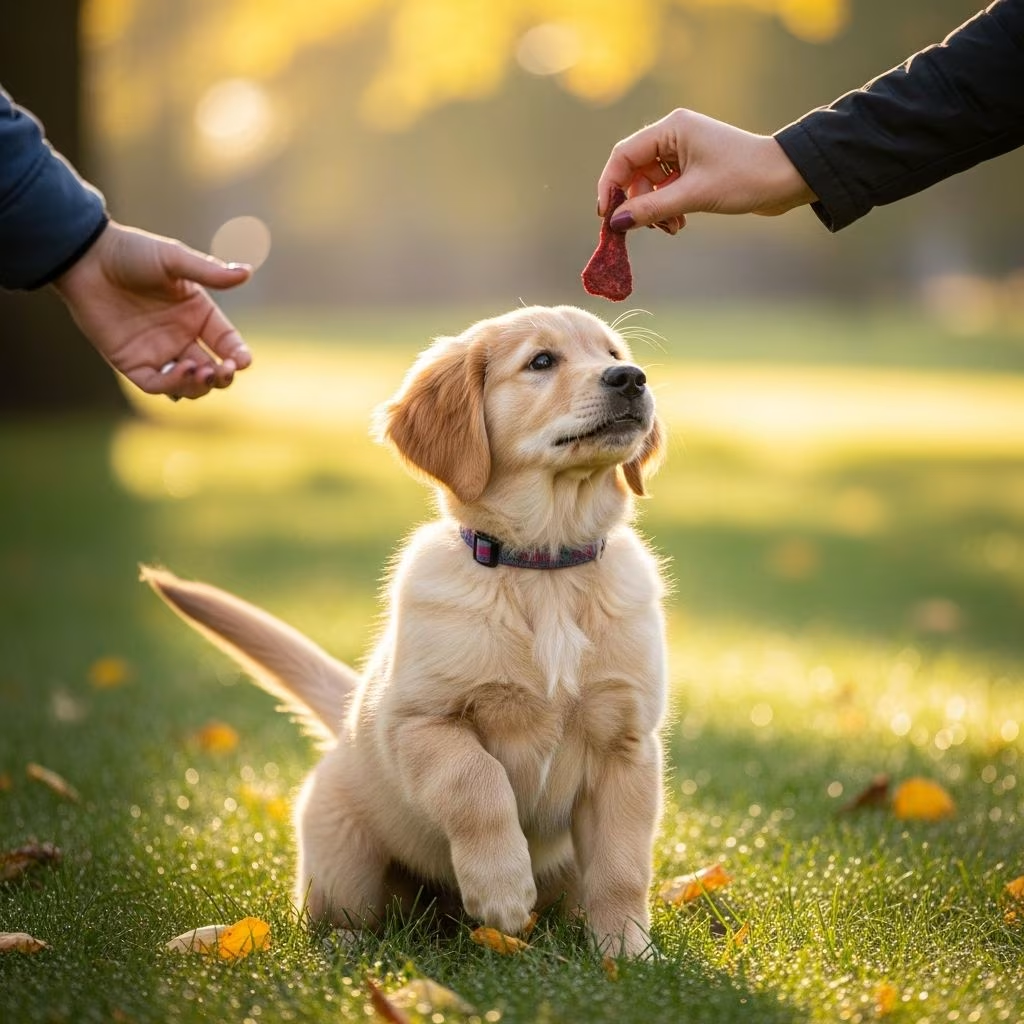
Teaching an excited puppy to sit is one of the most useful early skills you can introduce. A reliable sit helps your puppy learn self-control, makes daily life easier, and lays the foundation for more advanced training using humane, positive reinforcement methods backed by modern behavior science.
Why Teaching “Sit” Matters for Excited Puppies
“Sit” is more than a cute trick. It is a basic behavior that can help your puppy:
- Practice impulse control when they feel excited or overstimulated.
- Greet people politely instead of jumping up.
- Stay safer at doors, sidewalks, and busy environments.
- Focus on you and build a habit of checking in with their handler.
- Learn how training works through clear, consistent rewards.
Animal learning research shows that positive reinforcement—rewarding behaviors you like—encourages dogs to repeat those behaviors and improves welfare compared with punishment-based approaches.
Preparing to Train Your Puppy
Before teaching the sit cue, set the stage so your puppy can succeed. Preparation reduces frustration for both of you and makes learning faster and more enjoyable.
Choose a Quiet, Distraction-Free Space
Puppies are naturally curious and easily distracted, so begin training in an environment that makes it easier for them to concentrate. Ideal locations include:
- A quiet room indoors with the door closed.
- A calm corner of your living room or kitchen away from foot traffic.
- A hallway or small area with minimal visual and sound distractions.
Starting in a low-distraction environment aligns with standard dog-training best practice: gradually introducing more difficult settings only after the dog masters the skill in easier contexts.
When you move to a new environment (like a backyard or a different room), give your puppy a few minutes to explore and sniff before you begin. This reduces restlessness and allows them to focus better once training starts.
Have Treats or Toys Ready for Positive Reinforcement
Rewards are how you tell your puppy, “Yes, that’s what I wanted!” In positive reinforcement training, the reward marks the behavior and makes it more likely to happen again.
Prepare:
- Small, soft treats that are easy to chew and highly appealing.
- Multiple treat pieces so you can deliver several repetitions quickly.
- A favorite toy (like a tug or squeaky) if your puppy is more play-motivated.
Your energy and voice are also important rewards. Use a light, cheerful tone—if you feel a bit silly praising your puppy, you are likely doing it right. Enthusiastic verbal praise paired with treats or toys builds a strong association between training, fun, and success.
Keep Training Sessions Short (Five to Ten Minutes)
Puppies have short attention spans. Short, frequent sessions are much more effective than long, exhausting ones.
- Aim for five to ten minutes per session.
- Plan several brief sessions throughout the day instead of one long block.
- End the session on a “win,” such as a particularly good sit.
If you see your puppy starting to wander, lose interest, or get overly wound up, ask for one last simple sit, reward generously, and then end the session. Short, successful training aligns with recommendations from professional trainers and organizations like the Association of Professional Dog Trainers (APDT).
Step-by-Step Guide: Teaching Your Puppy to Sit
The following method uses a food lure (guiding with a treat), then adds a verbal cue and hand signal. This approach is widely used in modern dog training because it is clear, gentle, and easy for most puppies to understand.
| Step | What You Do | What Your Puppy Learns |
|---|---|---|
| 1. Start with a treat | Show a small treat near their nose. | Treats predict guidance and rewards. |
| 2. Guide them | Slowly move the treat up and back over their head. | Following your hand leads to the sit position. |
| 3. Reward and praise | Mark and reward as soon as their butt hits the floor. | Sitting makes good things happen. |
| 4. Give breaks | Stop before they get bored or frustrated. | Training stays fun and low-pressure. |
| 5. Add the cue | Say “sit” right before they move into position. | The word “sit” predicts the behavior and reward. |
Step 1: Start with a Treat
Begin with your puppy standing in front of you. Hold a small treat between your fingers so they can smell it but not grab it. The treat should be:
- Tiny (pea-sized or smaller).
- Soft and easy to swallow quickly.
- Smelly enough to be exciting.
High-value food rewards have been shown to increase motivation in dog training sessions, especially when teaching new behaviors.
Step 2: Guide Them into Position
Use the treat as a lure:
- Place the treat right at your puppy’s nose so they are focused on it.
- Slowly move your hand up and back over their head toward their tail in a straight line.
- Move slowly enough that their nose follows your hand without jumping or losing focus.
As they track the treat upward, their head lifts and their weight shifts back. Most puppies will naturally drop their rear end to the floor to keep their balance. This is the moment you are looking for.
The same hand motion you are using now will eventually become your hand signal for sit, even when there is no treat in your hand. Dogs are excellent at reading body language, so hand signals are a powerful communication tool.
Step 3: Reward and Praise Immediately
Timing is crucial. The instant your puppy’s butt touches the floor:
- Mark the behavior with a happy “Yes!” or a click from a clicker.
- Deliver the treat right away to reinforce that specific moment.
- Layer in praise and gentle touch they enjoy (chest rub, side of the neck, etc.).
A reliable marker signal (like a click or a consistent word) helps the puppy understand exactly which behavior earned the reward, which is a core principle of marker-based training.
Step 4: Give Them a Break
After a few good repetitions, give your puppy a quick break. Breaks can look like:
- A short game of tug or fetch.
- Time to sniff around the room.
- A quick cuddle session or chance to lie down.
The goal is to stop while your puppy is still having fun, not when they are tired or frustrated. This keeps training associated with positive emotions and reduces the risk of stress or avoidance.
Step 5: Add the Verbal Cue “Sit”
Add the verbal cue only after your puppy is reliably following the lure into a sit most of the time (around 80–95% success in a quiet setting). Then:
- Say “Sit” once in a calm, clear voice.
- Immediately use the same hand motion you used with the treat lure.
- When your puppy sits, mark and reward as before.
After enough repetitions, your puppy will begin to anticipate the behavior from the word alone. At that point, you can start to fade the lure by moving your hand in the same way but without food in it, and then rewarding from your other hand. This prevents your puppy from becoming dependent on seeing food before responding, which aligns with best practices in reward-based training.
Tips for Success: Building Positive Habits
Once your puppy understands how to sit, your focus shifts from simply “teaching the trick” to building a reliable habit that works in real-life situations.
Stay Consistent
Consistency helps puppies understand what is expected. To stay consistent:
- Use the same cue word (e.g., always “sit,” not “sit down” sometimes and “park it” other times).
- Maintain a similar hand signal each time.
- Reward the behavior generously while your puppy is still learning.
- Practice “sit” in different rooms, at different times of day, and with different people handling the puppy.
Repetition in varied contexts helps dogs generalize a behavior, so they respond reliably even when the situation changes.
Keep Sessions Short and Focused
Because puppies are easily overstimulated, brief, focused sessions work best:
- Stick with five to ten minutes of training at a time.
- Use a handful of high-quality repetitions instead of drilling until your puppy loses interest.
- Watch for signs of fatigue (yawning, wandering off, ignoring treats) and take a break when you see them.
This approach supports your puppy’s natural attention span and aligns with guidance from professional trainers and behaviorists.
Practice Daily
Daily practice is key to building a strong and reliable sit cue:
- Do several micro-sessions each day (e.g., morning, midday, evening).
- Incorporate sit into everyday routines, such as before meals, before going outside, or before greeting people.
- Gradually increase the difficulty by adding mild distractions or practicing in new environments once your puppy is solid in quiet spaces.
Regular, short training sessions help strengthen your dog’s understanding and create durable habits over time.
Be Patient and Kind
Patience is one of the most important training tools you have. Puppies are:
- Still learning how their bodies work.
- Adjusting to a new home and environment.
- Just beginning to understand human language and expectations.
Frustration, yelling, or physical corrections can harm your relationship with your puppy and are not recommended by veterinary behavior organizations that advocate for reward-based methods. Instead, if your puppy is struggling, make the task easier: move to a quieter place, use a better treat, or take a break and try again later.
Using “Sit” in Everyday Life
Once your puppy has a basic sit, use it in real-world scenarios to make the behavior more functional and reliable.
- Doorway manners: Ask for a sit before opening doors to go outside.
- Polite greetings: Ask visitors to only pet your puppy when they are sitting.
- Feeding time: Ask for a sit before you place the food bowl down.
- Leash transitions: Have your puppy sit before clipping on the leash or getting out of the car.
Each time your puppy sits in these contexts and is rewarded with access (to outside, people, food, or walks), the behavior becomes stronger and more automatic.
Frequently Asked Questions (FAQs)
Q: What if my puppy is too excited to sit?
If your puppy is bouncing around or jumping, move to a quieter area and wait for a second of stillness, then gently lure them into a sit and reward. If they truly cannot focus, give them an outlet first—like a brief play or sniff break—and try again with fewer distractions.
Q: How often should I train my puppy to sit?
Aim for three to six short sessions per day, each lasting five to ten minutes. You can also ask for quick sits during daily routines, like before meals and doors, to keep practice frequent but low-pressure.
Q: When can I stop giving treats for sit?
Once your puppy responds reliably in different places, you can begin to reward intermittently—sometimes with treats, sometimes with praise, toys, or access to fun activities. Make sure to still use treats occasionally so the behavior stays strong and your puppy remains motivated.
Q: My puppy only sits when they see a treat. What should I do?
Begin fading the lure by using the same hand motion without food in that hand and delivering the treat from the other hand after they sit. Over time, your puppy learns that the cue and behavior, not the visible treat, predict rewards.
Q: Is it okay to push my puppy’s rear end down to make them sit?
Pushing a puppy into position is not recommended and can be uncomfortable or confusing. Using a lure and rewarding voluntary movement is clearer, kinder, and supports better long-term learning, in line with modern reward-based training guidelines.
References
- AVSAB Position Statement on Humane Dog Training — American Veterinary Society of Animal Behavior. 2021-01-01. https://avsab.org/wp-content/uploads/2021/01/Humane_Dog_Training_Position_Statement_Download_-_10-6-14.pdf
- Ziv, G. The effects of using aversive training methods in dogs—A review — Journal of Veterinary Behavior. 2017-05-01. https://doi.org/10.1016/j.jveb.2016.10.006
- Teaching Your Puppy to Sit — Association of Professional Dog Trainers (APDT). 2020-06-01. https://apdt.com/teaching-your-puppy-to-sit/
- Companion Animal Psychology: Positive Reinforcement in Dog Training — Companion Animal Psychology / J. Martens. 2021-03-15. https://www.companionanimalpsychology.com/2019/03/why-dog-training-with-rewards-is-better.html



