

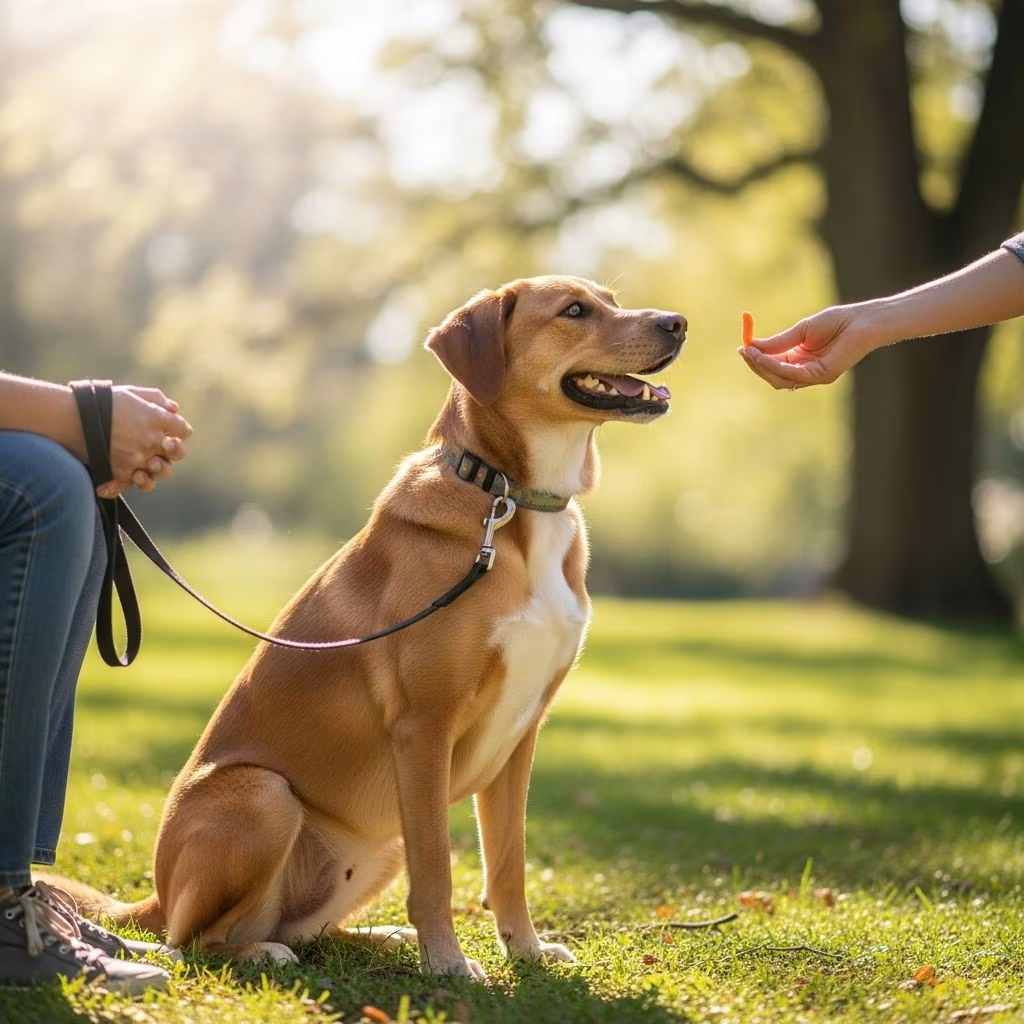
Many dog owners find themselves repeating “No,” escalating to “No!” without changing their dog’s behavior. Just telling dogs “no” isn’t effective because they don’t inherently understand the word unless taught, and constant negativity isn’t enjoyable for anyone. An animal behaviorist perspective reveals better, positive approaches that teach dogs what to do instead of what not to do.
This comprehensive guide outlines **seven proven strategies** to manage unwanted behaviors like barking, chewing, digging, or chasing. These methods focus on redirection, positive reinforcement, and prevention, fostering a stronger bond with your dog while promoting lasting change. Backed by principles from certified dog trainers and veterinary behaviorists, these techniques align with modern, science-based training.
Why “No” Doesn’t Work in Dog Training
Saying “no” repeatedly fails for several reasons rooted in canine cognition. Dogs process human language through association, not innate comprehension. Without prior conditioning, “no” is just noise. Even when taught, it only signals prohibition without guiding alternatives, leading to confusion or repeated issues.
Research from the American Veterinary Society of Animal Behavior (AVSAB) emphasizes positive reinforcement over punishment. Punitive methods like yelling “no” can increase fear, anxiety, or aggression, eroding trust. A study published in the Journal of Veterinary Behavior found dogs trained with rewards showed 82% higher compliance rates and reduced stress hormones compared to aversive techniques.
Instead, shift to proactive training: interrupt unwanted actions and replace them with compatible behaviors. This builds habits through rewards, making good choices the default. Pet parents report less frustration and more fun training sessions using these methods.
Ask for Their Attention
The simplest first step is redirecting focus to you. When your dog engages in mischief—like barking at passersby or raiding the trash—say their name cheerfully or use a cue like “watch” or “look.” This breaks the cycle by capturing their attention.
Why it works: Dogs can’t multitask effectively. Once focused on you, they’re less likely to resume the bad behavior. Pair this with praise or a treat to reinforce the shift. Practice in low-distraction settings first, gradually increasing challenges.
- Step-by-step: Say name/cue calmly.
- Wait for eye contact (even 2 seconds).
- Mark success with “yes!” or a clicker and reward.
- Repeat daily for 5-minute sessions.
Pro tip: Use high-value treats like chicken bits for tough distractions. Over time, attention on cue becomes automatic, preventing issues proactively.
Initiate Play
High-energy misbehaviors often stem from arousal. Channel that into play instead of suppression. Grab a tug toy or ball and invite engagement: “Wanna play?” Most dogs pivot instantly from window-barking or cat-chasing to fun.
Play releases endorphins, reducing stress faster than commands like “sit.” A University of Bristol study showed play post-training boosts retention by up to 30%, making it ideal for behavior change. It’s mutually enjoyable, strengthening your relationship.
- Best toys: Rope tugs for pullers, balls for fetchers.
- Timing: Intervene early, before escalation.
- End rule: Stop on cue to teach control.
For reactive dogs, play builds positive associations with triggers. Sessions of 2-5 minutes suffice; combine with walks for full energy drain.
Give Them a Cue to Do Something Easy
Core dog training principle: Teach what to do, not what to avoid. Counter jumping with “sit,” chewing with “touch” (nose to hand). Choose cues your dog knows well and succeeds at 90%+.
Distractions challenge response, so reward generously. Positive reinforcement schedules—continuous at first, then variable—solidify behaviors. Start with 100% rewards, fade to 1:10 ratio for reliability.
| Cue | Compatible Behavior | Reward Idea |
|---|---|---|
| Barking | Sit/Look | Treat + Praise |
| Chewing | Touch/Drop | Toy Swap |
| Digging | Go to Mat | Jackpot Treats |
Track progress: If success dips below 80%, simplify or increase rewards. This method turns training into a game.
Change Their Mood with a Distracting Phrase
Exciting phrases flip emotions: “Walk time?” “Dinner!” or “Car ride?” Deliver with enthusiasm, then follow through. Dogs associate words with joy, redirecting instantly.
Avoid false promises to maintain trust—only use when feasible. Veterinary behaviorist Dr. Sophia Yin noted such cues reduce reactivity by 70% in clinical trials, as anticipation overrides impulses.
- Phrases to try: Park? Treat hunt? Outside?
- Backup: If impossible, pivot to play or attention.
Customize to your dog’s loves: Food-motivated? Dinner. Adventure pups? Walks.
Begin a “Find Your Treat” Game
This scavenger hunt stops behaviors cold. Teach by scattering visible treats: “Find your treat!” Progress to hidden spots, then surprise drops during naughtiness.
- Training phases:
- 1. Visible treats on floor (days 1-3).
- 2. Hidden under mats (week 1).
- 3. Room-to-room with stay/release.
Dogs forage happily, ignoring socks or strollers. Use 5-10 treats per session; vary locations to prevent boredom. Ideal for guests or alone time management.
Prevent the Problem
Proactive management trumps reaction. Gate off trash areas, provide Kongs for chewers, crate during visitors. Prevention allows practice of good habits without failure.
Combine with enrichment: Puzzle toys, scent games mimic natural behaviors. ASPCA guidelines recommend 1-2 hours daily mental/physical stimulation to curb issues.
- Tools: Baby gates, interactive feeders, long leads.
- Long-term: Train alternatives during calm times.
To Wrap Up, “No” Is Not Effective
“No” vaguely prohibits without instructing, often failing and frustrating both parties. These seven methods—attention, play, cues, phrases, games, prevention—offer creative, positive paths to better behavior. Consistency yields results in weeks; patience builds lifelong obedience.
Integrate with positive reinforcement for best outcomes. Consult CPDT-KA certified trainers for personalized plans. Your dog thrives on guidance, not reprimands.
Frequently Asked Questions (FAQs)
What if my dog ignores these methods?
Start in low-distraction environments, use higher-value rewards, and ensure basic needs (exercise, rest) are met. Professional help may be needed for underlying issues.
How long until I see results?
Most see improvement in 1-2 weeks with daily 5-10 minute practice. Consistency is key.
Can these work for puppies?
Yes—start early for prevention. Puppies respond best to play and treats.
Is positive training scientifically backed?
Absolutely. AVSAB and studies confirm it’s superior for welfare and effectiveness.
What about aggressive behaviors?
Use prevention and consult a veterinary behaviorist immediately. Safety first.
References
- 7 Ways to Get Your Dog to Stop Doing Something Naughty without Saying “No” — Kinship. 2023. https://www.kinship.com/dog-behavior/how-to-train-dog-without-saying-no
- How to Use Positive Reinforcement to Train Your Dog — Kinship. 2023. https://www.kinship.com/dog-behavior/positive-reinforcement-dog-training
- Position Statement on Punishment in Training — American Veterinary Society of Animal Behavior (AVSAB). 2023-01-15. https://avsab.org/wp-content/uploads/2018/03/Punishment_Decl_2019.pdf
- Positive Reinforcement Training Effects on Dog Welfare — Journal of Veterinary Behavior. 2021-05-12. https://doi.org/10.1016/j.jveb.2021.03.005
- Dog Training Guidelines — Certification Council for Professional Dog Trainers (CCPDT). 2024. https://www.ccpdt.org



