How to Train Your Dog to Stop Jumping Up
Discover effective, positive strategies to curb your dog's jumping habit and promote calm greetings for a safer home.
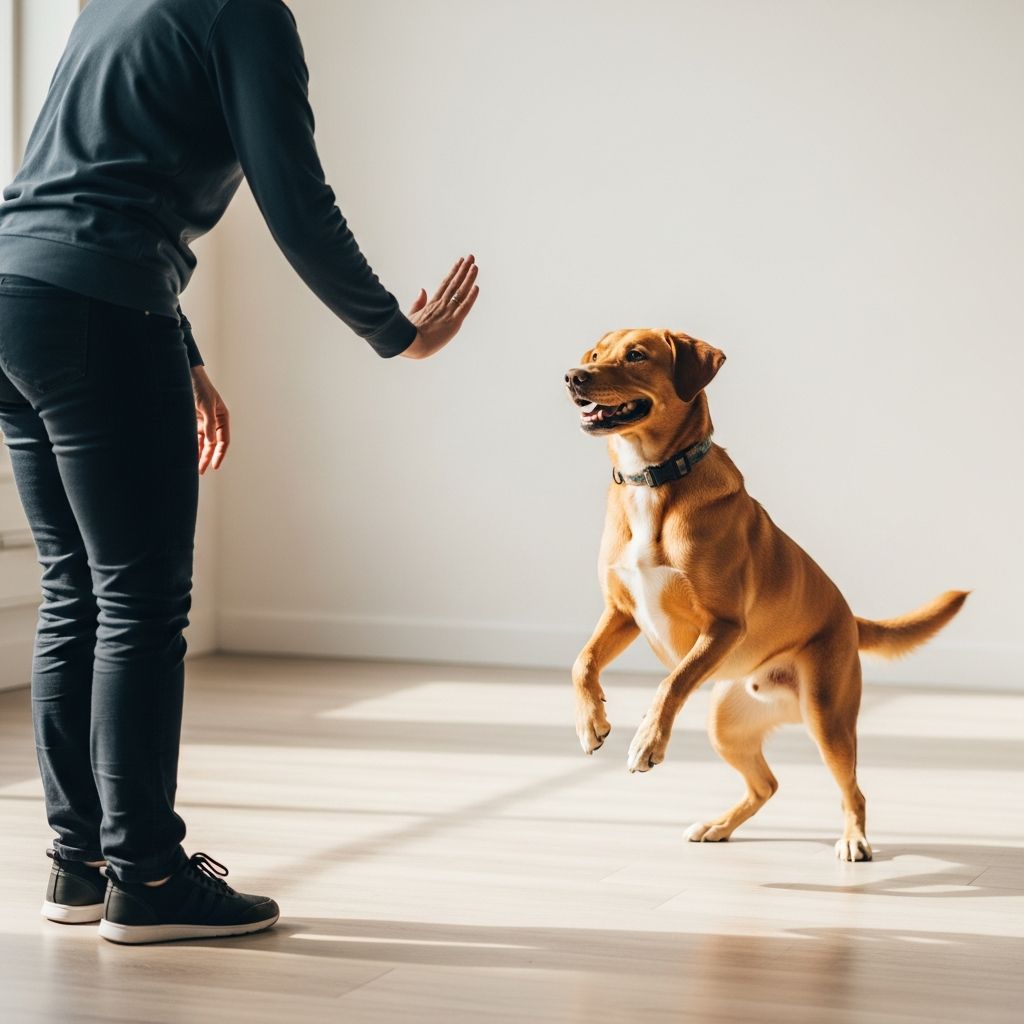
Dogs often jump up on people during greetings due to excitement, attention-seeking, or natural canine communication instincts. Effective training focuses on positive reinforcement, consistency, and preventing reinforcement of the unwanted behavior to encourage calm, four-paws-on-the-floor interactions.
Understanding the Roots of Jumping Behavior
Jumping is a common issue in dogs, particularly puppies, stemming from their innate desire to connect at face level during greetings. Shorter than most humans, dogs leap to reach noses or faces, mimicking how they greet other dogs. This behavior intensifies with excitement upon seeing owners return home or meeting visitors.
Attention plays a key role: even scolding or pushing away provides interaction, inadvertently rewarding the jump. For some dogs, unease around strangers prompts jumping as a coping mechanism or way to control movement in their space. Without early intervention, this habit solidifies, posing risks like knocking over children, elderly individuals, or causing scratches from paws.
- Excitement-driven jumps: Triggered by arrivals or play, leading to uncontrolled energy release.
- Attention-seeking: Learned when jumping yields pets, talk, or eye contact.
- Anxiety or control: Used to manage discomfort from new people or unpredictable motion.
Recognizing these triggers allows owners to address the underlying motivation rather than just the action.
Dangers of Unchecked Jumping Habits
Beyond annoyance, jumping creates safety hazards. Larger breeds can topple people, resulting in falls or injuries, especially to vulnerable household members. Claws may scratch skin or damage clothing, while persistent jumping erodes trust in social settings, limiting where the dog can comfortably join.
| Risk Factor | Potential Consequences |
|---|---|
| Large or energetic dogs | Knocking over guests, children, or seniors |
| Sharp nails | Scratches, tears in clothes, minor injuries |
| Inconsistent responses | Escalated behavior, confusion for the dog |
Addressing this promptly fosters better manners and prevents escalation into more challenging issues like leash reactivity.
Core Principles for Successful Training
Positive reinforcement forms the foundation: reward desired behaviors like sitting calmly while withholding attention for jumping. Consistency across all household members and visitors is crucial; mixed signals strengthen the behavior through variable reinforcement schedules, akin to slot machines.
Avoid punishment, as it heightens arousal or fear, worsening jumps. Instead, manage environments to prevent practice of bad habits and proactively teach alternatives.
Step-by-Step Training Techniques
1. Master the Ignore and Reward Method
When your dog jumps, turn away completely—no eye contact, talking, or touching. Wait for all four paws to hit the ground, then immediately praise and offer a treat or pet. This shifts reinforcement to calm behavior.
Practice daily: Have family members simulate greetings. Step through doors or approach excitedly, rewarding only grounded positions. Progress to longer calm periods before rewards.
2. Teach an Alternative: The Sit for Greeting
Train a rock-solid “sit” cue first in low-distraction settings. Use it during greetings: As excitement builds, cue “sit” and reward compliance with attention or treats. This diverts energy into a polite posture, fulfilling the dog’s need for interaction.
- Start sessions short: 5-10 reps, multiple times daily.
- Use high-value treats to compete with excitement.
- Practice with calm visitors first, advancing to high-energy scenarios.
3. Deploy the Scatter or Toss Technique
Redirect upward energy downward. Upon entering, toss treats or kibble on the floor, cueing “find it.” Sniffing prevents jumping, channeling arousal productively. Follow with calm interaction once settled.
Ideal for homecomings: Prepare treats in advance. Vary with toys for engagement. This builds positive associations with arrivals.
4. Incorporate Red Light, Green Light Game
Teach impulse control amid motion, a common jump trigger. “Green light” means energetic play or running; “red light” demands a sit or down-stay. Reward compliance, freezing movement if jumping occurs.
Great for households with kids: Practice transitions from high to low energy, preventing jumps during lively moments.
5. Management Tools for Prevention
While training, use leashes, baby gates, or crates to block jumping opportunities. Greet outside or in controlled spaces. Enlist guests: Instruct them to turn away and reward calm feet.
Exercise matters: Ensure daily physical and mental outlets to reduce pent-up energy fueling jumps.
Handling Specific Scenarios
Jumping at Guests
Prep visitors: Ask them to ignore jumps and reward sits. Position your dog on a leash for control, cueing sits as needed. Over time, fade the leash for reliable off-leash manners.
Puppy vs. Adult Dog Differences
Puppies learn quickest; start early before habits form. Adults may require more reps due to entrenched patterns but respond well to consistency. Patience yields results in weeks.
When Ignoring Doesn’t Work
If insecurity drives jumps, ignoring may increase anxiety. Combine with confidence-building: Pair greetings with toys or food scatters, gradually introducing calm interactions.
Common Mistakes and How to Avoid Them
- Inconsistent family responses: Hold a group meeting to align on methods.
- Reinforcing accidentally: No pets or talk during jumps, even negative.
- Rushing progress: Build skills in low-stakes settings first.
- Neglecting exercise: Tired dogs jump less; prioritize walks and play.
Advanced Strategies for Stubborn Cases
For persistent jumpers, introduce a “greeting cue” like a bell or sound signaling attention only on calm behavior. Use tethering: Secure dog to furniture, rewarding proximity without jumping.
Consult professionals if anxiety underlies behavior; certified trainers offer tailored plans.
Tracking Progress and Long-Term Maintenance
Log sessions: Note triggers, successes, and setbacks. Expect variability; reinforce intermittently for durability. Real-world tests like walks or parties solidify skills.
Frequently Asked Questions (FAQs)
How long does it take to stop jumping?
Most dogs improve in 1-4 weeks with daily practice, though full reliability may take months.
Is it okay to knee a jumping dog?
No; it risks injury and increases arousal. Stick to positive methods.
What if my dog jumps on other dogs?
Similar principles: Reward calm greetings, manage leashed intros.
Can treats cause other issues?
Use sparingly in training, transitioning to life rewards like walks.
Why does my dog regress around guests?
Novelty spikes excitement; practice with role-play and prep visitors.
Building a Calmer Canine Companion
Consistent application transforms jumpers into polite greeters. Focus on prevention, rewards, and understanding yields a safer, more enjoyable life with your dog.
References
- Dog Behavior Problems – Greeting Behavior – Jumping Up — VCA Animal Hospitals. 2023. https://vcahospitals.com/know-your-pet/dog-behavior-problems-greeting-behavior-jumping-up
- Jumping – Positively.com — Positively.com. 2022. https://positively.com/dog-training/article/behavior-problems-jumping
- How to Stop Your Dog from Jumping — Bark Busters. 2024. https://www.barkbusters.com/dog-training/southwest-orlando/how-to-stop-your-dog-from-jumping
- My dog jumps up at visitors, how can I stop him? — Goddard Veterinary Group. 2023. https://www.goddardvetgroup.co.uk/blog/my-dog-jumps-up-at-visitors-how-can-i-stop-him/
- How Do I Stop My Dog From Jumping? — Canine Body and Mind. 2024. https://www.caninebodyandmind.com/dr-beths-blog/how-do-i-stop-my-dog-from-jumping
Similar Articles








Read full bio of Sneha Tete