

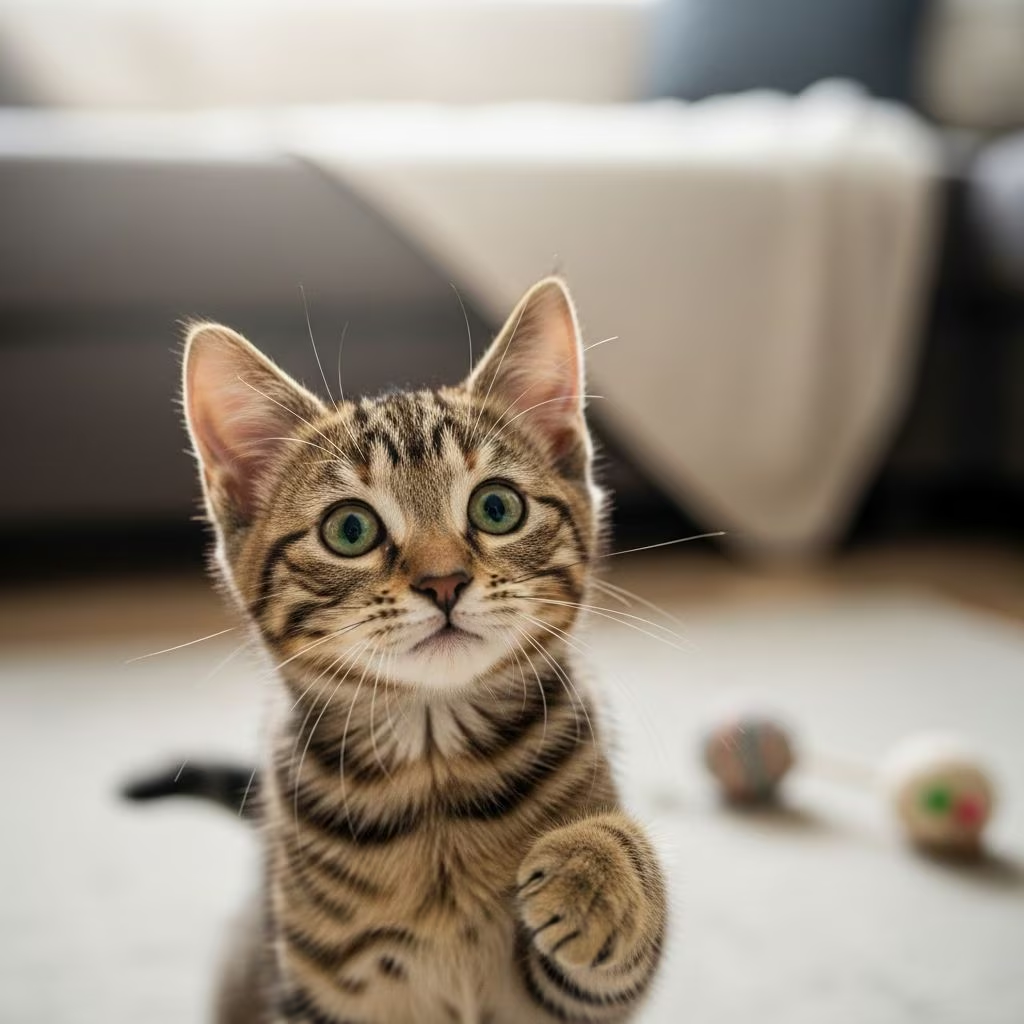
Training kittens early helps them develop positive behaviors, prevents bad habits, and strengthens your bond. Cat behaviorist Mieshelle Nagelschneider emphasizes that kittens are malleable at this stage, making them receptive to learning, unlike the more rigid approaches used for puppies.
Understanding your kitten’s behavior
Successful kitten training starts with grasping their natural instincts and impulses. Rather than fighting innate behaviors, set up the environment to channel them appropriately, directing energy toward suitable outlets.
Natural instincts and behaviors
Kittens exhibit instinctive actions like scratching for claw maintenance and territory marking. Without proper scratchers, they may target furniture instead. Biting, pouncing, and meowing are also hardwired predatory or communication behaviors that need redirection, not suppression.
Common kitten traits
Recognize key signals: scratching, biting during play, purring for contentment, meowing for attention, and back arching when startled or playful. Reading body language allows timely intervention and positive guidance during training sessions.
Importance of early training
Young kittens adapt easily before habits solidify. Older cats often resist change, so starting between 8 weeks builds lifelong compliance and prevents issues like destructive scratching or aggression.
Basic training techniques
Consistent training schedule
Maintain regularity without rigid timetables. Create a supportive environment for natural expressions like play-hunting or climbing. Daily short sessions, integrated into playtime, reinforce desired actions consistently.
Positive reinforcement techniques
Avoid punishment, which breeds fear and erodes trust. Reward good behavior immediately with treats, praise, or pets. This associates actions like using the litter box or scratching posts with positivity, encouraging repetition.
Basic commands and signals
Teach simple cues like “sit” by luring with a treat above their head until they sit, then reward. Use a cheerful voice and name association. Progress to “come” or “stay” similarly, building focus and responsiveness.
- Start sessions when the kitten is calm and hungry for motivation.
- Keep interactions brief (2-5 minutes) to match short attention spans.
- End on a high note with success to foster eagerness.
Advanced training techniques
Clicker training for kittens
Clicker training marks precise moments of desired behavior with a distinct click sound followed by a treat. Begin at 8 weeks: condition the clicker by pairing it with rewards alone, then apply to actions like eye contact or scratching the post. Sessions last 2-3 minutes. Advance to tricks: spin (lure in a circle), high-five (touch hand), roll over, or lie down. Cats learn slower on vocabulary but excel with consistent cues.
Steps for clicker success:
- Charge the clicker: Click and treat repeatedly without commands.
- Introduce cues: Click for natural behaviors like looking at you.
- Shape tricks: Reward approximations, refining gradually.
- Fade treats: Use praise or play intermittently.
Leash training and outdoor exploration
Start indoors with a well-fitted harness to build comfort. Reward tolerance, then short drags, progressing to walking. Once confident, venture outside in safe areas. This enables supervised exploration, preventing escapes and enriching stimulation.
- Choose escape-proof H-harness designs.
- Practice daily indoors for weeks before outdoors.
- Use high-value treats for initial associations.
Common training challenges to address
Overcoming fear and anxiety
Anxious kittens resist training due to stress. Ensure a secure base: hiding spots, pheromone diffusers, and gradual desensitization to stimuli. Address roots like loud noises or new people before commands.
Handling stubborn kittens
Stubbornness stems from low motivation or unmet needs. Identify rewards that excite—tuna treats, wand toys, or cuddles—and use them liberally. Patience and variety prevent boredom; consult behaviorists for persistent cases.
Redirecting unwanted behaviors
For issues like furniture scratching or counter jumping, never punish. Provide alternatives: sturdy posts, vertical spaces. Reward usage instantly. Instinct drives these; fulfillment redirects naturally.
| Problem Behavior | Root Instinct | Solution | Reward Strategy |
|---|---|---|---|
| Scratching furniture | Claw maintenance/marking | Sisal post nearby | Click/treat on use |
| Biting hands | Play predation | Interactive toys | Praise for toy engagement |
| Counter surfing | High vantage/curiosity | Cat shelves | Treats for perching there |
Frequently Asked Questions (FAQs)
Q: How early can I start training my kitten?
A: Begin at 8 weeks with short, positive sessions matching their attention span.
Q: Can all kittens learn tricks like dogs?
A: Yes, with clicker training, they master spins, high-fives, and more, though slower on verbal cues.
Q: What if my kitten ignores commands?
A: Boost motivation with preferred treats or play; ensure consistency and environment supports success.
Q: Is leash training safe for kittens?
A: Yes, starting young indoors builds confidence for safe outdoor time.
Q: How do I stop biting during play?
A: Redirect to toys, withdraw attention if persistent, and reward gentle interactions.
Training fosters a harmonious home. Patience, positivity, and understanding instincts yield a confident companion. Integrate sessions into daily routines for lasting results.
References
- How to Train a Kitten—Expert Advice — Kinship. 2023. https://www.kinship.com/cat-behavior/how-to-train-a-kitten
- How to Train Your Kitten (Yes, It’s Possible!) — Kinship (YouTube Transcript). 2023. https://www.youtube.com/watch?v=X77C2_H3mqs
- How to Train Your Kitten (Yes, It’s Possible!) — Kinship Video. 2023. https://www.kinship.com/video/how-to-train-your-kitten-yes-its-possible
- ASPCA: Kitten Behavior and Training — ASPCA.org. 2024-05-15. https://www.aspca.org/pet-care/cat-care/kitten-behavior-and-training
- AVMA: Feline Behavior Guidelines — AVMA. 2025-01-10. https://www.avma.org/resources-tools/pet-owners/petcare/feline-behavior



