

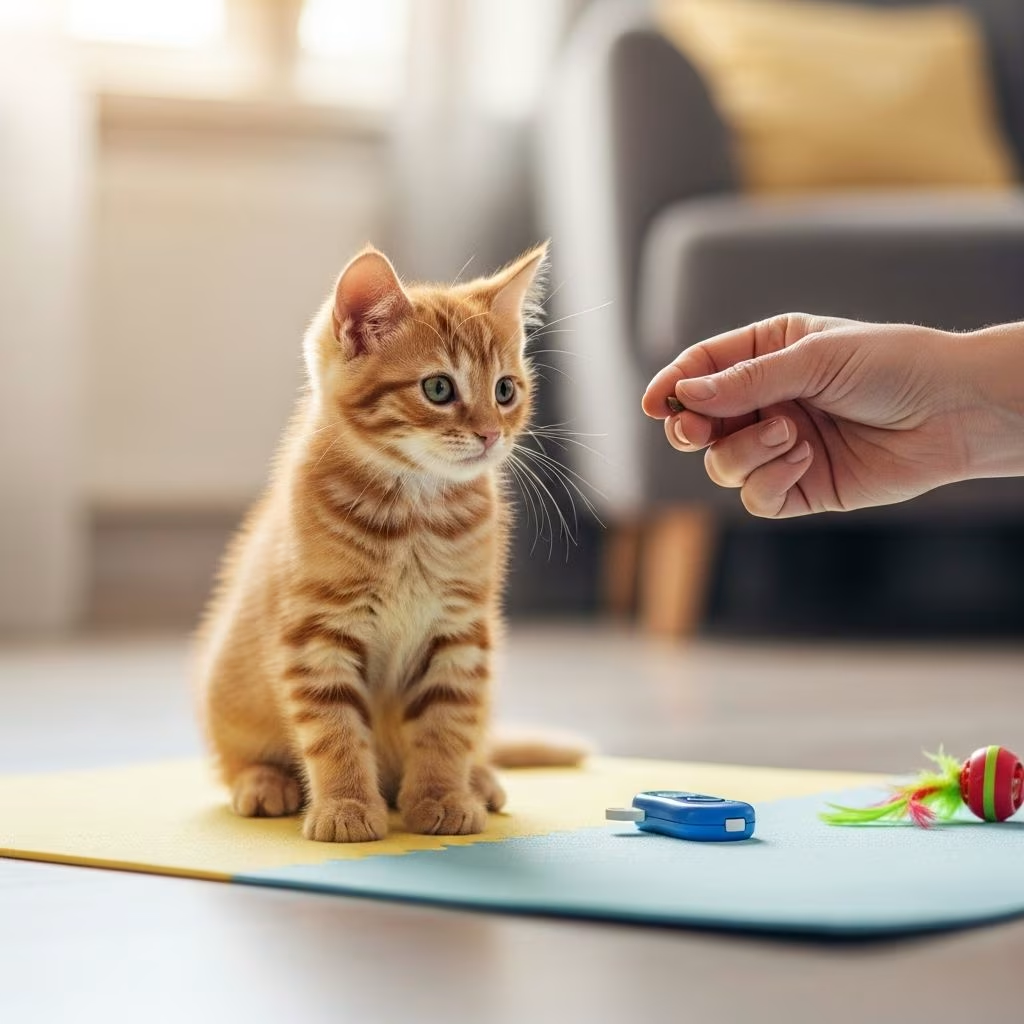
Training kittens early establishes positive behaviors, prevents unwanted habits, and builds a strong bond between you and your pet. Unlike puppies, kittens respond best to methods that respect their independent nature and natural instincts.
Understanding your kitten’s behavior
Successful kitten training begins with comprehending their innate behaviors and impulses. By creating an environment that channels these instincts appropriately, you can guide your kitten toward desirable actions while avoiding problem ones.
Natural instincts and behaviors
Kittens exhibit behaviors driven by survival instincts, such as scratching to maintain claws, mark territory, and stretch muscles. Without suitable alternatives like scratching posts, they may target furniture instead. Biting, pouncing, and meowing are also natural predatory or communication traits that require redirection rather than suppression.
Common kitten traits
Observe body language to anticipate actions: scratching signals maintenance needs, meowing seeks attention or food, biting during play tests boundaries, purring indicates contentment, and arching the back shows arousal or fear. Recognizing these helps in timely intervention and training.
Importance of early training
Kittens under 12 weeks are highly malleable, making this the ideal window for learning. Early intervention prevents stubborn habits in older cats, who resist change more readily. Training fosters confidence, reduces stress, and promotes lifelong good behavior.
Consistent training schedule
Maintain consistency without rigid timetables; instead, structure the home to encourage proper outlets for energy. Daily short sessions—2-5 minutes—match short attention spans. Integrate training into play and routines for natural reinforcement.
Positive reinforcement techniques
Avoid punishment, which erodes trust and increases fear. Reward desired actions immediately with treats, praise, toys, or affection. This associates good behavior with positive outcomes, encouraging repetition. Use a cheerful tone and timing to link rewards precisely.
Basic commands and signals
Teach simple cues like “sit,” “come,” or “stay” using lures such as treats held above the head for sitting. Pair verbal cues with gestures, rewarding compliance. Kittens learn through repetition and association, eventually responding to voice alone.
Advanced training techniques
Once basics are mastered, progress to sophisticated skills that provide mental stimulation and strengthen your relationship. These methods build on foundational positive reinforcement.
Clicker training for kittens
Clicker training marks exact desired moments with a distinct click sound, followed by a treat, accelerating learning. Start at 8 weeks: charge the clicker by pairing it with rewards repeatedly. Use for tricks like “spin,” “high-five,” “lie down,” or “roll over.” Sessions last 2-3 minutes to suit attention spans. Over time, fade treats, using the click as primary reinforcer.
- Step 1: Introduce clicker—click and treat without commands until kitten anticipates reward.
- Step 2: Add cues like “look” or “touch”—click at performance.
- Step 3: Practice daily, varying locations for generalization.
- Step 4: Chain behaviors for complex sequences.
Leash training and outdoor exploration
Begin indoors with a well-fitted harness to accustom your kitten to the sensation. Reward calm wearing with play or treats. Progress to short indoor drags, then supervised outdoor walks in safe areas. Never force; let curiosity drive exploration. This prevents escapes and enables safe adventures.
- Select escape-proof harness.
- Allow free movement indoors for 1-2 weeks.
- Attach leash, follow kitten’s lead.
- Venture outside gradually, rewarding bravery.
Common training challenges to address
Kittens face hurdles like fear or independence, but targeted strategies resolve most issues patiently.
Overcoming fear and anxiety
Anxious kittens from shelters or new homes may resist training. Create a secure space with hiding spots, pheromone diffusers, and gradual exposure. Build trust through play before commands. If severe, consult a vet to rule out health issues.
Handling stubborn kittens
Some kittens test limits due to high energy or personality. Identify motivators—food, toys, or petting—and use them exclusively for rewards. Increase session frequency but keep short. Persistence pays off; most respond within weeks.
| Challenge | Symptoms | Solution |
|---|---|---|
| Fear/Anxiety | Hiding, hissing, avoidance | Safe space, slow desensitization, vet check |
| Stubbornness | Ignoring cues, counter-surfing | High-value rewards, consistent redirection |
| Scratching | Furniture damage | Provide posts, reward use |
Frequently Asked Questions (FAQs)
Q: How young can I start training a kitten?
A: As early as 8 weeks, focusing on short, fun sessions to match their developing attention span.
Q: Can all kittens be clicker trained?
A: Yes, with patience; it’s effective for most due to precise marking of behaviors.
Q: What if my kitten bites during play?
A: Redirect to toys, yelp loudly to mimic kitten feedback, and reward gentle interactions.
Q: Is leash training safe for kittens?
A: Yes, when started young with proper gear; supervise to avoid hazards.
Q: How do I stop counter jumping?
A: Remove access, provide alternatives like cat trees, and train “off” cues with rewards.
Q: What treats work best for training?
A: Small, soft pieces of commercial treats, tuna flakes, or chicken; avoid overfeeding.
Training transforms chaotic kitten energy into harmonious companionship. Patience, consistency, and positivity yield a confident, responsive cat. Integrate these techniques daily for lasting results.
References
- Training Kittens with Positive Reinforcement — ASPCA. 2024-06-15. https://www.aspca.org/pet-care/cat-care/cat-training-tips
- Clicker Training for Cats — American Association of Feline Practitioners. 2023-11-20. https://catvets.com/resources/clicker-training-cats
- Kitten Behavior and Development — Cornell University College of Veterinary Medicine. 2025-01-10. https://www.vet.cornell.edu/departments-centers-and-institutes/cornell-feline-health-center/health-information/feline-health-topics/kitten-behavior
- Positive Reinforcement in Cat Training — International Association of Animal Behavior Consultants. 2024-03-05. https://iaabc.org/learn/articles/positive-reinforcement-cat-training
- Leash Training Cats Safely — Humane Society of the United States. 2024-08-22. https://www.humanesociety.org/resources/leash-training-your-cat



