

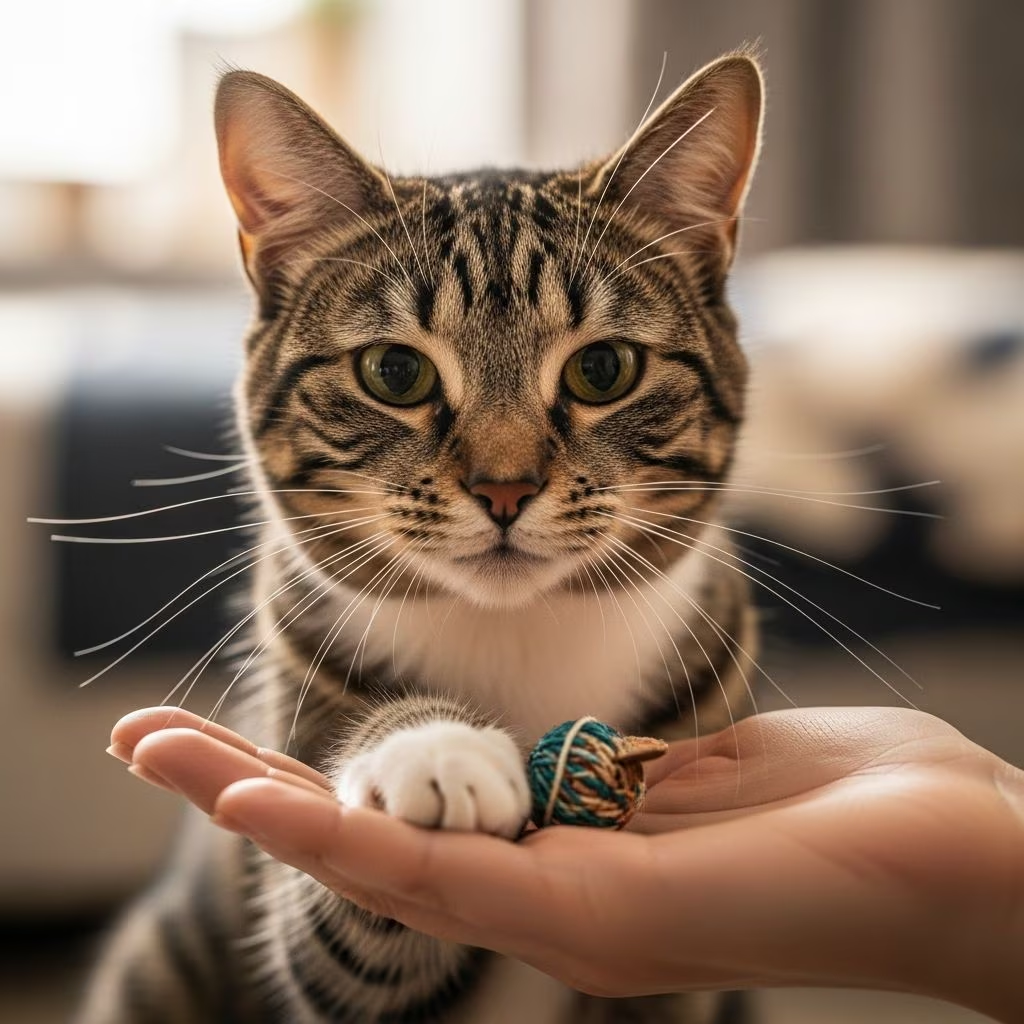
Cats bite for various reasons, including play, overstimulation, fear, or seeking attention. Training them not to bite requires patience, understanding feline body language, and positive reinforcement techniques rather than punishment, which can worsen behavior.
Why Do Cats Bite?
Understanding the root causes of biting is essential for effective training. Cats often bite during **play** when they misdirect predatory instincts onto hands or feet, especially if taught that human body parts are toys. **Overstimulation** occurs when petting continues past the cat’s tolerance, signaled by tail flicking, ear pinning, or skin twitching—stopping immediately prevents escalation. **Fear or defensive biting** happens when cats feel threatened, such as during handling by strangers or in stressful environments. **Attention-seeking** bites prompt interaction, while **redirected aggression** stems from frustration, like seeing outdoor cats through a window. Kittens bite exploratively, but adults may bite due to medical issues like pain or hyperthyroidism—consult a vet first to rule these out.
General Tips Before Starting Training
Prepare a distraction-free training space with water, litter, and hiding spots like boxes or cat trees. Use short 3-5 minute sessions between meals when your cat is hungry, rewarding with tiny high-value treats or wand toys that keep hands safe. Avoid hands as toys; opt for rod toys with feathers to mimic prey at a distance. Observe body language: dilated pupils, flattened ears, and thrashing tail indicate impending bites—withdraw calmly. Never yell or hit, as it increases fear and aggression.
- Schedule daily play sessions to expend energy and satisfy hunting instincts.
- Provide puzzle feeders and vertical spaces to reduce stress.
- Spay/neuter to minimize hormone-driven aggression.
- Ensure basic needs: clean litter, fresh food, and safe hiding spots.
Method 1: Redirect Biting to Appropriate Toys
The simplest first step is **redirection**. When your cat approaches to bite, toss a toy like a ping-pong ball, crinkled paper, or jingle ball away from you, praising gentle play. For interactive play, use wand toys swept quickly to imitate fleeing prey, keeping limbs out of reach. This teaches that toys, not people, are for biting and clawing.
Avoid common mistakes like dangling fingers or string from hands—cats conflate hand with toy. Increase play frequency to 10-15 minutes twice daily, incorporating chase games to tire them out. Praise gentleness lavishly with treats or pets under the chin, their preferred spot. Ignore bites by withdrawing attention; cats learn biting ends fun.
Method 2: Desensitization and Counterconditioning (DS/CC)
For **petting-induced bites** from overstimulation or fear, use DS/CC. Gradually expose your cat to touch at sub-threshold levels (no reaction) paired with rewards. Start with head pets during meals, progressing to body if relaxed, associating touch with positivity. Dr. Sally Foote demonstrates pairing brief pets on sensitive areas with food, observing for stress signs.
For stranger fear, have the person at a distance tossing treats, slowly closing gap as relaxation builds. Sessions must be slow-paced, especially with trauma history, building positive emotional states over time. Combine with a safe space for retreat.
Method 3: Clicker Training
**Clicker training** marks desired behaviors instantly with a clicker sound followed by treats, shaping alternatives to biting. If bites seek attention, train ‘high-five’ or ‘shake’: click and reward paw touches, ignoring bites. Consistency is key—reward only positives.
Step-by-step: Charge the clicker (click-treat repeatedly until cat anticipates), then lure behaviors like ‘sit’ or ‘touch’. For biting, click calm sitting or mat-going, fading lures over sessions. This builds confidence and reduces aggression.
Method 4: Target Training
**Target training** uses a stick for nose touches, replacing bites with appropriate actions. Click and treat nose-to-stick contacts, gradually shaping distance or duration. Kate Luse used this for fear aggression, redirecting focus from threats. Ideal for attention bites—cat targets stick instead of hand.
Method 5: Teach ‘Go to Mat’ for Calmth
To curb **redirected aggression**, train a ‘calm place’ cue. Place a mat/towel, lure with treats to it, clicking stays. Reward relaxation, using cue to de-escalate inter-pet tension or stress. Portable for multi-room use.
Training Kittens vs. Adult Cats
**Kittens** learn fastest: from 8 weeks, redirect all play to toys, never hands. Short, frequent sessions build habits before predatory drive strengthens. **Adults** need behavior modification assessing triggers—patience yields results, but vets check health first. Both benefit from routines meeting physical/emotional needs.
Play Therapy and Enrichment
Boost **object play** with household items: corks, pasta shells for batting. Wand toys for predatory satisfaction without risk. Puzzle feeders mimic hunting, reducing frustration bites. Daily exercise prevents pent-up energy causing nips. Vertical spaces and exploration build confidence.
Common Mistakes to Avoid
- Using punishment: Increases fear/aggression.
- Hand play: Teaches biting hands.
- Ignoring signals: Leads to surprise bites.
- Inconsistent responses: Confuses cat.
- Skipping vet checks: Misses pain causes.
Table: Biting Triggers and Solutions
| Trigger | Signs | Solution |
|---|---|---|
| Play | Ambush pounces | Wand toys, redirection |
| Overstimulation | Tail flick, ear flatten | Stop petting, DS/CC |
| Fear | Hissing, hiding | DS/CC, safe space |
| Attention | Gentle nips | Clicker alternatives |
| Redirected | Sudden attacks | ‘Go to mat’, enrichment |
Frequently Asked Questions (FAQs)
What if my cat bites during petting?
Stop immediately, withdraw calmly. Use DS/CC: pair brief pets with treats during meals, respecting boundaries like avoiding belly.
How long does training take?
Weeks to months; kittens faster. Consistency and short sessions key.
Is my cat aggressive if biting?
Rarely; usually play, overstimulation, or fear. Vet rule out pain.
Best toys for bite training?
Wand/rod toys, balls, no hand-held.
Should I punish biting?
No—ignore and redirect. Punishment worsens issues.
Helps multi-cat homes?
Yes, ‘go to mat’ reduces tension.
With these methods, most cats learn bite-free interaction. Persistence and positivity transform behavior for joyful companionship.
References
- How To Train Your Cat Not To Bite — cats.com. 2023. https://cats.com/how-to-train-your-cat-not-to-bite
- Stop Cat Biting Fast: The 3-Step Method I Use for All My Cats — YouTube (Jackson Galaxy). 2020-08-25. https://www.youtube.com/watch?v=b6VCEZvAigI
- How to Stop Your Cat from Biting — PetMD. 2024. https://www.petmd.com/cat/behavior/how-to-stop-a-cat-from-biting
- Five Ways to Stop a Cat Biting and Scratching — Animal Friends. 2023. https://www.animalfriends.co.uk/cat/cat-advice/cat-training-and-behaviour/four-ways-to-stop-a-cat-biting-and-scratching/
- How To Stop Unwanted Cat Behavior With Clicker Training — Cat School. 2023. https://www.catschool.co/cat-training-articles/how-to-stop-unwanted-cat-behavior-with-clicker-training



