

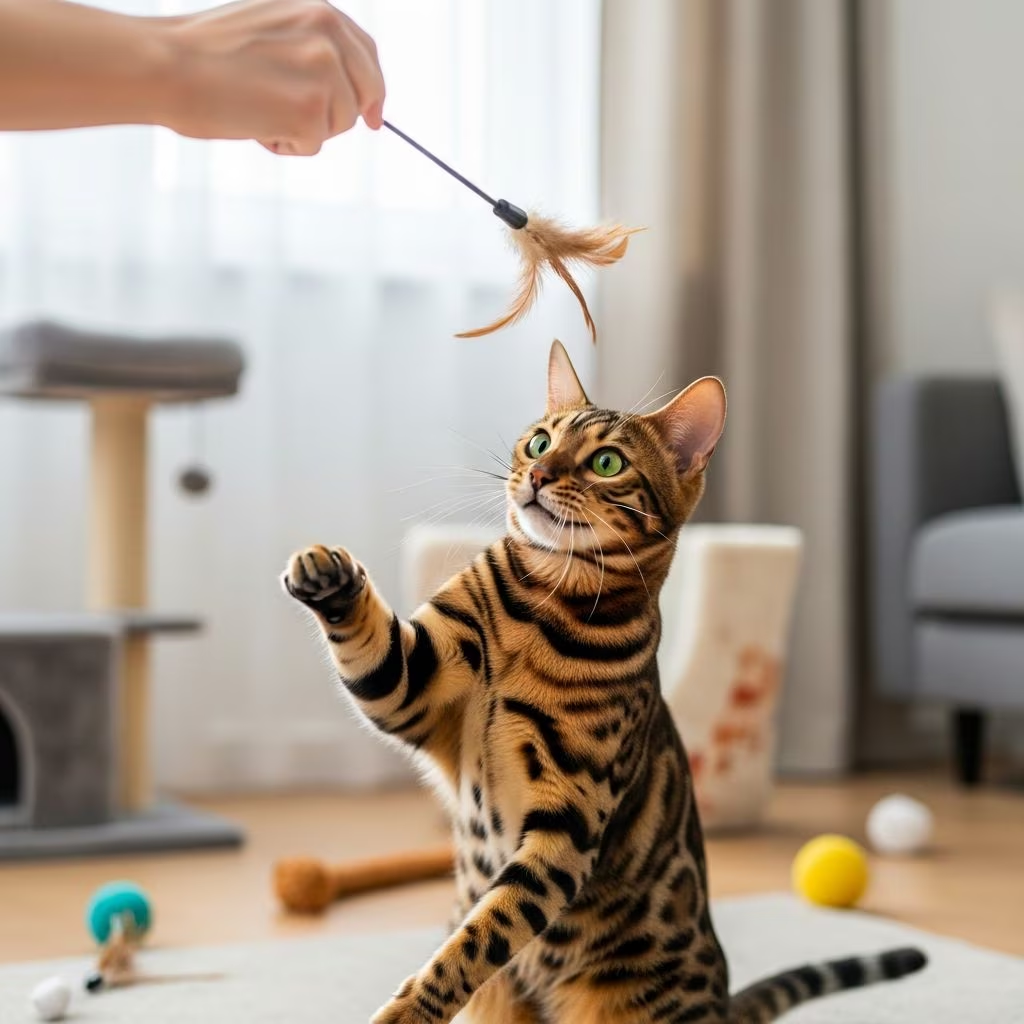
Bengal cats are known for their intelligence, athleticism, and spirited personalities. Unlike many other cat breeds, Bengals are highly trainable and enjoy mental stimulation. Their natural curiosity and desire to engage with their environment make them excellent candidates for various training techniques. Whether you want to teach your Bengal basic obedience commands or impressive tricks, understanding the right approach is crucial for success. This comprehensive guide will walk you through seven vet-approved training methods that work exceptionally well for Bengal cats.
Understanding Bengal Cat Intelligence and Learning Styles
Bengal cats possess remarkable cognitive abilities that set them apart from other feline breeds. They learn through multiple pathways, including associative learning, observational learning, operant conditioning, and habituation. Understanding how your Bengal learns is the first step toward successful training. Bengals thrive on interaction and mental challenges, making them responsive to structured training programs when approached correctly. Their independent nature, however, means they require patience and consistency to achieve desired results.
1. Embrace Positive Reinforcement as Your Foundation
Positive reinforcement is the cornerstone of effective Bengal cat training. This method involves rewarding your cat immediately after they perform a desired behavior, which encourages them to repeat it. The timing of the reward is critical—provide treats, praise, or their favorite toy within seconds of the correct action to create a strong association between the behavior and the reward.
Avoid punishment-based training methods, as Bengal cats are sensitive creatures that can develop stress and anxiety when subjected to negative reinforcement. This anxiety can actually hinder the training process and damage your relationship with your cat. Instead, focus on what your Bengal does right and reward those behaviors consistently. Rewards can include:
- High-value treats (such as tuna or wet food)
- Verbal praise and affection
- Access to favorite toys or play sessions
- Physical affection like petting or chin scratches
2. Master Clicker Training Techniques
Clicker training is a highly effective method for Bengal cats due to their quick learning ability. This technique uses a small handheld clicker device that creates a consistent, distinctive sound. The clicker serves as a bridge between the desired behavior and the reward, helping your cat understand exactly what they did correctly.
To begin clicker training, start with conditioning exercises. Sit with your Bengal in a quiet space and click the clicker device. Immediately after each click, provide a treat reward. Repeat this sequence approximately ten times. After several sessions of this conditioning, your cat will begin associating the clicking sound with an incoming food reward.
Once your cat understands the click-treat association, you can use the clicker to mark desired behaviors as they occur. The click sound marks the exact moment your Bengal achieves the desired behavior, creating a clear communication channel between you and your pet. This clarity helps Bengals grasp training concepts quickly, making clicker training ideal for teaching commands and tricks.
3. Utilize Target Stick Training
Target stick training is an excellent method of operant conditioning that teaches your Bengal to touch or follow a specific object. A target stick is simply a stick with a ball or other object at the end. Before your target stick sessions begin, place a piece of smelly food—such as tuna or your cat’s favorite wet food—on the ball at the end of the stick.
Start by getting your cat interested in the target stick using the aromatic food. Once they understand the concept of touching the stick, you can maneuver the stick over furniture so they have to jump to reach it. At this stage of training, reward them with a click and treat each time they touch the stick, establishing a strong history of reinforcement.
Eventually, you can fade out the frequent treats and offer them only randomly for following the target. However, during the initial training phase, consistent reinforcement is essential for establishing the foundation. Target training can be useful for teaching your cat to come when called or for guiding them to perform specific behaviors.
4. Implement Interactive Play as Training
Play is absolutely essential for Bengal cats, and incorporating interactive toys into training sessions channels their natural hunting instincts while building behavioral skills. Bengals are highly active and energetic cats that require both mental and physical stimulation. Interactive play-based training serves a dual purpose: it burns off their abundant energy while reinforcing good behavior and strengthening your bond.
Effective interactive toys for Bengal training include:
- Feather wands and string toys
- Laser pointers for chase games
- Puzzle feeders that combine play with mental engagement
- Ball toys that mimic prey movement
- Interactive treat-dispensing toys
By rotating toys regularly, you maintain your Bengal’s curiosity and prevent boredom, which is crucial for sustained training success. Make exercise sessions short but exciting to avoid overtaxing your cat. Keep sessions to five to ten minutes, as Bengals can lose focus when overworked.
5. Use Clicker Training as Your Training Foundation
Clicker training acts as a fantastic foundation for your cat to understand what training is all about. Once your Bengal knows how a clicker works and associates it with positive outcomes, subsequent training becomes significantly easier. The clicker becomes a universal communication tool that transcends specific behaviors or commands.
The beauty of clicker training lies in its clarity. Unlike verbal commands that can vary in tone and timing, the clicker provides a consistent signal that your cat can reliably associate with positive reinforcement. This consistency is particularly valuable for intelligent Bengals who quickly recognize patterns and respond to clear communication.
6. Teach Basic Commands and Obedience
Contrary to popular belief, Bengal cats are quite capable of learning basic obedience commands. With the right approach, you can teach your Bengal to respond to commands such as:
- Sit
- Stand on two legs
- Lie down
- Come when called
- Shake or shake hands
Start with simple instructions and gradually build up to more complex tasks. Use treats and praise to reinforce positive behavior consistently. Keep training sessions short—ideally under ten minutes—to maintain your Bengal’s focus and enthusiasm. Always end on a positive note to keep your cat motivated and eager for future training sessions.
Once your cat masters basic commands, you can progress to more advanced tricks such as spinning, meowing on command, giving kisses, and even rollovers. The possibilities are virtually limitless when you have established a strong foundation of positive reinforcement and clear communication.
7. Practice Patience and Consistency
Training a Bengal cat requires patience and unwavering consistency. While Bengals are intelligent, they are also independent thinkers who may not always follow commands immediately. It’s important not to become discouraged if your cat doesn’t pick up new behaviors right away. Every cat learns at its own pace, and individual personality differences can affect how quickly they respond to training.
Consistency is equally crucial. Use the same commands, the same reward system, and the same training signals every time you practice. This consistency helps your Bengal understand what is expected and builds strong behavioral associations. Short, frequent training sessions work best for maintaining focus and preventing frustration for both you and your cat.
As the owner, you must remain committed and creative throughout the training process. Each training session should be a mixture of fun and learning so that your Bengal cat remains motivated. This way, training becomes not just effective but also a joyful part of your life together.
Advanced Training Techniques for Bengal Cats
Beyond basic training, you can explore advanced behavioral shaping methods. Shaping involves gradually reinforcing closer approximations of a desired behavior until the final behavior is achieved. Chaining teaches a series of behaviors in a specific order to achieve a desired outcome. Discrimination training teaches your cat to respond to specific cues or stimuli, while generalization transfers a learned behavior from one context to another.
Modeling—demonstrating a desired behavior for your cat to imitate—can be effective, as can fading, which gradually reduces the use of prompts or rewards as behavior becomes more consistent. These advanced techniques allow you to train increasingly complex behaviors and tricks.
Harness and Leash Training for Bengal Cats
Many Bengal owners want to take their cats for walks, and harness and leash training makes this possible. Begin by desensitizing your cat to the presence of the harness. Simply place it in the room and use your target stick to get your Bengal close to it. Reinforce your cat for getting near the harness and for eventually touching it.
Take your time with this process. Use your target stick to guide your cat to pass by the harness, touching it with their head and the top and sides of their body. Eventually, place the harness over your cat and reinforce them for wearing it. You can use the target to guide your cat’s face and neck through the harness hoop.
Once your Bengal is comfortable wearing the harness, introduce the leash gradually by rewarding your cat for walking calmly on it. Start indoors in a familiar environment before venturing outside. With patience and consistency, you can teach your Bengal to walk on a leash just like a dog.
Addressing Common Training Challenges
Bengal cats may present specific training challenges due to their high energy and independent nature. If your cat becomes bored during training, switch up your techniques and introduce new toys or rewards. If your Bengal seems overstimulated, shorten your training sessions and allow more recovery time between sessions.
Remember that every Bengal is unique. Some may excel at clicker training, while others respond better to target stick methods or interactive play. Observe your cat’s preferences and adapt your approach accordingly. The goal is to create a positive, enjoyable learning experience that respects your Bengal’s individual personality and learning style.
Frequently Asked Questions
Q: At what age can I start training my Bengal cat?
A: You can begin basic training with Bengal kittens as early as 8-12 weeks old. Start with simple exercises like clicker training and target stick introduction. Young Bengals are particularly receptive to learning and habit formation.
Q: How long should Bengal cat training sessions be?
A: Keep training sessions to 5-10 minutes maximum. Bengals have shorter attention spans and can become frustrated or bored with longer sessions. Multiple short sessions throughout the day are more effective than one long session.
Q: Can Bengal cats really learn to walk on a leash?
A: Yes, Bengal cats can learn to walk on a leash with proper desensitization and positive reinforcement. Start with harness training indoors, gradually introduce the leash, and reward calm walking behavior consistently.
Q: What treats work best for Bengal cat training?
A: High-value treats like tuna, wet food, or specially formulated training treats work best. Use small pieces so your Bengal doesn’t feel overfed during extended training sessions. Vary treats occasionally to maintain interest.
Q: What should I do if my Bengal cat ignores commands?
A: If your Bengal ignores commands, try using higher-value rewards, ensure your commands are clear and consistent, and keep sessions shorter. Never use punishment. Consider consulting a professional cat trainer if challenges persist.
Q: Can I use punishment to train my Bengal cat?
A: No, punishment is not recommended for Bengal cats. They are sensitive animals that respond poorly to negative reinforcement, which can create anxiety and stress. Positive reinforcement is always the most effective approach.
References
- Bengal Cat Training Guide — Iconic Bengal Cat Breeders. 2024. https://iconicbengalcatbreeders.com/bengal-cat-training-guide/
- Unlock Fun Training Techniques for your Bengal Cat — Purebred Kitties. 2024. https://purebredkitties.com/blogs/bengal-cat/training-techniques-that-work-well-for-bengal-cats
- How to Train a Bengal Cat: 7 Vet-Approved Tips — Catster. 2024. https://www.catster.com/lifestyle/how-to-train-a-bengal-cat/
- Training a Bengal cat: Practical tips — Flappie. 2024. https://flappiedoors.com/en/blogs/katzenerziehung/bengal-katze-erziehen



