

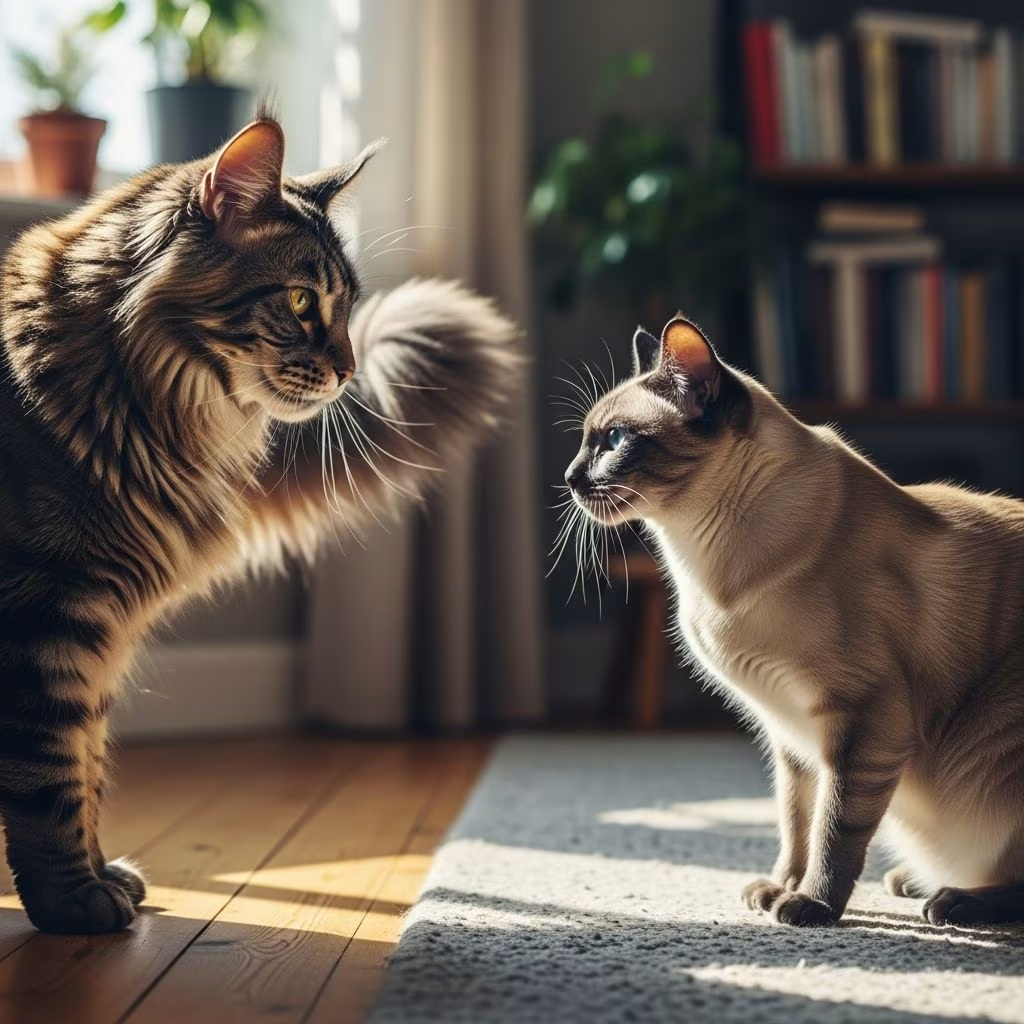
In multi-cat households, understanding cat social dynamics is crucial for harmony. While many owners perceive one cat as the ‘boss,’ true dominance in cats differs from pack animals like dogs. Cats do not form strict hierarchies but exhibit behaviors influenced by personality, resources, and environment. This guide explores signs of dominant behavior, common misconceptions, and strategies to foster peaceful coexistence.
Understanding Dominance in Cats
Dominance refers to a relationship where one animal uses force or aggression to control another’s access to resources, leading to submission. However, cats lack a rigid hierarchical structure seen in wolves or dogs. Instead, interactions depend on individual personalities, motivations, health issues, resource availability, and past experiences.
Confident cats may intimidate timid ones but submit to bolder peers, creating fluid dynamics rather than a linear ‘pecking order.’ For instance, around food, a cat blocking the bowl isn’t asserting superiority but guarding territory against perceived outsiders. Providing ample resources like multiple bowls, litter boxes, and perches prevents such conflicts.
Signs of a Dominant Cat
Dominant cats monopolize resources using active and passive aggression. These behaviors often emerge during social maturity (2-4 years), as cats claim territory. Key indicators include:
- Vocalizations: Hissing, growling, snarling to warn others away.
- Physical aggression: Swatting, biting, chasing across the home.
- Passive aggression: Staring intently, blocking doorways or paths, sitting on another cat, pushing from beds.
- Marking behaviors: Urine spraying, excessive grooming (allorubbing) to assert ownership.
Observe patterns: A dominant cat pursues others, guards food, demands attention, or climbs atop companions. These actions secure preferential access to food, resting spots, and human interaction.
Myths About Cat Dominance
Owners often misinterpret behaviors. Eating first doesn’t mean dominance; it may reflect confidence or habit. Resource guarding stems from territorial instincts, not hierarchy. Cats are opportunistic solitary hunters, prioritizing personal resources over group leadership.
In multi-cat homes, assertive cats target shy ones selectively. No cat ‘ranks up’; dynamics shift with context, like health or new stressors.
When Dominant Behavior Becomes Problematic
Resource scarcity causes most conflicts. Limited food, litter boxes, or attention frustrates cats, prompting control tactics like swatting passersby or blocking litter access. This leads to stress, inappropriate elimination, or fights.
Cats thrive on autonomy. Scheduled meals or indoor restrictions heighten tension, pushing confident cats to dominate for security. Signs of issues: Nervous cats avoiding trays, peeing outside boxes, or hiding.
How to Manage Dominant Cats in Multi-Cat Homes
Equalize access to reduce tension:
- Supply resources generously: One litter box per cat plus one extra; multiple feeding stations.
- Distribute vertically: Shelves, cat trees for territory division.
- Feed separately if guarding occurs.
- Enrich environment: Toys, scratching posts, windows for stimulation.
- Monitor health: Pain can mimic aggression; vet checks essential.
Ignore demands for attention to avoid reinforcing. Use positive reinforcement for calm interactions. If severe, consult behaviorists.
Dominance Towards Humans: Fact or Fiction?
Cats don’t dominate humans like they might peers. Demanding meows or blocking paths exploit routines, not establish rule. If meowing wakes you for food, it persists because it works. Cats manipulate via learned responses, not innate superiority.
Signs like staring, scratching, or claiming spots signal confidence or habit, not challenge. Respond firmly: Ignore yowls, redirect scratches with toys. Punishment worsens issues; consistency reestablishes balance.
| Behavior | In Multi-Cat Homes | Towards Humans |
|---|---|---|
| Blocking Access | Guards litter/food from peers | Claims lap/doorway by habit |
| Vocal Demands | Hissing/growling at rivals | Yowling for food/attention |
| Physical Contact | Swatting/chasing | Scratching if ignored |
Age and Development of Dominance
Dominance appears early but peaks at 2-4 years. Kittens test boundaries; adults solidify territories. Spaying/neutering reduces intensity, though personality endures. Watch for changes post-adoption or illness.
Health Factors Influencing Behavior
Arthritis, dental pain, or hyperthyroidism can cause irritability mistaken for dominance. Less confident cats yield due to discomfort. Annual vet exams rule out medical roots.
Creating a Peaceful Multi-Cat Environment
Success stories highlight prevention:
- Slow introductions for new cats.
- Puzzle feeders for mental engagement.
- Scent swapping before mingling.
- Calming pheromones (Feliway).
Track interactions via journals. If fights escalate, separate temporarily.
Frequently Asked Questions (FAQs)
What are clear signs my cat is dominant?
Dominant cats hiss, swat, block access, and monopolize resources like food or laps.
Do cats have a pack leader?
No, cats lack hierarchies; behaviors arise from resources and personality.
How do I stop resource guarding?
Provide multiples of everything: litter boxes, bowls, perches.
Is my cat dominating me?
Unlikely; it’s learned manipulation. Ignore demands, reward calm.
When to see a vet or behaviorist?
If aggression increases, elimination issues arise, or sudden changes occur.
Conclusion: Harmony Through Understanding
Recognizing true dominance empowers owners to adjust environments, minimizing stress. Ample resources and patience turn potential rivals into companions.
References
- How To Tell Which Cat Is Dominant — Cats.com. 2023. https://cats.com/how-to-tell-which-cat-is-dominant
- 6 Signs Your Cat Thinks They’re the Boss of You — Feline Fanatics (YouTube). 2024-08-14. https://www.youtube.com/watch?v=X9O7KS-EbP4
- Are you being controlled by your cat? — Petplan. Accessed 2026. https://www.petplan.co.uk/cat-insurance/cat-care-and-advice/cat-dominance-behaviour.html



