

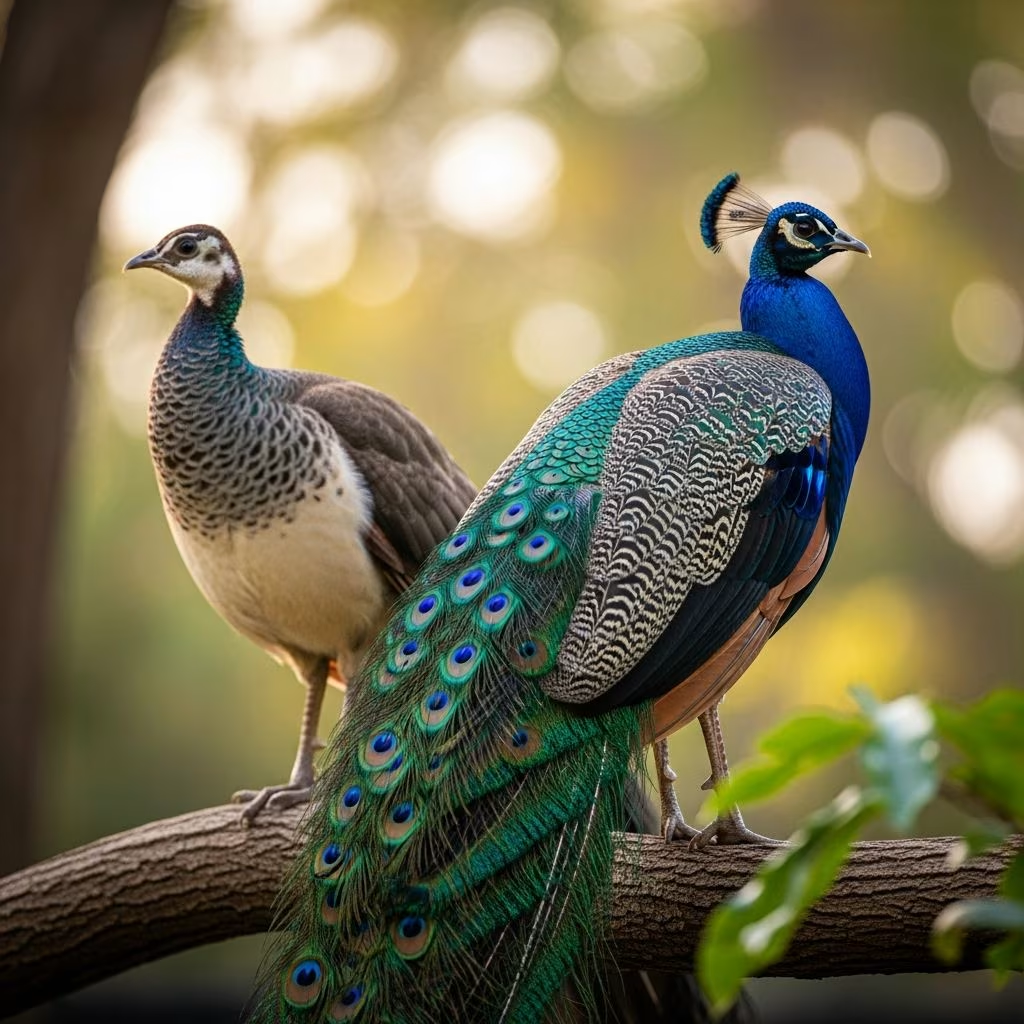
How to Tell the Sex of a Bird
Determining the sex of your pet bird can be surprisingly challenging, even for experienced bird owners. Unlike many other pets, most male and female birds look remarkably similar, making visual identification difficult without expert knowledge. Whether you’re a new bird parent or an experienced aviculturist, understanding the various methods available to determine your bird’s sex is essential for proper care, breeding considerations, and understanding your feathered companion’s behavior.
The difficulty in sexing birds stems from the fact that the majority of bird species are monomorphic, meaning males and females appear nearly identical in size, plumage, and external characteristics. This is why many bird owners turn to multiple methods—combining observation, behavioral analysis, and modern diagnostic testing—to accurately determine their bird’s gender.
Visual Differences Between Male and Female Birds
While many bird species make visual sexing nearly impossible, some birds do display noticeable physical differences between males and females. These differences often relate to evolutionary advantages and survival strategies.
In many species, male birds exhibit brighter, more vibrant plumage compared to their female counterparts. This coloration serves an important purpose: the bright colors help males attract mates during the breeding season. Female birds, conversely, typically display duller coat colors that allow them to blend seamlessly into their surroundings while building nests or protecting their young.
However, relying solely on visual inspection requires significant expertise and time investment. For many popular pet bird species, particularly parrots, these color differences are either absent or so subtle that they escape the notice of casual observation.
Species-Specific Visual Markers
Budgies (Budgerigars): One of the clearest visual indicators appears in budgies, where the cere—the fleshy area above the beak—provides reliable gender identification in adults. Males typically display bright blue ceres, while females show tan, white, or brown coloring. However, genetic mutations like albinism can obscure this distinction, making it unreliable in all cases.
Cockatiels: Female cockatiels possess distinctive tail markings that males lack, and they may exhibit quieter behaviors with nesting tendencies. Males tend to sing, whistle, and mimic more frequently than females. Yet even these differences can be subtle and are not foolproof, particularly in non-standard color morphs.
Finches and Canaries: Male finches generally display more vibrant plumage around the face and chest area, while females appear noticeably duller. In canaries, males produce complex, sustained songs especially during breeding season, whereas females typically only chirp and rarely sing in the same manner.
Exotic and Dimorphic Parrots: Some parrot species make sexing straightforward; eclectus parrots, for example, display obvious dimorphism with males being bright green and females being red and blue. However, many popular species like African greys and macaws are monomorphic and cannot be reliably sexed by appearance alone.
Behavioral Clues and Vocal Indicators
Beyond physical appearance, behavioral characteristics and vocalizations can provide valuable insights into your bird’s sex, though these methods require careful, prolonged observation.
Singing and vocalization patterns offer one of the most reliable behavioral indicators, particularly in species like canaries and some finch varieties. Male birds typically produce more complex, sustained vocalizations, especially during breeding season. However, this method has limitations: young or stressed males might sing less frequently, and some females can develop partial songs under certain conditions, making this approach more reliable when paired with visual observation over time.
Nesting behaviors also provide clues, with female birds often displaying stronger nesting instincts and tendencies to create nesting spaces. Male birds, conversely, may show more aggressive territorial behaviors during breeding season.
It’s important to note that behavioral observation alone is rarely sufficient for definitive gender identification, especially with young birds or juvenile chicks where behavioral patterns are not yet fully developed.
DNA Sexing: The Most Reliable Method
When visual cues and behavioral observation prove inconclusive, DNA sexing offers the most accurate, non-invasive, and economical method for determining your bird’s sex. This test has become the gold standard in avian gender identification and is increasingly accessible to bird owners worldwide.
How DNA Sexing Works
DNA sexing is a non-surgical laboratory test that identifies a bird’s gender by analyzing its chromosomes. Unlike mammals that use XY chromosomes, birds possess a unique chromosomal system: females have ZW chromosomes while males have ZZ chromosomes. The genetic sexing technique specifically amplifies the CHD gene sequence using PCR (polymerase chain reaction), which exists on both sex chromosomes in birds.
The test requires only minimal biological material—either a few feathers or two small drops of blood from your bird. This minimally invasive approach means your bird experiences virtually no stress or discomfort during sample collection.
Advantages of DNA Sexing
- Speed: Results can be obtained in as quickly as 48 hours, allowing you to know your bird’s sex within two days of sample submission.
- Accuracy: DNA sexing is highly precise and eliminates guesswork, providing definitive results whether your bird is dimorphic or monomorphic.
- Non-invasive: Unlike endoscopy, DNA testing requires no sedation, anesthesia, or surgical incisions, making it safe for birds of all ages.
- Age-appropriate: PCR-based DNA tests can be performed on birds at any age, including newly hatched chicks where behavioral or visual sexing would be impossible.
- Cost-effective: Compared to veterinary surgical procedures, DNA sexing is considerably more economical.
- Reliability for all species: DNA sexing works equally well for monomorphic species where visual identification is impossible.
The DNA Testing Process
Collecting a DNA sample is straightforward and requires no special training. Most commonly, veterinarians or bird owners collect 3-5 feathers from the bird or perform a simple blood draw. The samples are then sent to a laboratory where trained professionals extract the DNA and analyze it for sex-specific chromosomes. Results are typically provided within 48 hours.
For optimal results, it’s essential to follow proper sampling guidelines as provided by your testing laboratory. Professional laboratories with proper equipment and experienced technicians provide the most reliable outcomes.
Veterinary Methods for Sex Determination
When visual cues and behavioral observation aren’t sufficient, and DNA testing isn’t immediately available, veterinarians employ several advanced diagnostic techniques.
Endoscopy
Endoscopy involves inserting a small camera into the bird to directly visualize internal reproductive organs, providing highly accurate identification. However, this method requires sedation or anesthesia and necessitates a small surgical incision. Due to these invasive requirements and associated risks, endoscopy is typically reserved for cases where other methods have failed. Additionally, endoscopy carries higher costs and potential complications compared to non-invasive alternatives.
Ultrasound
Ultrasound represents a noninvasive imaging technique used primarily for larger birds and mammals to detect internal reproductive structures like testes or ovaries without surgery. This method provides visual confirmation of internal reproductive anatomy and can be particularly useful for birds too large or too valuable to subject to more invasive procedures.
DNA Analysis via Laboratory Testing
As discussed previously, DNA sexing through laboratory analysis has largely become the preferred veterinary method for determining bird sex due to its reliability, minimal invasiveness, and relatively low cost compared to surgical alternatives.
Species-Specific Considerations
Different bird species present unique challenges and opportunities for sex determination. Understanding your specific bird species is the primary step in identifying its gender.
Dimorphic Species: Birds with obvious sexual dimorphism—such as eclectus parrots or certain finch species—allow for relatively easy gender identification through visual inspection alone when combined with behavioral observation.
Monomorphic Species: Birds that appear identical between sexes, including African greys, macaws, and many cockatoo species, require either DNA testing or veterinary imaging for definitive sex determination.
For breeders and serious aviculturists planning breeding programs, knowing the sex of each bird is essential. This is particularly true for chicks in their early months of life, when behavioral traits haven’t fully developed and visual differences are impossible to assess.
Why Knowing Your Bird’s Sex Matters
Understanding your bird’s sex has practical implications beyond simple curiosity. Knowing your bird’s gender helps with:
- Appropriate naming: You can give your feathered friend a name that matches their actual sex.
- Breeding decisions: If you’re involved in aviculture, knowing sex is essential for responsible breeding programs.
- Behavioral understanding: Male and female birds often exhibit different behavioral patterns, particularly during breeding season, which can help you better understand and manage your pet’s needs.
- Medical and nutritional planning: Some health considerations and nutritional requirements may differ between males and females.
- Hormone management: Understanding your bird’s sex helps with monitoring and managing hormonal behaviors if they become problematic.
Consulting with Your Veterinarian
When you’re uncertain about your bird’s sex, the most reliable course of action is to consult with an avian veterinarian. Your vet can provide expert guidance based on your specific bird species and individual characteristics. They can recommend the most appropriate testing method for your situation, whether that’s careful observation combined with behavioral analysis, DNA testing, or advanced imaging techniques.
Veterinarians with exotic animal experience are particularly valuable resources, as they can combine careful observation with advanced diagnostics like ultrasound and DNA testing to deliver clear, reliable results.
Frequently Asked Questions
Q: Can I visually determine my bird’s sex at home?
A: For some species like budgies or cockatiels, certain visual markers can help indicate sex. However, most bird species are monomorphic, meaning males and females look identical. Visual determination requires expertise and is often inconclusive, so professional DNA testing is recommended for certainty.
Q: How accurate is DNA sexing for birds?
A: DNA sexing is highly accurate and considered the most reliable method for determining bird sex. When performed by professional laboratories following proper sampling guidelines, it provides definitive results regardless of the bird species or age.
Q: How long does DNA sexing take?
A: Results from DNA sexing can be obtained in as quickly as 48 hours from the time the sample reaches the laboratory.
Q: Is DNA testing painful or stressful for my bird?
A: No. DNA testing requires only a small blood sample or a few feathers, making it minimally invasive and stress-free for your bird. There’s no need for anesthesia or surgical procedures.
Q: Can DNA sexing be performed on chicks?
A: Yes. PCR-based DNA tests can be performed on birds at any age, including newly hatched chicks, making it ideal for early identification in breeding situations.
Q: What’s the cost of DNA sexing?
A: DNA sexing is considerably more economical than surgical procedures like endoscopy. Cost varies by laboratory but is generally affordable for most bird owners.
Q: Are there any bird species where sex can be easily determined visually?
A: Yes. Species like eclectus parrots show clear dimorphism, with males being bright green and females displaying red and blue coloring. Budgies also show clear differences in cere coloration. However, even in these species, DNA confirmation is sometimes recommended, especially for non-standard color morphs.
Q: Should I always use DNA testing, or are other methods sufficient?
A: For definitive identification, especially with monomorphic species or for breeding purposes, DNA testing is the most reliable option. However, for dimorphic species with clear visual markers, careful observation may suffice. When in doubt, consult your veterinarian.
References
- Methods To Differentiate If Your Pet Bird Is A Male Or Female — Redbelly Diagnostics. 2024. https://www.redbellydiagnostics.com/blogs/methods-to-differentiate-if-your-pet-bird-is-a-male-or-female/
- How to Determine the Sex of Pet Mammals and Birds: A Practical Guide — Exotic Animal Hospital of Orlando. 2024. https://www.orlandoexoticveterinarian.com/blog/how-to-determine-the-sex-of-pet-mammals-and-birds-a-practical-guide/
- DNA Bird Sexing, The Most Reliable Technique — Iberogen. 2022-04-08. https://iberogen.com/en/2022/04/08/dna-bird-sexing-the-most-reliable-technique/
- DNA Sexing — The Bird Clinic. 2024. https://www.thebirdclinic.com/dna-sexing
- How to Tell the Sex of a Bird — Chewy. 2024. https://www.chewy.com/education/bird/general/is-your-pet-bird-a-boy-or-girl



