

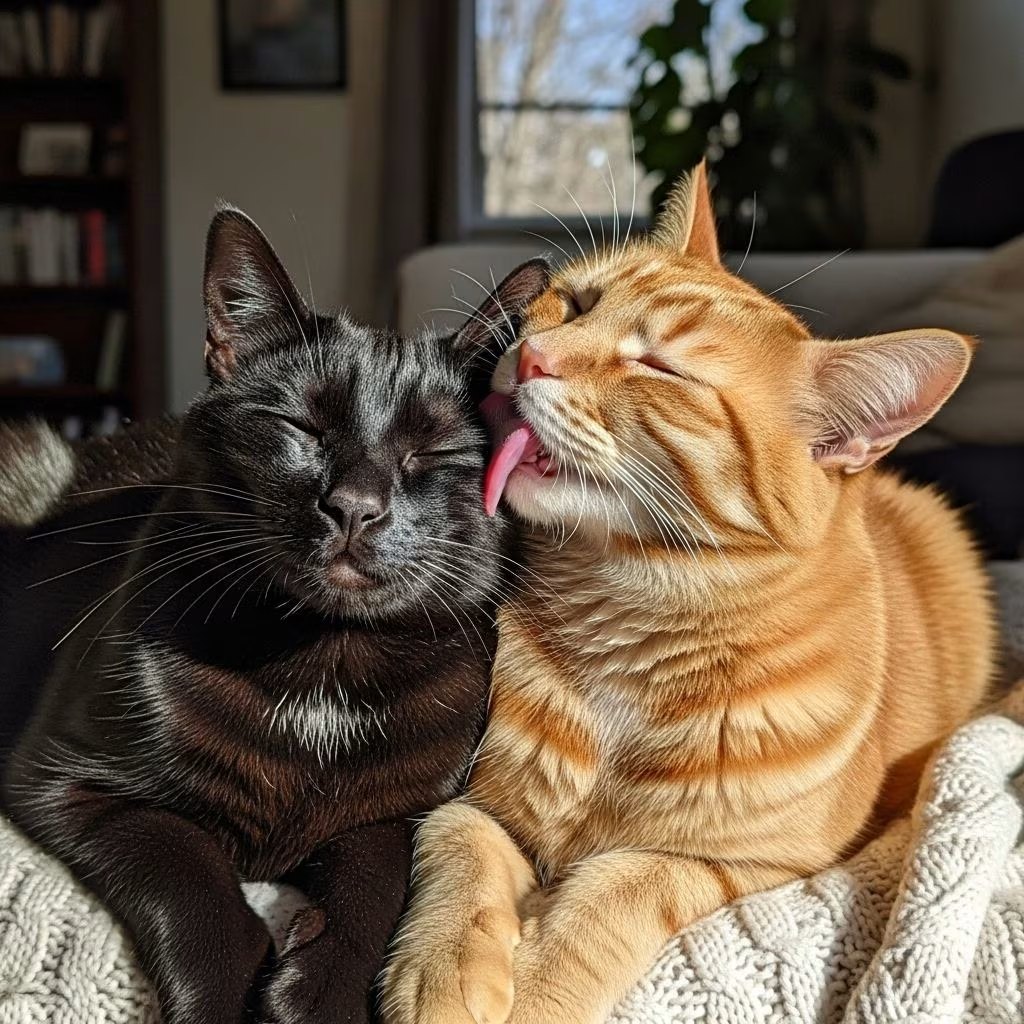
Introducing cats to each other can be a delicate process, especially in a multi-cat household. While some cats bond quickly, others take time to warm up. Understanding feline body language and social behaviors is crucial to assess their relationship. Positive signs include seeking each other’s company, relaxed interactions, and shared activities. This guide outlines key indicators that your cats are getting along, helping you foster a peaceful home.
Introduction to Cat Social Dynamics
Cats are often seen as solitary creatures, but they form complex social bonds. In the wild, feral cats live in colonies where related females and their kittens coexist peacefully. Domestic cats retain these instincts, showing affection through scent exchange and physical contact. When cats get along, they exhibit relaxed postures, mutual grooming, and resource sharing. Conversely, tension shows in hissing, swatting, or avoidance. Observing daily interactions reveals their harmony level.
Signs of friendship develop gradually. Initially, cats may tolerate each other from afar. Over time, they progress to close proximity and affection. Patience is key; forcing interactions can lead to stress. Provide ample resources like multiple litter boxes, food stations, and perches to reduce competition.
Signs Your Cats Are Bonding
Here are the primary behaviors indicating your cats are friends:
- They seek each other’s company: Cats that enjoy time together may play with toys, watch out windows side-by-side, or relax on the sofa. This voluntary proximity shows comfort.
- Tail-up greetings: Approaching with tails raised vertically signals friendliness, often with a slight hook like a question mark. This invites interaction.
- Nose touching or sniffing: A gentle nose bump is a classic feline “hello,” allowing scent checks without aggression.
- Headbutting and rubbing (allorubbing): Cats rub heads, cheeks, and flanks to share scents, creating a group identity.
- Mutual grooming (allogrooming): Licking each other’s head and neck fosters bonds and scent mixing. Cats spend 30-50% of their day grooming, so social grooming is affectionate.
- Sleeping or resting together: Sleep is vulnerable; choosing to nap in contact—even in warm weather—confirms trust.
- Playful interactions: Chasing, pouncing, and wrestling with relaxed bodies, high tails, and no claws indicate fun, not fights.
- Social rolling: Exposing the belly while rolling near another cat invites play, showing no threat.
- No resource blocking: Peaceful access to food, water, litter, and scratchers without guarding means harmony.
- Purring and chirping: Relaxed vocalizations during contact are positive.
Understanding Play vs. Aggression
Distinguishing play from fights prevents unnecessary worry. Playful cats have loose muscles, forward ears, high wagging tails, and take turns (e.g., switching roles in wrestling). They make light contact without injury, chirping or mewing happily. No hissing, spitting, or flattened ears occur.
Aggression involves tense bodies, arched backs, piloerection (raised fur), flattened ears, and swats with claws out. One-sided chasing or blocking paths signals issues.
| Play | Aggression |
|---|---|
| Relaxed body, ears forward, tail up/wagging | Tense body, ears back, tail lashing |
| Take turns, no injury, chirping | One-sided, claws out, hissing/yowling |
| Ends amicably | Chase with intent to harm |
Body Language Breakdown
Cat communication relies on subtle cues:
- Tail signals: Vertical tail = friendly; lashing = irritation.
- Ear positions: Forward/relaxed = content; flattened = defensive.
- Eye contact: Slow blinks = trust; staring = challenge.
- Posture: Loose and stretched = relaxed; arched = alert/threatened.
Monitor these during greetings and rests for insights.
Creating a Conducive Environment
Support bonding with proper setup:
- One litter box per cat + one extra, scattered apart.
- Multiple feeding stations and water bowls.
- Vertical space: cat trees, shelves for territory.
- Individual playtime to prevent jealousy.
- Scent swapping via shared blankets.
Avoid punishment; use positive reinforcement. If issues persist, consult a vet or behaviorist.
Signs They Aren’t Getting Along
Watch for red flags:
- Hissing, growling, swatting.
- Avoidance or hiding.
- Resource guarding/blocking.
- One-sided pursuits.
- Over-grooming from stress.
Separate if needed and reintroduce slowly.
Frequently Asked Questions (FAQs)
What if my cats play rough but no one gets hurt?
Rough play is normal if relaxed and reciprocal. Monitor for escalating tension.
How long does bonding take?
Weeks to months; kittens bond faster than adults.
Should I intervene in play fights?
Only if claws emerge or vocalizations turn aggressive. Distract with toys.
My cats sleep near but not touching—is that okay?
Yes, it’s progress toward full bonding.
What if one cat blocks the other?
Increase resources and observe; persistent cases may need professional help.
Expert Tips for Multi-Cat Homes
Veterinary behaviorists emphasize resource abundance and patience. Cornell Feline Health Center notes aggression types like fear-induced or redirected, stressing environmental management. ASPCA highlights play as mock aggression in young cats, advising monitoring. AVSAB recommends multiples of essentials.
Track progress weekly. Celebrate small wins like first nose bumps. Your cats’ happiness enhances household harmony.
References
- 10 Signs Your Cats Are Starting To Get Along — cats.com. 2023. https://cats.com/signs-cats-are-starting-to-get-along
- Feline Friends or Foes? How to Know if Your Cats Are Getting Along — catinaflat.com. 2023. https://catinaflat.com/blog/how-to-know-if-your-cats-are-getting-along
- Friendly Felines: How To Tell If Your Cats Get Along — American Veterinary Society of Animal Behavior (avsab.org). 2023. https://avsab.org/friendly-felines-how-to-tell-if-your-cats-are-getting-along/
- Aggression Between Cats in Your Household — ASPCA (aspca.org). 2024. https://www.aspca.org/pet-care/cat-care/common-cat-behavior-issues/aggression-between-cats-your-household
- Feline Behavior Problems: Aggression — Cornell University College of Veterinary Medicine (vet.cornell.edu). 2023-10-15. https://www.vet.cornell.edu/departments-centers-and-institutes/cornell-feline-health-center/health-information/feline-health-topics/feline-behavior-problems-aggression



