

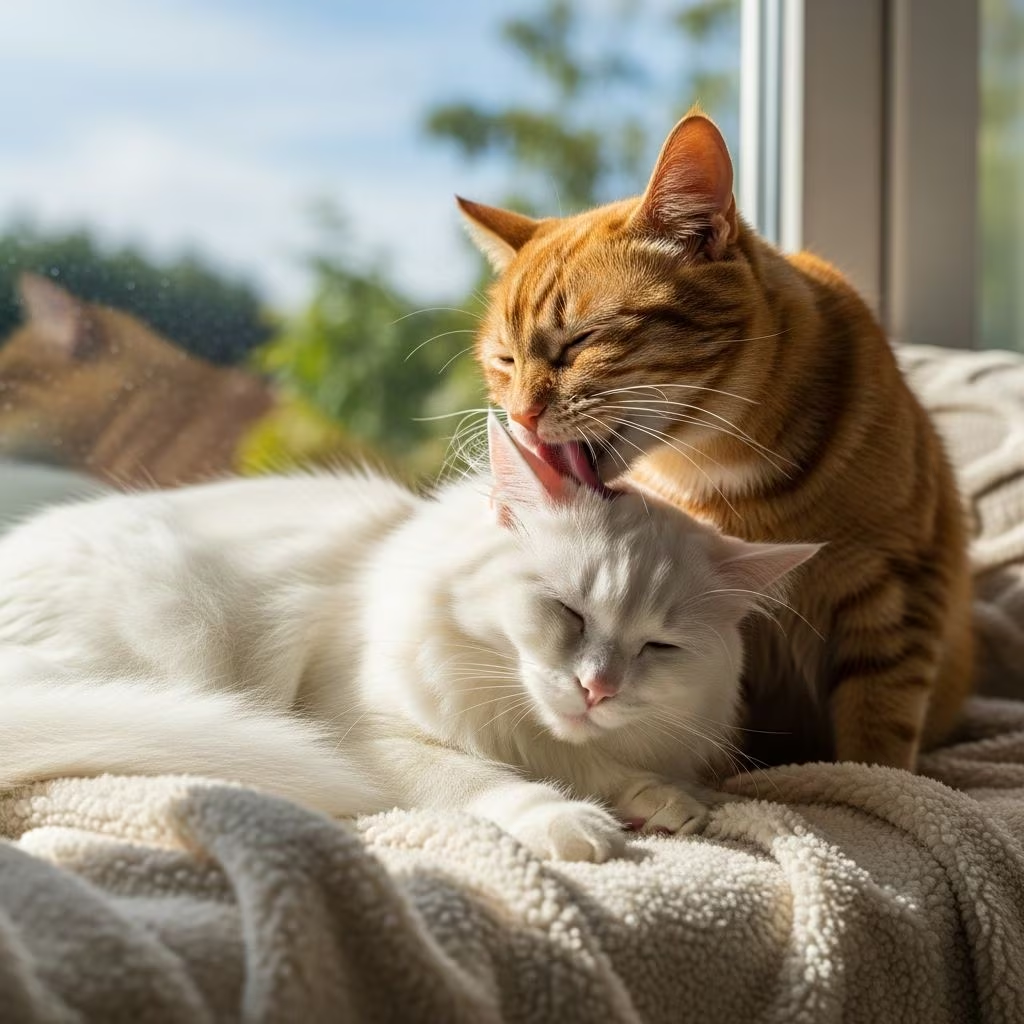
Observing your cats’ interactions can reveal whether they share a profound connection known as bonding. Bonded cats exhibit specific behaviors that demonstrate trust, affection, and companionship, making their lives richer and less stressful.
What Does It Mean When Cats Are Bonded?
Cats form bonds with each other regardless of relation—they can be littermates, siblings, parents and offspring, or unrelated strangers. These pairs spend most of their time together, often starting young but possible even in adulthood. Bonded cats provide mutual support, reducing boredom, stress, and anxiety. Shelters frequently adopt them out as pairs to preserve their health and happiness, as separation can lead to severe emotional distress.
Bonding in cats is a social phenomenon where they choose each other as preferred companions. This isn’t random; it stems from shared experiences, compatible personalities, and positive interactions. Understanding this helps owners make informed decisions about multi-cat households.
Signs Your Cats Are Bonded
Recognizing bonded cats involves watching for consistent, affectionate behaviors. Here are the primary indicators, each rooted in feline social dynamics.
Sleeping and Cuddling Together
Cats are most vulnerable when asleep, so they choose sleeping partners carefully. If your cats curl up together, spooning or nestled close during naps, it’s a strong bonding sign. This shows deep comfort and safety in each other’s presence. They might even sleep on top of one another or entwine limbs, mirroring littermate behaviors from kittenhood.
Observe them in various settings: on the couch, in bed, or favorite perches. Consistent choice of each other over solo spots confirms the bond. This vulnerability-sharing is rare among non-bonded cats, who prefer isolation during rest.
Rubbing Faces or Bodies on Each Other
Cats possess scent glands on faces, flanks, and tails. Rubbing transfers unique scents, marking each other as family and signaling familiarity. Watch for cheek-to-cheek rubs, side-swipes, or tail intertwining—these exchanges reinforce group identity and comfort.
This behavior extends to the environment, but mutual rubbing prioritizes the bond. It’s a daily ritual for bonded pairs, often accompanied by purring or relaxed postures, distinguishing it from territorial marking.
Cleaning, Licking, and Grooming One Another
Social grooming, or allogrooming, is a hallmark of affection. Bonded cats lick hard-to-reach areas like the head and neck, strengthening ties. This mirrors mother-kitten care and occurs reciprocally, with one cat initiating and the other responding positively.
Frequency matters: daily sessions lasting minutes indicate a solid bond. Unlike solitary grooming, allogrooming involves eye contact and gentle nibbles, fostering emotional closeness. Forum anecdotes highlight instant mutual grooming as an early bonding cue.
Playing Together Without Aggression
Bonded cats engage in energetic, prolonged play—chasing, wrestling, pouncing—without hissing, swatting, or chasing off. They expose bellies, a trust gesture, and take turns ‘winning.’ Play sessions end amicably, often transitioning to grooming or cuddling.
Distinguish play from fights: play has relaxed ears, no dilated pupils, and vocal chirps, not growls. This shared activity burns energy, prevents boredom, and deepens companionship.
Other Bonding Behaviors
- Sharing Resources: Comfortably using the same food bowls, litter boxes, or beds without tension shows security.
- Unique Vocalizations: Special meows, chirps, or trills reserved for each other indicate private communication.
- Synchronized Movements: Eating, sleeping, or exploring in tandem reflects harmony.
- Greeting Rituals: Excited reunions after brief separations, with rubs and meows.
What Happens When You Separate Bonded Cats?
Separating bonded cats triggers intense distress. Symptoms include refusal to eat, excessive vocalizing, hiding, aggression toward others, or depression-like lethargy. In shelters, they may stop grooming, leading to health decline. Some experience ‘broken heart syndrome,’ with stress-related illnesses.
Reunions can be rocky; cats might ignore or fight initially due to scent changes. Gradual reintroduction with scent swapping helps, but prevention is ideal. Vets note long-term anxiety in separated pairs, underscoring lifelong commitments.
Can Adult Cats Become Bonded?
Yes, adults can bond, though slower than kittens. Introduce gradually via neutral spaces, shared meals, and play. Positive associations build trust over weeks or months. Monitor for signs like grooming; patience yields strong bonds. Factors like similar ages, energy levels, and personalities boost success.
How to Encourage Bonding Between Cats
Promote bonding with these strategies:
- Provide ample resources to avoid competition.
- Engage in joint play with toys like wand teasers.
- Use pheromone diffusers for calm.
- Reward positive interactions with treats.
- Respect their pace; force proximity backfires.
| Do’s | Don’ts |
|---|---|
| Supervised playdates | Punish play that looks rough |
| Separate feeding stations | Force cuddling |
| Scent swapping | Rush introductions |
Frequently Asked Questions (FAQs)
Are my cats playing or fighting?
Play features relaxed body language, no fur flying, and role reversals. Fighting involves growling, flattened ears, and injury. Bonded cats’ play stays fun and balanced.
Can bonded cats be separated temporarily?
Short separations (days) are manageable with familiar items. Longer ones risk stress; prepare with gradual prep.
Do all sibling cats bond?
No, genetics don’t guarantee bonds; personality and experiences do. Some siblings remain aloof.
How long does bonding take?
Weeks to months for adults; kittens bond faster through play.
What if one cat seems dominant?
Mild hierarchy is normal if non-aggressive. Monitor resource access; consult vets for issues.
Conclusion
Bonded cats enrich each other’s lives with companionship and security. By spotting signs like cuddling, grooming, and playful harmony, owners foster ideal environments. Cherish these bonds—they’re feline love at its purest.
References
- Are Your Cats Bonded? Here’s How to Tell — TheCatSite. 2023-05-15. https://thecatsite.com/c/how-to-tell-if-cats-are-bonded/
- How to Tell if Your Cats Are a Bonded Pair — Wired Whisker. 2024-02-20. https://www.wiredwhisker.com/blog/how-to-tell-if-your-cats-are-a-bonded-pair
- 10 Signs Your Cat Has Imprinted On You — Kinship. 2023-11-10. https://www.kinship.com/cat-behavior/can-your-cat-imprint-on-you
- The Cat-Human Bond — Catwatch Newsletter (Cornell Feline Health Center). 2022-08-01. https://www.catwatchnewsletter.com/behavior/the-cat-human-bond/
- Bonded Cats Guide: Signs, Care & Wellness Tips — BestLife4Pets. 2024-01-12. https://www.bestlife4pets.com/blogs/pet-blog-tips/bonded-cats



