

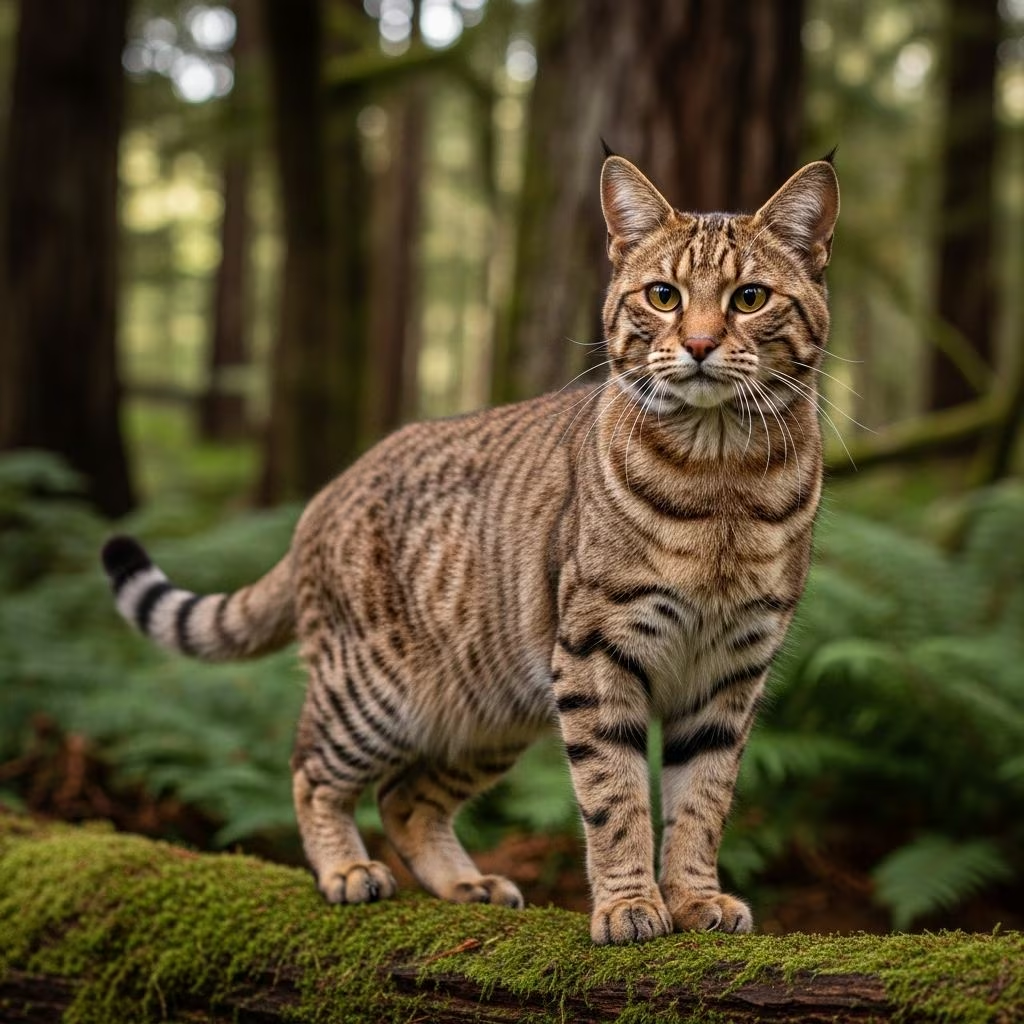
Many cat owners wonder if their pet has wild ancestry, especially if it sports unusual features like tufted ears or a short tail. Bobcats (Lynx rufus), with their striking spotted coats and powerful builds, spark curiosity about potential hybrids with domestic cats (Felis catus). This article breaks down physical traits, behaviors, breeds mimicking bobcats, and the genetic reality behind these claims.
Can Domestic Cats Breed with Bobcats?
Domestic cats and bobcats belong to the Felidae family but differ significantly in genetics. Bobcats have 32 chromosomes, while domestic cats have 38, creating a barrier to viable offspring. Even observed matings rarely produce fertile hybrids due to sperm-egg incompatibility and differing reproductive physiologies.
Claims of bobcat hybrids often stem from misidentified domestic cats with bobcat-like traits. Breeds selectively bred for wild appearances, such as Pixie-Bobs, fuel the myth without genetic proof. Natural hybridization is improbable; bobcats avoid domestic cats’ habitats and mating cycles.
Physical Traits That Mimic Bobcat Hybrids
Bobcats exhibit distinct features: short tails (1/3 body length), tufted ears, spotted tawny coats, large paws, and longer hind legs. Domestic cats showing similar traits are often purebreds or natural variants, not hybrids.
- Size and Build: Bobcat kittens double typical domestic kitten size at birth. Adults weigh 15-35 lbs with muscular frames and longer hind legs for pouncing. Massive domestic cats may suggest Maine Coon or Savannah ancestry instead.
- Tail Length: Bobcats have ‘bobbed’ tails, 4-7 inches. Short-tailed domestics carry the Manx gene, unrelated to bobcats.
- Ears: Tufted ears are common in bobcats but appear in American Curls, Pixie-Bobs, and Lynx-point Siamese due to domestic genetics. Shorter-haired cats highlight tufts more dramatically.
- Coat and Markings: Spotted or tawny coats with facial ruffs mimic bobcats. Domestic tabbies, Bengals, and Egyptian Maus display these via selective breeding.
- Paws and Face: Large, tufted paws and pronounced fangs occur in bobcats. Domestic polydactyls (extra toes) or breeds like Chausies show similar exaggerations.
| Trait | Bobcat | Domestic Mimic | Hybrid Likelihood |
|---|---|---|---|
| Size | 15-35 lbs, double kitten size | Maine Coon (up to 25 lbs) | Low – breed trait |
| Tail | Short, bobbed | Manx, Pixie-Bob | Low – genetic mutation |
| Ears | Tufted, pointed | American Curl, Lynx points | Low – selective breeding |
| Coat | Spotted tawny | Bengal, tabby | Low – pattern genes |
| Behavior | Solitary, chirps | High-energy ferals | Myth – environmental |
Behavioral Signs of Possible Wild Heritage
Bobcats are solitary hunters, chirping instead of meowing, with dog-like play growls. Hybrids, if real, might show heavy purring, independence, and climbing prowess. However, stray domestics in bobcat areas adopt similar traits from survival needs, not genetics.
- Extreme acrobatics and longer hind legs for leaping.
- Chirping/trilling over meowing; deep-toned purrs and growls during play.
- Double-layered silky coats for insulation, common in ferals.
- Intense hunting drive, needing enriched environments like climbing trees.
These behaviors appear in active domestics like Abyssinians or Bengal mixes, debunking hybrid assumptions.
Pixie-Bob Cats: The Ultimate Bobcat Lookalikes
Pixie-Bobs originated from a supposed barn cat-bobcat mating myth. They feature bobbed tails, tufted ears, polydactyl paws, and spotted coats. Despite claims, genetic tests confirm no bobcat DNA; they’re domestic cats bred for wild aesthetics.
Recognized by TICA, Pixie-Bobs weigh 8-17 lbs with muscular builds and affectionate temperaments. Their ‘wild’ look comes from outcrosses to Manx, American Bobtails, and others.
Other Bobcat-Like Breeds
Several breeds emulate bobcats without wild blood:
- Desert Lynx: Spotted, tufted ears, short tail; developed from domestic stock.
- Highland Lynx: Curled ears, polydactyl; crossed with Jungle Curls.
- Mohave Bob: Rexed coat on Desert Lynx base; muscular with hind leg emphasis.
- Bengal: Spotted from Asian leopard cat hybrids, not bobcat.
Genetic Testing: The Definitive Answer
DNA tests from labs like UC Davis or Wisdom Panel detect feline breed ancestry but cannot confirm bobcat markers in domestics due to hybridization rarity. Mitochondrial DNA in alleged hybrids traces to domestic mothers only. If suspecting wild mix, consult a vet for swab testing—results typically reveal pure domestic or known breeds.
Legal and Ethical Considerations
Bobcats are protected wildlife; owning them or unverified hybrids violates laws in most U.S. states (e.g., California Fish and Game regulations). True hybrids, if existent, require permits as exotic animals. Ethical breeding prioritizes domestic lines to avoid conservation impacts on bobcat populations.
Prospective owners must check local regs; many hybrids claims are marketing hype for lookalike breeds.
Frequently Asked Questions (FAQs)
Q: Can my cat really be a bobcat hybrid?
A: Biologically unlikely due to chromosome mismatch and interfertility barriers. Traits are usually from domestic breeds.
Q: What breeds look like bobcat hybrids?
A: Pixie-Bob, Desert Lynx, Bengal, and American Bobtail mimic the look through selective breeding.
Q: How do I test for bobcat ancestry?
A: Use commercial DNA kits or vet labs; they identify domestic breeds but rarely detect wild felid DNA.
Q: Are bobcat hybrids legal to own?
A: Varies by location; often regulated as exotics. Research state wildlife laws first.
Q: What if my stray cat acts wild?
A: Likely feral domestic adapting to environment, not hybrid. Provide socialization and enrichment.
The Truth About Bobcat Hybrids
Domestic cats and bobcats cannot interbreed successfully. Chromosome differences (38 vs. 32), mating incompatibilities, and lack of scientific evidence confirm this. Alleged hybrids are misidentified domestics or bred lookalikes. Bobcats thrive in wild habitats, not homes—leave them there. Embrace your cat’s unique traits without wild myths.
References
- The Allure of Bobcat Hybrid Cats: Nature Meets Nurture — Oreate AI. 2023. https://www.oreateai.com/blog/the-allure-of-bobcat-hybrid-cats-nature-meets-nurture/a608e9557d0f195b432036787f09c2ac
- Domestic x Bobcat/Lynx Hybrids — MessyBeast. Accessed 2026. http://messybeast.com/small-hybrids/rufus-lynx-hybrids.htm
- How to Tell if Your Cat is Mixed With a Bobcat: Vet Verified Facts vs … — Catster. 2023. https://www.catster.com/lifestyle/how-to-tell-if-cat-mixed-with-bobcat/
- Is my kitty a bobcat hybrid? — TheCatSite. 2019. https://thecatsite.com/threads/is-my-kitty-a-bobcat-hybrid.331816/



