

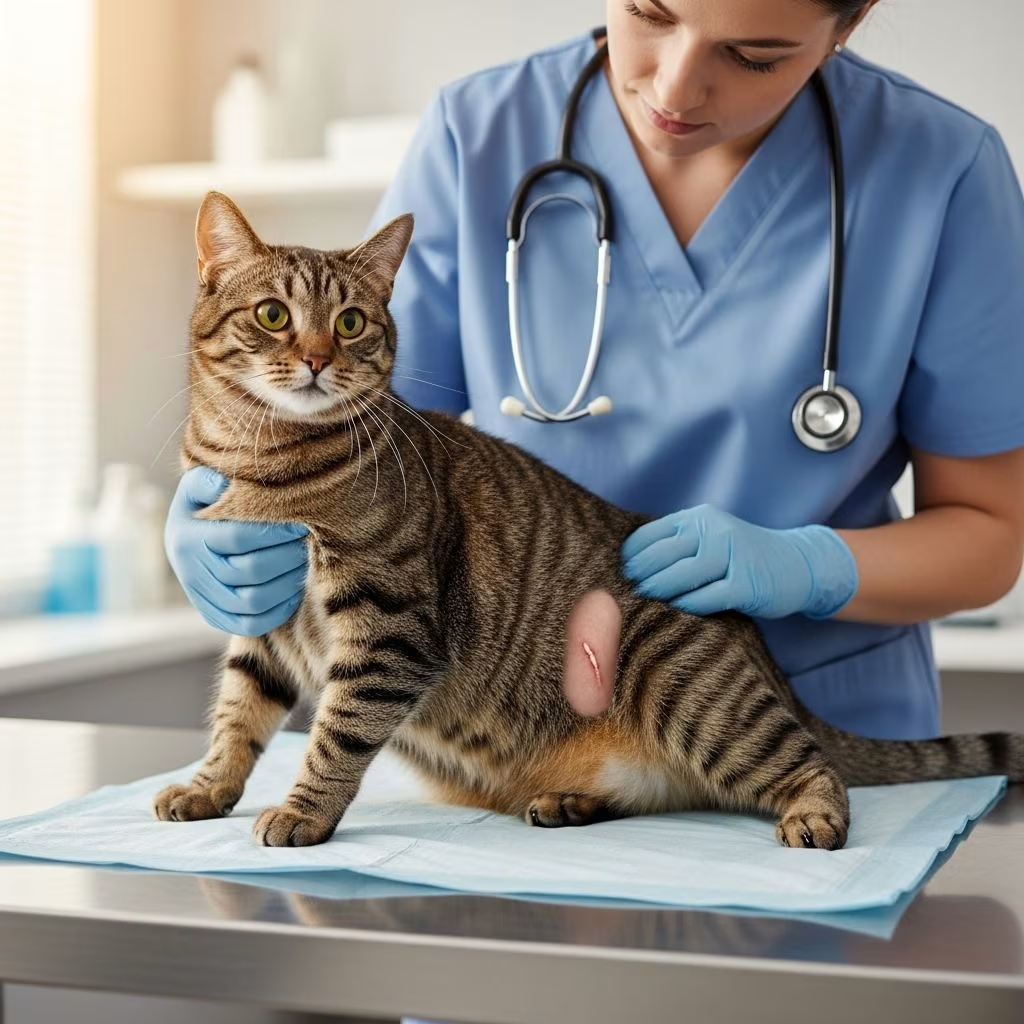
How to Tell If a Cat Is Neutered: 6 Vet-Reviewed Signs to Look For
Determining whether a male cat has been neutered is an important part of understanding his health, behavior, and history. Whether you’ve adopted a stray, rescued a feral cat, or simply want to confirm your own cat’s surgical status, there are several reliable methods to identify a neutered versus intact male cat. While a veterinary examination remains the most definitive way to confirm neutering, you can look for specific physical and behavioral indicators that suggest whether a cat has undergone this common surgical procedure.
Physical Signs to Look For
1. Check for Ear-Tipping
One of the most recognizable and universally accepted indicators that a cat has been neutered is ear-tipping, also known as ear notching. If you’ve picked up a stray or feral cat, begin your examination by carefully inspecting his ears. Feral cats that are trapped, neutered, and released (TNR) through community cat programs will have the top of one ear surgically tipped or clipped. This distinctive mark serves as a permanent visual indicator to inform the community and animal welfare organizations that this particular feline has already been neutered and does not need to be captured again.
Ear-tipping is the universal standard in trap-neuter-return programs worldwide and is recognized by animal welfare professionals everywhere. The procedure is typically performed by a veterinarian during the neutering surgery and involves removing approximately one-quarter inch from the tip of one ear. The cut is clean and surgical, and it heals quickly with minimal discomfort to the cat. This method is preferred over other identification methods because it is permanent, clearly visible from a distance, and does not require close physical contact with the cat to identify.
2. Look for a Neuter Tattoo
Some veterinarians will tattoo cats when they’re neutered as an additional confirmation method, and these tattoos are strategically placed for quick visual verification. The tattoo typically appears as a straight, green line approximately 1.5 centimeters long, and you’ll find the marking on either side of the cat’s scrotum or his lower belly. The green ink is chosen specifically because it stands out visibly against the cat’s skin, making it easier to spot during examination.
However, you may have to clip or shave the cat’s fur to see the tattoo clearly, which can be challenging if your cat has long or thick fur. This process may require the assistance of another person or a professional groomer. Unfortunately, not all veterinary clinics tattoo neutered cats as a standard practice. Research indicates that almost 20% of fixed male cats did not receive a neuter tattoo, meaning this method alone cannot definitively confirm that a cat is neutered. If you find a tattoo, however, it’s an excellent indicator of neutering. Some veterinarians also use ear tattoos as an alternative marking location.
3. Feel for Testicles
The most direct and reliable physical examination method is to check for the presence of testicles. When you lift a male cat’s tail, you will see his anus, scrotum, and penis. A cat’s scrotum typically looks like two small cotton balls when the cat is intact. If you can feel either or both testicles inside the scrotum when you gently palpate the area, the cat is intact and has not been neutered. If the scrotum feels empty and appears as loose skin, he is most likely neutered.
This method is generally reliable, but it isn’t 100% effective because some male cats have a condition called cryptorchidism, also known as retained testicles. A cat with this condition has internal testicles that never descended into the scrotum, so they won’t be visible or palpable during external examination. Cryptorchidism is relatively rare but does occur in some cats. Male cats with retained testicles still need to be neutered surgically to prevent the higher risk of testicular tumors and to prevent breeding, as they are still capable of reproducing despite the lack of visible testicles.
Less Reliable Signs That a Cat Is Neutered
While the physical signs mentioned above are more definitive, intact male cats share other physical and behavioral characteristics that can help you make an educated guess about their status. However, none of these signs alone can confirm that a cat is neutered, as neutered cats may occasionally display these behaviors, and the absence of these signs doesn’t guarantee that a cat is intact.
4. Chubby Cheeks (Stud Jowls)
Intact male cats typically develop noticeably chubbier cheeks compared to their neutered counterparts, a condition referred to as “stud jowls.” Elevated testosterone levels in unneutered males can cause the tissue in the cheeks to grow rapidly, creating a broader, fleshier appearance around the face and jaw. This physical development serves as useful defensive padding in fights with other male cats competing for mates.
However, stud jowls can be harder to detect if a cat has long, thick fur or if the cat is naturally overweight, as extra weight can obscure this distinctive feature. Additionally, some neutered cats may develop heavier cheeks due to weight gain, making this sign less reliable for diagnosis. If you notice pronounced facial jowls on a previously neutered cat, weight management may be necessary.
5. Spraying Urine
Unneutered cats will frequently spray to mark their territory. Their urine is quite potent and has a particularly pungent, distinctive odor that can be challenging to remove from furniture and carpeting. Male cats spray urine to let other cats know where their territory is and to signal to females that they are available to mate.
However, peeing or spraying outside the litterbox can also be a sign of a urinary tract infection (UTI) or other medical conditions, so this is not a reliable trait on its own. Additionally, neutered cats may still spray, though the behavior is significantly less common and the odor is generally much less intense than that of intact males. If your neutered cat is spraying, consult your veterinarian to rule out medical issues.
6. Yowling or Caterwauling
Cats vocalize for many reasons, but intact males produce a distinct yowl called “caterwauling.” They make this characteristic loud, sometimes unsettling noise to attract female cats and let other male cats know that this territory belongs to them. You may notice that caterwauling occurs more frequently at night and is often accompanied by restlessness and pacing behavior. The sound is quite distinctive and differs from normal meowing in both pitch and intensity.
Neutered cats may still vocalize, but the intensity and frequency typically decrease significantly after surgery. If you hear intense caterwauling, especially at night, combined with other signs mentioned above, it’s likely the cat is intact.
Behavioral Differences Between Neutered and Intact Males
Understanding the behavioral differences between neutered and intact male cats can provide additional context for determining a cat’s status. Neutered male cats tend to stay closer to home and show significantly reduced territorial behaviors compared to their intact counterparts. They are also generally calmer, more focused on their owners, and less likely to engage in aggressive confrontations with other male cats.
Intact males have strong-smelling urine and large scent glands near their tails, which they use to mark territory and communicate with potential mates. After neutering, cats tend to be cleaner overall, as they no longer feel the compulsion to mark territory through spraying. Additionally, neutered male cats are approximately 90% less likely to roam than intact males, making them safer pets that are less likely to get lost, injured, or involved in fights.
When Should You Seek Veterinary Confirmation?
The easiest and most definitive way to tell if a cat is neutered is to bring him to a veterinarian for examination. A veterinary professional can perform a thorough physical examination and provide a definitive answer. This is particularly important if you cannot clearly identify physical markers or if the cat exhibits conflicting signs. Veterinary confirmation is also essential if you’ve recently adopted a cat and want to ensure proper medical records and future care planning.
If you suspect a cat has cryptorchidism or any other medical condition affecting the reproductive system, veterinary evaluation is necessary. A vet can order imaging tests if needed to confirm the presence or absence of internal testicles and recommend appropriate treatment options.
Quick Reference: Physical Signs Comparison
| Sign | Neutered Cat | Intact Cat | Reliability |
|---|---|---|---|
| Ear-Tipping | Top of ear clipped | Ears intact | Very High |
| Neuter Tattoo | Green line on belly/scrotum | No tattoo | High (if present) |
| Testicles | Empty scrotum | Testicles palpable | Very High |
| Stud Jowls | Narrower cheeks | Pronounced cheeks | Moderate |
| Urine Spraying | Minimal/rare | Frequent | Moderate |
| Caterwauling | Rare | Frequent (especially at night) | Moderate |
Frequently Asked Questions
Q: Can a neutered cat still have testicles?
A: No. When a cat is neutered, both testicles are surgically removed. However, some cats have cryptorchidism (retained testicles), meaning the testicles never descended into the scrotum. These cats will appear neutered externally but still need surgery to remove internal testicles.
Q: Is ear-tipping permanent?
A: Yes. Ear-tipping is a permanent surgical mark that heals quickly. Once healed, it remains visible for the cat’s entire life and is immediately recognizable to animal welfare professionals.
Q: Do all vets tattoo neutered cats?
A: No. Research shows that almost 20% of neutered male cats do not receive neuter tattoos, as not all veterinary clinics use this marking method as standard practice.
Q: Can a neutered cat still spray?
A: Yes, though it is uncommon. While neutering significantly reduces or eliminates spraying behavior in most cats, some neutered cats may still spray occasionally. If this occurs, consult your vet to rule out medical issues.
Q: What should I do if I’m unsure whether my cat is neutered?
A: Schedule an appointment with your veterinarian for a definitive examination. They can perform a thorough physical assessment and provide confirmation of your cat’s neutering status.
Q: How can I tell the difference between a neutered and intact male cat from a distance?
A: Ear-tipping is the most visible sign from a distance. Intact males typically have broader, fleshier heads and may display behavioral signs like increased vocalization and marking. However, close examination is the most reliable method.
Q: Is it normal for a neutered cat to have a prominent scrotum?
A: Yes. Even after neutering, the scrotum may still be visible as loose skin. What distinguishes a neutered cat is the absence of palpable testicles within the scrotum.
Conclusion
Determining whether a male cat is neutered involves examining multiple physical and behavioral indicators. The most reliable methods include checking for ear-tipping, looking for a neuter tattoo, and palpating the scrotum to confirm the absence of testicles. Secondary signs such as stud jowls, spraying behavior, and caterwauling can support your assessment but are not definitive on their own. If you have any doubt about your cat’s neutering status, consult with a veterinarian who can provide professional confirmation and ensure your cat receives appropriate health care. Understanding these signs is particularly important for those working with stray or feral cats through trap-neuter-return programs, as it helps prevent unnecessary re-trapping of already-neutered animals.
References
- How to Tell If a Cat Is Neutered: 6 Vet-Reviewed Signs to Look For — Catster. 2024. https://www.catster.com/cat-health-care/how-to-tell-if-cat-is-neutered/
- Neutered vs. Unneutered Male Cats: Vet-Verified Differences — Catster. 2024. https://www.catster.com/cat-health-care/neutered-vs-unneutered-male-cats/
- How Do Vets Neuter Cats: Our Vet Explains Step by Step — Catster. 2024. https://www.catster.com/ask-the-vet/how-do-vets-neuter-cats/
- How Does a Cat Neutering Procedure Work? Vet-Reviewed Facts — Catster. 2024. https://www.catster.com/cat-health-care/how-does-cat-neutering-procedure-work/



