

How to Tell If Your Cat Is Microchipped
As a responsible cat owner, understanding whether your feline companion has a microchip is crucial for ensuring their safety and increasing the chances of reunion if they ever become lost. A microchip is a small RFID (radio frequency identification) device implanted under your cat’s skin that contains a unique identification number linked to your contact information. Unlike ID tags that can be lost or damaged, microchips provide a permanent form of identification that cannot be altered or removed.
Many cat owners are unsure how to determine if their cat has already been microchipped, whether during adoption, rescue, or previous veterinary care. This comprehensive guide will walk you through the process of identifying whether your cat has a microchip, understanding how microchipping works, and what steps to take if you discover your cat is or isn’t microchipped.
What Is a Cat Microchip?
A cat microchip is a tiny electronic device about the size of a grain of rice that is implanted beneath your cat’s skin, typically between the shoulder blades. The microchip contains a unique identification number that serves as a permanent identifier for your pet. When scanned with a specialized RFID reader, this number is displayed on the scanner’s screen.
It’s important to understand that a microchip is not a GPS tracking device. Unlike GPS devices, microchips don’t require power and don’t transmit real-time location data. Instead, they function as a passive identification system that must be actively scanned by a veterinarian, animal shelter, or rescue organization to reveal your pet’s information.
The Benefits of Microchipping Your Cat
Microchipping offers several significant advantages for cat owners:
- Permanent Identification: Microchips cannot be lost, stolen, or damaged like traditional ID tags
- Increased Reunion Rates: Microchipped pets have significantly higher chances of being returned to their owners
- Safety During Travel: If your cat is involved in an accident or natural disaster, microchips help identify your pet during rescue operations
- Legal Documentation: Microchips provide proof of ownership in legal disputes
- Peace of Mind: Knowing your cat has permanent identification provides comfort for pet owners
How to Scan Your Cat for a Microchip
The most direct way to determine if your cat is microchipped is through a professional microchip scan. Here’s what you need to know about the scanning process:
Where to Get Your Cat Scanned
Several locations can scan your cat for a microchip:
- Your veterinary clinic or animal hospital
- Local animal shelters and rescue organizations
- Emergency veterinary hospitals
- Some humane societies and animal welfare organizations
The scanning process is quick, painless, and non-invasive. Most veterinarians can perform this service during a routine appointment or new patient registration. If you’ve recently adopted your cat and are unsure of its microchip status, ask your veterinarian to scan your cat at your first appointment.
Understanding the Scanning Process
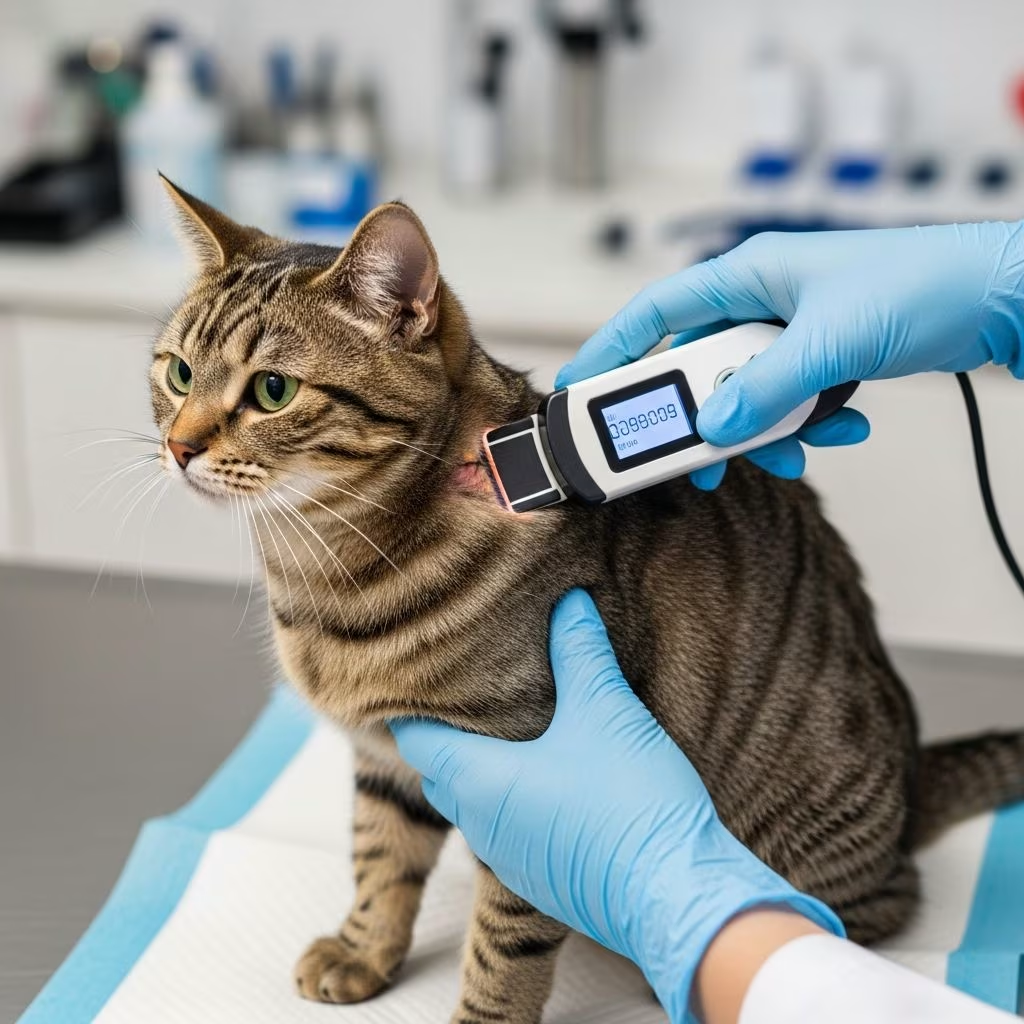
When your cat is scanned, the veterinarian will use a handheld or wand scanner that operates on radio frequency technology. The scanner is held parallel to your cat’s body, either barely touching or less than an inch away. The scanner emits a radio frequency signal that activates any microchip present, causing it to transmit its unique identification number back to the scanner.
The scanning should be thorough and follow a specific pattern. The scanner operator should scan in an “S” shape from side to side, beginning between the shoulder blades where microchips are typically implanted. However, since microchips can occasionally migrate from their original position, the scan should also cover the sides, back, and legs of your cat.
Proper Scanning Technique
For accurate results, the scanning process should follow these guidelines:
- Take Time: Spend between 10-20 seconds scanning each animal, moving the scanner no more than 6 inches per second
- Use S-Shaped Motions: Move the scanner in an S-pattern from side to side to ensure detection of microchips at all orientations
- Cover the Entire Body: Scan from the head to the tail tip, sides, and legs, as microchips can migrate
- Use Universal Scanners: Ensure the facility uses a universal scanner capable of detecting all three microchip frequencies: 125 kHz, 128 kHz, and 134.2 kHz
- Test the Scanner: The scanner should be tested with a test microchip to ensure it’s functioning properly
Understanding Microchip Frequencies
In the United States, microchips operate on three different frequencies: 125 kHz, 128 kHz, and 134.2 kHz. This variation exists because different manufacturers produce microchips with different frequencies. A critical issue is that not all scanners can detect all frequencies.
To ensure accurate identification, it’s essential that veterinary clinics and shelters use “universal scanners” capable of detecting all three frequencies. If a facility uses a scanner that only detects one or two frequencies, they may miss your cat’s microchip entirely. When seeking a microchip scan, confirm that the facility uses a universal scanner.
What If Your Cat’s Microchip Is Found?
If a scan reveals that your cat has a microchip, the next step involves accessing the microchip registry. When a microchip number is scanned and detected, that information must be looked up in the appropriate database to retrieve the owner’s contact information.
The Microchip Lookup Process
Different microchip companies maintain different databases. If your cat’s microchip is detected, the person or organization performing the scan will:
- Record the microchip identification number displayed on the scanner
- Contact the appropriate microchip registry to locate owner information
- Use the AAHA’s universal pet microchip lookup tool at www.petmicrochiplookup.org to identify which registry the microchip is enrolled in
- Contact the registry or microchip company directly to obtain owner contact details
It’s important to note that if a microchip is not showing up in one database, it does not mean the microchip isn’t registered elsewhere. The AAHA’s universal lookup tool helps ensure that microchips from various manufacturers can be identified, though AVID is the only major microchip provider that does not participate in this tool and must be contacted directly.
Ensuring Your Microchip Information Is Current
Having a microchip implanted is only half the solution—you must also ensure that your contact information is accurately registered and current in the microchip database.
Why Registration Matters
A microchip without current registration information is ineffective. If your cat is found and scanned, but your contact information is outdated or missing, you cannot be reached, and your cat may not be returned to you. Before microchipping, discuss registration with your veterinarian and complete all necessary paperwork immediately after implantation.
Updating Your Information
After microchipping, you should:
- Receive documentation of your cat’s microchip number
- Register your microchip with the manufacturer’s database
- Provide current contact information including phone number and email address
- Update your information if you move or change phone numbers
- Review your registered information annually to ensure accuracy
Microchipping for Adopted or Rescue Cats
If you’ve adopted your cat from a shelter, rescue organization, or adoption agency, there’s a good chance your cat may already be microchipped. Many shelters implant microchips in all animals before adoption to increase the likelihood of safe return if they become lost.
Ask your adoption facility whether your cat has been microchipped, and request the microchip number and registry information. If the microchip is registered to the shelter or previous owner, you should contact the registry to transfer ownership and update the contact information to your details.
Combining Microchips With Other Identification Methods
While microchips are highly effective, using both ID tags and microchips provides the best chance of being reunited with your pet. ID tags offer immediate identification without requiring professional scanning, while microchips provide permanent, permanent backup identification.
Consider implementing a multi-layered identification approach:
- Traditional ID tag with your current phone number and name
- Implanted microchip with registered contact information
- Recent photos of your cat stored in multiple locations
- Up-to-date microchip information provided to your veterinarian
Frequently Asked Questions
Q: Does it hurt to microchip a cat?
A: The microchipping procedure is minimally invasive and causes minimal discomfort. Many cats experience no pain during the implantation, though some may experience slight discomfort similar to a vaccine injection. The procedure typically takes just seconds to complete.
Q: Can a microchip move or migrate?
A: Yes, microchips can occasionally migrate from their original implantation site between the shoulder blades. This is why thorough scanning of the entire body is important, and why veterinarians should scan your microchip during each checkup to verify it’s still functioning and in the correct location.
Q: How long do microchips last?
A: Microchips are designed to last for the lifetime of your cat. They don’t require batteries or power sources, making them permanent identification solutions.
Q: How much does microchipping cost?
A: Microchipping is relatively inexpensive, typically costing between $25 to $75 at most veterinary clinics, including the chip implantation and initial registration.
Q: What if I find a microchipped cat?
A: If you find a cat, take it to a veterinarian or animal shelter immediately for scanning. Once the microchip number is obtained, use the AAHA microchip lookup tool to identify the registry and contact the owner.
Conclusion
Determining whether your cat is microchipped is a simple process that can be accomplished with a quick visit to your veterinarian or local animal shelter. Microchipping represents one of the most effective ways to ensure your cat’s safe return if they ever become lost. By understanding how microchips work, knowing how to identify them, and ensuring your registration information is current, you’re taking a crucial step in protecting your feline companion. Whether you’re a new cat owner or have been caring for cats for years, microchipping should be an essential part of your pet care strategy.
References
- How to Scan a Cat for a Microchip — Alley Cat Allies. 2024. https://www.alleycat.org/resources/how-to-scan-a-cat-for-a-microchip/
- Microchip Identification of Cats – Position Statement — American Association of Feline Practitioners (AAFP). 2019. https://catvets.com/resource/microchip-identification-of-cats-position-statement/
- Cat Microchipping, ID Tags, Registration, Lookup and More — Springs Animal Hospital. 2024. https://www.springsanimal.com/services/cats/cat-microchip
- Everything You Should Know About Microchipping Cats — Carson Veterinary Clinic. 2024. https://www.carsonvet.com/services/cats/cat-microchip
- Microchipping FAQ — American Veterinary Medical Association (AVMA). 2024. https://www.avma.org/resources-tools/pet-owners/petcare/microchips-reunite-pets-families/microchipping-faq
- Identification Tags & Microchips — American Humane Society. 2024. https://www.americanhumane.org/public-education/identification-tags-microchips/
- Reunite with Your Lost Pet: Proven Identification Methods — MedVet. 2024. https://www.medvet.com/reunite-with-your-lost-pet-proven-identification-methods/



