

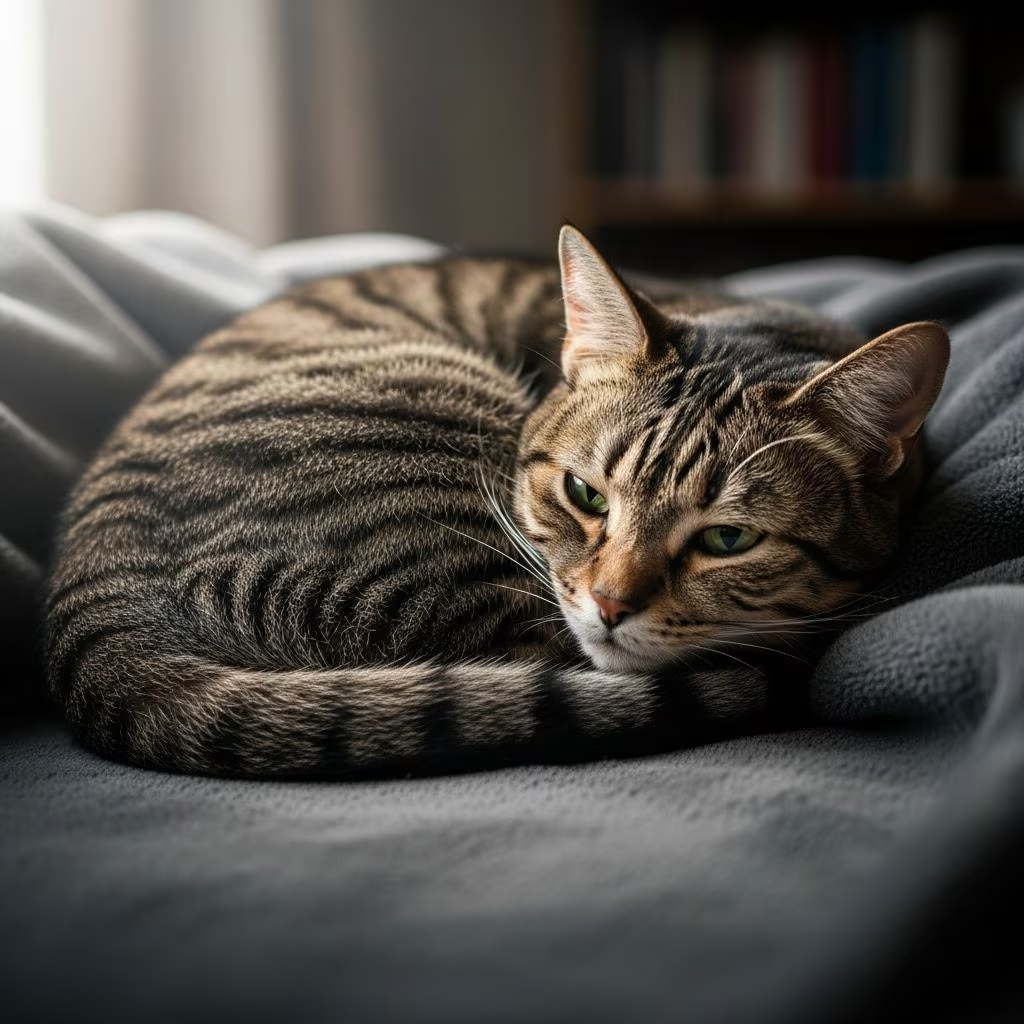
Cats are masters at hiding discomfort, but cold weather can affect them deeply, leading to hypothermia or stress. Recognizing the signs early ensures your feline stays safe and comfortable, especially during winter months or in chilly homes.
Understanding Why Cats Get Cold
Domestic cats originate from warmer climates and rely on thick fur for insulation, but short-haired breeds, kittens, seniors, and those with health issues are more vulnerable to cold. Factors like low indoor temperatures below 68°F (20°C), drafts, or outdoor exposure increase risks. Unlike humans, cats can’t always find warmth independently if unwell or elderly.
Maintaining a home temperature of 68-77°F (20-25°C) is ideal for cats. Outdoor cats face greater dangers from wind, wet fur, and dropping temperatures, potentially leading to frostbite or hypothermia.
Physical Signs Your Cat Is Cold
Observe your cat’s body for these telltale physical indicators of cold stress:
- Shivering or Trembling: Involuntary muscle contractions to generate heat, similar to humans. Persistent shivering signals the need for immediate warming.
- Cold Ears, Paws, Tail, or Nose: Feel these extremities; if cooler than the body (below 99°F or 37°C), hypothermia may be setting in. Ears and paws lose heat first due to less fur and blood flow.
- Hunched Posture: Cats curl tightly into a ball, tucking paws and tail under their body to conserve heat. A tucked tail is a classic sign.
- Fast or Shallow Breathing: Rapid respirations attempt to warm the body internally. Labored breathing warrants urgent vet attention.
- Dilated Pupils: Wide pupils indicate stress or discomfort from cold exposure.
- Pale or Blue Gums: A severe sign of hypothermia; normal gums are pink. Blue tinges mean emergency care is needed.
Table of Physical Signs by Severity:
| Severe Sign | Mild Sign | Action |
|---|---|---|
| Shivering + lethargy | Cold paws | Warm gradually |
| Blue gums | Hunched posture | Vet immediately |
| Labored breathing | Dilated pupils | Monitor closely |
Behavioral Signs Your Cat Is Cold
Cats communicate discomfort through actions. Watch for these behavioral changes:
- Seeking Heat Sources: Pressing against heaters, radiators, or laps excessively. They may hide in blankets or boxes.
- Lethargy or Withdrawal: Reduced playfulness, sleeping more, or avoiding interaction. Cold saps energy.
- Increased Grooming: Licking fur excessively to generate warmth through friction.
- Hiding in Warm Spots: Choosing sunny windows, warm appliances, or closets over usual areas.
- Reduced Appetite: Disinterest in food, as cold affects digestion and smell.
- Vocalizing More: Meowing plaintively or unusually to signal discomfort.
These behaviors often appear before physical signs, allowing early intervention. Kittens and seniors show them more prominently due to weaker thermoregulation.
How Cold Affects Cats Differently by Age and Breed
Kittens
Newborn kittens can’t regulate body temperature until 3-4 weeks old. They rely on mom or warming pads. Signs include constant crying, weak suckling, and cool bellies. Keep environments at 85-90°F (29-32°C) initially.
Senior Cats
Aging reduces fur density and circulation. Arthritic joints make movement painful in cold. Provide heated beds and monitor for stiffness.
Breeds
- Short-Haired (e.g., Siamese): Less insulation; need sweaters outdoors.
- Sphynx or Hairless: Extremely sensitive; indoor-only with warm baths and clothing.
- Long-Haired (e.g., Persian): Better protected but matted wet fur loses insulation.
Risks of Cold Exposure: Hypothermia in Cats
Hypothermia occurs when body temperature drops below 99°F (37.2°C). Mild (99-90°F) causes shivering; moderate (90-82°F) leads to weakness; severe (<82°F) risks coma or death. Wet fur accelerates heat loss by 25 times.
Complications include frostbite on ears/tail, weakened immunity leading to infections, and chronic issues like pneumonia in prolonged cases.
How to Warm Up a Cold Cat Safely
Never use direct heat like hot water bottles; risk burns. Steps:
- Move to Warm Room: Above 70°F (21°C), away from drafts.
- Dry Fur: Gently towel-dry if wet.
- Wrap in Blanket: Snuggle with body heat; avoid tight wrapping.
- Offer Warm (Not Hot) Food: Wet food or broth encourages eating.
- Use Safe Heater: Ceramic pet heaters or microwavable pads (max 10 min).
- Monitor Temperature: Rectal thermometer if possible; vet if below 98°F.
Recovery takes 1-24 hours for mild cases. Severe signs need IV fluids and monitoring.
Preventing Your Cat from Getting Cold
- Indoor Temperature: Thermostat at 68-77°F.
- Insulated Beds: Elevated, cave-style with mylar lining.
- Clothing: Sweaters for hairless/outdoor cats.
- Draft-Proofing: Seal windows, use door sweeps.
- Multiple Heat Sources: Self-warming mats, heated blankets (low-voltage).
- Outdoor Shelters: Straw-insulated boxes if strays; no outdoor pets below 45°F.
- Regular Checks: Feel extremities weekly in winter.
When to See a Vet If Your Cat Is Cold
Seek immediate care if:
- Shivering persists >30 min despite warming.
- Temperature <98°F.
- Lethargy, no eating >24 hours, blue gums.
- Breathing issues, vomiting, or seizures.
Vets may diagnose underlying issues like hyperthyroidism or heart disease mimicking cold signs.
FAQ: How to Tell If Cat Is Cold
Are cold ears a sign my cat is cold?
Yes, ears cool first. Warm them gently; if body is cold too, act quickly.
Do cats shiver when cold?
Absolutely, like humans. Distinguish from fear by context.
Can indoor cats get too cold?
Yes, below 68°F, especially hairless breeds.
How do I know if it’s hypothermia?
Rectal temp <99°F, plus weakness. Vet stat.
Should I let my cat sleep outside in winter?
No, unless insulated shelter >45°F. Indoor is safest.
What’s the ideal room temp for cats?
68-77°F; higher for kittens/seniors.
This comprehensive guide empowers cat owners to protect their pets from cold dangers. Stay vigilant for a happy, warm kitty year-round.
References
- What Every Cat Owner Should Know About Cat Cold Symptoms — bfahnh.com. 2024. https://bfahnh.com/blog/cat-cold-symptoms/
- Cat Colds & What To Do For Them — PetVet Care Centers. 2020-09-16. https://www.petvetcarecenters.com/site/blog/2020/09/16/cat-colds–what-to-do-for-them
- Cats & Colds: Can They Get Them & What To Do? — Miller Clark Animal Hospital. 2024-07-31. https://www.millerclarkanimalhospital.com/site/blog/2024/07/31/what-stomatitis-cats-causes-copy
- Cat Colds & How to Help Your Cat Feel Better — Whitesburg Animal Hospital. 2023-03-15. https://www.whitesburganimalhospital.com/site/blog/2023/03/15/cat-cold
- What to Do if Your Cat has a Cold — Carolina Vet. 2023-10-15. https://www.rock-hill.carolinavet.com/site/blog/2023/10/15/cat-cold
- What to do if your cat has a cold — Four Paws USA. N/A. https://www.fourpawsusa.org/our-stories/publications-guides/cat-cold-what-to-do
- Cats & Colds: Can They Get Them & What To Do? — Critter Creek Vet. 2024-01-31. https://www.crittercreekvet.com/site/blog/2024/01/31/cats-colds
- Cat Colds: Symptoms, Causes, and Treatment — PetMD. N/A. https://www.petmd.com/cat/conditions/respiratory/cat-colds



