

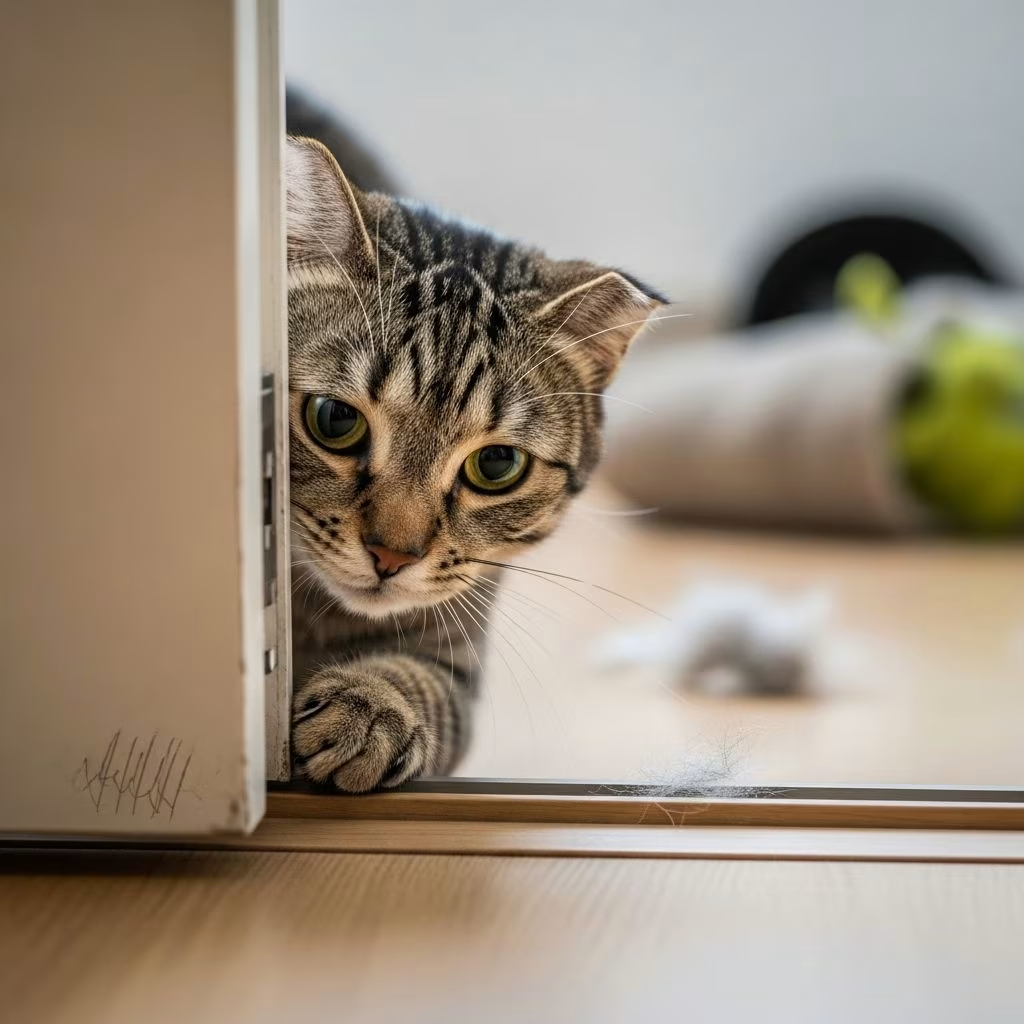
Separation anxiety in cats manifests as distress when owners leave, leading to behaviors like excessive vocalization and destructive actions. Cats form strong bonds and can experience genuine stress from isolation, unlike their independent reputation suggests.
What Is Separation Anxiety in Cats?
Separation anxiety occurs when a cat becomes overly distressed upon separation from its primary caregiver, showing stress responses beyond normal missing their owner. This condition affects indoor cats sensitive to solitude, often those strongly attached to owners.
Unlike dogs, cats’ anxiety is subtler but involves agitation, depression-like symptoms, and maladaptive behaviors triggered by absence. It stems from fear of abandonment, exacerbated by routine changes.
Do Cats Get Separation Anxiety?
Yes, cats develop separation anxiety, displaying stress, agitation, or depression when alone. Single indoor cats are particularly prone, showing unusual sensitivity and attachment.
Veterinarians recognize it as a disorder with symptoms varying by cat, often combining home and away behaviors. Not every vocal cat has it, but patterns indicate true anxiety.
Signs Your Cat Has Separation Anxiety
Observe behaviors at departure, during absence (via camera), and return. Key signs cluster around vocalization, elimination, appetite, and attachment.
Symptoms When You’re Home
- Extreme attachment: Cat follows you everywhere, demands attention, becomes upset if you move away—indicating clinginess.
- Destructive scratching: Targets furniture or doors to de-stress and mark territory, uncharacteristic for well-behaved cats.
- Overgrooming: Excessive licking leads to bald patches on belly or legs, a stress-relief compulsion.
- Anxious departure cues: Pacing, hiding, blocking doors, crying as you prepare to leave.
- Inappropriate elimination: Urinating/defecating outside litter box, often on bedding or clothes.
- Rapid eating: Gulps food leading to regurgitation from anxiety.
Symptoms When You’re Away
- Excessive vocalization: Persistent meowing, yowling, crying upon leaving or alone—expresses distress.
- Destructive behavior: Knocking items, scratching windows/doors, chewing objects only when unsupervised.
- Appetite changes: Refuses food/drink while alone, despite normal care; prolonged loss warrants vet check.
- Inappropriate elimination: Urination outside tray, sometimes immediately post-departure.
- Restlessness/hiding: Pacing, inability to settle, retreating to closets or under beds.
- Exuberant greetings: Over-the-top excitement upon return.
- Other signs: Vomiting (with hair/food), excessive self-grooming, lethargy, startling easily.
Use a pet camera to confirm away behaviors, as they pinpoint anxiety timing.
Causes of Separation Anxiety in Cats
Triggers include sudden schedule changes, rehoming, loss of companions, or insufficient transition to alone time. Abuse history or strong bonding heightens risk. Indoor-only cats without stimulation are vulnerable.
| Common Triggers | Description |
|---|---|
| Sudden routine shifts | New work hours without gradual adjustment. |
| Rehoming/trauma | Past abuse or multiple homes fosters insecurity. |
| Lack of enrichment | Boredom in single-cat homes amplifies stress. |
| Over-dependence | Constant attention prevents independent coping. |
How Veterinarians Diagnose Separation Anxiety
No specific test exists; diagnosis relies on history, symptom observation, and ruling out medical issues. Vets assess via owner reports, video footage, and physical exams to exclude pain or illness mimicking anxiety (e.g., urinary problems).
Behaviorists like consultants evaluate patterns: Must occur specifically with separation, not randomly. Bloodwork or imaging rules out hyperthyroidism or arthritis causing similar signs.
Treatment and Management Options
- Environmental enrichment: Provide toys, scratching posts, window perches for stimulation; rotate items to prevent boredom.
- Gradual desensitization: Practice short departures, increasing duration slowly to build tolerance.
- Pheromone therapy: Diffusers like Feliway mimic calming scents.
- Dietary supplements: Vet-recommended calming treats with L-theanine or tryptophan.
- Medication: Anti-anxiety drugs like fluoxetine for severe cases, prescribed post-diagnosis.
- Play and routine: Daily interactive sessions; consistent feeding/sleep schedules reassure.
- Companionship: Introduce another pet cautiously or use daycare for long absences.
Combine approaches; track progress with journals or cameras. Patience is key—improvement takes weeks.
How to Help a Cat with Separation Anxiety
Start with vet visit to exclude health issues. Implement a plan:
- Enrich environment: Puzzle feeders, cat trees, background radio for company.
- Desensitize departures: Put on shoes/jacket without leaving; short outings with treats upon return.
- Ignore attention-seeking pre-departure; reward calm behavior.
- Monitor via camera; adjust based on footage.
- Consult certified behaviorist if persistent.
Avoid reinforcing anxiety by over-coddling at returns—calm greetings help.
FAQs
Can all cats get separation anxiety?
Yes, any cat can, but indoor, single-pet households or those with bonding histories are at higher risk.
Is excessive meowing always separation anxiety?
No; rule out hunger, pain, or mating. Patterns tied to alone time confirm it.
How long does treatment take?
Weeks to months with consistency; severe cases may need ongoing management.
Should I get a second cat?
Possibly, but introduce slowly; not a cure-all and may worsen if incompatible.
Can kittens have separation anxiety?
Yes, early weaning or sudden changes trigger it; prevention via gradual independence.
References
- Separation Anxiety in Cats – 7 Signs & 9 Ways to Help — Sploot Veterinary Care. 2023. https://www.splootvets.com/post/separation-anxiety-in-cats-signs-symptoms-ways-to-help
- Separation Anxiety – Indoor Pet Initiative — The Ohio State University. Accessed 2026. https://indoorpet.osu.edu/cats/problem-solving/separation-anxiety
- Cat Separation Anxiety: Symptoms, Causes, and How To Help — Rover. 2023. https://www.rover.com/blog/cat-separation-anxiety/
- Signs of Cat Separation Anxiety & How To Help — Whisker. 2023. https://www.whisker.com/blog/cat-separation-anxiety
- Anxiety Disorders in Cats — PetMD. 2024. https://www.petmd.com/cat/conditions/behavioral/anxiety-disorders-cats



