

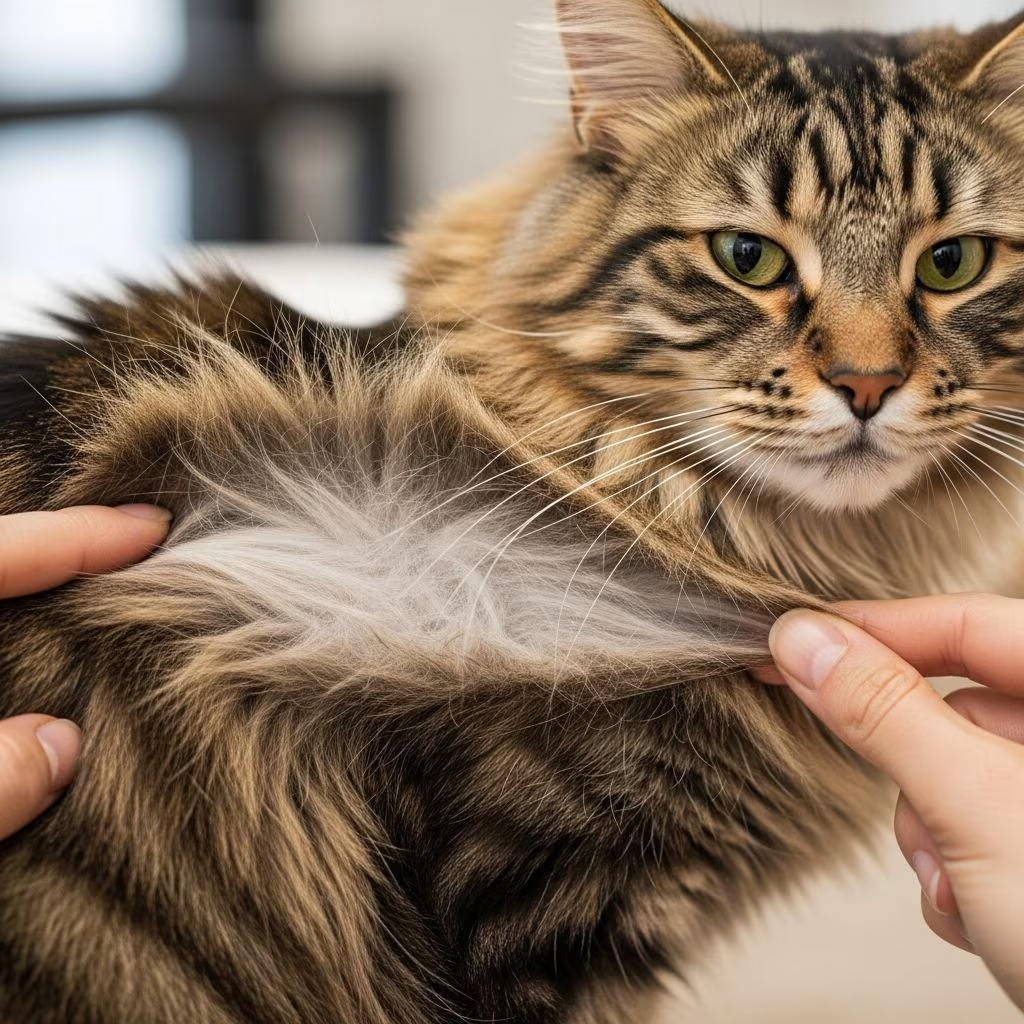
Many cat owners notice their pets shedding excessively or sporting unusually plush fur, sparking curiosity about coat types. A **double coat** in cats features two distinct layers: a dense, soft undercoat for insulation and longer guard hairs forming the protective topcoat. This structure helps cats regulate temperature, especially in varying climates. Understanding your cat’s coat type aids in proper grooming, reducing matting and health issues. This article outlines simple tests, breed examples, care routines, and more to help you identify and maintain a double-coated feline.
What Is a Double Coat in Cats?
A double coat consists of a short, fluffy undercoat near the skin and coarser, longer outer hairs that repel water and dirt. Unlike single-coated cats with uniform fur length, double-coated ones have visibly distinct layers, often leading to seasonal shedding known as “blowing coat”. The undercoat traps air for warmth, while guard hairs shield against elements. According to cat coat genetics, most cats possess all three natural hair types (down, awn, guard), but in double coats, down hairs form the insulating base with equal-length awn and guard hairs creating the appearance of two layers.
This adaptation is evolutionary, seen in cats from cold regions. Double-coated cats like Maine Coons thrive in harsh winters due to this insulation, but it demands diligent care to prevent tangles. Single coats, common in warmer-climate breeds, lie flat and shed minimally.
Breeds Prone to Double Coats
Certain breeds are renowned for their luxurious double coats, bred for resilience in tough environments. Here’s a breakdown:
- Maine Coon: Largest domestic breed with a dense undercoat and water-resistant topcoat, ideal for snowy origins.
- Norwegian Forest Cat: Thick undercoat beneath long, glossy guard hairs; excels in cold Nordic climates.
- Siberian: Triple-coat potential with exceptionally plush undercoat; water-repellent and insulating.
- Persian: Long, thick double coat requiring frequent grooming to avoid mats.
- British Shorthair: Surprisingly dense undercoat under short top hairs, giving a plush feel.
Mixed-breed cats can inherit these traits too. Genetic factors like the agouti gene and melanin inhibitors influence coat density.
How to Tell If Your Cat Has a Double Coat: 4 Simple Steps
Identifying a double coat requires no fancy tools—just your hands and eyes. Follow these steps for accurate assessment.
Step 1: Part the Fur and Observe Layers
Gently part the fur along the back or sides. Look for a thick, pale undercoat contrasting with darker, longer guard hairs. In double-coated cats, you’ll see a fluffy secondary layer close to the skin. Single coats show uniform color and length throughout.
Step 2: Perform the Hand Test
Run your fingers against the grain from head to tail. Double-coated cats feel like plush velvet with a spongy underlayer; single coats feel sleek and smooth. Check the shoulders and rump, where undercoats are thickest.
Step 3: Blow Test with a Dryer
On low heat, blow air into the fur. Double coats puff up dramatically, revealing the dense undercoat. Single coats barely react. Avoid high heat to prevent discomfort.
Step 4: Check for Shedding Patterns
Double-coated cats shed heavily in spring and fall, releasing the old undercoat. Brush gently; clumps of soft fur indicate double layers.
| Test Method | Double Coat Sign | Single Coat Sign |
|---|---|---|
| Parting Fur | Thick pale underlayer visible | Uniform fur, no contrast |
| Hand Feel | Spongy, plush resistance | Sleek, flat slide |
| Blow Test | Fur puffs significantly | Minimal lift |
| Shedding | Heavy seasonal undercoat loss | Even, light shedding |
Grooming Double-Coated Cats
Regular grooming is crucial for double-coated cats to prevent matting, reduce shedding, and promote skin health.
Essential Tools
- Undercoat rake or de-shedding brush for removing loose fur.
- Slicker brush for topcoat detangling.
- Wide-tooth comb for mats.
- Grooming gloves for gentle daily sessions.
Grooming Routine
Brush **3-5 times weekly**, more during shedding seasons. Start with the undercoat rake in the direction of hair growth, then slicker for the top. Focus on belly, armpits, and tail base where mats form. Bathing is rare; use dry shampoo if needed. Professional grooming quarterly helps for long coats.
Benefits include better circulation, early health detection, and less hairballs. Neglect leads to painful mats and skin infections.
Common Myths About Double Coats
- Myth: Shaving prevents shedding. Shaving damages the coat’s natural protection and risks sunburn.
- Myth: All longhaired cats are double-coated. Some, like Orientals, have single silky layers.
- Myth: Daily baths are necessary. Overbathing strips oils; brushing suffices.
Health Considerations for Double-Coated Cats
Double coats offer superb insulation but increase risks like heat intolerance in summer. Provide shaded, cool areas and monitor for overheating. Obesity exacerbates issues, so maintain ideal weight. Skin allergies or fleas hide easily in thick fur—regular checks are vital. Nutrition with omega-3s supports coat health.
Frequently Asked Questions (FAQs)
What breeds commonly have double coats?
Maine Coon, Norwegian Forest Cat, Siberian, Persian, and British Shorthair are prime examples, thanks to genetics favoring insulation.
Can mixed-breed cats have double coats?
Yes, if they inherit genes from double-coated ancestors. Use the four-step test to confirm.
How often should I groom a double-coated cat?
3-5 times per week, increasing during shedding seasons to manage undercoat buildup.
Does shaving a double coat help with shedding?
No, it disrupts natural growth cycles and exposes skin to harm. Focus on brushing instead.
Why does my cat shed so much seasonally?
This “blowing coat” sheds the old undercoat for a fresh layer, adapting to temperature changes.
Is a triple coat different from double?
Yes, triple coats have three distinct layers (down, awn, guard) in varying lengths, seen in Siberians for extreme cold.
Double-coated cats bring beauty and warmth but require commitment. Mastering identification and care ensures your feline stays comfortable and mat-free. Consult a vet for persistent shedding or skin issues.
References
- Cat coat genetics — Wikipedia. 2023-10-15. https://en.wikipedia.org/wiki/Cat_coat_genetics
- Understanding Your Cat’s Coat: Grooming Cats With Different Fur Types — Dallas Mobile Pets Paw. 2024-05-20. https://dallasmobilepetspaw.com/understanding-your-cats-coat-grooming-cats-with-different-fur-types/
- Grooming for Double-Coated Breeds: A Comprehensive Guide — Purrfect Grooming Pet Blog. 2024-08-10. https://purrfectgrooming.pet/blog/b/grooming-for-double-coated-breeds-a-comprehensive-guide-to-handling-shedding/
- How To Tell If Your Cat Has A Double Coat In 4 Simple Steps — Cats.com. 2024-03-12. https://cats.com/how-to-tell-if-your-cat-has-a-double-coat



