

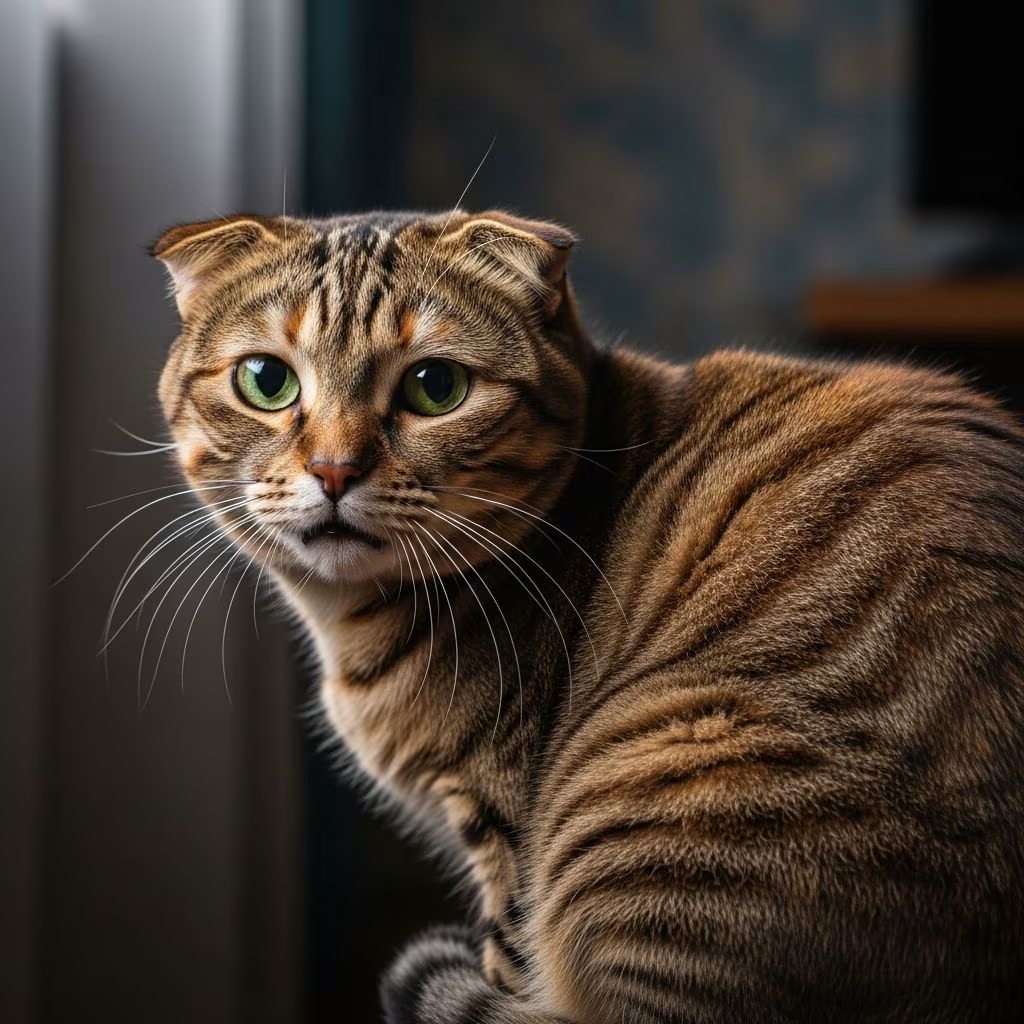
Cats are masters of masking their emotions, but fear is a powerful instinct that reveals itself through distinct body language, vocalizations, and behaviors. Understanding **how to tell if a cat is scared** can help you intervene early, prevent stress-related issues, and build a stronger bond with your feline friend. Fear in cats triggers the fight, flight, or freeze response, often stemming from perceived threats like loud noises, strangers, or unfamiliar environments.
Recognizing these signs isn’t just about observation—it’s about empathy. A scared cat may hide for hours or lash out unexpectedly, leading to misunderstandings or bites. By decoding their signals, you create a safer home and improve their quality of life. This comprehensive guide draws from veterinary insights to cover signs, causes, calming techniques, and more.
Signs Your Cat Is Scared: Body Language Breakdown
Cats communicate primarily through body language. A relaxed cat has soft eyes, forward ears, and a loose tail, but fear flips these cues dramatically. Here’s how to spot **scared cat signs** from mild to severe.
Mild Signs of Fear
- Partial pupil dilation: Eyes widen slightly as adrenaline kicks in.
- Ears slightly rotated outward: Not fully flattened, but turning away from the threat.
- Whiskers forward but tense: Body turns sideways to avoid direct confrontation.
- Tail wrapping closer to body: A subtle sign of unease, unlike the happy upright tail.
- Displaced grooming: Licking paws excessively to self-soothe.
These early indicators mean your cat is uncomfortable but not panicked. Intervene gently to prevent escalation.
Moderate Signs of Fear
- Increased pupil dilation: Eyes become large and round, focusing intensely on the threat.
- Ears rotated and slightly flattened: Back arches subtly; whiskers pull back.
- Direct staring: Tense jaw, possible low growls or hissing.
- Fur starting to puff (piloerection): Tail fluffs up partially.
- Quick breathing and trembling: Body leans away from the fear source.
At this stage, the cat’s fight-or-flight is ramping up. Offer space immediately.
Severe Signs of Fear
- Fully dilated pupils and flattened ears: “Halloween cat” pose—arched back, bristled fur, standing on tiptoes.
- Freeze response: Crouched low, tail tucked, body small and still.
- Aggression cues: Swatting, spitting, growling, biting if cornered.
- Hiding or fleeing: Bolting to safe spots like under beds or closets.
- Physiological signs: Sweaty paws, rapid heart rate, loss of bladder control.
Severe fear can lead to chronic anxiety if unaddressed. Note patterns for vet consultation.
Common Causes of Fear in Cats
Fear isn’t random—it’s often triggered by specific stimuli. Understanding **why cats get scared** helps in prevention.
- Loud noises: Thunder, fireworks, vacuums overwhelm their sensitive ears.
- Strangers or new pets: Unfamiliar scents and movements signal danger.
- Traumatic events: Abuse, vet visits, or “one-trial learning” from a single scare.
- Environmental changes: Moving homes, new furniture, or routine disruptions.
- Health issues: Pain from illness amplifies fear responses.
Kittens socialized early (2-7 weeks) are less prone, but adults can develop generalized fear from past negatives.
How to Comfort a Scared Cat
Comforting a **scared cat** requires patience—no forcing interaction. Focus on safety and positive associations.
- Create a safe space: Provide a quiet room with hiding boxes, beds, and familiar scents.
- Use pheromone products: Feliway diffusers mimic calming facial pheromones.
- Slow blinks and soft talk: Mimic relaxed cat signals to de-escalate.
- Avoid punishment: Never scold for fear behaviors—they worsen anxiety.
- Gradual desensitization: Expose to triggers at low intensity with treats.
Play therapy with toys builds confidence. Monitor for progress over days.
Understanding Feline Fear, Anxiety, and Stress (FAS)
**FAS**—Fear, Anxiety, Stress—forms a spectrum. Fear is immediate (real threat); anxiety anticipates danger; stress is chronic overload. Untreated FAS weakens immunity and causes litterbox issues.
| Stage | Signs | Response |
|---|---|---|
| Mild | Turned ears, grooming | Remove trigger |
| Moderate | Hissing, arched back | Give space, pheromones |
| Severe | Aggression, hiding | Vet check, behaviorist |
This table summarizes FAS progression for quick reference.
When to See a Vet for Your Scared Cat
If fear persists >2 weeks, includes appetite loss, or aggression, consult a vet. Rule out medical causes first. They may recommend anti-anxiety meds or referrals to certified behaviorists.
- Sudden onset: Possible pain or illness.
- House soiling: Stress marker.
- No improvement with home strategies: Professional intervention needed.
Frequently Asked Questions (FAQs)
Why is my cat suddenly scared of everything?
Triggers like illness, trauma, or changes can cause this. Check for health issues first.
Can a scared cat become aggressive?
Yes, defensive aggression (hissing, swatting) occurs when escape isn’t possible.
How long does it take to calm a scared cat?
Varies; mild cases hours, severe weeks with consistent efforts.
Is hiding normal for scared cats?
Absolutely—it’s their flight response. Respect it.
What if my cat freezes instead of running?
Freeze is a fear tactic to appear less threatening. Don’t approach.
Preventing Fear in Cats: Long-Term Tips
Proactive steps build resilience:
- Early socialization for kittens.
- Consistent routines.
- Enrichment: Scratching posts, perches.
- Regular vet checkups.
Word count: 1678 (excluding metadata).
References
- Cat Behavior Problems – Fears and Phobias — VCA Animal Hospitals. Accessed 2026. https://vcahospitals.com/know-your-pet/cat-behavior-problems—fears-and-phobias
- Fraidy Cat? How To Recognize Signs Of Feline Fear, Anxiety And Stress — Fear Free Happy Homes. Accessed 2026. https://www.fearfreehappyhomes.com/fraidy-cat-how-to-recognize-signs-of-feline-fear-anxiety-and-stress/
- How to Comfort a Scared Cat — PetMD. Accessed 2026. https://www.petmd.com/cat/behavior/how-comfort-scared-cat
- Shy and Fearful Cats: The Complete Guide — San Diego Humane Society. Accessed 2026. https://sdhumane.org/resources/shy-and-fearful-cats-complete/
- Fear in Cats: How to Calm Stress and Create Security — Lanoka Oaks Veterinary Hospital. 2025-11-27. https://lanokaoaks.com/2025/11/27/fear-in-cats-solutions/
- The Fearful Cat — PAWS. Accessed 2026. https://www.paws.org/resources/fearful-cat/



