

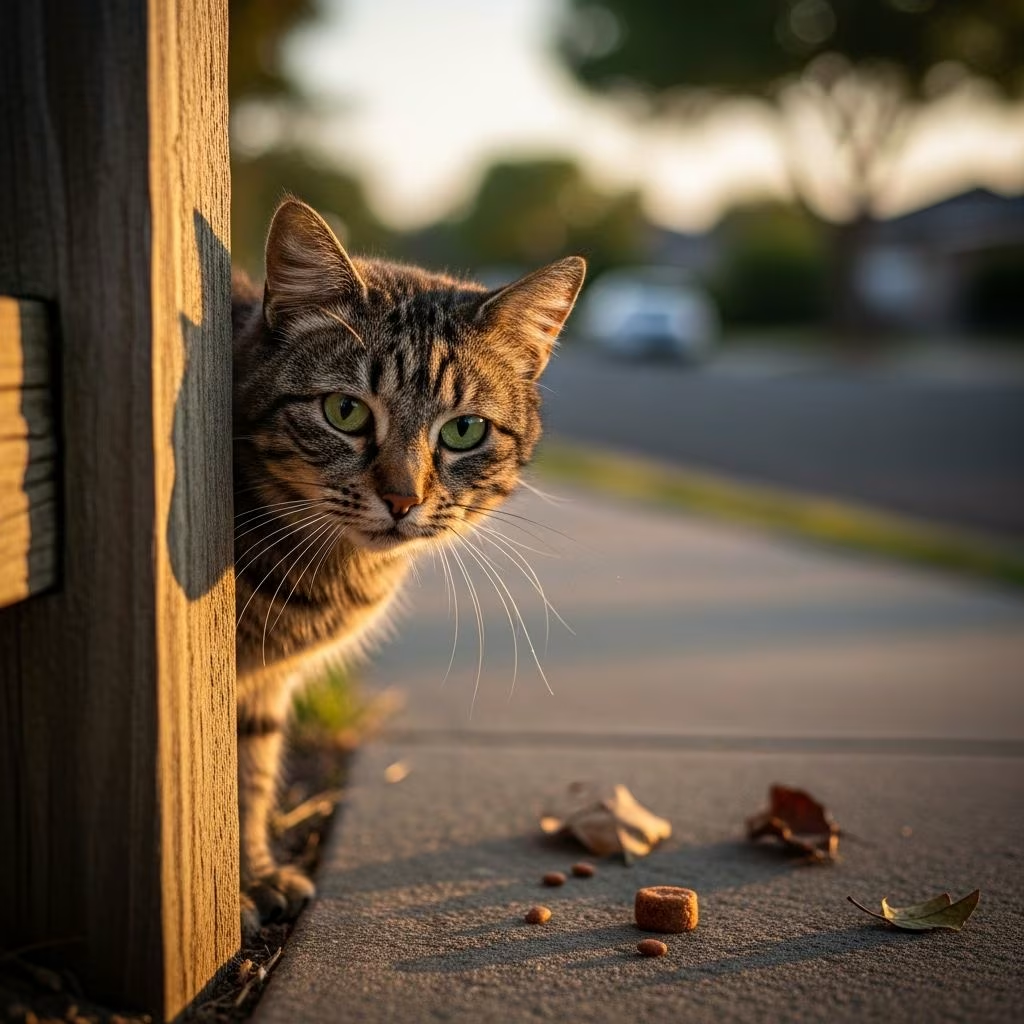
You’ve likely encountered cats roaming neighborhoods during your daily routine. Distinguishing whether a cat is a **stray**—without a home—or an **outdoor pet** with caring owners is crucial for providing appropriate help. This guide outlines vet-reviewed indicators to guide your decisions compassionately and effectively.
The Importance of Learning the Difference
Understanding if a cat is stray or outdoor ensures you respond correctly. Outdoor cats with homes rarely need intervention, unlike strays who may suffer from malnutrition, injury, or illness. Lost pets might show distress signs like thinness or wounds, signaling urgency. Misidentifying can lead to unnecessary stress for owned cats or missed opportunities to aid true strays. Observing carefully helps decide on actions like feeding, trapping, or contacting shelters, promoting animal welfare without overstepping.
Strays often face harsh survival challenges, including exposure to weather, fights, and disease, while outdoor cats benefit from regular care. Early identification supports programs like Trap-Neuter-Return (TNR) for ferals or reunions for lost pets.
How to Tell If a Cat Is Stray or Outdoor
Use these key indicators—**appearance**, **behavior**, **schedule**, and **location**—to assess a cat’s status. Combine multiple clues for accuracy, as no single sign is definitive.
1. Their Appearance
A cat’s physical condition reveals much about its circumstances. **Collars** are a strong indicator of ownership, though not universal among outdoor cats.
- Stray Cats: Often disheveled with matted, thin, or dirty coats. Eyes or noses may be runny/crusty from infections. Visible injuries like scratches from fights, emaciation showing ribs/spine. Ear-tipping (notched ear) signals TNR participation in ferals.
- Outdoor Cats: Shiny, well-groomed coats, bright eyes, clean noses. Minimal injuries, healthy weight from regular feeding.
Strays may neglect grooming due to stress, while ferals self-groom diligently despite hardships. Check for fleas, wounds, or abscesses as stray red flags.
2. Their Behavior
Observe from afar to gauge socialization. Approach slowly if safe.
- Stray Cats: Vary from friendly (previously owned) to fearful. May approach for food but skittish. Feral strays avoid humans, hiss, or flee.
- Outdoor Cats: Relaxed around people, may meow, rub legs, or follow. Comfortable with touch if familiar.
Ferals rarely meow at humans—a vocalization learned for pet owners. Tail-up greetings signal domestication; crouching/freezing indicates fear. Test by offering food: pets eat openly, ferals cautiously from distance.
3. Their Schedule
Roaming patterns reflect security. Strays roam anytime, enduring rain or night for survival. Outdoor cats prefer daylight/good weather, retreating home at night or bad conditions.
- Ferals are nocturnal, avoiding peak human activity.
- Strays/pets active dawn/dusk or day in neighborhoods.
Consistent evening returns to one yard suggest a home; constant wandering points to stray.
4. Their Location
Habitat choices differ sharply.
- Stray/Feral Cats: Hide in bushes, alleys, dumpsters. Solitary strays or feral colonies avoid visibility. Approach homes boldly if socialized.
- Outdoor Cats: Lounge openly in yards, streets. Patrol familiar territories without hiding.
Colony presence (multiple cats) often means ferals; lone wanderers could be either.
What to Do If You Find a Stray Cat
Suspect stray? Act humanely prioritizing safety.
- Assess Safely: Don’t chase; use food to lure if needed. Wear gloves for scratches.
- Check ID: Look for collar/tags. Scan for microchip at vet/shelter (home scanners unreliable).
- Vet Check: Transport in carrier for health scan, deworming, vaccines if unclaimed.
- Contact Authorities: Call humane society/animal control. Post flyers, social media “found cat” notices with photos.
- TNR for Ferals: Ear-tipped? Leave if healthy or support TNR.
Provide temporary care: fresh water, wet food, sheltered box. Avoid milk (lactose intolerant). If unadoptable, shelters find homes.
What to Do For an Outdoor Cat
Healthy, confident cat? Likely owned—monitor without interfering.
- Observe for owner routines (e.g., feeding times).
- If injured/ill: Try to contact via flyers, knock on doors, or microchip check.
- Post neighborhood notices: “Lost cat? Describe and contact me.”
Respect boundaries; overfeeding disrupts home diets.
Frequently Asked Questions (FAQs)
What’s the difference between a stray cat and a feral cat?
Strays were once pets, often socialized and approachable. Ferals are unsocialized, wild-born or reverted, typically fearful.
Do all outdoor cats wear collars?
No, many don’t for safety (breakaway risks), but well-groomed appearance helps identify.
How do I check for a microchip without a vet?
Home scanners exist but are unreliable; professionals use universal scanners best.
Should I feed a stray cat?
Yes, sparingly with wet food to avoid dependency, while seeking permanent solutions.
What does an ear-tipped cat mean?
Indicates TNR: trapped, neutered, vaccinated, released. Part of feral management.
Key Comparison Table: Stray vs. Outdoor Cat
| Indicator | Stray Cat | Outdoor Cat |
|---|---|---|
| Coat | Matted, dirty, thin | Shiny, groomed |
| Body Condition | Emaciated, injuries | Healthy weight |
| Behavior | Fearful or variable | Relaxed, meows |
| Schedule | Anytime, bad weather | Daytime, good weather |
| Location | Hiding, alone/colony | Open yards |
This table summarizes visual cues for quick reference.
References
- How to Tell If a Cat Is a Stray or Outdoor? Vet-Reviewed Differences — Catster. 2023. https://www.catster.com/lifestyle/how-to-tell-if-a-cat-is-a-stray-or-outdoor/
- How to Tell If a Cat Is Feral: 7 Questions to Ask Yourself — Catster. 2023. https://www.catster.com/lifestyle/how-to-tell-if-a-cat-is-feral/
- What Do You Do if You Find a Stray Cat? 4 Vet-Reviewed Steps — Catster. 2023. https://www.catster.com/cat-health-care/what-do-you-do-if-you-find-a-stray-cat/
- Feral Cat vs. Stray Cat: Main Differences Explained By Our Vet — Catster. 2023. https://www.catster.com/ask-the-vet/feral-cat-vs-stray-cat/
- What to Do with a Stray Cat That Won’t Leave? Vet-Approved Tips — Catster. 2023. https://www.catster.com/cat-behavior/what-to-do-with-a-stray-cat-that-wont-leave/



