

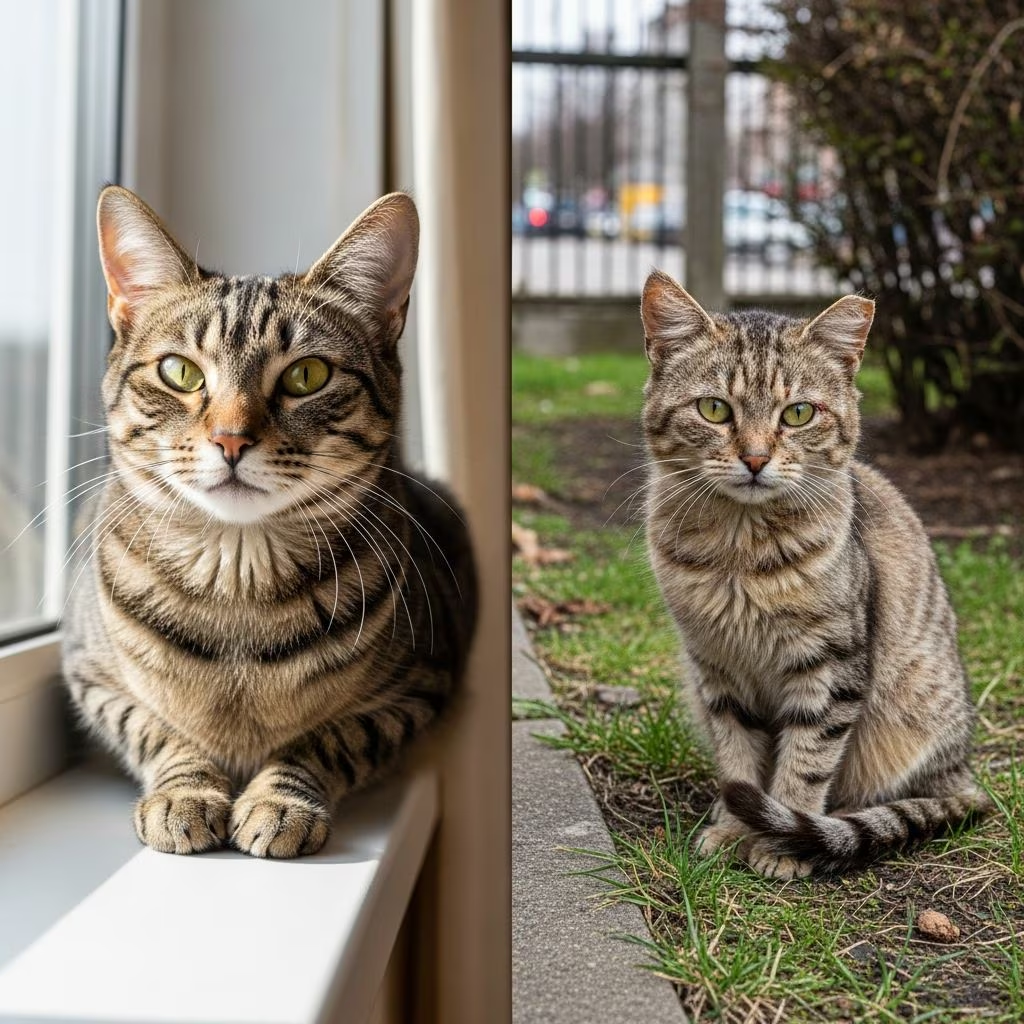
You’ve likely encountered cats roaming neighborhoods during your daily routine. Distinguishing whether a cat is a **stray** needing help or an **outdoor pet** with a home is crucial for appropriate action. This guide covers vet-reviewed signs including appearance, behavior, schedule, location, and next steps.
The Importance of Learning the Difference
Understanding if a cat is stray or outdoor ensures you provide the right support. Outdoor cats with homes rarely need intervention unless injured, while strays often suffer from malnutrition, illness, or injury. Misidentifying can stress owned pets or delay aid for true strays. Knowing these differences guides whether to scan for microchips, contact shelters, or simply observe.
Strays may appear lost or abandoned, showing wear like thin bodies or wounds, unlike healthy roaming pets. This knowledge promotes humane responses, supporting programs like Trap-Neuter-Release (TNR) for ferals while reuniting lost pets.
How to Tell If a Cat Is Stray or Outdoor
Use these four key indicators to assess a roaming cat. Observe safely from afar to avoid scaring potentially feral individuals.
1. Their Appearance
A cat’s physical condition reveals much. **Collars** signal owned outdoor cats, though not all wear them. Compare traits below:
- Stray Cats: Disheveled, dirty coats; matted or thin fur; runny/crusty eyes or noses; visible scratches/injuries; bony, underweight frames (spines/hips show); possible ear-tip notch from TNR programs indicating feral status.
- Outdoor Cats: Clean, shiny, healthy coats; bright eyes/clear noses; minimal scratches; well-fed, muscular builds without malnutrition signs.
Strays neglect grooming due to stress, while outdoor pets maintain hygiene. Ear notches (often left ear) mark TNR cats, confirming feral/stray status without ownership.
2. Their Behavior
Approach cautiously. Socialization levels differ markedly:
- Stray Cats: Vary from friendly (if recently socialized) to scared; may approach cautiously or hide; less likely to meow at humans unless domesticated recently.
- Outdoor Cats: Relaxed around people; may meow, rub legs, or follow; comfortable in human spaces like yards.
- Feral Cats (subset of strays): Fearful, avoidant; crouch, freeze, or flee; no meowing; nocturnal vigilance; tail low, body tense.
Observe reactions: disinterest or hiding suggests feral; curiosity indicates stray/pet. Meowing strongly points to socialization, ruling out pure feral.
| Behavior Cue | Stray/Feral | Outdoor Pet |
|---|---|---|
| Meows at humans | Rare | Common |
| Approaches/rubs | Unlikely (feral) | Frequent |
| Body language | Crouched, frozen | Relaxed, tail up |
| Human tolerance | Flees/hides | Tolerates proximity |
3. Their Schedule
Roaming patterns reflect security:
- Stray Cats: Active anytime, including bad weather/night; no safe shelter drives constant foraging.
- Outdoor Cats: Daytime roamers, especially good weather; return home at night or storms.
- Feral Cats: Primarily nocturnal/dusk-dawn; avoid peak human hours.
Spotting a cat in rain or midnight scavenging flags stray status—owned cats seek indoor comfort.
4. Their Location
Hangouts indicate lifestyle:
- Stray Cats: Solitary (non-colony); near homes/garbage for food; hide in bushes/sheds; approach doors boldly if socialized.
- Outdoor Cats: Neighborhood loungers; visible in yards/driveways; part of territories without hiding.
- Feral Cats: Colonies in secluded spots; dumpsters/alleys; avoid open human areas.
Solitary wanderers near resources lean stray; confident yard-dwellers suggest homes.
What to Do Next
For a Stray Cat
If signs point to stray, act compassionately:
- Assess Safety: Ensure no aggression; use humane trap if needed.
- Check ID: Look for collar/tags; scan microchip at vet/shelter (home scanners unreliable).
- Vet Check: Treat injuries/illness; TNR if feral.
- Rehome: No chip? Shelter or foster; post flyers with description/location.
Contact humane society if unable to handle. Microchips link to owners/databases efficiently.
For an Outdoor Cat
Healthy appearances/behaviors mean monitor only:
- Observe over days for routines.
- Ill/injured? Knock doors, post ‘found cat’ flyers with photo/details.
- No response/microchip? Treat as stray.
Respect boundaries—interfering stresses pets.
Frequently Asked Questions (FAQs)
What if the cat has no collar but looks healthy?
Many outdoor cats skip collars. Check behavior/schedule; vet scan confirms ownership.
Is a meowing cat always owned?
No, but socialized strays meow too. Feral cats rarely vocalize at humans.
What does an ear notch mean?
TNR program indicator: trapped, neutered, vaccinated, released feral—hands-off unless ill.
Can strays become feral?
Yes, unsocialized strays feralize over time, losing human trust.
Should I feed roaming cats?
Strays yes (trap later); outdoor no, to avoid dependency. Feral colonies: support TNR feeders.
Key Takeaways Table
| Indicator | Stray/Feral Signs | Outdoor Pet Signs |
|---|---|---|
| Appearance | Dirty, thin, wounded, ear notch | Clean, shiny, healthy weight |
| Behavior | Fearful, no meow, hides | Friendly, meows, relaxed |
| Schedule | Anytime, bad weather | Daytime, good weather |
| Location | Hiding, solitary foraging | Open yards, neighborhood roam |
References
- How to Tell If a Cat Is a Stray or Outdoor? Vet-Reviewed Differences — Catster. 2023. https://www.catster.com/lifestyle/how-to-tell-if-a-cat-is-a-stray-or-outdoor/
- How to Tell If a Cat Is Feral: 7 Questions to Ask Yourself — Catster. 2023. https://www.catster.com/lifestyle/how-to-tell-if-a-cat-is-feral/
- What to Do with a Stray Cat That Won’t Leave? Vet-Approved Tips — Catster. 2023. https://www.catster.com/cat-behavior/what-to-do-with-a-stray-cat-that-wont-leave/
- How Do Outdoor Cats Survive Cold Winters? Vet-Verified Facts — Catster. 2023. https://www.catster.com/cat-health-care/how-do-outdoor-cats-survive-cold-winters/
- Feral Cat vs. Stray Cat: Main Differences Explained By Our Vet — Catster. 2023. https://www.catster.com/ask-the-vet/feral-cat-vs-stray-cat/



