

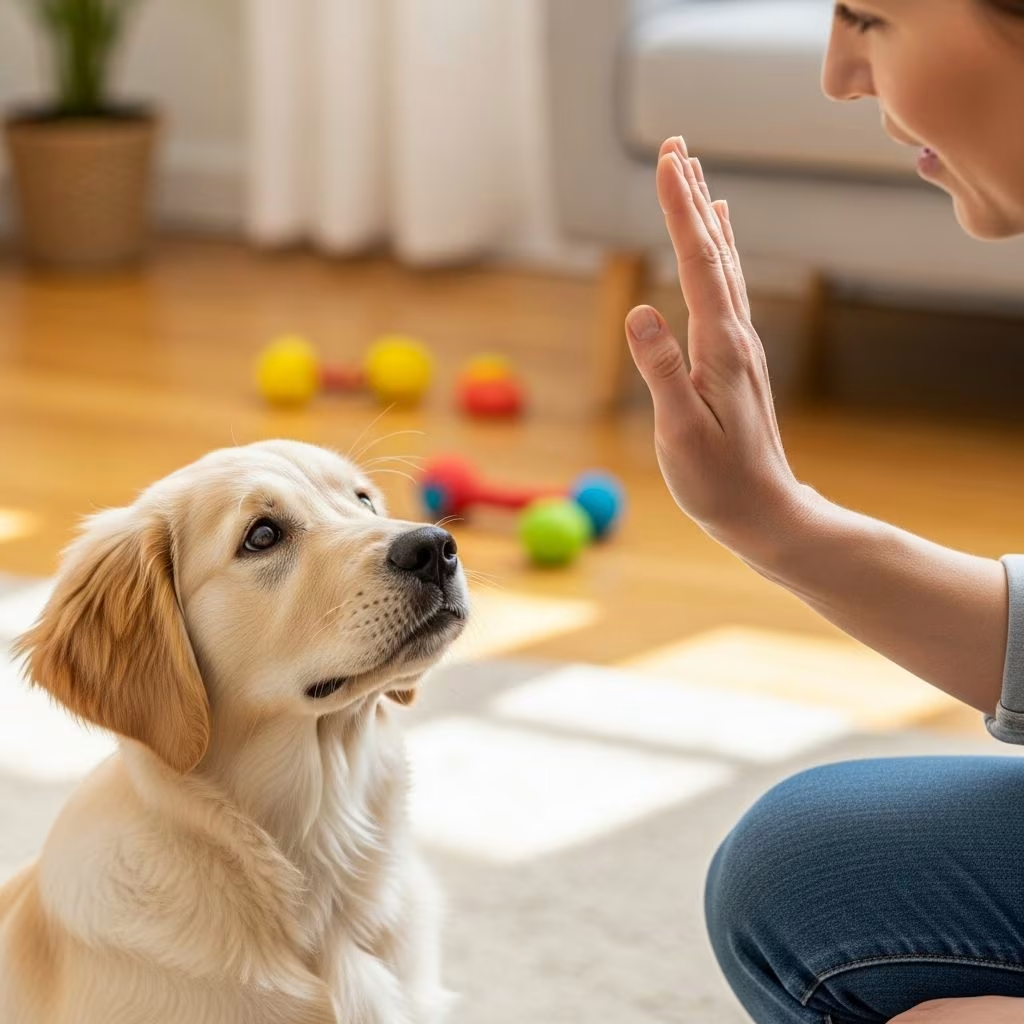
Are you looking for a way to get your dog’s attention quickly and effectively? The watch me dog command is one of the most valuable tools in any dog trainer’s toolkit. Whether you’re working on basic obedience, addressing behavioral issues, or simply need your pup to focus during walks, mastering this command can be a real time-saver. When you need your pooch to direct his attention to you during training sessions, walks, or any situation where it’s crucial to have your dog’s undivided attention, the watch me command is absowoofly perfect for the job.
Why You Should Teach a “Watch Me” Cue
Teaching your dog a watch me cue goes far beyond just having them look at you—it’s about establishing a foundation for all future training and behavioral management. When your dog understands and responds to the watch me command, you gain the ability to control your dog’s focus, which is absolutely essential during training sessions. This focused attention directly increases your success, particularly with lure-and-reward training methods where you lure a given behavior with a treat or toy. A dog that isn’t looking simply won’t see what you’re doing, but one who watches you is waiting attentively to see what you’ll ask for next.
Beyond the training environment, the watch me cue is incredibly valuable in everyday life. It’s common to give your dog instructions, such as to lie down on a mat when visitors arrive at the door or sit before you serve dinner. Getting your dog’s focus first, especially when there are exciting things competing for their attention, can greatly increase obedience and make your life as a pet parent significantly easier.
One of the most practical applications of the watch me command is its ability to redirect your dog away from distractions. If you want to pass another dog on a walk, asking your dog to look at you instead of the other dog will make it easier to walk on by without pulling, lunging, or becoming overly excited. This command becomes your primary tool for refocusing your dog’s attention from something you don’t want them to pay attention to, so you can then ask for and build the habit of behavior you do like.
Understanding Why Attention Matters
The foundation of effective dog training is getting and maintaining your dog’s attention. If your dog isn’t looking at you, chances are they aren’t listening to you either. This is why teaching the watch me command should be one of the first commands you teach your dog. Simply getting your dog’s attention away from unwanted behavior is the start to fixing that behavior. Once you have their attention, you can then redirect them to the behavior you want them to display.
Think of attention as the first step in stopping problem behaviors. For example, if your dog is chewing on your shoes, you can first negatively mark the behavior, then ask for watch me to gain attention, and finally ask for a sit or other alternative behavior to take the place of the unwanted chewing. This three-step approach transforms your dog’s focus and helps establish new, positive habits.
How to Teach a “Watch Me” Cue
Getting Started in a Quiet Environment
The easiest way to teach a watch me cue is to lure the behavior from your dog. If you make it obvious where you want your dog to look, it won’t take long for them to catch on. Start these exercises in a quiet environment so you’re easily the most interesting thing in the room. This eliminates competing distractions and allows your dog to focus entirely on you and the training process.
Step-by-Step Training Process
Follow these fundamental steps to lure your dog’s eye contact:
- Hold a treat in front of your dog’s nose.
- Slowly bring the treat up between your eyes. Your dog should watch the treat and be staring at your forehead.
- Mark your dog’s behavior with a clicker, a marker word like “yes,” or enthusiastic praise, then give your dog the treat as a reward.
- Repeat the above steps but reward your dog with a treat from your other hand instead. This breaks the association between the hand movement and the treat.
Introducing Hand Signals
Once your dog understands the basic concept, it’s time to introduce a hand signal. Repeat the treat-luring steps with an empty hand, but still reward your dog with a treat when they make eye contact. It can help if you stink up your fingers first by rubbing them with a treat or a small amount of peanut butter. This way, your dog still picks up the scent cue even though you’re not holding the treat in your hand. You’ve now successfully taught a hand signal for “watch me.”
Many trainers use their index finger pointing at their nose as the hand signal, as this is intuitive and easy for both you and your dog to understand. Once your dog is reliably following the hand signal, you can start saying your verbal cue like “watch me” or “look” before you move your hand. This verbal cue combined with the hand signal creates a more versatile command that works in various situations.
Fading the Lure
The transition from using treats as a lure to relying on just the verbal or hand signal is an important stage in training. When your dog is reliably following your hand signal, try giving the command without a treat. Use the hand signal and see if your dog makes eye contact. If she does, reward and praise her enthusiastically. If she doesn’t, go back to using the treat until she fully understands the command. This gradual process ensures your dog truly understands what you’re asking, rather than simply following a treat.
Adding Distractions to Build Real-World Success
Now that your dog has mastered watch me in a quiet environment, you’re ready to build a single distraction into your training. The goal is to give your dog a choice of where to look—at you or at the treat. You want your dog to realize that the way to get the food is not to stare at it, but to pay attention to you instead.
The Distraction Training Process
Follow these steps to introduce distractions:
- Hold a treat to your dog’s nose then slowly move your hand out to the side of your body so your arm is straight. Your dog can now either stare at the treat or look at your eyes. Chances are the treat will initially win their attention. Wait patiently.
- Eventually, your dog will look at you to see what’s going on. As soon as your dog looks towards your face, mark the moment immediately with a clicker or marker word and give them the treat. This timing is crucial for teaching the correct choice.
- After several repetitions, your dog should begin to understand the correct choice. Now wait for direct eye contact before marking and rewarding. This ensures they’re truly focused on you and not just glancing in your direction.
- When your dog is reliably choosing to look at you instead of the treat, add your verbal cue like “Watch Me” before you place the treat out to the side. This helps establish the verbal command as a trigger for the behavior.
Tips to Encourage Your Dog to Look at You
Progressing Through Distracting Environments
When your dog has mastered watch me in a quiet environment, start training in more and more distracting locations. Begin with slightly noisy areas, then progress to busier environments. If your dog fails to look at you, you’ve moved too far, too fast. Take a step back and practice some more in a less distracting environment before trying again. Eventually, your dog should find looking at you as rewarding as looking at anything else in their environment, particularly if you’ve taught them that the way to good stuff is through you.
Becoming the Source of Rewards
One of the most powerful strategies for encouraging your dog to look at you consistently is to become the source of your dog’s rewards. Make it so they want to look at you because good things come from you. Ask your dog to sit before you give a chew bone or ask for a down before going for a walk. If they know that they’ll be rewarded by listening to you, your dog will naturally pay more attention to you. This approach transforms your relationship with your dog and makes training exponentially more effective.
Practical Applications
The watch me command not only works for improving general attention but can also be used for addressing specific problem behaviors. This command works on chewing on shoes, barking, jumping up, rushing the door, and even aggression with dogs and people. In all situations, watch me becomes your main way to refocus your dog’s attention from something you don’t like back to you so that you can then ask for and build the habit of behavior you do like. Remember the principle: ignore the bad and reward the good.
Common Training Techniques
Using Marker Training
Many successful dog trainers incorporate marker training into their watch me command training. A marker is a specific sound (like a clicker) or word (like “yes”) that tells your dog exactly the moment they did something right. This precision helps your dog understand what behavior earned the reward. In the marker training system, there are only two consequences to a behavior that you’re trying to train: there’s either a reward or no reward. This clear communication accelerates the learning process significantly.
The Three-Step Behavior Modification Formula
As mentioned earlier, the watch me command fits perfectly into a three-step behavior modification formula: first, negatively mark the unwanted behavior with a sound or word; second, ask for watch me to gain attention; and third, ask for an alternative behavior to replace the unwanted one. This sequential approach ensures you’re not just stopping bad behavior but actively building better habits.
Building Duration and Distance
As your dog builds stronger duration and distance capability with the watch me command, you will be able to continue your work in more distracting environments and with greater distances between you and your dog. Start by asking for short bursts of attention right next to you, then gradually increase the duration and distance as your dog demonstrates reliability. This progressive training approach ensures success at each stage before moving to a more challenging level.
Frequently Asked Questions
Q: What verbal cues can I use for the watch me command?
A: Several verbal cues work well for this command. “Watch me,” “look,” or “look at me” can all work effectively as verbal cues to catch your dog’s attention. Choose whichever feels most natural to you and your training style, and stay consistent with your choice.
Q: How long does it take to teach the watch me command?
A: The time varies depending on your dog’s age, previous training experience, and your consistency. In a quiet environment with daily practice, many dogs can grasp the basics within a few days to a week. However, mastering it in distracting environments may take several weeks or months.
Q: Can I teach watch me to an older dog?
A: Absolutely. Dogs of any age can learn the watch me command. The training process remains the same regardless of age, though older dogs may learn at a slightly different pace than puppies.
Q: Should I use a clicker for watch me training?
A: While a clicker isn’t absolutely necessary, it can be very helpful. A clicker provides precise timing for marking the exact moment your dog offers the correct behavior. However, a verbal marker word like “yes” or enthusiastic praise works just as well if you don’t have a clicker.
Q: What if my dog won’t look away from the distraction treat?
A: If your dog is fixated on the distraction, you’ve introduced too challenging a distraction too quickly. Go back to practicing in a quieter environment or use a less enticing object as the distraction. Gradually work your way up to more challenging distractions as your dog demonstrates success.
Q: Can watch me help with leash pulling?
A: Yes, the watch me command is excellent for managing leash pulling. By redirecting your dog’s attention to you instead of other dogs, people, or environmental stimuli, you can significantly reduce pulling and make walks more enjoyable.
Key Takeaways for Success
Getting a dog’s attention, particularly when they’re new to training, is the first step to teaching any behavior. The watch me command is fundamental to all other training you’ll do with your dog. Start in a quiet environment, use positive reinforcement consistently, gradually introduce distractions, and always remember that you should become the most rewarding thing in your dog’s world. With patience, consistency, and plenty of treats, your dog will have all eyes on you whenever you ask for it. Mastering this command can truly be a time-saver for any situation where you need to get your dog to listen or learn something new.
References
- Grab & Hold Your Dog’s Attention With the “Watch Me” Command — American Kennel Club (AKC). 2024. https://www.akc.org/expert-advice/training/watch-me-command-grab-dogs-attention/
- Dog Training Tips: Learning The ‘Watch Me’ Command — K9 Magazine. 2024. https://www.k9magazine.com/dog-training-tips-learning-the-watch-me-command/
- The Power of Training Dogs with Markers (Clickers) — Leerburg. 2024. https://leerburg.com/markers.htm
- How To Teach Your Dog ‘Watch Me’ — Chewy Editors. 2024. https://www.chewy.com/education/dog/training-and-behavior/dog-commands-how-to-teach-watch-me



