

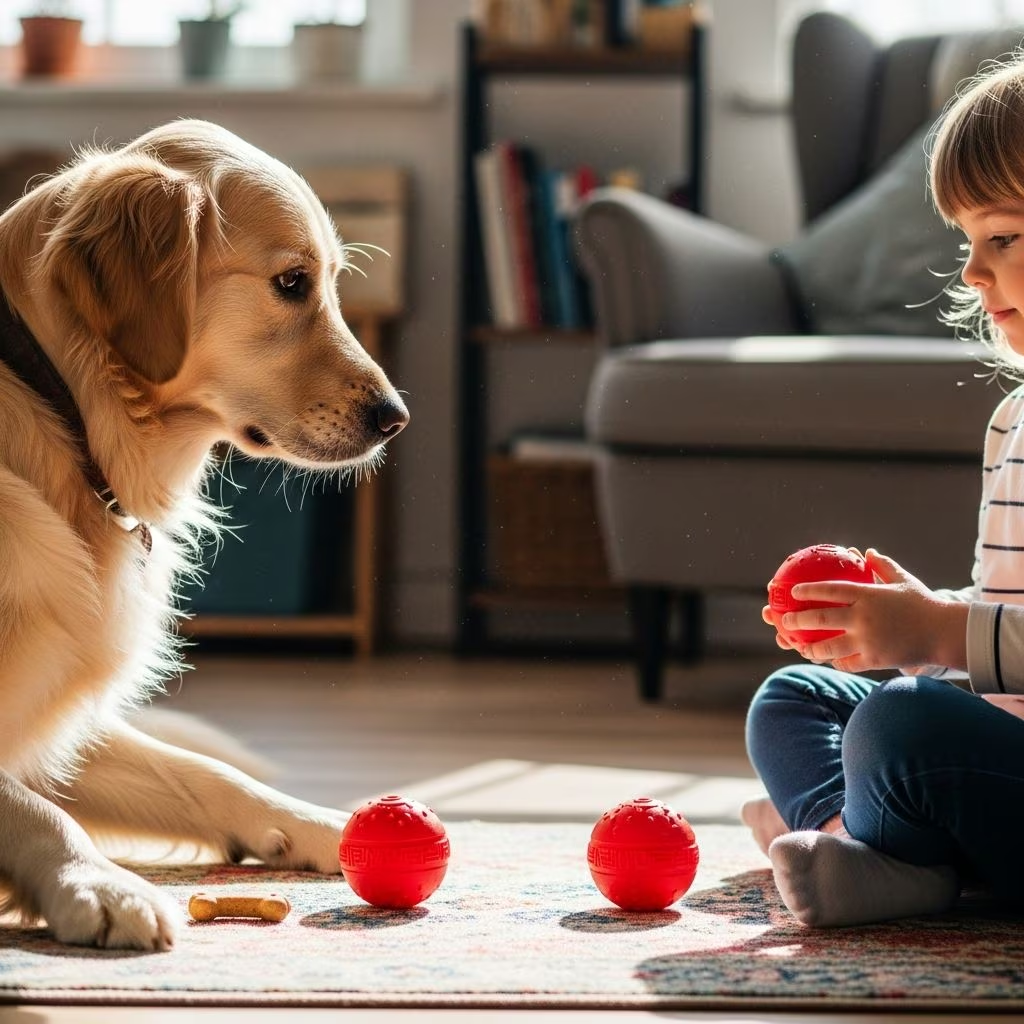
How to Teach Your Dog to Share: A Complete Guide
Sharing doesn’t always come naturally to dogs, but it’s a crucial skill that every canine companion should master. Whether you’re dealing with a pup who refuses to drop that stolen shoe, managing territorial behavior over food bowls, or navigating the dynamics of multiple dogs in one home, teaching your dog to share is fundamental to maintaining household harmony and ensuring the safety and happiness of all family members.
Resource possessiveness is a common canine behavior rooted in survival instincts. However, with patience, consistency, and positive reinforcement techniques, you can help your dog understand that sharing brings rewards rather than losses. This comprehensive guide walks you through practical strategies for teaching your dog to share with both you and other dogs, creating a more peaceful living environment for everyone.
Understanding Resource Guarding vs. Normal Possessiveness
Before diving into training techniques, it’s important to distinguish between normal canine possessiveness and problematic resource guarding behaviors. A little resource possessiveness between appropriately socialized dogs is actually healthy and natural. When one dog has a bone and another approaches with intent to take it, the dog with the bone may signal with a freeze or hard stare that he intends to keep it. An equally well-adjusted dog will recognize this communication and back off without any escalation occurring.
However, if your dog exhibits excessive guarding behaviors such as freezing over resources, rapidly consuming food, growling, snapping, or chasing others away when they approach, this is problematic resource guarding that requires professional intervention. In these cases, seek guidance from a qualified positive reinforcement trainer rather than attempting to address the issue on your own. The training tips outlined in this guide work best for dogs who don’t already display over-the-top guarding behaviors.
Sharing with You: Building Trust and Obedience
The foundation of teaching your dog to share begins with one-on-one training between you and your pet. When your dog learns to relinquish objects on command, you establish yourself as a trustworthy leader while simultaneously teaching him that giving up items results in positive outcomes rather than loss.
The Drop Command: Step-by-Step Training
Start by selecting a low-level toy—something your dog likes but isn’t obsessed with. High-value items will make training more challenging initially. Follow these steps to teach the drop command:
Step 1: Give your dog the toy and let him become comfortable holding it.
Step 2: Hold a savory dog treat directly in front of his nose so he can smell it clearly.
Step 3: As soon as your dog opens his mouth to get the treat and drops the toy, immediately say “drop” to label the action.
Step 4: Reward him generously with the treat and praise.
Step 5: After he finishes the treat, offer him the toy again and repeat the process.
Complete several repetitions of this sequence, then gradually remove the treat inducement. Ask your dog to “drop” without holding the treat in front of his nose. With sufficient repetitions, your dog will understand that the word “drop” means he should let go of whatever is in his mouth, even without a treat reward. Practice this exercise with different types of toys to ensure your dog will drop anything and everything when you ask, not just specific items.
Food Bowl Protocol: Positive Associations During Meals
Many dogs develop possessive behaviors around food bowls, making mealtimes tense and potentially dangerous. You can help your dog learn that people approaching his bowl bring extra special goodies, eliminating any need for him to feel possessive about his food.
Phase 1: Create Positive Associations
Begin by walking towards your dog as he’s eating and toss a high-value treat like chicken, cheese, or hot dog in the direction of his bowl. Repeat this process several times throughout his meal. Watch for positive acknowledgment from your dog, such as a happy expectant expression and broadly wagging tail. This signals that your dog has made the connection between your approach and the arrival of special treats.
Phase 2: Escalate Your Involvement
Work up to dropping the goodies directly into your dog’s bowl rather than tossing them from a distance. Before long, you’ll become your dog’s favorite dining companion, and he’ll actually look forward to your presence during meals rather than viewing it as a threat to his food.
Sharing with Other Dogs: Multi-Dog Household Strategies
If you have multiple dogs or frequently have canine guests, teaching your dog to share with other dogs is essential. A dog who doesn’t like to share might hog toys, sprawl across the dog bed leaving no room for a companion, or hover over water bowls to prevent others from drinking. However, sharing training doesn’t mean your dog must always relinquish his possessions—it means he should be comfortable when other dogs are near his “stuff,” whether that’s toys, bones, food bowls, or his bed.
The Reward-Based Sharing Approach
The most effective technique involves using treats and praise to reward your dog every time another dog gets close to or interacts with something your less-than-gracious dog considers his. Here’s how to implement this strategy:
Fill your pockets with high-value dog treats and be ready to dole them out strategically. Give your dog a steady stream of goodies and lots of praise when another dog checks out your dog’s bed. If another dog sticks his head in your dog’s toy basket, immediately reward your dog with a handful of treats and enthusiastic encouragement. During fetch, if the other dog manages to grab the ball before your selfish pup has a chance, let him know that sharing his ball results in an “atta boy!” and a piece of cheese.
Timing is absolutely critical. Your dog must make the connection between the other dog interacting with his stuff and the good things he’s receiving as a result. This means rewards should come immediately when the other dog is near his resources. With consistency, your dog will become a gracious and accommodating host to his furry siblings and friends.
Environmental Management for Foster Dogs or Visitors
If you’re hosting a dog buddy for a weekend visit or fostering a puppy and your dog has questionable sharing skills, environmental management can prevent conflicts while your dog is still learning. Consider these strategies:
- Remove temptation: Pick up all toys and bones that you think your dog might have a hard time sharing to prevent potential scuffles before they start.
- Separate feeding areas: Feed the dogs in separate rooms so neither feels the need to guard their food or eat faster than they normally would.
- Clean up promptly: Pick up empty dog bowls as soon as both dogs have finished eating to eliminate a resource that might cause conflict.
These management techniques aren’t permanent solutions, but they make situations more tolerable for your dog while you continue building positive associations with sharing through reward-based training.
Training Best Practices and Key Principles
Regardless of whether you’re teaching your dog to share with you or other dogs, several fundamental principles should guide your training approach:
- Use Positive Reinforcement: Rewarding desired behaviors is far more effective than punishing unwanted ones. When your dog associates sharing with treats, praise, and good things happening, he’ll be motivated to repeat the behavior.
- Keep Sessions Short: Brief, focused training sessions are more effective than lengthy ones. Adult dogs typically benefit from sessions around 10 minutes, with play breaks interspersed throughout. This keeps your dog engaged and prevents frustration or boredom.
- Practice Consistently: Regular practice in various locations and with different objects helps your dog generalize the behavior. Train in multiple rooms of your house, outside, and with different toys and treats.
- Be Patient: Every dog learns at his own pace. Some dogs grasp sharing concepts quickly, while others need more time and repetition. Celebrate small progress and stay consistent with your approach.
Comparison Table: Training Methods for Different Scenarios
| Scenario | Primary Method | Key Focus | Duration |
|---|---|---|---|
| One Dog, One Person | Drop Command Training | Building obedience and trust | 2-4 weeks |
| Food Bowl Sharing | Positive Association Protocol | Creating positive mealtime experiences | 3-6 weeks |
| Multi-Dog Household | Reward-Based Interaction | Treating other dogs’ proximity as reward triggers | 4-8 weeks |
| Visiting Dogs | Environmental Management | Preventing conflict while building tolerance | Ongoing as needed |
Troubleshooting Common Challenges
My dog isn’t responding to the drop command: Your dog may not have made the connection between the word and the action yet. Go back to basics with the treat-in-front-of-nose method, and ensure you’re saying “drop” the exact moment the toy leaves his mouth. Practice with lower-stakes toys that your dog isn’t intensely attached to.
My dog shows guarding behaviors: If your dog displays freezing, growling, snapping, or chasing behaviors around resources, professional help from a certified positive reinforcement trainer is essential. These signs indicate resource guarding that requires specialized intervention.
Progress seems slow with other dogs: Consistency and timing are crucial when training dogs to share with other dogs. Ensure you’re rewarding immediately when the other dog interacts with your dog’s resources, and maintain a steady supply of high-value treats. Progress may feel incremental, but repeated positive associations will pay off.
Frequently Asked Questions
Q: At what age should I start teaching my dog to share?
A: You can begin basic drop command training with puppies as young as 8 weeks old. However, young puppies have limited attention spans, so keep sessions very brief (5 minutes or less) and use lower-stakes toys. Multi-dog sharing dynamics can be introduced once your puppy is past the extreme teething phase.
Q: What if one of my dogs is significantly larger than the other?
A: Size differences can amplify possessiveness, as the larger dog may feel he can easily defend resources. Apply the same reward-based training methods, but consider managing resources initially to prevent escalation. Supervise all interactions carefully and reward calm, appropriate behavior around each other.
Q: Can adult dogs learn to share if they’ve never done so before?
A: Absolutely. Dogs of any age can learn new behaviors with consistent, positive reinforcement training. Adult dogs may take slightly longer than puppies, but their ability to focus and capacity for learning are excellent. Stick with your training plan and celebrate incremental progress.
Q: How do I know if my dog is ready for off-leash play with other dogs?
A: Your dog should demonstrate solid recall, not show resource guarding behaviors, and have positive interactions during on-leash meetings with other dogs. Introduce off-leash time gradually in controlled settings like a fenced yard, and always supervise initially.
Q: Should I always use high-value treats for training?
A: For initial training, high-value treats like chicken or cheese work best because they’re highly motivating. As your dog becomes more reliable with the behavior, you can gradually transition to lower-value rewards or use praise and play as reinforcers.
Q: What should I do if my dog growls at me when I try to take a toy?
A: Growling is a warning sign of resource guarding and shouldn’t be ignored. Stop attempting to take toys directly and consult with a certified positive reinforcement trainer. Never punish growling, as this can escalate the behavior to snapping or biting.
Moving Forward with Sharing Training
Teaching your dog to share is an investment in household peace and safety. Whether you’re addressing possessiveness over toys, managing food bowl dynamics, or creating harmony in a multi-dog home, the principles remain consistent: use positive reinforcement, maintain consistency, practice regularly, and celebrate progress. Remember that dogs learn at different rates, and what works for one dog might need modification for another. Stay patient, maintain your sense of humor, and enjoy the process of watching your dog become a more gracious and well-adjusted family member.
References
- How to Teach Your Dog to Share — Chewy Education, by Victoria Schade, CPDT-KA. 2025. https://www.chewy.com/education/dog/training-and-behavior/training-training-tips-how-to-teach-your-dog-to-share
- Clicker Training for Dogs 101: Everything You Need To Know — Chewy Education, by Stephanie Osmanski. 2025. https://www.chewy.com/education/dog/training-and-behavior/clicker-training-for-dogs
- Your Essential Guide to Basic Dog Obedience Training — Chewy Education, by Irith Bloom, CPDT-KSA. 2025. https://www.chewy.com/education/dog/training-and-behavior/sit-stay-and-beyond-weve-got-the-essential-guide-to-basic-dog-obedience-training



