

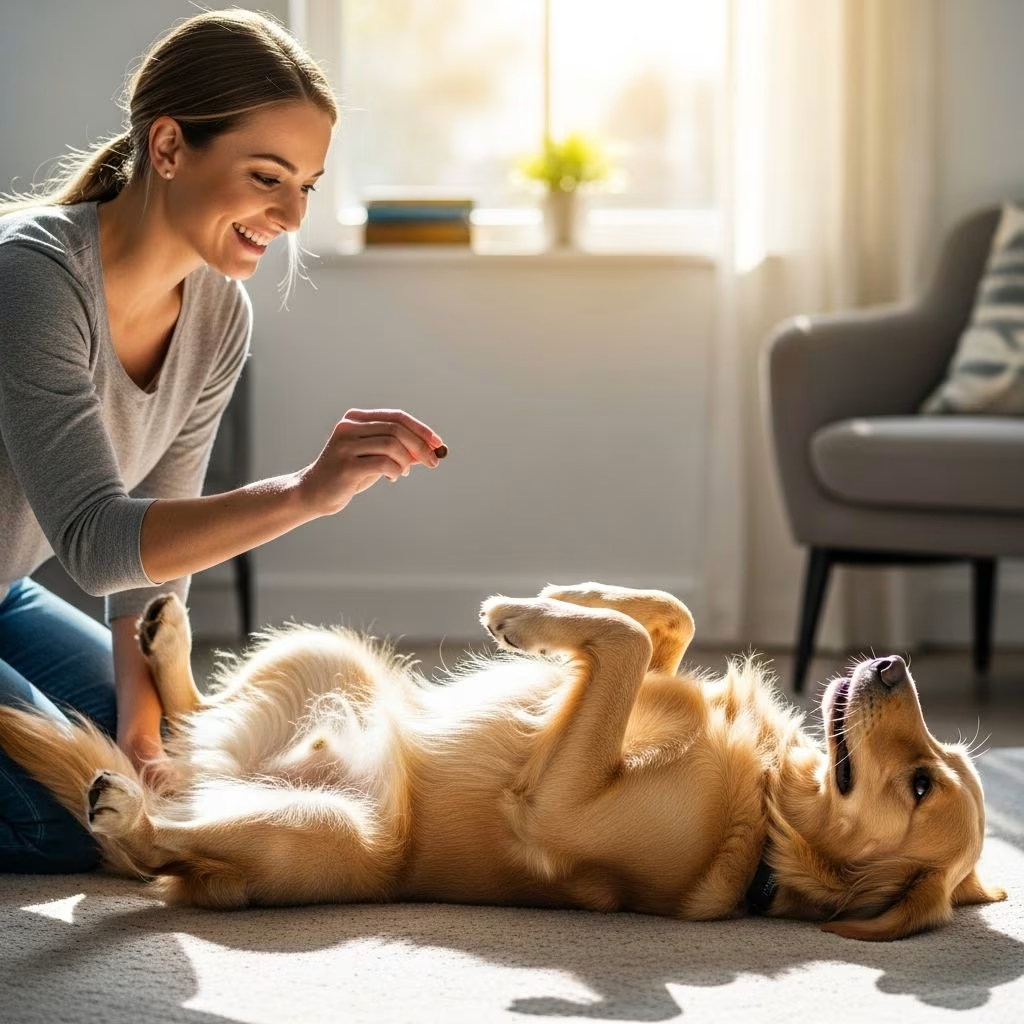
Teaching your dog to roll over is a delightful trick that entertains both you and your furry friend while strengthening your bond. This classic move requires breaking down the behavior into manageable parts using positive reinforcement, making it accessible even for novice trainers. Most dogs can learn this skill in a few short sessions if you follow a structured approach.
Roll over combines basic obedience like ‘down’ with luring techniques, helping your dog build confidence and focus. It’s not just fun—tricks like this provide mental stimulation, reducing boredom-related behaviors such as chewing or digging. Before starting, ensure your dog knows the ‘down’ command reliably, as it’s the foundation for this trick.
Why Teach Your Dog to Roll Over?
Beyond the cuteness factor, rolling over offers numerous benefits. It enhances your dog’s physical flexibility, improves coordination, and encourages relaxation in vulnerable positions, which builds trust. Training sessions boost endorphins for both of you, combating stress and promoting a healthier lifestyle. According to certified trainers, incorporating tricks into daily routines increases obedience and makes vet visits or grooming easier by desensitizing dogs to handling.
Short, daily practice—15-30 minutes—yields the best results. Dogs thrive on consistency, and mastering roll over can lead to more advanced tricks like ‘play dead’ or ‘army crawl.’ It’s suitable for puppies as young as 8 weeks and adult dogs of all breeds, though larger breeds may need extra patience due to their size.
What You’ll Need
- High-value treats: Small, soft treats like Zuke’s Mini Naturals that your dog loves but won’t fill them up.
- Quiet training space: Free from distractions to help your dog focus.
- Clicker (optional): For precise timing in positive reinforcement, such as Frisco Pet Training Clicker.
- Patience and enthusiasm: Keep sessions positive; end on a high note.
- Leash (if needed): For puppies or easily distracted dogs.
Prepare by selecting treats your dog finds irresistible. Test a few to see what motivates them most during short practice runs.
Step 1: Get Your Dog into the Down Position
Start in a distraction-free area. Command your dog to ‘down’ or ‘lie down.’ Observe their natural lean—if their left leg extends, guide the roll to the right to avoid resistance. Praise and treat immediately for lying down reliably. This step reinforces the foundation; without it, progressing will be challenging.
If your dog doesn’t know ‘down,’ spend 5-10 minutes daily practicing first. Use a treat to lure them from sit to down, fading the lure over time. Puppies may take longer, but consistency pays off.
Step 2: Lure with a Treat Across Their Body
Hold a treat at your dog’s nose level in the down position. Slowly move it in a circle over their shoulder in the direction of their natural lean, keeping it close (about 1-2 inches) so they follow without standing. Their head will turn, causing their body to shift toward the shoulder.
At first, reward any head turn or shoulder dip. Gradually require more body movement—onto the side—before treating. This shaping technique builds the behavior incrementally. Sessions of 3-5 minutes prevent frustration; multiple short practices daily work best.
Pro Tip: If your dog stands up, calmly return to down and try again slower. Use a firmer treat hold to prevent snatching.
Step 3: Guide the Full Roll Over
Once on their side reliably, continue the lure to encourage the full roll onto their back and over. Gently use your free hand to tip if needed, but let them initiate most movement. Mark the completion with praise or a clicker, then treat lavishly.
Practice until they roll fully with the lure 8/10 times. Watch for comfort—avoid if they show pain or stiffness. Indoor settings minimize vulnerability. Common with energetic breeds like Jack Russells, this step may take 2-3 days.
Step 4: Fade the Lure and Add the Cue
With the roll solid using a lure, repeat with an empty hand mimicking the motion. Say ‘roll over’ just before the signal, delaying the hand movement by 1-2 seconds initially, then longer (count to 5). Reward from a nearby container to avoid cuing the treat hand.
Practice varying delays until they respond to the verbal cue alone. Chain with other tricks for fun variety. Clicker users: pair the click with the roll’s completion for precision.
Troubleshooting Common Problems
Many dogs struggle initially—here’s how to fix issues:
- Dog won’t follow lure: Use higher-value treats; ensure they’re hungry but not starving. Break into tinier steps, rewarding head turns first.
- Stands up or resists: Slow the lure speed; check natural lean direction. Physically assist gently only if comfortable.
- Not rolling fully: Reward partial rolls (side position) multiple times to build value, then shape further.
- Forgets cue: Return to luring briefly; practice daily before meals for motivation.
- Large/older dogs: Support their roll with a hand under the hip; shorten sessions.
A table of breed considerations:
| Breed Type | Challenges | Tips |
|---|---|---|
| Small Breeds (e.g., Chihuahua) | Quick but stubborn | High-value treats; short bursts |
| Medium (e.g., Beagle) | Distractible | Quiet space; clicker |
| Large (e.g., Labrador) | Momentum issues | Gentle tipping; patience |
| Senior Dogs | Joint stiffness | Soft surfaces; vet check |
Advanced Tips for Success
To polish the trick:
- Practice twice daily, varying locations once mastered.
- Combine with ‘bang’ for ‘play dead’ variation.
- Use in agility or therapy dog training for real-world application.
- Fade treats to verbal praise over weeks.
Monitor body language—yawning or lip-licking signals stress; stop and try later. Positive reinforcement ensures lifelong enjoyment.
Frequently Asked Questions (FAQs)
Q: How long does it take to teach roll over?
A: Most dogs learn in 3-7 sessions of 10-15 minutes, depending on prior training and motivation.
Q: Can puppies learn this trick?
A: Yes, from 8 weeks, but keep sessions short and fun to match short attention spans.
Q: What if my dog has health issues?
A: Consult a vet first; avoid if arthritis or pain is present. Modify for comfort.
Q: Does breed matter?
A: Flexible breeds like Labs excel; brachycephalic (short-nosed) may need slower pacing.
Q: How to teach without treats?
A: Use toys or praise after initial treat phase; clicker bridges effectively.
Q: My dog rolls but ignores the cue?
A: Increase delay between cue and signal gradually; proof in distractions.
With these steps, your dog will roll over on command, impressing friends and family. Keep training positive for a happy, skilled companion!
References
- How to Teach Your Dog to Roll Over in 7 Simple Steps — Chewy.com. 2023. https://www.chewy.com/education/dog/training-and-behavior/training-training-tips-how-to-teach-your-dog-to-roll-over
- How to teach a dog to roll over in 3 easy steps — Dog Trick Academy. 2023. https://www.dogtrickacademy.com/blog/how-to-teach-a-dog-to-roll-over/
- How To Teach Your Dog To Roll Over – Professional Dog Training Tips — YouTube (Will Atherton). 2023-01-15. https://www.youtube.com/watch?v=-d-BTGv6LJc
- DIY: How to Teach Your Puppy to Roll Over — YouTube (DIYEasyCrafts). 2023. https://www.youtube.com/watch?v=TEBk9gK8rC8
- Teach Your Dog to Roll Over – Dog Training — YouTube (Denise Herman). 2023. https://www.youtube.com/watch?v=dCOvAf_-Xz8



