

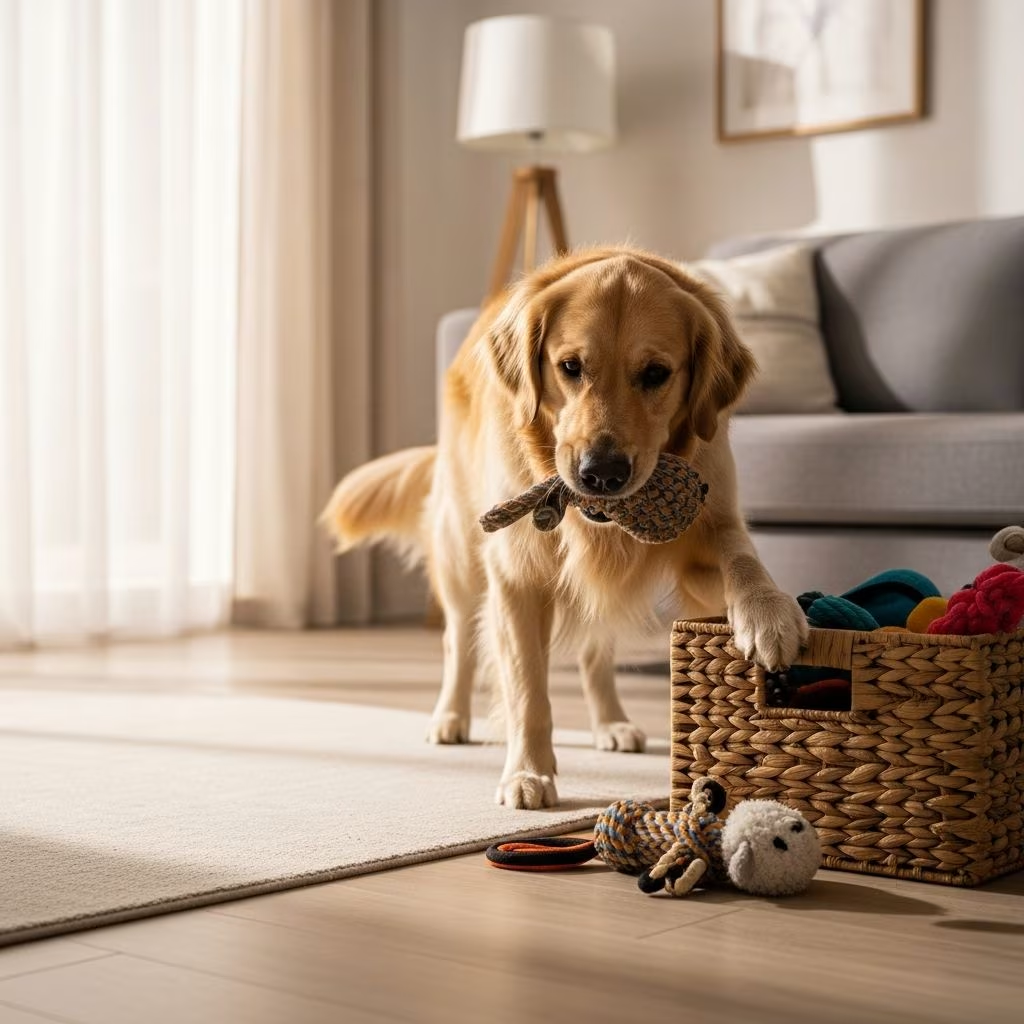
How to Teach Your Dog to Put Away His Toys
Teaching your dog to put away his toys is far more than just a cute parlor trick—it’s a combination of good manners and an impressive display of training prowess. This clever skill taps into your dog’s innate desire to fetch and retrieve, transforming those natural instincts into a useful behavior that will amaze your friends and help keep your home organized. Whether your pup is a dedicated toy enthusiast or only moderately interested in playtime, this comprehensive guide will walk you through the entire training process.
The beauty of teaching this trick lies in its foundation. Dogs are naturally driven to chase, capture, and carry objects. By channeling these instincts and shaping them through consistent training, you’ll create a behavior that feels as natural to your dog as playing fetch itself. The entire process builds gradually, starting with basic commands and advancing to the finished product.
Understanding Your Dog’s Motivation
Before diving into the training process, it’s important to understand that this trick is easiest to teach to dogs that are toy-driven—meaning they love playing games like fetch and tug with you. However, don’t be discouraged if your dog isn’t naturally obsessed with toys. With patience, consistency, and the right rewards, even less toy-crazy dogs can master this impressive skill.
The key is identifying what motivates your individual dog. For some, it’s the toy itself; for others, it’s the praise, playtime with their owner, or treats. Understanding your dog’s primary motivation will help you structure your training sessions for maximum success. You may need to experiment with different rewards to find what truly excites your pup.
Step 1: Focus on the “Drop” Command
The foundation of teaching your dog to put away toys is mastering the “drop” command. This essential skill allows your dog to release toys on cue, which is crucial for the entire cleanup process.
Setting Up Your Training Space
Begin by selecting an appropriately sized box that’s low enough for your dog to drop toys into without difficulty. The box should have a wide opening so that both you and your dog can work comfortably over it. The height is critical—if the box is too high, your dog will struggle to deposit toys, and the training will become frustrating. A shallow storage container, laundry basket, or specially designed toy box works perfectly for this purpose.
Teaching the Drop Cue
Start with a toy that your dog loves and is familiar with. Give your dog the toy and let him hold it in his mouth. While he has the toy, hold a high-value treat (something more enticing than the toy) directly in front of his nose. As he opens his mouth to take the treat, immediately say “drop” in a clear, consistent voice. The moment his mouth opens and the toy falls, immediately reward him with the treat and enthusiastic praise.
Repeat this process multiple times during short training sessions. Consistency is key—always use the same word and the same timing. Your dog will quickly begin to associate the word “drop” with releasing the toy and receiving a reward. Most dogs learn this basic version of the command within just a few training sessions.
Step 2: Progress to Dropping in the Box
Once your dog reliably drops the toy when you ask, it’s time to introduce the box as the destination for the dropped toy.
Positioning Over the Box
Hold the toy and your treat over the box instead of in open space. Give your dog the toy, then hold the treat over the box. When your dog drops the toy at your cue, it will naturally fall into the box. This teaches your dog that the box is the appropriate place for toys to go. Immediately reward with the treat and praise.
Building Box Association
Gradually position your treat closer to the box so your dog is naturally looking into and focusing on the box when dropping the toy. Repeat this many times until your dog is readily and confidently dropping toys directly into the box when you give the cue. This step typically takes several training sessions spread over a few days.
Step 3: Create Distance and Independence
The next phase involves teaching your dog to retrieve toys from a distance and deliver them to the box without the treat lure directly over it.
Introducing Distance
Once your dog is comfortable dropping toys into the box, toss the toy a few feet away from the box. Your dog will probably chase after the toy as he normally would during fetch. He should then bring it back to the box. At this point, wait and see if he drops the toy in the box without using the drop cue. You want the “drop” part of the process to become automatic rather than requiring a verbal cue each time your dog brings a toy to the box.
When your dog successfully drops the toy in the box without prompting, give him a treat and lots of praise. This positive reinforcement is crucial for reinforcing the behavior. Celebrate his success enthusiastically—your excitement will motivate him to repeat the behavior.
Varying Toy Locations
Practice tossing the toy in different spots around the room so your dog learns that the toy won’t always be in the same location. This teaches him that regardless of where the toy ends up, the goal is always to bring it to the box and drop it in. Variety in training prevents your dog from becoming dependent on a specific setup and generalizes the behavior to different situations.
Step 4: Expanding to Multiple Toys
Once your dog has mastered the process with his original toy, it’s time to add complexity by introducing new toys to the training.
Introducing New Toys Gradually
Add a new much-loved toy to the training process. This might initially confuse your dog, since he has a strong reward history with the first toy and may not immediately understand that the second toy follows the same rules. If your dog seems confused or hesitates, simply go back to step one and have him drop the new toy directly over the box with the treat lure, just as you did when beginning the original training.
Building Consistency Across Toys
Toss the new toy just like you did with the original, waiting to see if your dog automatically brings it to the box and drops it in. With some dogs, this clicks immediately; others need more repetition. Every dog learns at their own pace, so be patient and celebrate small victories.
Using Multiple Toys in Training
Use different dog toys during your practice sessions so your dog understands that the key is the “clean up” behavior, not the specific toy. For example, you might practice one day with a squeaky toy, the next day with a rope toy, and the day after with a plush toy. This variation helps your dog generalize the behavior and understand that all toys follow the same rules.
Step 5: The “Clean Up” Command
Once your dog has had a series of successful training sessions with multiple toys, you’re ready to test his overall understanding with the “clean up” command.
Setting Up the Test
Scatter a few toys around the floor near the box, but not directly inside it. These toys should be within your dog’s line of sight but not already in the box. Give your dog a clear cue, such as “clean up” or “put away your toys.” This is the moment to see if your dog understands the complete behavior—that toys scattered around should be placed into the box.
Rewarding Progressive Success
Praise your dog enthusiastically when he deposits the first toy into the box. Then, reward him with a treat after he puts the second toy in. Continue alternating between praise and treats with each successive toy. The idea is that eventually, you’ll reward your dog once the entire sequence is completed and all of the toys are put away. This gradual shift from constant rewards to occasional rewards helps maintain the behavior while teaching your dog that the real payoff comes when the entire job is done.
Tips for Success and Troubleshooting
Maintaining Motivation and Interest
If your dog seems more interested in the treats than the toys, try using a less interesting treat (like regular kibble) while introducing new and more exciting toys. This rebalances the equation so toys remain the primary focus. Keep the overall experience fun and upbeat—training should feel like playtime, not work. Dogs are more likely to engage with training when it’s enjoyable for everyone involved.
Training Session Length
Keep training sessions short and sweet, typically 5 to 15 minutes. Dogs have limited attention spans, and short, frequent sessions are often more effective than long, exhausting ones. End each session on a positive note with your dog succeeding at the task.
Consistency is Critical
Use the same verbal cues consistently throughout training. Don’t say “drop” one time and “drop it” the next time. Pick your cue and stick with it. Similarly, use the same box and training space until the behavior is firmly established, then gradually introduce variations.
Patience with Plateau Periods
Some dogs learn new behaviors quickly, while others need more time. If your dog seems stuck at a particular stage, go back a few steps and rebuild from there. There’s no race—the goal is a well-learned, reliable behavior, not speed.
Advanced Training Variations
Expanding Beyond One Box
Once your dog has mastered putting toys away in one location, you can gradually train him to use multiple toy storage areas throughout your home. Start by repeating the entire training process with a second box in a different room, using the same methods and rewards.
Verbal Variations
Some owners teach multiple verbal cues like “clean up,” “tidy up,” or “put away your toys.” These are essentially the same behavior with different labels. You can introduce them gradually once the core behavior is solid, always ensuring the dog clearly understands what each cue means.
Why This Trick Matters Beyond Entertainment
While teaching your dog to put away toys is undoubtedly impressive and entertaining, the benefits extend beyond just having a clever party trick. This training reinforces important behavioral principles including responsiveness to commands, focus, and the relationship between actions and rewards. It also encourages mental engagement and provides constructive ways for your dog to channel his natural retrieving instincts.
Additionally, this behavior can help reduce toy-related chaos in your home and teaches your dog that toys have a specific place. This foundation often translates into better overall house manners and can even prevent certain destructive behaviors related to unsupervised toy access.
Frequently Asked Questions
Q: How long does it typically take to teach a dog to put away his toys?
A: The timeline varies depending on your individual dog’s learning speed and motivation. Most dogs can master the basic “drop” command in a few sessions, but the complete behavior might take several weeks of consistent practice. Stay patient and celebrate incremental progress.
Q: Can older dogs learn this trick, or is it only for puppies?
A: Dogs of any age can learn to put away toys. While puppies may pick it up quickly due to their developing brains’ neuroplasticity, older dogs can absolutely master this behavior. It may take longer with some senior dogs, but age alone isn’t a limiting factor.
Q: What if my dog isn’t interested in toys?
A: Not all dogs are naturally toy-motivated. Focus on identifying what does motivate your dog—whether it’s treats, play, praise, or physical affection. You can then use that as your reward during training, though the behavior may take longer to establish than with a naturally toy-driven dog.
Q: Should I use the same box throughout training?
A: Yes, initially you should use the same low box with a wide opening throughout training. Once the behavior is firmly established, you can gradually introduce different boxes and locations, but consistency during the learning phase is important.
Q: What type of treats work best for this training?
A: High-value treats that your dog really loves work best initially—think small pieces of chicken, cheese, or special training treats. As your dog progresses, you can gradually transition to less exciting rewards like regular kibble, since the real motivation should be the toys and playtime.
Q: Can I teach multiple dogs this behavior at once?
A: It’s generally easier to teach one dog at a time to avoid confusion and competition for rewards. Once one dog masters the behavior, you can teach others individually, though having a canine role model sometimes helps accelerate the process.
References
- How to Teach Your Dog to Put Away His Toys — Chewy. Accessed 2025-11-28. https://www.chewy.com/education/dog/training-and-behavior/training-training-tips-how-to-teach-your-dog-to-put-away-his-toys
- Basic Puppy Training Guide — Chewy. Accessed 2025-11-28. https://www.chewy.com/education/dog/new-dog/basic-puppy-training
- Your Essential Guide to Basic Dog Obedience Training — Chewy. Accessed 2025-11-28. https://www.chewy.com/education/dog/training-and-behavior/sit-stay-and-beyond-weve-got-the-essential-guide-to-basic-dog-obedience-training



