

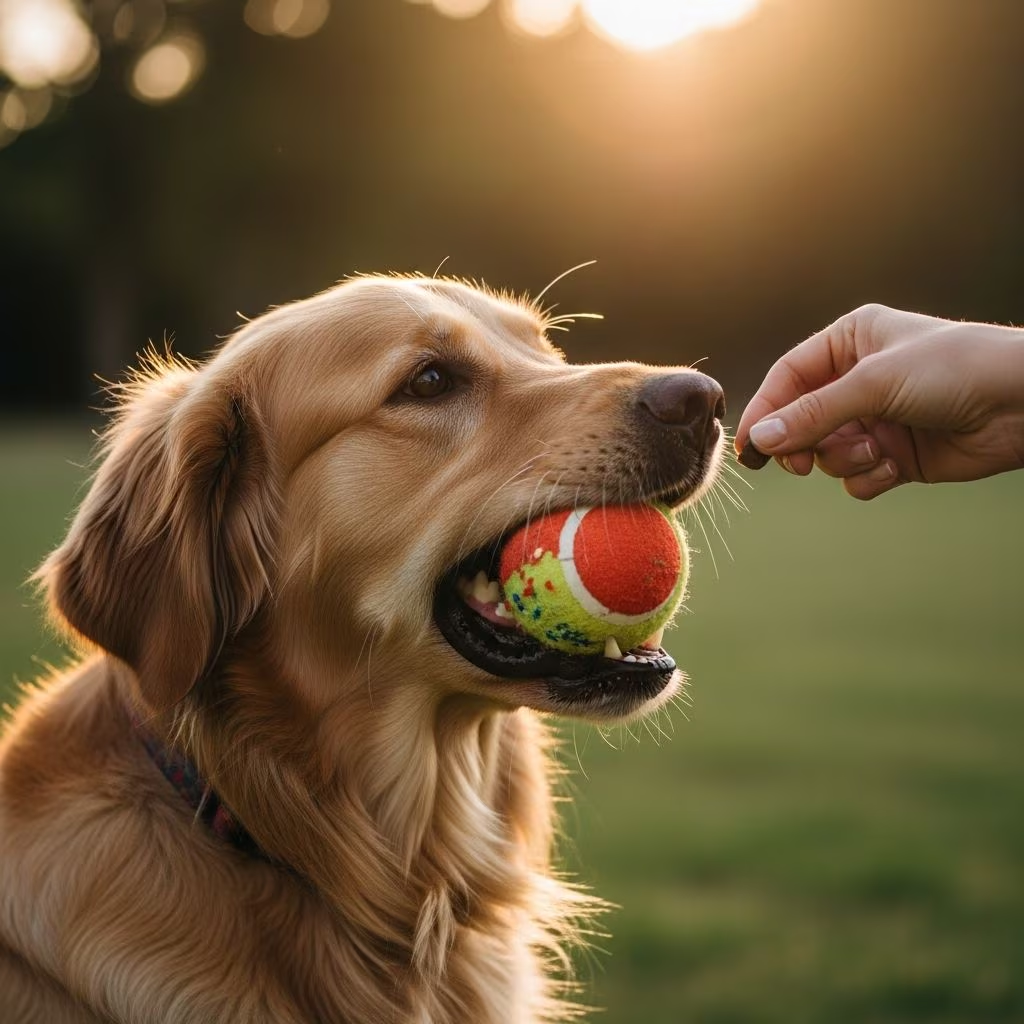
How to Teach Your Dog to Drop It: A Step-by-Step Guide
One of the most important dog training commands you can teach your dog is the ability to drop things on cue. Whether it’s retrieving your favorite shoes or, more critically, preventing your dog from consuming a dangerous item they’ve found, the “drop it” command can be a lifesaver. This essential skill transforms everyday situations and provides crucial safety benefits that every dog owner should prioritize. Teaching this command using positive reinforcement techniques creates a strong foundation for reliable obedience and strengthens the bond between you and your pet.
The “drop it” command is particularly valuable because it allows you to safely retrieve items from your dog’s mouth without physical confrontation or force. Dogs that have learned this command are less likely to engage in resource guarding behavior, and owners feel more confident managing their pets in unpredictable situations. Whether your dog picks up something hazardous during a walk or decides to grab your personal belongings during playtime, a well-trained “drop it” response ensures everyone’s safety.
Why the “Drop It” Command Matters
The “drop it” command serves multiple important functions in your dog’s training and your household’s safety. First and foremost, it prevents your dog from ingesting potentially toxic substances, sharp objects, or foods that could cause serious harm. Dogs naturally explore their environment with their mouths, and sometimes they pick up things that pose immediate health risks.
Beyond emergency situations, this command improves your daily life with your pet. It allows you to redirect your dog away from destructive behaviors, manage their enthusiasm during play sessions, and maintain better control during walks. Additionally, the “drop it” command is invaluable for dogs who enjoy playing fetch, as it ensures they’ll release the retrieved item so you can throw it again and continue your game together.
Step 1: Gather Your Supplies
Before you begin training, assemble all necessary materials to set yourself up for success. Having everything within reach keeps your training sessions efficient and prevents interruptions that could disrupt your dog’s learning process.
Essential supplies include:
- A dog toy your dog loves and enjoys playing with
- High-value treats that your dog finds irresistible
- A training clicker for marking desired behaviors
- Optional: a treat pouch to keep rewards easily accessible
The quality of your supplies significantly impacts training success. Choose toys that genuinely excite your dog and treats that are noticeably more appealing than regular kibble. High-value treats serve as powerful motivators that make your dog more willing to release their toy in exchange for the reward. The clicker functions as a marker that clearly communicates to your dog the exact moment they’ve performed the desired behavior correctly.
Step 2: Offer the Toy
The training process begins by encouraging your dog to pick up and hold their favorite toy. This foundational step establishes the baseline behavior upon which you’ll build the “drop it” command. Toss the toy in front of your dog or hand it to them directly, then allow them to engage with it.
During this phase, your goal is simply to have your dog hold the toy in their mouth for a few seconds. Don’t rush this step. Let your dog become comfortable with holding the toy and maintaining their interest in it. This creates the perfect setup for introducing the next phase of training, where you’ll teach them to release it on command.
Step 3: Offer a Treat
Once your dog has the toy in their mouth and is actively engaged with it, present them with a tasty treat as an incentive to release it. This is where the exchange begins—your dog learns that releasing the toy results in something even better.
As soon as your dog drops the toy to grab the treat, mark this moment with your clicker and immediately deliver the reward. The timing of your click is crucial; it must occur at the exact instant your dog releases the toy. This precision helps your dog understand exactly which behavior earned the reward.
Repeat this process multiple times during your training session until your dog reliably drops the toy every single time they see you hold up a treat. Consistency is key during this phase. Each successful repetition strengthens your dog’s understanding that releasing the toy leads to positive outcomes.
Pro Tip: If your dog is having difficulty releasing the toy, try using an even higher-value treat—something your dog finds absolutely irresistible. The more your dog desires the treat, the more motivated they’ll be to drop what they’re holding.
Step 4: Introduce the Verbal Command
Once your dog consistently drops the toy when they see a treat, it’s time to add the verbal cue “drop it” to the sequence. This step connects the physical action your dog is already performing with a specific command word that you can use in real-world situations.
The training sequence now expands to include the verbal cue:
- Offer toy to your dog
- Dog takes toy and holds it
- Say “drop it” clearly
- Hold up the treat
- Dog drops toy
- Click and feed treat
Repeat this sequence many times across multiple training sessions. Your dog is learning to associate the words “drop it” with the action of releasing the toy. Say the command in a clear, consistent tone—not angry or aggressive, just clear and matter-of-fact. Over time, your dog will begin to understand that “drop it” predicts the appearance of a treat.
Step 5: Fade Out the Treats
As your dog becomes more reliable with the command, begin gradually reducing their dependence on seeing the treat before they comply. This phase teaches your dog to drop the toy based on the verbal command alone, rather than requiring visual confirmation of a reward first.
The modified sequence becomes:
- Offer toy to your dog
- Dog takes toy and holds it
- Say “drop it”
- Dog drops toy (without seeing treat first)
- Click and feed treat
Your dog still receives a reward every time they comply, but they no longer need to see it beforehand to motivate their response. This transition teaches them that the verbal command itself is the signal to drop the item, and the reward will follow.
A helpful tool during this phase is a treat pouch. Keeping treats within reach but hidden from your dog’s view maintains their motivation without relying on visual enticement. Your dog doesn’t see the treat until after they’ve dropped the toy and you’ve clicked to mark the behavior.
Step 6: Mix It Up
The final step involves practicing the “drop it” command with a wide variety of objects in different environments. This generalization is essential for ensuring your dog responds reliably in real-world situations, not just during formal training sessions with their favorite toy in your living room.
Follow this progression for best results:
- Start with less exciting toys in quiet locations
- Gradually increase the interest level of objects
- Practice in more distracting environments
- Include high-value items like special chews or toys
- Eventually test with realistic temptations like shoes
The importance of this progression cannot be overstated. If you only practice with toys your dog isn’t excited about, they may not reliably drop high-value items when it matters most. Similarly, a command that works perfectly in your quiet living room might fail when your dog is excited at the dog park or on a busy street.
Throughout this phase, continue using high-value treats. This is not the time to downgrade to lower-quality rewards. The more your dog values the treat relative to the object they’re dropping, the more reliable their compliance will be. Remember that practice with easier scenarios first builds your dog’s confidence and reinforces the foundation before tackling more challenging situations.
Practical Applications of the “Drop It” Command
Protecting Your Belongings: We can’t promise the “drop it” command will save every pair of shoes your dog takes an interest in, but it certainly comes in handy when you notice your puppy chomping away on them. When your dog drops the forbidden item, immediately redirect them to an appropriate chew toy. This teaches them what they should be chewing instead of your belongings.
Enhancing Fetch Games: Many dogs love games of fetch but struggle to return the retrieved item to their person. The “drop it” command transforms fetch from a one-throw game into an endlessly repeatable activity. Once your dog learns to drop the item on command, you can throw it again and again without the frustration of chasing your dog down.
Safety in Emergency Situations: Perhaps most importantly, a reliable “drop it” command can literally save your dog’s life. If your dog picks up something toxic, sharp, or otherwise dangerous, you can immediately command them to drop it before they suffer harm. This real-world application demonstrates why investing time in training this command is so worthwhile.
Complementary Training: The “Leave It” Command
While mastering “drop it,” consider also teaching your dog the “leave it” command. These two commands work together to provide comprehensive impulse control. While “drop it” tells your dog to release something they’ve already picked up, “leave it” prevents them from picking up the item in the first place. Together, they create multiple layers of protection against your dog getting into trouble.
Important Training Principles
Never Chase Your Dog: If your dog picks something up that concerns you, don’t chase them. Chasing transforms the situation into a game—one you’ll always lose. Instead, use your trained “drop it” command, or if your dog is still in the learning phase, distract them with treats or redirect them calmly.
Use Positive Reinforcement Only: Never punish your dog for not following the command or for picking up inappropriate items in the first place. Punishment creates fear and can make your dog less likely to respond to commands or more likely to gulp down items quickly before you can retrieve them. Positive reinforcement builds trust and reliability.
Keep Your Dog Focused: If your dog tends to run away with toys during training, use a leash to keep them in one place. This prevents them from escaping with the item and helps you maintain control during the learning phase.
Timeline and Expectations
Professional trainers recommend working on teaching the “drop it” cue for approximately two weeks before expecting your dog to respond reliably outside of formal training sessions. Consistency matters significantly—daily or near-daily practice sessions yield faster results than sporadic training. Even once your dog appears to understand the command, continue regular practice to maintain and strengthen the behavior.
Frequently Asked Questions
Q: How long does it take to teach a dog to drop it?
A: Most dogs can begin showing understanding within a few days of consistent training, but expect about two weeks of regular practice before your dog responds reliably to the command in various situations.
Q: What if my dog won’t drop the toy for treats?
A: Use even higher-value treats that your dog finds irresistible. You might also try starting with toys your dog is less excited about, making the exchange easier. Some dogs respond better to different types of rewards—try different options to find what motivates your individual dog.
Q: Can older dogs learn the “drop it” command?
A: Yes, absolutely. While puppies may learn quickly, dogs of any age can learn this command using positive reinforcement techniques. The training process remains the same regardless of your dog’s age.
Q: Should I use the same command word every time?
A: Yes, consistency in your command word is important for your dog to learn the association. Choose a word like “drop it” and use that same phrase every single time during training.
Q: What’s the difference between “drop it” and “leave it”?
A: “Drop it” tells your dog to release something they already have in their mouth, while “leave it” prevents them from picking up an item in the first place. Both commands are valuable for comprehensive impulse control.
Q: Can I use this training method with any toy or object?
A: Yes, once your dog understands the command with their favorite toy, the behavior transfers to other objects. However, always practice with a variety of items to ensure reliable response to different temptations.
References
- How to Teach Your Dog to Drop It: A Step-by-Step Guide — Chewy. Authored by Irith Bloom, CPDT-KSA. https://www.chewy.com/education/dog/training-and-behavior/how-to-train-your-dog-to-drop-it-in-6-steps
- How To Teach Your Dog To Drop It in 6 Steps — Woofz. https://www.woofz.com/blog/teach-your-dog-to-drop-it/
- How to Teach a Dog to Drop It: My Labrador’s Sock Obsession — K9 Connoisseur. https://k9connoisseur.com/blogs/news/how-to-teach-a-dog-to-drop-it
- Drop It! Teaching Your Dog to Drop Anything Quickly and Easily — McCann Dogs. https://www.mccanndogs.com/blogs/articles/drop-it-teaching-your-dog-to-drop-anything-quickly-and-easily



