

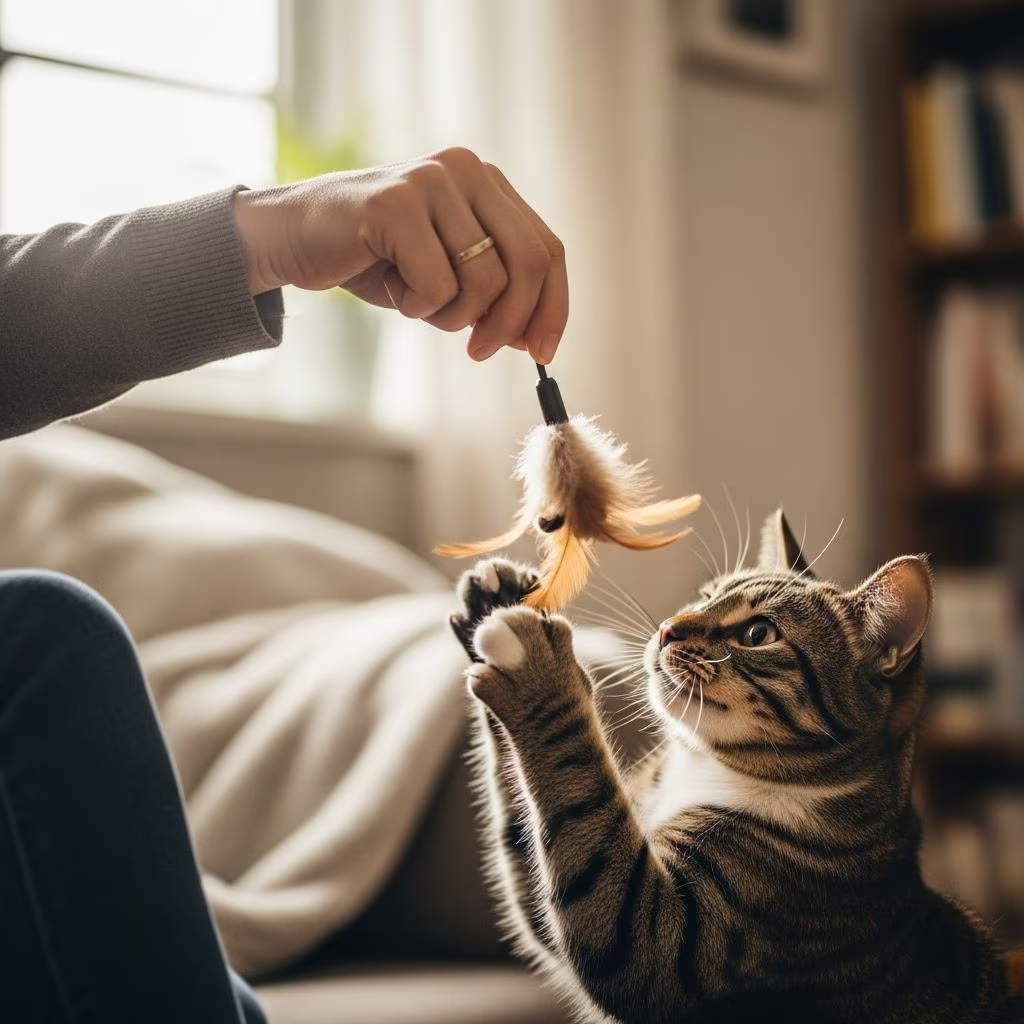
Playtime with your cat can be one of the most joyful parts of pet ownership, fostering a strong bond while satisfying their natural instincts. However, when play turns rough—with stalking, pouncing, scratching, and biting directed at you—it becomes painful and problematic. Cats are innate predators, wired to hunt, chase, and capture prey, but they must learn that humans are not toys. Teaching your cat to play gently involves channeling these instincts into appropriate outlets, using consistent training, and providing ample opportunities for active play. This guide draws from certified animal behavior experts to equip you with practical steps for safe, enjoyable interactions.
Why Cats Play Rough and How It Affects You
Cats’ rough play stems from their evolutionary role as skilled hunters. Stalking, ambushing, biting, and clawing are essential survival skills in the wild, allowing them to catch prey effectively. Domestic cats retain these behaviors, viewing movement as a trigger for the ‘hunt’. When your hands, feet, or body become the target, it feels thrilling to them but leads to scratches, bites, and unwanted habits that can extend to guests, children, or other pets.
In kittens, this is especially common during teething and exploration phases, but without intervention, it persists into adulthood. Rough play teaches cats poor boundaries, potentially escalating to aggression or fear-based responses. The good news: with proactive training, you can redirect these impulses. Experts like Karen B. London, PhD, CAAB, emphasize that cats thrive when allowed to express predatory behaviors on toys, not people, preserving play’s benefits while saving your skin.
Let Your Cat Hunt: Channel Natural Instincts
To teach gentle play, embrace your cat’s hunter nature. Provide outlets for stalking, chasing, pouncing, and ‘killing’ toys, mimicking prey. Active play is key—still toys won’t engage them like moving ones. Drag string toys across the floor, swing wand toys overhead, or toss balls for retrieval. This satisfies their predatory drive, reducing the appeal of human targets.
Interactive wand toys are particularly effective, as they keep your hands at a safe distance while the ‘prey’ dances enticingly. Cat behavior expert Samantha Bell recommends praising and rewarding cats for targeting the toy, reinforcing that it’s the fun object. Sessions should last 10-15 minutes, 2-3 times daily, ideally before meals to simulate a successful hunt ending in ‘food’.
- Top Hunting Toys: Wand toys with feathers or mice, laser pointers (supervised), crinkle balls, and treat-dispensing puzzles.
- Play Tip: Vary movements—slow drags for stalking, quick flicks for pouncing—to match different hunting styles.
- Pro Advice: End with a ‘catch’ where the cat ‘wins’ the toy, followed by a meal, boosting satisfaction.
Never Use Your Hands or Feet as Toys
A common mistake is treating hands or feet as playthings, especially with kittens. Wiggling fingers or bare toes invite bites and scratches, blurring the line between toy and human. This must stop immediately and consistently across all household members. Instead, opt for purpose-built cat toys: stuffed kickers for bunny-kicking, dangling fishing poles, or sound-emitting critters.
Commercial options abound, from catnip-infused mousies to battery-free launchers. The rule is simple: if it involves direct contact with skin, it’s not play. This consistency prevents confusion—cats learn quickly through repetition. For families with children, model this behavior; teach kids to use toys only, practicing gentle petting on arms first to gauge pressure.
| Do Use | Don’t Use |
|---|---|
| Wand toys, balls, tunnels | Hands, fingers, feet |
| Stuffed animals for kicking | Clothing strings or hair |
| Treat puzzles for mental hunt | Household objects like cords |
Commit to Lots of Daily Playtime
Cats need multiple daily play sessions to expend energy and hone instincts without targeting you. Aim for 20-30 minutes total, split into short bursts matching their attention span. Play teaches vital lessons: toys are for roughhousing, humans for gentle affection. If bites or claws emerge, redirect instantly to a toy with enticing movement.
Positive reinforcement works wonders—praise vocal enthusiasm or treats for toy-focused play. Variety prevents boredom: rotate toys weekly, introduce scents like catnip or silvervine. For multi-cat homes, supervised peer play teaches boundaries naturally, as kittens learn from littermates. Schedule play around peak activity times, like dawn and dusk, aligning with their crepuscular nature.
Respond Correctly to Biting or Scratching
When rough play occurs, don’t yell or punish—that escalates arousal. Instead, freeze movement to become ‘boring prey’. If it persists, calmly withdraw, ending the session. Return with a toy after a brief pause. This teaches cause-and-effect: gentle play continues fun, roughness stops it.
Redirection is key for kittens. Offer a toy saying ‘no’ softly, then praise engagement. Consistency is crucial; mixed signals confuse. For persistent biters, track patterns—hunger, overstimulation?—and address roots. Experts note it’s easier to teach ‘bite toy, not human’ than ‘no biting ever’, honoring natural dentition needs.
Best Toys for Gentle Play Training
Selecting the right toys amplifies training success. Prioritize durable, interactive items promoting distance play.
- Wand Toys: Ideal for safe hunting simulation; Da Bird or similar with feathers.
- Kick Toys: Soft, catnip-filled for safe scratching/biting practice.
- Chase Toys: Battery-free balls or mice for solo reinforcement.
- Puzzle Feeders: Mental hunts tire them out, reducing physical roughhousing.
Avoid strings that mimic dangerous linear prey or anything ingestible. Rotate to maintain novelty, preventing fixation on you as the sole mover.
Tips for Kittens vs. Adult Cats
Kittens learn fastest during socialization windows (2-7 weeks), but adults adapt too. For kittens, pair play with littermates if possible. Adults may need more sessions to unlearn habits. Both benefit from routine: play, eat, rest cycle.
Involve family: kids learn slow wand flicks, low to ground, never in face. Monitor body language—dilated pupils, thrashing tail signal ‘overstimulated’; switch to calm pets or rest.
Common Mistakes and How to Avoid Them
- Inconsistency: All must enforce no-hand play.
- Insufficient Play: Leads to pent-up energy targeting you.
- Punishment: Increases fear/aggression; use withdrawal.
- Ignoring Signals: Pushing past ‘no’ erodes trust.
Frequently Asked Questions (FAQs)
Q: How long does it take to teach a cat gentle play?
A: Most see improvement in 1-2 weeks with daily consistency; kittens faster than adults.
Q: What if my cat ignores toys?
A: Make them irresistible—add catnip, heat slightly, or use motion. Persistence pays off.
Q: Can children play safely with trained cats?
A: Yes, supervise; teach slow pets, toy use, and cat-led interactions.
Q: My cat fetches—does that help?
A: Absolutely; structured games reinforce toy focus over human targeting.
Q: Is rough play ever okay?
A: With toys, yes; with people, no—gentle bonds last longer.
Mastering gentle play enriches your cat’s life and yours, turning potential pain into pure delight. Patience and play pave the way.
References
- How to Teach Your Cat to Play Gently — Kinship (Karen B. London, PhD, CAAB). 2024. https://www.kinship.com/cat-behavior/how-to-teach-your-cat-to-play-gently
- How to Teach Your Kitty-Obsessed Kid How to Pet a Cat — Kinship. 2024. https://www.kinship.com/cat-lifestyle/teach-kids-pet-cats
- How to Train a Kitten Not to Bite — Kinship. 2024. https://www.kinship.com/cat-behavior/how-to-train-a-kitten-not-to-bite
- Train Your Cat to Play Nice WITHOUT Getting Scratched! — Kinship (Samantha Bell). 2024-12-03. https://www.youtube.com/watch?v=soZ48mACRpg
- Your Cat Really Wants You to Play With Them—Here’s How — Kinship (Mikel Delgado). 2024. https://www.kinship.com/cat-behavior/how-to-play-with-your-cat-mikel-delgado



