

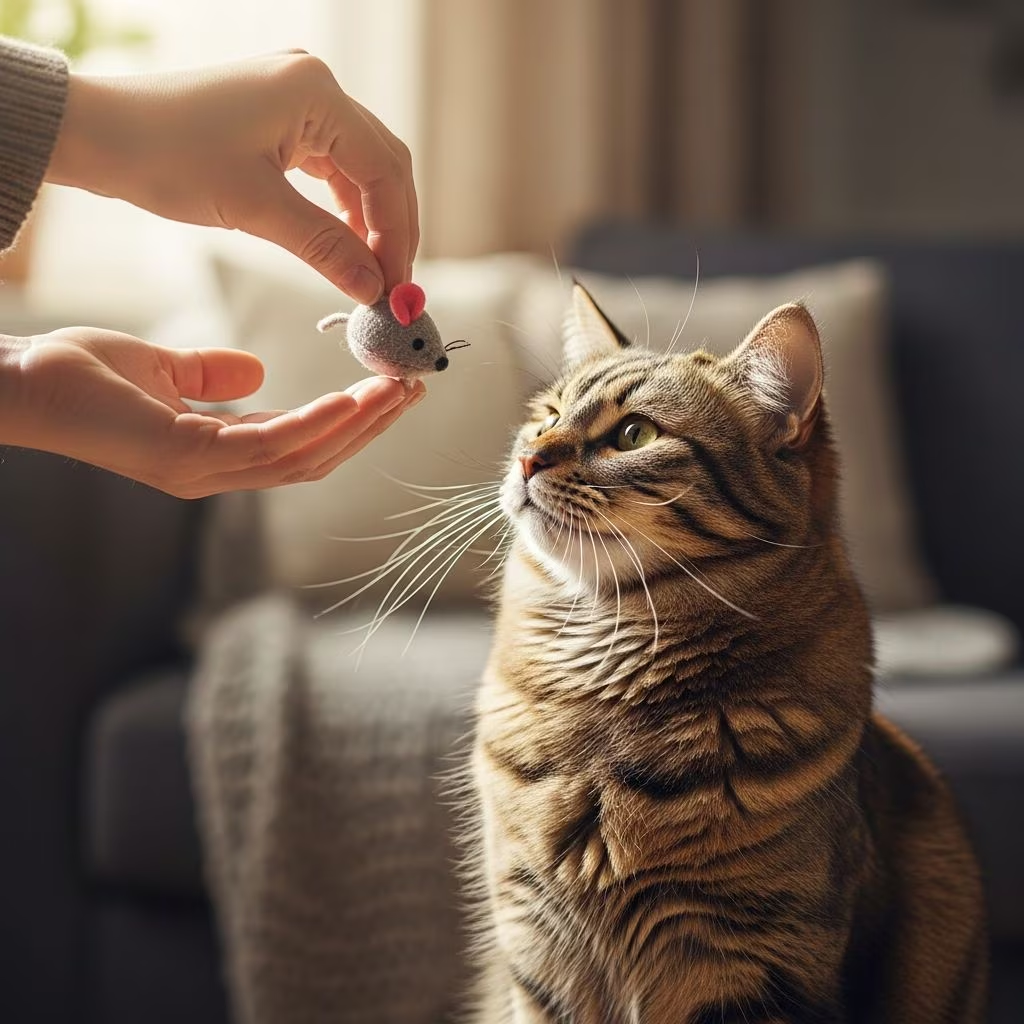
Your cat deserves engaging playtime, but you shouldn’t end up as the target of their claws and teeth. Teaching cats to play gently involves channeling their natural predatory instincts toward appropriate toys while establishing clear boundaries with humans. This guide draws from certified animal behaviorist insights to help you foster safe, enjoyable interactions.
How to Keep Your Kitten From Making You the Toy at Playtime
Playtime with kittens is delightful until they mistake your hands or feet for prey. Kittens naturally stalk, chase, pounce, and bite as part of their development, mimicking hunting behaviors essential for survival in the wild. However, when directed at people, these actions lead to painful scratches and bites, potentially creating lifelong bad habits.
The core principle is simple: cats must learn the distinction between toys and humans. Toys are for rough play—biting, clawing, and bunny-kicking are encouraged. Humans require gentleness because we are not prey. Without intervention, your moving body becomes the most enticing ‘toy’ in the home, especially if static toys fail to captivate.
Consistent training from kittenhood prevents escalation in adulthood. Adult cats with poor play habits are harder to retrain, as reinforced behaviors become ingrained. Start early with daily sessions to satisfy their needs while reinforcing rules.
Let Your Cat Hunt
Cats are obligate carnivores and born predators; suppressing their hunting drive leads to frustration and destructive behaviors. Instead, embrace it through structured play. Encourage stalking, chasing, pouncing, and biting on toys to fulfill these instincts safely.
Active play is key. Drag toys across the floor to simulate fleeing prey or dangle them slightly above head level to mimic birds. Moving toys trigger the predatory sequence far more effectively than stationary ones. If toys remain inert, your cat will seek motion elsewhere—often from you.
Incorporate wand toys or fishing pole-style interactives, which keep your hands at a safe distance. Flick them low to the ground to encourage stalking, then vary speed to build chase excitement. This setup allows cats to ‘catch’ their prey repeatedly, ending sessions on a high note with a ‘kill’ to satisfy the hunt cycle.
For kittens, multiple short sessions daily mimic natural hunting patterns. Pair play with feeding by hiding kibble in toys, turning play into a rewarding hunt that expends energy and sharpens skills.
Don’t Use Your Hands and Feet as Toys
One of the most common mistakes is treating body parts as playthings. Wiggling fingers, poking with toes, or allowing hand-biting during kitten cuddles sends mixed signals. What feels cute with tiny teeth becomes agonizing with adult fangs and claws.
Commit household-wide: everyone must avoid hand or foot play. Commercial toys abound—stuffed kickers for bunny-kicking, crinkle balls for sounds, tunnels for ambushes. Invest in durable options that withstand rough handling, ensuring cats prefer them over skin.
Redirection is crucial. If a cat lunges at your hand, calmly withdraw and offer a toy instead. Praise engagement lavishly. Over time, they associate hands with ‘no fun’ and toys with excitement.
Have a Lot of Playtime
Cats thrive on routine play, ideally 15-30 minutes twice daily, timed before meals to simulate hunt-eat cycles. Insufficient play leads to pent-up energy directed at inappropriate targets.
Variety prevents boredom: rotate toys weekly, introducing novel textures, sounds, and movements. Puzzle feeders and treat-dispensing balls add mental stimulation, teaching problem-solving alongside physical exercise.
Observe your cat’s play style. Some prefer solitary object play, batting balls; others crave interactive predatory pursuits. Tailor sessions accordingly for maximum engagement.
- Locomotive play: Running, leaping—use laser pointers or chase toys.
- Predatory play: Stalking, pouncing—wand toys excel here.
- Object play: Batting, carrying—balls, mice.
- Social play: Gentle interactions—short petting sessions transitioning to toys if arousal builds.
If They Bite or Scratch, Stop Playing
Immediate consequences teach boundaries effectively. When teeth or claws contact skin, freeze movement to become uninteresting prey. Silently withdraw hands and, if needed, leave the room.
Resume only after redirecting to a toy. Praise gentle play vocally or with treats. Rough play ends fun; gentle play extends it. Cats quickly learn this cause-and-effect.
Avoid punishment like yelling or spraying water—it creates fear, not understanding. Positive reinforcement builds trust, making training faster and more enjoyable.
Additional Tips for Success
Enrich the environment with cat trees, shelves, and window perches for independent play. Trim nails regularly to minimize damage during learning phases.
For multi-cat homes, ensure equal attention to prevent jealousy-fueled aggression. Socialization with peers teaches bite inhibition naturally.
Monitor body language: dilated pupils, twitching tail, flattened ears signal overstimulation. End play proactively to avoid escalation.
Common Challenges and Solutions
| Challenge | Solution |
|---|---|
| Persistent hand-biting | Increase toy variety and play frequency; use gloves initially if needed. |
| Kitten teething aggression | Provide chilled wet washcloths or dental toys; redirect consistently. |
| Adult cat relapse | Reintroduce structured sessions; consult behaviorist for underlying issues. |
| Family involvement (kids) | Supervise; teach slow strokes on cheeks, use treats for positive associations. |
Frequently Asked Questions (FAQs)
Why does my cat bite during play?
Cats bite to practice hunting; without toys, humans become targets. Redirect to appropriate outlets.
How long until my cat learns gentle play?
Kittens respond in days to weeks with consistency; adults may take months. Patience is key.
What toys are best for gentle play training?
Wand toys, kickers, balls—anything keeping hands safe and encouraging predatory motion.
Can all cats be taught to play gently?
Yes, with consistent positive methods. Some breeds like Bengals may need more outlets.
Is play-fighting with other cats okay?
Yes, it teaches inhibition naturally, but monitor for bullying.
Implementing these strategies transforms chaotic play into harmonious bonding. Your cat stays true to their nature while respecting your boundaries, leading to a scratch-free home.
References
- How to Teach Your Cat to Play Gently — Kinship (Karen B. London, PhD, CAAB, CPDT-KA). 2024. https://www.kinship.com/cat-behavior/how-to-teach-your-cat-to-play-gently
- How to Teach Your Kitty-Obsessed Kid How to Pet a Cat — Kinship. 2024. https://www.kinship.com/cat-lifestyle/teach-kids-pet-cats
- How to Train a Kitten Not to Bite — Kinship. 2024. https://www.kinship.com/cat-behavior/how-to-train-a-kitten-not-to-bite
- Train Your Cat to Play Nice WITHOUT Getting Scratched! — Kinship (Samantha Bell). 2024-12-03. https://www.youtube.com/watch?v=soZ48mACRpg
- Your Cat Really Wants You to Play With Them—Here’s How — Kinship (Mikel Delgado). 2024. https://www.kinship.com/cat-behavior/how-to-play-with-your-cat-mikel-delgado



