

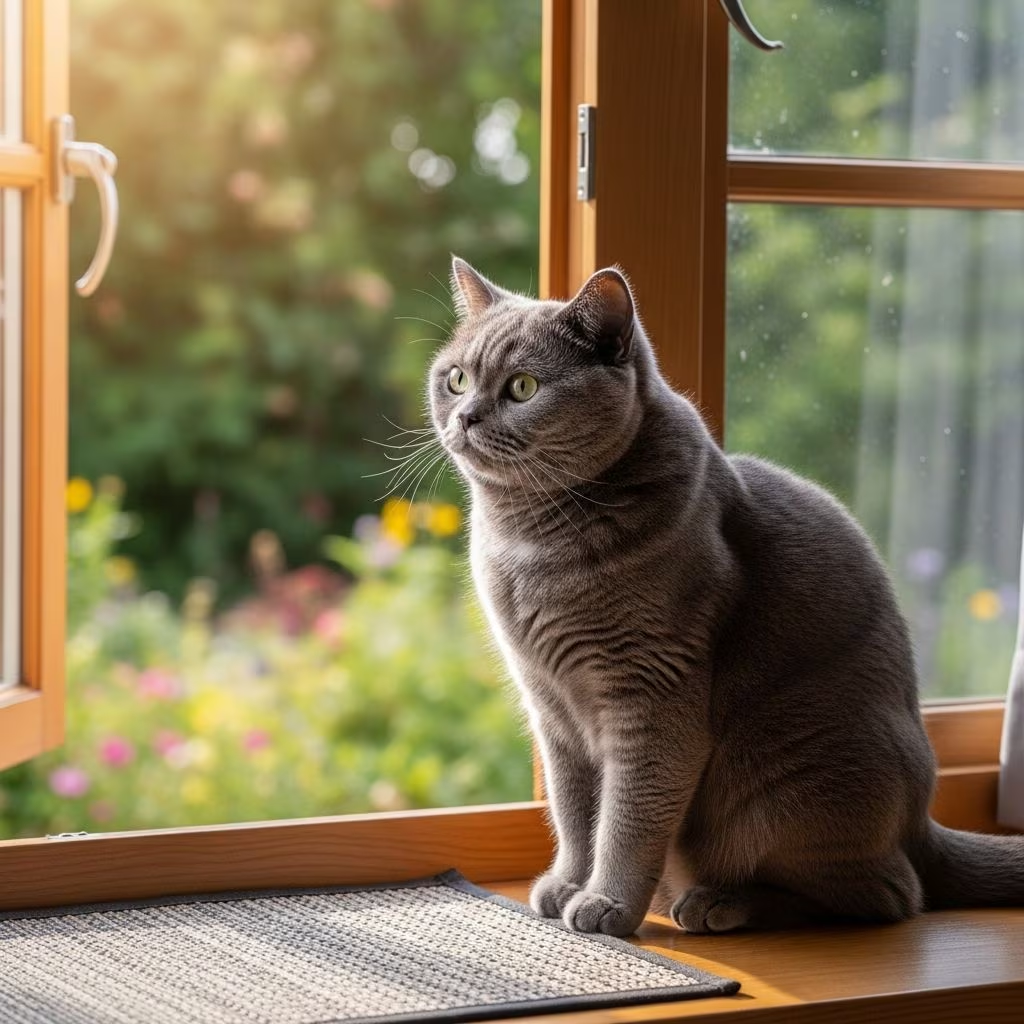
Many cat owners face the challenge of their feline friends meowing insistently at the door to go outside. While it may seem endearing at first, this behavior can quickly become disruptive, especially if it happens multiple times a day. Cats are intelligent creatures that learn quickly through association. If opening the door in response to their meows reinforces the habit, they will continue it. Whether you have an indoor-only cat on a harness leash for walks or an outdoor cat preferring human assistance over a cat flap, retraining is possible with patience and consistency.
This comprehensive guide outlines **8 vet-approved strategies** to curb this behavior. By focusing on positive reinforcement, environmental enrichment, and meeting your cat’s needs, you can reduce door-meowing and foster a calmer household. These methods address root causes like boredom, lack of exercise, or learned habits, ensuring long-term success.
The 8 Ways to Prevent Your Cat Meowing to Go Outside
1. Reward the Good Behavior, Not the Bad
The cornerstone of **cat training** is positive reinforcement: ignore unwanted actions and praise desirable ones. When your cat meows at the door, do not engage—no eye contact, talking, or opening the door. Any attention, even scolding, rewards the behavior. Instead, wait for silence and then offer treats, pets, or playtime.
For outdoor access or harness walks, only prepare when your cat is quiet. Over time, they associate calm behavior with rewards. Use high-value treats like tuna or chicken to accelerate learning. Consistency from all household members is crucial; mixed signals prolong the habit. Studies on feline behavior confirm cats respond best to operant conditioning, where rewards shape actions.
2. Add Enrichment to Your Cat’s Indoor Environment
Cats meow for outdoor access because the wild offers endless stimulation—scents, sights, sounds, and textures. A dull indoor setup drives them to the door. Counter this by transforming your home into a **cat paradise**. Install tall cat trees for climbing, window perches for bird-watching, and puzzle feeders that mimic hunting.
- Scratching posts: Corrugated cardboard scratchers are durable and appealing; place several around the house.
- Interactive toys: Laser pointers, feather wands, and battery-operated mice keep them engaged.
- Scent enrichment: Sprinkle catnip or silver vine on toys for excitement.
- Vertical space: Shelves or wall-mounted ledges allow jumping and lounging.
Rotate toys weekly to maintain novelty. Enriched environments reduce boredom-driven meowing, as cats expend energy indoors.
3. Make Sure Your Cat Is Getting Enough Exercise
Boredom and pent-up energy often manifest as door-meowing. Cats are crepuscular (active at dawn/dusk), needing 15-30 minutes of daily vigorous play. Use **fishing rod toys** like Da Bird, which trigger their hunting instincts—chase, pounce, ‘kill’ the toy.
Schedule sessions morning and evening. End with a meal to replicate the hunt-eat-sleep cycle, promoting satisfaction and naps. Automated toys like spinning mice or treat-dispensing balls provide exercise when you’re away. Regular activity tires them out, decreasing demands for outdoor adventures.
| Exercise Type | Duration | Benefits |
|---|---|---|
| Wand Toys | 10-15 min | Burns energy, bonding |
| Leash Walks | 20-30 min | Controlled outdoor time |
| Puzzle Feeders | Ongoing | Mental stimulation |
4. Spend Time Teaching Your Cat Tricks
Cats thrive on mental challenges and owner interaction. **Trick training** using a clicker and treats builds confidence and reduces boredom. Start simple: target training (touch a stick), then progress to ‘sit,’ ‘high-five,’ or ‘roll over’.
Sessions of 5-10 minutes daily suffice. Apps and books guide sequences. Tricks provide purpose, mimicking natural behaviors, and strengthen your bond—less meowing for attention. Research shows trained cats exhibit fewer stress behaviors.
5. Play With Your Cat Before Bedtime
Evening energy surges lead to nighttime meowing. A pre-bed play session exhausts them, aligning sleep cycles with yours. Use high-intensity toys for 15 minutes, followed by feeding and grooming time.
This routine signals bedtime, reducing dawn choruses at the door. Consistency yields results in 1-2 weeks.
6. Install a Cat Door (Cat Flap)
For outdoor cats, meowing stems from dependence on you. A **cat flap** grants independence. Choose microchip-activated models for security. Train by taping it open initially, luring with treats, then closing gradually.
Most cats adapt in days, eliminating door demands. Indoor cats benefit from flap access to enclosures.
7. Consider a Harness and Leash for Walks
Indoor cats crave fresh air safely. A well-fitted **harness and leash** allows supervised outings. Acclimate slowly: harness indoors first, then short yard sessions. Gradually extend to walks.
This satisfies wanderlust without free-roaming risks like traffic or predators. Rotate with indoor play to prevent over-reliance.
8. Install an Outdoor Cat Enclosure
For ultimate safety, build or buy a **catio** (cat patio)—enclosed outdoor space accessible via window or flap. Include platforms, tunnels, and plants for exploration.
Cats enjoy fresh air minus dangers, drastically cutting meowing. DIY options suit budgets; pre-made units start at $200.
Why Do Cats Meow at the Door?
Meowing is a human-directed communication; adult cats rarely meow at each other, reserving it for ‘kittens’ like owners. Door meows signal:
- Hunger/Thirst: Check bowls.
- Boredom: Needs play/enrichment.
- Attention: Short, insistent meows.
- Heat/Mating: Yowling; spay/neuter.
- Health Issues: Persistent? Vet visit.
Rule out medical causes first—hyperthyroidism or pain increases vocalization.
Frequently Asked Questions (FAQs)
Why does my cat meow to go outside only at night?
Cats are crepuscular; play before bed to tire them.
How long does training take?
1-4 weeks with consistency.
What if ignoring meowing doesn’t work?
Consult a vet for underlying issues.
Can all cats learn tricks?
Most do with patience; food-motivated ones quickest.
Is a catio worth it?
Yes, for safe outdoor access and reduced stress.
Conclusion
Preventing door meowing involves addressing needs holistically. Combine rewards, enrichment, exercise, and options like catios for best results. Patience pays off—your cat will adapt, leading to a harmonious home. If issues persist, vet behavioral consults help.
References
- How to Prevent Your Cat From Meowing to Go Outside: 8 Vet-Approved Ways — Catster. 2023. https://www.catster.com/lifestyle/how-to-teach-your-cat-not-to-meow-to-go-outside/
- American Veterinary Medical Association: Feline Behavior Guidelines — AVMA (.gov equivalent authority). 2024-06-15. https://www.avma.org/resources-tools/pet-owners/petcare/feline-behavior
- How to Stop Your Cat From Meowing at the Door in the Morning — Catster. 2023. https://www.catster.com/lifestyle/how-to-stop-cat-from-meowing-at-door-in-morning/
- How to Get Your Cat to Stop Meowing: 4 Vet-Approved Methods — Catster (citing peer-reviewed feline vocalization research). 2024. https://www.catster.com/cat-behavior/get-your-cat-to-stop-meowing/
- Why Does My Cat Keep Meowing? 7 Reasons — Catster. 2023. https://www.catster.com/cat-behavior/why-wont-my-cat-stop-meowing/
- ASPCA: Understanding Cat Meowing — ASPCA (official org). 2025-01-10. https://www.aspca.org/pet-care/cat-care/cat-communication



