

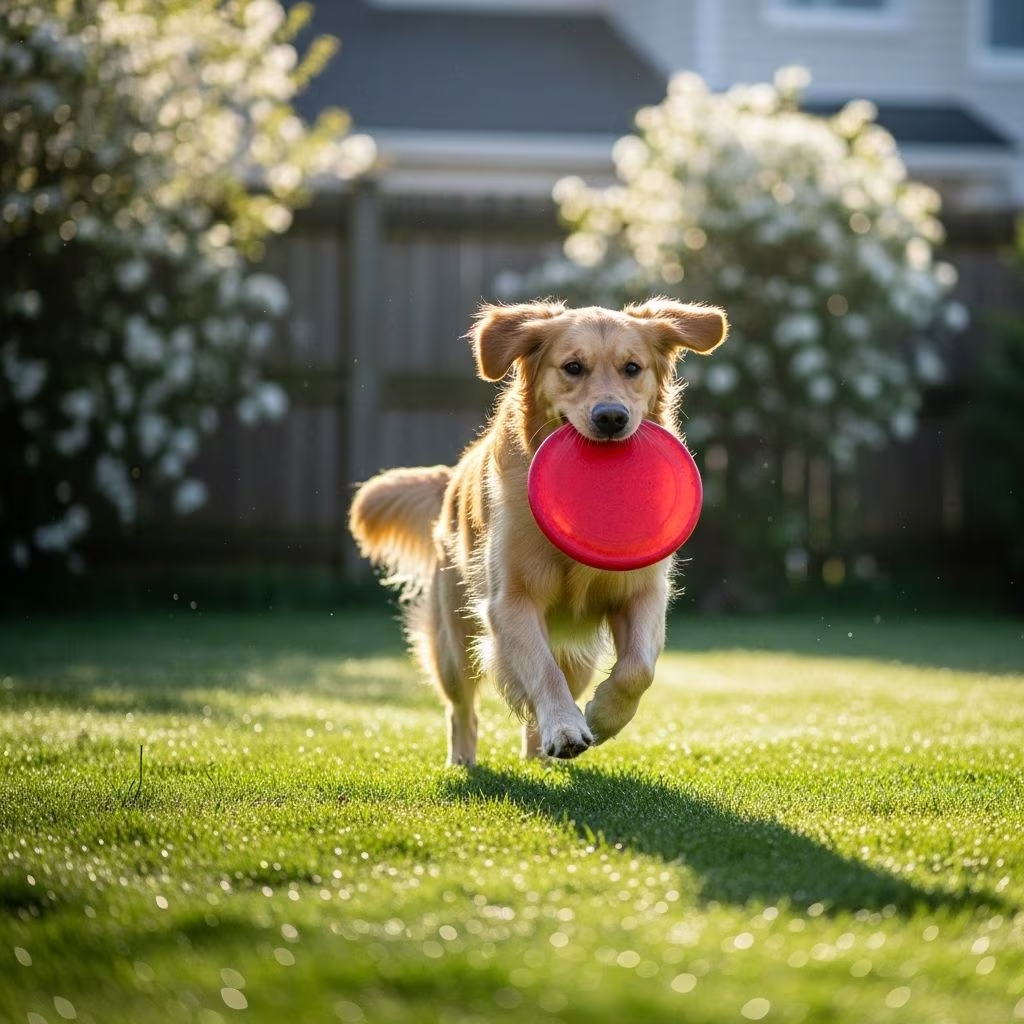
How to Teach a Dog to Fetch: A Step-by-Step Guide
Teaching your dog to fetch is one of the most rewarding training exercises you can undertake. Not only does it provide excellent physical exercise for your canine companion, but it also strengthens the bond between you and your pet while offering mental stimulation. Fetch is a natural behavior for many dogs, as they are inherently programmed to chase moving objects. However, turning this instinct into a reliable command requires patience, consistency, and positive reinforcement.
Whether you have a curious puppy or an adult dog looking to learn new tricks, this comprehensive guide will walk you through everything you need to know to successfully teach your dog to fetch. From the initial preparation stages to advanced training techniques, we’ll cover all the essential steps to transform your dog into a skilled fetcher.
What You Will Need
Before you begin training your dog to fetch, gather the following materials to ensure you have everything necessary for success:
- An enclosed, small space such as a hallway, fenced backyard, or bedroom
- A ball or toy that your dog finds interesting
- High-quality training treats for positive reinforcement
- 15 to 20 minutes per day dedicated to training
- Patience and enthusiasm for the training process
Having these items ready before you start will help create a smooth training experience. The enclosed space is particularly important during the initial stages, as it prevents distractions and helps your dog focus on the task at hand.
Step 1: Start in an Enclosed, Small Space
The foundation of successful fetch training begins with choosing the right environment. Training in an enclosed space—such as a hallway, fenced backyard, or bedroom—is crucial during the early stages of teaching your dog this command. This controlled environment serves multiple purposes in the learning process.
When your dog has nowhere else to go, they are naturally encouraged to remain focused on you and the training task at hand. This containment eliminates distractions and reduces the likelihood of your dog running off with the retrieved object instead of bringing it back to you. Additionally, an enclosed space makes it easier for you to reinforce positive behavior and redirect your dog if they attempt to run away with the toy.
The confined space also builds your dog’s confidence as they learn, allowing them to develop the skill without feeling overwhelmed by open environments. Once your dog masters the basics of fetch in this controlled setting, you can gradually introduce larger spaces and more challenging environments.
Step 2: Teach Your Dog to Chase the Ball
The second step in teaching fetch is encouraging your dog to chase after the toy. This step leverages your dog’s natural instinct to pursue moving objects, making it relatively straightforward for most dogs.
Simply throw the ball or chosen toy a short distance and enthusiastically encourage your dog to chase after it. Use excited verbal cues and body language to motivate them. Most dogs are naturally programmed to chase moving objects, so they may require minimal encouragement beyond your initial throw.
However, some dogs may not yet understand what a ball or toy is or why they should chase it. In these cases, you’ll need to introduce the object more deliberately. Get your dog excited about the toy by bouncing it, playing with it in front of them, and rolling it around on the ground. Engage with the toy yourself to demonstrate that it’s fun and worth pursuing. Once your dog becomes interested and begins chasing the toy, reward this behavior with praise and treats.
Step 3: Teach Your Dog to Return With the Toy
Getting your dog to chase the toy is only half the battle. The crucial component of fetch training is teaching your dog to bring the toy back to you. This step requires patience and consistent practice.
When your dog catches up to the toy and grabs it, your goal is to encourage them to return to you. One effective technique is to run backwards while clapping and using encouraging verbal cues. This action often triggers your dog’s natural desire to chase you, as they now have something in their mouth that might seem like a prize to keep.
As your dog approaches you with the toy, have another toy or treat ready. This dual-toy method is highly effective: when your dog returns to you, trade them for the toy they’re carrying. Offer either another interesting toy or a high-value treat in exchange for the one they have. Most dogs will readily make this trade, especially if what you’re offering is more enticing than what they currently hold.
If your dog is reluctant to make the trade, always offer a treat instead. Never attempt to tug the toy away from your dog or engage in a pulling match, as this can create negative associations with the game and make your dog less likely to cooperate.
Step 4: Teach the “Drop It” Command
An essential component of successful fetch training is teaching your dog the “drop it” command. This command ensures your dog will release the toy on cue, making the game more controlled and safer.
Hold the ball gently while it’s still in your dog’s mouth and calmly repeat the “drop it” command. Maintain a patient demeanor and avoid tugging on the toy or pulling it away aggressively. Your dog will eventually release the ball voluntarily. The moment they do, immediately praise them enthusiastically and reward them with a treat.
This takes consistent practice and requires significant patience. If your dog runs away with the ball, simply restart the process. Don’t chase them or get frustrated, as this can turn the game into a chase rather than a training exercise. Continue practicing this step until your dog reliably drops the toy without struggle or hesitation.
Step 5: Add the “Fetch” Verbal Cue
Once your dog is consistently chasing the toy, returning to you, and dropping it, you can add the verbal command “fetch” to solidify the behavior. Say “fetch” as you throw the toy, helping your dog associate the word with the action.
Repeat this pairing consistently during training sessions so your dog learns that “fetch” is the command that initiates the game. After several repetitions, your dog will understand that this verbal cue means they should chase the thrown toy and bring it back to you.
Once your dog has mastered the basic fetch command with this verbal cue, you can gradually increase the distance you throw the toy. Start by throwing it just a few feet away and slowly increase the distance as your dog becomes more proficient and reliable at returning with the toy.
Things to Avoid When Training Fetch
Teaching a dog the fetch command requires patience, practice, and positivity. Understanding what not to do is just as important as knowing the correct training methods.
Don’t Scold Your Dog
Always use positive reinforcement during training sessions. This means rewarding your dog for positive behavior rather than scolding them for mistakes. Dogs respond much better to encouragement and rewards than to punishment. If you find yourself getting frustrated during training, step away and try again the next day. Frustration can be sensed by your dog and may create negative associations with the training process.
Don’t Push Beyond Physical Limitations
Be aware of your dog’s individual physical limitations and capabilities. Not every dog is physically inclined to play fetch regularly. Some breeds have lower energy levels, while others may have physical limitations due to age, health conditions, or breed characteristics. Respect these boundaries and adapt the training to suit your specific dog. A dog with joint problems or breathing difficulties may not be suitable for intensive fetch training.
Don’t Practice in Unsafe Spaces
Always play fetch in a safe environment where your dog cannot get injured. Avoid playing fetch around moving cars, in areas with dangerous obstacles, in extremely hot or cold weather, or anywhere else that poses potential hazards. Safety should always be your top priority during training and play sessions.
Transitioning to Larger Spaces
Once your dog has reliably mastered fetch in an enclosed space, you can gradually transition to larger environments. Begin by practicing in slightly larger enclosed areas before moving to open spaces like dog parks.
The transition should be gradual to ensure your dog doesn’t become overwhelmed or distracted by the new environment. Start with a larger backyard or a quiet park area before attempting to teach fetch in busier locations with more distractions.
Frequently Asked Questions
How can I teach my dog to fetch in the park?
Training experts recommend starting fetch training in a small, enclosed space when you first begin. Your house, apartment, or backyard is ideal because it helps keep your dog focused on the training. Once your dog reliably retrieves a toy and drops it consistently, you can graduate to larger spaces such as dog parks. Make this transition gradually to maintain your dog’s focus and obedience.
What if my dog doesn’t like toys?
If your dog doesn’t initially show interest in toys, try experimenting with different types. Some dogs prefer balls, while others respond better to frisbees, rope toys, or squeaky toys. You can also make toys more interesting by playing with them yourself first to demonstrate their appeal. Some dogs respond better to fetch games if the toy resembles prey or makes interesting sounds.
How long should training sessions last?
Keep fetch training sessions brief and fun. Most training experts recommend 15 to 20 minutes per day for optimal results. Short, consistent sessions are more effective than lengthy marathon training periods. For puppies, sessions should be even shorter, around 5 to 10 minutes, as they have shorter attention spans and tire more easily.
Why won’t my dog bring the toy back?
If your dog chases the toy but won’t return it, try using the two-toy method where you trade for another toy or a treat. You can also make coming back to you more rewarding by using high-value treats or making your return path more exciting. Avoid chasing your dog, as this turns the game into a chase rather than a controlled exercise. Never punish your dog for not returning; instead, make returning more rewarding than running away.
At what age can I start teaching fetch?
You can start introducing fetch concepts to puppies as early as 8 weeks old, though formal training is best started around 12 weeks. Young puppies have limited endurance and attention spans, so keep sessions very brief. As your puppy matures, you can gradually increase training intensity and session length. Always ensure your puppy doesn’t overexert themselves, as too much running can strain developing bones and joints.
Can all dog breeds learn to fetch?
While most dogs can technically learn to fetch, some breeds have stronger natural instincts for it than others. Retriever breeds, for example, were originally bred to retrieve game and naturally excel at fetch. Other breeds may show less enthusiasm or ability. Regardless of breed, most dogs can learn fetch through patient training, though individual dogs may vary in their natural aptitude and enthusiasm for the activity.
References
- How to Teach a Dog to Fetch: A Step-by-Step Guide — Chewy Editorial Team. 2024. https://www.chewy.com/education/dog/training-and-behavior/how-to-teach-dog-to-fetch
- Your Essential Guide to Basic Dog Obedience Training — Irith Bloom, CPDT-KSA, Chewy. 2024. https://www.chewy.com/education/dog/training-and-behavior/sit-stay-and-beyond-weve-got-the-essential-guide-to-basic-dog-obedience-training
- How To Teach a Dog to Stay: A Step-by-Step Guide — Chewy Editorial Team. 2024. https://www.chewy.com/education/dog/training-and-behavior/basic-dog-training-commands-stay



