

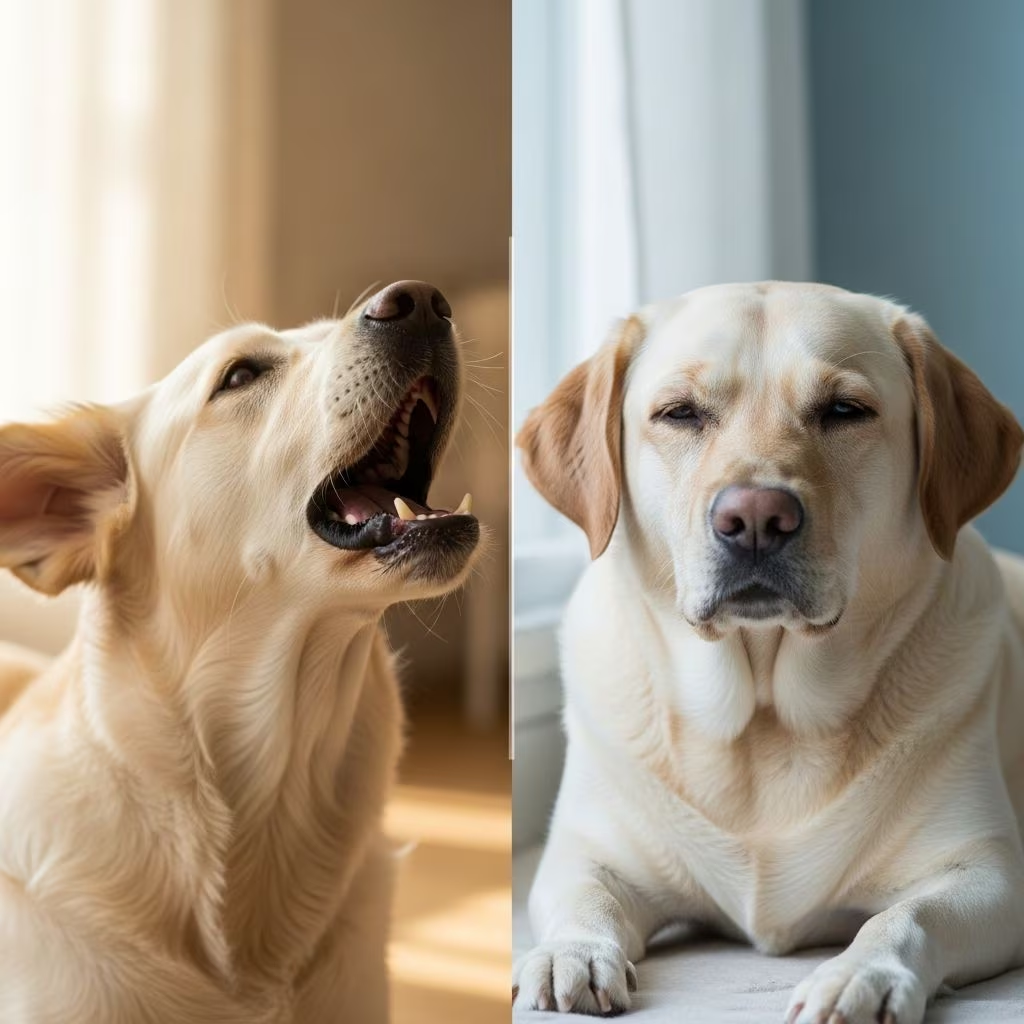
How to Teach a Dog to Speak and Be Quiet
Teaching your dog to bark on command and to be quiet when requested are valuable skills that enhance communication between you and your pet. These commands go beyond simple tricks—they provide practical benefits for managing your dog’s behavior in various situations. Whether you want to reduce excessive barking or establish better control over your dog’s vocal expressions, mastering both the “speak” and “quiet” commands can transform your relationship with your furry companion.
Understanding the Importance of ‘Speak’ and ‘Quiet’ Commands
Before diving into the training process, it’s essential to understand why these commands matter. Teaching your dog to speak on command gives you the ability to channel their natural barking instinct into a controlled behavior. This is particularly useful for dogs with high prey drive or those who are naturally vocal. Once your dog understands the “speak” command, teaching “quiet” becomes significantly easier because your dog learns to associate barking with a specific cue, making it simpler to request silence when needed.
These commands also serve practical purposes beyond entertainment. Many dog owners use the “speak” command to alert them when their dog needs to go outside for bathroom breaks. Additionally, these skills can help reduce neighbor complaints about excessive barking and create a more harmonious living environment in apartment buildings or close neighborhoods.
Preparation: Setting Yourself Up for Success
Gather Your Training Materials
Before you begin training, ensure you have everything you need on hand. The most critical element is a high-value reward that motivates your dog. This could be:
- Small training treats (especially effective for quick rewards)
- Favorite toys or chew items
- Verbal praise and enthusiasm
- A combination of rewards to maintain interest
Having your rewards immediately accessible is crucial because timing is everything in dog training. Your dog needs to associate the barking behavior directly with the reward, so delayed rewards won’t be as effective.
Choose the Right Training Environment
Select a location where your dog is comfortable but has room to move around. If you live in close proximity to neighbors, consider training during times when barking won’t disturb others. Practice sessions should be relatively short—typically 5 to 10 minutes—to maintain your dog’s focus and enthusiasm.
Step 1: Get Your Dog to Bark
The first challenge is actually getting your dog to bark on cue. This step varies depending on your dog’s natural temperament. Some dogs are naturally vocal and will bark readily when excited, while others require more encouragement.
For Naturally Vocal Dogs
If your dog barks frequently, you’ll have plenty of opportunities to capture the behavior. Watch for situations that naturally trigger barking, such as:
- When you grab their leash for a walk
- When you pick up their favorite toy
- When someone arrives at the door
- During play sessions
For Less Vocal Dogs
If your dog rarely barks, you’ll need to actively encourage vocalization. The most effective method is to get your dog excited enough that they naturally want to bark. Try these techniques:
- Run or jump around your dog with enthusiasm
- Tease them playfully with their favorite toy
- Use an excited, high-pitched tone of voice
- Play interactive games that build excitement
- Go in and out of sight while calling to them enthusiastically
During these excitement-building sessions, watch carefully for any barking, even a single bark or whine, as this is your opportunity to mark and reward the behavior.
Step 2: Mark the Bark Immediately
Timing is absolutely critical in dog training. The moment your dog barks, you need to immediately mark that behavior with a verbal marker and reward. This teaches your dog that the barking is what earned the reward.
Using a Verbal Marker
A verbal marker can be any word or sound that clearly indicates to your dog that they’ve done something right. Common options include:
- “Yes!” delivered with enthusiasm
- “Good!” in an excited tone
- “Speak!” paired with the reward
- Any other consistent word of your choice
Using Clicker Training
Many trainers prefer clicker training, which uses a distinct clicking sound as a marker. The clicker provides a precise, consistent signal that tells your dog exactly when they performed the desired behavior. If you’re using clicker training, click the moment your dog barks, then immediately follow with a reward.
Delivering the Reward
After marking the behavior, immediately provide a reward. This could be a treat, toy, enthusiastic praise, or play session. The faster you reward after the bark, the clearer the connection your dog will make between barking and positive outcomes.
Step 3: Add the Verbal Command
Once your dog is barking reliably in response to your excitement and play, you can begin associating a verbal command with the behavior. The most common command is “speak,” but you can choose any word you prefer.
Introducing the Command
Start by saying your chosen command (“speak,” “talk,” “bark,” etc.) just before your dog naturally barks. For example, you might say “speak” as you excite them with a toy or during a play session when you know they’re likely to bark. The key is to say the command right before the bark occurs, so your dog begins to associate the word with the vocalization.
Reinforcing the Association
Continue pairing the command with barking opportunities. Over time, your dog will begin to understand that the word “speak” precedes barking. Eventually, your dog will start barking in anticipation of or in response to hearing the command, rather than barking first and then hearing the command.
Important Considerations
When teaching the “speak” command, focus on capturing single barks rather than encouraging long barking sessions. You want your dog to understand that “speak” means “bark once or a few times,” not “bark continuously for several minutes.” This distinction is important for practical control and for maintaining good neighborly relations.
Step 4: Add a Hand Signal
Once your dog reliably responds to the verbal “speak” command, you can enhance the training by adding a hand signal. This gives you additional ways to communicate with your dog, which is particularly useful in noisy environments where verbal commands might not be heard clearly.
Common Hand Signals for “Speak”
A frequently used hand signal involves starting with an open hand, palm facing your dog, then repeatedly closing your four fingers against your thumb in a talking motion. This mimics the appearance of talking and creates a strong visual cue.
Training the Hand Signal
To introduce the hand signal:
- Give the hand signal followed immediately by your verbal “speak” command
- Wait for your dog to bark
- Mark and reward the behavior
- Repeat this sequence until your dog begins responding to the hand signal alone
- Gradually phase out the verbal command so your dog responds to the hand signal independently
Using Both Cues Together
Many handlers find it effective to use both the verbal command and hand signal together for consistency and clarity. This redundancy can be especially helpful when training in distracting environments or when you need your dog’s attention from a distance.
Teaching the “Quiet” Command
Now that your dog understands “speak,” teaching “quiet” becomes much more manageable. The “quiet” command is arguably more important than “speak” because it addresses the challenge of excessive barking.
Introduction to the “Quiet” Command
The “quiet” command uses the same marker-and-reward system as “speak,” but you’re marking the cessation of barking rather than the barking itself. This creates a balanced approach to barking management.
Step-by-Step Training Process
Start with Active Barking: Use your “speak” command to get your dog barking. Once your dog has barked several times, pause and wait for a moment of silence.
Mark the Silence: The instant your dog stops barking, say “quiet” or your chosen command for silence, then immediately reward with treats, praise, or play.
Reinforce the Association: Repeat this sequence multiple times during training sessions. Your dog will begin to understand that stopping barking results in a reward.
Extend the Silence: Gradually increase the duration of silence required before rewarding. Start by rewarding after just a second or two of quiet, then gradually extend to three seconds, five seconds, and longer.
Advanced Quiet Training
Once your dog reliably understands “quiet” in controlled training situations, practice the command during real-world scenarios. For example, if your dog barks at the doorbell, ask for “speak,” then follow with “quiet” to demonstrate control over their barking in response to triggers.
Practical Applications for “Speak” and “Quiet”
Managing Bathroom Breaks
Many dog owners successfully use the “speak” command to signal when their dog needs to go outside. By training your dog to bark when they need to eliminate, you create a communication system that alerts you to their needs without requiring constant vigilance.
Reducing Excessive Barking
Teaching “quiet” is particularly valuable for dogs prone to excessive barking. Instead of simply telling your dog to stop barking (which they may not understand), you’re providing a specific command that has been practiced and rewarded, making it more likely your dog will comply.
Modifying Bark Volume
An advanced application involves teaching your dog to “whisper”—bark at a lower volume. Once your dog understands “speak,” you can selectively reward quieter barks, gradually shaping the behavior toward softer vocalizations.
Entertainment and Competition
The “speak” command is a popular trick for entertaining guests and family members. Additionally, these tricks are recognized by the American Kennel Club’s Trick Dog program. Completing the “speak” command along with other tricks can earn your dog official Trick Dog titles.
Common Training Mistakes to Avoid
Inconsistent Timing
The most common training error is delaying the reward or marker. If you wait too long between the bark and the reward, your dog may not understand which behavior earned the reward.
Rewarding Long Barking Sessions
Be careful to capture and mark only single barks initially. Rewarding continuous barking teaches your dog that longer barking sessions are desirable, which defeats the purpose of controlled barking.
Practicing in Inappropriate Settings
Training your dog to bark in apartments or close quarters with neighbors requires careful consideration. Practice during times when barking won’t disturb others, or find alternative locations such as parks or open spaces.
Lack of Patience
Some dogs learn quickly, while others require more time and repetition. Avoid becoming frustrated if progress seems slow. Every dog has their own learning timeline, and consistent, positive practice will eventually yield results.
Training Timeline and Expectations
The duration of training varies significantly depending on your dog’s age, temperament, and prior training experience. Generally, you can expect:
- Week 1-2: Your dog begins to understand the connection between barking and rewards
- Week 3-4: Your dog responds consistently to “speak” in familiar environments
- Week 5-6: Hand signals can be introduced and reinforced
- Week 7-8: “Quiet” command training becomes increasingly effective
Puppies often pick up these commands more quickly than adult dogs, though consistency across all age groups is key to success.
Troubleshooting Common Issues
Dog Won’t Bark on Command
If your dog refuses to bark despite your efforts to excite them, try higher-value rewards, more vigorous play sessions, or different triggers. Some dogs respond better to specific toys or to the presence of other dogs.
Dog Barks Excessively After Training
If your dog barks more after learning “speak,” you may have inadvertently rewarded excessive barking. Restart training, focusing carefully on single barks and ensuring you’re rewarding only brief vocalizations.
Dog Won’t Stay Quiet
If your dog struggles with the “quiet” command, ensure you’re rewarding even very brief moments of silence initially. Gradually extend the quiet duration as your dog demonstrates understanding.
Frequently Asked Questions
Q: Is it safe to teach my dog to bark on command?
A: Yes, teaching “speak” is safe and can actually reduce excessive barking by giving you control over when barking occurs. Many professional trainers and veterinary behaviorists recommend this technique.
Q: At what age can I start teaching these commands?
A: You can begin teaching “speak” and “quiet” to puppies as young as 8 weeks old. Puppies often learn these commands more quickly than adult dogs, though patience and consistency are always important.
Q: Can all dogs learn these commands?
A: Most dogs can learn “speak” and “quiet” with proper training, though some breeds and individual dogs are naturally more vocal than others. Less vocal breeds may require more patience and creative motivation techniques.
Q: How long does it typically take to teach these commands?
A: Most dogs can learn basic “speak” and “quiet” commands within 4-8 weeks of consistent training, though complete mastery and reliability in all situations may take longer.
Q: What if my dog barks for negative reasons, like anxiety?
A: If your dog’s barking is driven by anxiety or fear, consult with a professional dog trainer or veterinary behaviorist before attempting these training techniques. Addressing the underlying cause is important for long-term success.
Q: Can I use these commands to stop my dog from barking at the doorbell?
A: Yes. By training “speak” and “quiet” in controlled settings first, you can then practice them during doorbell situations. Eventually, you can ask for “speak” and then “quiet” when someone arrives at the door.
Q: What rewards work best for training these commands?
A: The best rewards are those your dog finds most motivating. For many dogs, small training treats work well. Others prefer toy play or enthusiastic verbal praise. Experiment to find what motivates your dog most.
References
- ‘Speak!’ Training Your Dog to Bark on Command — American Kennel Club. 2024. https://www.akc.org/expert-advice/training/train-your-dog-to-speak/
- Teaching your dog to ‘speak’ on command — Battersea. 2024. https://www.battersea.org.uk/pet-advice/dog-advice/teaching-your-dog-speak-command
- Training the Non-Biting Dog to Bark at the Door — Leerburg. https://leerburg.com/bark.htm



