

How to Teach a Dog to Sit in 3 Easy Steps
Teaching your dog to sit is one of the most fundamental and valuable basic dog training commands you can establish. The “sit” command serves multiple practical purposes in your daily life with your canine companion. Whether you need your dog to stop jumping on visitors, wait politely at doorways, remain calm before crossing the street, or simply behave safely in social situations, the sit command provides a clear, effective directive that’s often more successful than simply saying “no.” The beauty of this command is that it’s relatively easy to teach most dogs—even those with stubborn temperaments—when you follow the right approach and maintain consistency throughout the training process.
Why Teaching “Sit” Matters for Your Dog
The sit command is more than just a cute party trick. It’s a foundational behavior that helps manage your dog’s impulses and provides them with a clear, appropriate action to take in various situations. When a dog understands the sit command, they have a positive outlet for their energy and a way to earn rewards through good behavior. This strengthens the bond between you and your dog while simultaneously reducing frustration for both parties. Rather than constantly correcting unwanted behaviors, you’re redirecting your dog’s energy into a desirable action that you can reward and reinforce.
Preparation: Setting Yourself Up for Success
Before you begin the three-step training process, it’s essential to prepare properly for a successful learning experience. The foundation of effective dog training begins with selecting the right environment and gathering appropriate tools.
Choosing Your Training Environment
Start practicing in a calm, quiet location with minimal distractions. Your home—perhaps a specific room or a quiet corner—is ideal for initial training sessions. This controlled environment allows your dog to focus entirely on you and the task at hand without competing stimuli pulling their attention away. Environmental distractions like other pets, outdoor noises, or multiple people can significantly hinder learning, so resist the urge to practice at the local park or busy neighborhood areas until your dog has mastered the behavior in a controlled setting.
Gathering Essential Training Tools
You’ll need two key items for successful sit training. First, have small, high-value treats available—these should be special rewards that your dog finds particularly motivating. Reserve these treats specifically for training sessions so they maintain their special status. Second, acquire a clicker, which is a small mechanical device that makes a distinct clicking sound. The clicker serves as a marker that precisely identifies the exact moment your dog performs the desired behavior, creating a clear connection between the action and the reward.
Step 1: Luring Your Dog Into the Sit Position
The first step in teaching your dog to sit involves physically guiding them into the position using a treat lure. This method is highly effective because it uses your dog’s natural instincts and motivation to make the behavior almost inevitable.
The Luring Technique
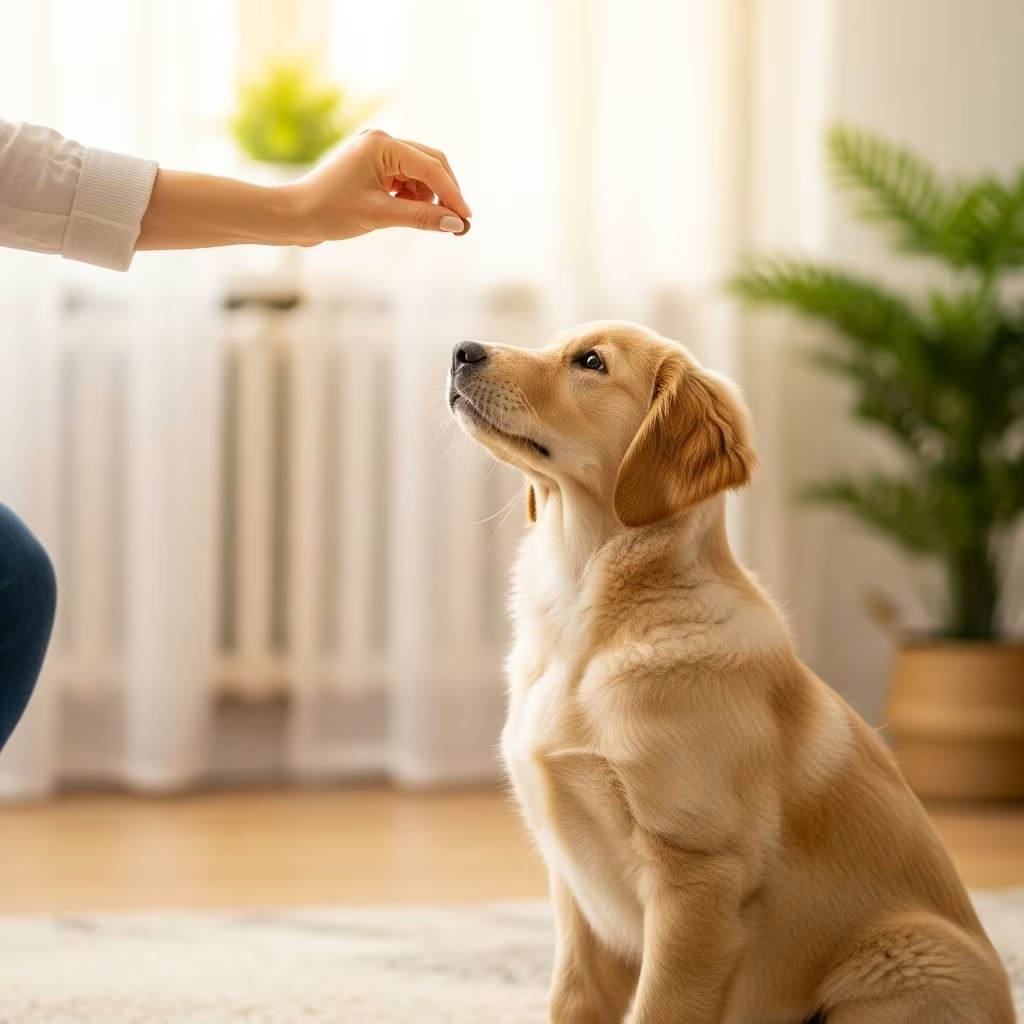
Begin by standing directly in front of your dog. Hold a small treat between your thumb and index finger, positioning it close to your dog’s nose but not so close that they can immediately grab it. This creates anticipation and maintains their focus. Slowly move your hand upward in front of your dog’s face, gradually moving it over their head. As their head naturally follows the treat upward, their rear end will instinctively lower toward the ground. This is the physics of dog body mechanics—when the head goes up, the rear goes down.
Marking and Rewarding the Behavior
The moment your dog’s rear touches the ground, immediately click your clicker and reward them with the treat. This timing is crucial because the click precisely marks the exact behavior you want to encourage. If your dog’s rear doesn’t immediately go down, click and provide the treat every time their head goes up to track the treat. With repeated practice, their rear will naturally start going down as they learn the pattern. If your dog tends to back up instead of sitting, position them with their back against a wall or other barrier to prevent backward movement and encourage the sitting position.
Step 2: Adding the Verbal Cue
Once your dog consistently sits quickly every time you practice the luring technique, it’s time to introduce the verbal cue “sit.” This step creates the association between the word and the behavior.
Introducing the “Sit” Command
Continue using the treat lure while now adding the verbal cue. Say “sit” in a clear, calm voice just before you perform the luring motion. Continue practicing this step—lure with the treat while using the verbal cue—until your dog begins showing consistent responses. The repetition helps your dog make the connection between hearing the word “sit” and performing the action. Maintain consistency in how you say the command; use exactly the same word and tone each time. Dogs are exceptionally good at detecting subtle differences, so “sit,” “sit down,” and “Fido, sit” may be interpreted as three completely different cues.
Step 3: Phasing Out the Lure
The final step transitions your dog from relying on the treat lure to responding to the verbal command alone. This is where you see the real magic of training take effect.
Removing the Physical Guide
Begin phasing out the lure by offering the command “sit” without the treat in your hand or with your hand in a different position. With consistent practice and positive reinforcement, your dog will eventually sit on cue without needing any physical guidance. Some dogs transition quickly through this phase, while others may need more repetitions. If your dog struggles, return briefly to using the lure before attempting to phase it out again. The key is moving at your dog’s pace and only progressing when they demonstrate consistent understanding.
Beyond the Basics: Proofing the “Sit” Command
Proofing in dog training refers to teaching your dog to generalize the behavior across different contexts, locations, and handlers. A dog that sits perfectly in your quiet living room might not respond the same way in a busy park or with a different person. Proofing ensures your dog will sit reliably anywhere, regardless of environmental factors.
Changing Locations Gradually
Start proofing by practicing in locations with minimal distractions, such as your backyard. Once your dog succeeds consistently, gradually move to environments with increasing levels of distraction. Progress to neighborhood streets, parks, and busier public areas only after your dog demonstrates reliable performance in calmer settings. Change only one factor at a time—if you move to a new location, keep everything else constant. Don’t simultaneously change the location and introduce new handlers or distractions.
Introducing Different Handlers
Have different people practice the training with your dog, beginning with the second step of the process. New handlers should start with the treat lure to set themselves and the dog up for success. Have handlers practice from different positions—standing, sitting down, or standing at various distances from your dog. This teaches your dog that the “sit” command is universal and applies regardless of who’s issuing it or their physical position.
Adding Distractions
Practice with people moving slowly around your dog, then gradually increase the speed of movement. Practice around other dogs with varying activity levels. Have children move around your dog if appropriate. Each new distraction should be introduced gradually, ensuring your dog maintains at least an 80% success rate before adding additional challenges. This careful progression prevents your dog from becoming frustrated or confused.
Common Training Tips for Success
Successful dog training requires more than just following steps—it requires understanding key principles that enhance learning and strengthen your relationship with your dog.
Keep Sessions Short and Focused
Most dogs learn most effectively in training sessions lasting 10 to 15 minutes. Even just five minutes of focused training multiple times per day can be highly effective. Shorter sessions maintain your dog’s attention and enthusiasm, making training a positive experience rather than a tedious chore. Long, drawn-out sessions often result in diminishing returns and decreased motivation.
Practice Consistency
Use exactly the same cue every single time you ask your dog to sit. Dogs are detail-oriented learners, and even slight variations in your command can create confusion. Ensure all family members use the identical cue and training approach. This consistency prevents frustration and accelerates learning significantly.
Use Positive Reinforcement
Always begin with positive reinforcement and reward-based training methods. Immediately jumping to aversive techniques that involve pain, fear, or intimidation can damage your relationship with your dog and actually produce less effective and less lasting results. Training should be a fun, enjoyable experience that strengthens your bond with your canine companion.
Handle Setbacks with Patience
Learning isn’t always linear. Your dog might fluctuate in their progress from day to day, and some training sessions may not go as planned. Stay calm, keep the bigger picture in mind, and avoid frustration. If a training session isn’t working, simply stop and try again later or the following day. Remember that you’re building long-term behavior for a long-term relationship with your dog.
Troubleshooting Common Challenges
Different dogs learn at different rates, and you may encounter specific obstacles during training.
Dog Backs Up Instead of Sitting
If your dog consistently moves backward rather than lowering into a sit, train with a wall or barrier directly behind them. This physical limitation prevents backward movement and naturally guides them into the sitting position.
Slow Progress or Resistance
Some dogs take longer than others to learn the sit command. If your dog seems to be progressing slowly, ensure you’re breaking the behavior into small enough steps. You might need to reward your dog for smaller progressive movements—like simply lowering their head—before expecting a full sit. Make the training process easier for your dog rather than expecting them to understand complex requests immediately.
Lack of Motivation
If your dog doesn’t seem motivated by the treats you’re using, experiment with different reward options. Some dogs are motivated by specific types of treats, toys, or even verbal praise. Find what truly excites your individual dog and use that as your training reward.
Frequently Asked Questions About Teaching “Sit”
Q: How long does it typically take to teach a dog to sit?
A: The timeline varies by individual dog. Some dogs learn within a few training sessions, while others may require several weeks of consistent practice. Most dogs show significant progress within 1-2 weeks of daily practice, but consistency is more important than speed.
Q: What if my dog is older? Can senior dogs learn to sit?
A: Absolutely. Dogs of any age can learn new behaviors. The training process is the same whether your dog is young or senior. Some older dogs may have physical limitations that affect how they sit, but they can still learn the command.
Q: Should I use a clicker for training?
A: While a clicker is highly effective for marking the exact moment of desired behavior, it’s not absolutely required. Some trainers use verbal markers like “yes!” instead. However, the consistent timing of a clicker can accelerate learning.
Q: Can I train my dog to sit without treats?
A: While treats are highly motivating and effective for most dogs, you can use other rewards like toys, play time, or enthusiastic praise. However, small food treats are generally the most reliable motivators for training purposes.
Q: What should I do if my dog refuses to sit during training?
A: Don’t force your dog physically into the position. Instead, go back to basics, use a higher-value treat, or take a break. Your dog may be distracted, tired, or unmotivated. Try training in a different environment or at a different time of day.
Q: How often should I practice the sit command?
A: Multiple short training sessions throughout the day are more effective than one long session. Aim for 2-5 sessions daily, each lasting 5-15 minutes. Even incorporating the command into your daily routine—asking for a sit before meals or going outside—helps reinforce the behavior.
Making Training a Lifelong Habit
Teaching your dog to sit is just the beginning of a rewarding training journey. Once your dog has mastered this fundamental command, you can use the same techniques to teach additional behaviors like “down,” “stay,” “come,” and many others. The skills you develop during sit training—patience, consistency, positive reinforcement, and careful progression—apply to all future training endeavors.Remember that training should always be a positive experience that strengthens the bond between you and your dog. Celebrate small successes, maintain consistency, and always keep sessions fun and engaging. With dedication and the right approach, teaching your dog to sit becomes not just an achievable goal but the foundation for a well-trained, well-behaved companion that enriches your life for years to come.
References
- How to Teach a Dog to Sit in 3 Easy Steps — Best Friends Animal Society. 2025. https://bestfriends.org/pet-care-resources/how-teach-dog-sit-3-easy-steps
- Dog Training Tips: Do’s and Don’ts — Best Friends Animal Society. 2025. https://bestfriends.org/pet-care-resources/dog-training-tips-dos-and-donts
- Dog Training Tips: How to ‘Proof’ Behaviors — Best Friends Animal Society. 2025. https://bestfriends.org/pet-care-resources/dog-training-tips-how-proof-behaviors



