

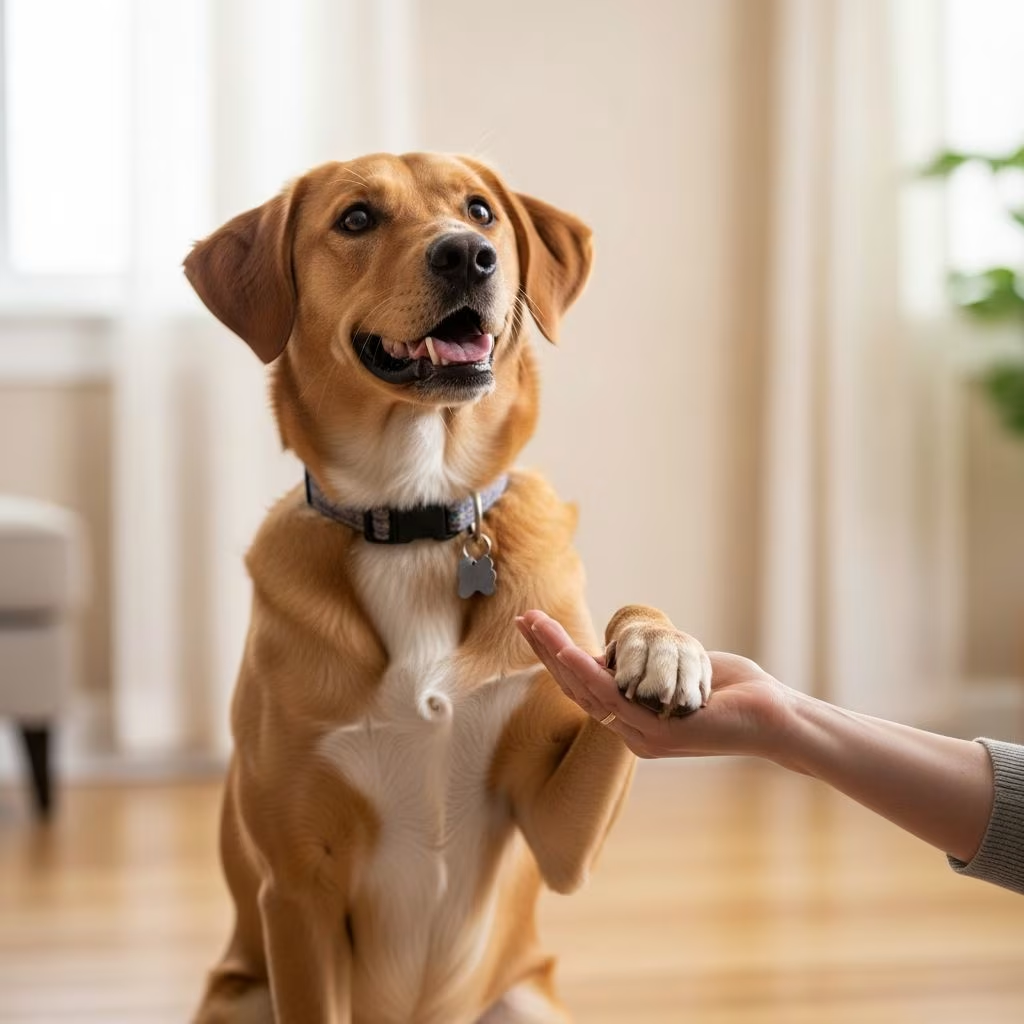
How to Teach a Dog to Shake a Paw: The Complete Training Guide
Teaching your dog to shake a paw is one of the most adorable and rewarding tricks you can train. Not only does it provide mental stimulation for your furry friend, but it also strengthens the bond between you and your pet through positive interaction. Whether you’re a first-time trainer or an experienced dog handler, this trick is surprisingly easy to teach, and the good news is that dogs can learn the shake command at any age.
The shake command, also known as “shaking hands,” is a classic trick that impresses friends and family while being simple enough for most dogs to master. If your pup loves treats—and let’s be honest, most do—you’ll find that teaching this trick becomes an enjoyable bonding experience. In this comprehensive guide, we’ll walk you through every step of the process, from gathering your supplies to introducing the verbal cue.
Gathering Your Supplies: What You’ll Need
Before you begin training your dog to shake, it’s important to have the right tools ready. The good news is that you don’t need much to get started. Here’s what you should gather:
- Dog training treats — Choose treats that your dog absolutely loves. These will serve as the primary motivator during training. High-value treats work best, as they encourage your dog to focus and participate.
- A training clicker (optional) — While not essential, a clicker can be incredibly helpful. It provides clear, immediate feedback to your dog about the exact moment they’ve performed the desired behavior correctly.
That’s it! You really don’t need much to teach this easy trick. If you already use a clicker in your training routine, it can definitely come in handy and speed up the learning process. However, many trainers successfully teach the shake command without one by simply using verbal praise and immediate treat rewards.
Step-by-Step Instructions for Teaching Your Dog to Shake
Step 1: Ask Your Dog to Sit
Begin your training session by asking your dog to sit. This is important because it establishes a calm starting position and helps your dog focus on you. A sitting dog is more likely to engage with the training and less likely to become distracted. If your dog doesn’t know how to sit yet, you may want to teach this basic command first, as it forms the foundation for many other tricks.
Step 2: Hold Out a Dog Treat
Once your dog is sitting calmly, hold a dog treat in your hand at a comfortable height. Position your hand in a way that your dog can see and smell the treat. This creates motivation and focuses your dog’s attention on your hand. The treat should be visible enough to capture their interest but held firmly so they can’t simply take it.
Step 3: Move the Treat to the Side Until They Lift Their Paw
This is where the real training begins. Slowly move the treat to your right or left side. As your dog follows the treat with their nose, their body will naturally shift in that direction. When you move the treat to your right, most dogs will lean right, and vice versa. As your dog leans to follow the treat, one of their front paws will naturally lift up off the ground.
This lifting of the paw is exactly what you’re looking for. At this early stage, don’t worry about perfection. You’re simply marking the moment your dog’s paw lifts, even slightly, and then immediately rewarding them with the treat. Many dogs will lift their paw while they’re shifting their weight—this is natural behavior, and you’re simply capturing and rewarding it.
Step 4: Mark and Reward the Behavior
As soon as you see either paw start to lift, even a little bit, mark the behavior immediately. If you’re using a clicker, click it the moment the paw lifts. If you’re not using a clicker, you can use a verbal marker like “yes!” or “good!” Then, feed your dog the treat right away. This immediate reward helps your dog understand exactly which behavior earned the treat.
At this early stage, don’t worry about anything else—not the height of the paw, not which paw is lifting, not the timing. Just watch for that front paw to lift, mark the moment it does, and feed your dog a treat. You’re building the foundation for the shake command by establishing that lifting their paw results in a reward.
Step 5: Practice and Consistency
Repeat this exercise several times in a row, moving the treat in the same direction each time. Marking and rewarding the same paw each time you practice will get you faster results. Dogs learn through repetition, so aim for multiple short training sessions rather than one long one. Five to ten repetitions per session is often ideal, and you can train multiple times per day.
During this phase, your dog should start to anticipate the movement and lift their paw more readily each time. You might notice they begin lifting their paw even before you move your hand quite as far, or they start to lift it faster. This is excellent progress.
Step 6: Transition to an Empty Hand Signal
Once your dog has mastered lifting their paw by following the treat, it’s time to transition away from using the treat as a lure. This is an important step because you don’t want your dog to become dependent on seeing a treat in your hand to perform the trick.
To do this, make the same hand movement as in the previous step, but this time without a treat in your hand. Use an empty hand and make the same sideways motion you’ve been practicing. The moment your dog’s paw lifts off the ground in response to your hand signal, mark the behavior (with a clicker or verbal marker) and then grab a treat from a treat pouch or nearby container and reward your dog.
The key difference here is that the treat comes after the mark, not before. This teaches your dog that the hand signal itself is the cue to lift their paw, not the presence of a treat. Keep practicing this until your dog is reliably lifting their paw in response to your empty hand signal.
Step 7: Encourage Higher Paw Raises
Once your dog is consistently lifting one paw as you use your hand signal, it’s time to shape the behavior by waiting for higher and higher paw raises. This process is called “shaping,” and it gradually refines the trick to make it look more impressive and polished.
After your dog lifts their paw a little, wait for them to raise it a tiny bit higher before you mark and treat. Then, the next time, wait for them to lift it even higher. Gradually increase your expectations with each repetition. Keep practicing until your dog is raising their paw about halfway off the ground. This creates the characteristic “shake” position where the paw comes up in a way that makes it easy for you to grasp.
Step 8: Introduce Your “Shake Hand”
Your shake hand is the hand you’ll use to hold your dog’s paw during the actual “handshake.” Because you’re already using one hand to make the paw-lifting signal, your other hand automatically becomes the shake hand.
When your dog is lifting their paw high enough, place your shake hand (your palm facing upward) in front of them, so your dog’s paw lands on it. The goal is for your dog to place their paw gently on your upturned palm. Repeat this a few times while watching your dog’s body language carefully to ensure they’re comfortable when their paw touches your hand.
Important Note About Paw Sensitivity: Some dogs dislike having their paws touched. If this is the case with your dog, be extra careful during training. Always let your dog’s paw touch you, rather than you reaching for their paw. During the early stages of this step, you might see signs of discomfort such as:
- Moving away from you
- Avoiding eye contact
- Trembling or tensing up
- Pulling their paw away quickly
If your dog shows these signs consistently, it might be best to skip this particular trick and choose a different command that they’ll enjoy more, such as “roll over” or “play bow.” Every dog is different, and respecting your dog’s boundaries is essential for positive training.
Step 9: Refine the Handshake Sequence
Once your dog is comfortable with their paw touching your hand, it’s time to refine the sequence. Now you can start to put your shake hand out before you move your signal hand to the side. Here’s the refined sequence to follow:
- Put your shake hand out (palm up)
- Wait about a second and a half
- Move your signal hand (the one that triggers the paw lift)
- Mark and feed as soon as your dog’s paw touches your shake hand’s palm
You may need to lower your shake hand a bit at first to make this easier for your dog. Repeat this sequence until your dog is reliably placing their paw on your shake hand’s palm before you even move your signal hand. This shows that they’ve really learned the trick and aren’t just following the treat lure.
Step 10: Introduce the Verbal Cue
Now comes the moment where your dog learns to respond to a verbal command. Let’s say you want to use “shake” as your verbal cue. To teach it effectively, follow this process:
Say the word “shake” and then put your shake hand out. Mark and feed when your pup puts their paw in your palm. At first, you may need to follow up with the hand signal to the side, and that’s perfectly fine. This is normal during the transition to a verbal cue.
Repeat this process until your dog immediately puts their paw in your hand as soon as you say “shake” and put out your shake hand. Mark and feed for every successful repetition. Eventually, your dog will make the connection between the word “shake” and the action, and you’ll be able to phase out the hand signal if you choose to do so.
Bonus: Teaching Your Dog to High-Five
Once your dog has mastered the shake, you can easily teach them to high-five using the same foundation. High-fiving is similar to shaking, but instead of placing their paw on your upturned palm, your dog touches their paw against your palm with your fingers pointing upward.
To teach a high-five, hold your palm facing your dog with the fingers pointed to the sky. Start without using the word “shake,” and use the to-the-side hand signal as a backup if you need it. Once your dog is reliably high-fiving you with this setup, you can add the verbal cue by saying “high five” and then putting your hand out with your fingers up and palm toward the dog.
Mark and feed every time your pup puts their paw against your palm. Before long, your loyal companion will be handing out high-fives whenever you need one!
Training Tips for Success
To make your training experience smooth and enjoyable, keep these tips in mind:
- Keep sessions short: Dogs have short attention spans. Five to ten minute training sessions are often more effective than longer ones.
- Be patient: Every dog learns at their own pace. Don’t rush the process.
- Use high-value treats: Choose treats that your dog absolutely loves to maximize motivation.
- Practice consistency: Use the same commands, hand signals, and rewards each time.
- End on a positive note: Always finish training sessions with success so your dog associates training with positive experiences.
Frequently Asked Questions
Q: At what age can I teach my dog to shake?
A: Dogs can learn the shake command at any age. Puppies as young as 8 weeks old can begin learning basic tricks, and senior dogs are perfectly capable of learning new commands too. The key is using patience and positive reinforcement appropriate for your dog’s age and ability level.
Q: What if my dog doesn’t naturally lift their paw?
A: If your dog doesn’t naturally lift their paw when following the treat, try moving the treat more to the side or slightly higher. Some dogs respond better to treats moved in one direction versus another. You can also gently encourage the paw lift by lightly touching their leg, though most dogs will eventually lift their paw on their own if you give them enough opportunities.
Q: How long does it typically take to teach this trick?
A: Most dogs can learn the basic shake within a few days to a couple of weeks of consistent practice. However, adding the verbal cue and fully refining the trick may take a few more weeks. This varies based on the individual dog’s age, experience with training, and natural ability.
Q: What if my dog is afraid to touch my hand?
A: If your dog shows signs of discomfort or fear when their paw touches your hand, move forward slowly and let them set the pace. Consider choosing a different trick that your dog will enjoy more. Forcing a dog to do a trick they’re uncomfortable with can damage your training relationship and cause anxiety.
Q: Can I use this technique to teach other tricks?
A: Absolutely! The positive reinforcement and shaping techniques used to teach the shake command are foundational dog training methods that work for many other tricks. Once your dog understands how to earn rewards through training, they’ll be ready to learn high-fives, roll over, play bow, and many other commands.
References
- How to Teach a Dog to Shake a Paw — Chewy. Accessed November 28, 2025. https://www.chewy.com/education/dog/training-and-behavior/dog-commands-shake-a-paw
- How To Teach A Dog To Shake A Paw | Chewtorials — Chewy. https://www.youtube.com/watch?v=Tc6gm48CTKo
- Your Essential Guide to Basic Dog Obedience Training — Chewy. https://www.chewy.com/education/dog/training-and-behavior/sit-stay-and-beyond-weve-got-the-essential-guide-to-basic-dog-obedience-training
- 10 Tips for Training Your Golden Retriever — Chewy. https://www.chewy.com/education/dog/training-and-behavior/10-tips-for-training-your-golden-retriever



