

How to Teach a Dog to Leave It: Complete Training Guide
Teaching your dog the “leave it” command is one of the most valuable skills you can instill as a pet owner. This essential obedience command can protect your dog from eating dangerous foods, picking up harmful objects on walks, or engaging with wildlife and other dogs. Whether your pup is a curious puppy or an adult dog, mastering this command creates a foundation for safety, control, and good manners. The beauty of this command is that it’s teachable at any age, and with patience, consistency, and the right approach, most dogs can learn it successfully.
Why the Leave It Command Matters
The “leave it” command serves as a critical safety tool in your dog’s training arsenal. Dogs naturally explore their world through their mouths, and without proper training, they may ingest toxic substances, eat spoiled food, or chase after potentially dangerous items. Beyond safety, this command demonstrates impulse control and respect for your authority as their owner. It’s particularly valuable during walks in urban environments, at dog parks, during family gatherings with food, and in any situation where your dog needs to ignore temptations. A well-trained “leave it” can literally save your dog’s life.
Preparation: Setting Up for Success
Gather the Right Treats
Before beginning training, assemble two distinct types of treats. Use low-value treats—typically your dog’s regular kibble or basic biscuits—as the “bait” they must resist. Reserve high-value treats like small pieces of chicken, hot dog, cheese, or steak as rewards for successful responses. The contrast between these treat values is crucial; your dog will understand that resisting the lower-value temptation earns them something far more desirable. This positive reinforcement creates strong motivation for learning the command.
Choose Your Training Environment
Start your training sessions in a quiet, distraction-free environment such as your living room, bedroom, or a secluded yard space. This controlled setting allows your dog to focus entirely on learning without competing stimuli. As your dog progresses, you’ll gradually introduce distractions and new locations, but initially, minimize variables to ensure clear learning. Keep training sessions brief—five to ten minutes is ideal—to maintain your dog’s attention and enthusiasm.
Use a Training Marker
Consider using a training clicker or verbal marker like “yes!” to mark the exact moment your dog performs the desired behavior. This immediate feedback helps your dog understand precisely what action earned the reward, accelerating the learning process. If you don’t have a clicker, a consistent verbal marker works equally well.
Step-by-Step Training Method
Stage One: Introduction with the Closed Fist Technique
Begin by showing your dog you have a low-value treat. Close your hand into a fist and hold it directly in front of your dog’s nose. Your dog will likely attempt to retrieve the treat through sniffing, licking, pawing, and nudging—this is completely normal and expected. Do nothing and simply wait. Your patience is essential here; don’t push your hand away or pull it back. Let your dog investigate and attempt to get the treat for several seconds.
After your dog tries unsuccessfully for a few seconds, they will eventually disengage and move their head away from your closed fist. This is the exact moment you mark the behavior with “yes!” or a clicker sound, then immediately open your hand and offer your dog a high-value treat from your other hand. This teaches your dog that disengaging from temptation results in something even better. Repeat this sequence at least ten times per session until your dog reliably moves away from your closed fist.
Stage Two: Adding the Verbal Cue
Once your dog consistently disengages from your closed fist, it’s time to introduce the verbal command. Say “leave it” in a calm, natural tone—not harsh or shouted—at the exact moment your dog is moving away from your hand. Repeat this process multiple times so your dog begins associating the words “leave it” with the action of turning away from temptation.
After several repetitions, try saying “leave it” as you present your closed fist to your dog. If your dog tries to grab the treat, quickly close your hand into a fist (if not already closed) and wait again. Once your dog resists and moves away, mark and reward immediately. Practice this stage until your dog reliably responds to the verbal cue with a closed fist.
Stage Three: Open Hand Presentation
When your dog masters the closed fist version, progress to presenting the treat in an open palm. Say “leave it” before offering your hand. If your dog tries to grab the treat, quickly close your hand into a fist and start over. This stage teaches your dog greater impulse control since the treat is now more accessible. Repeat until your dog can resist the temptation and look at you for their reward, making direct eye contact. Perform at least forty repetitions of this exercise for reliable learning.
Stage Four: Treat on the Floor with Hand Coverage
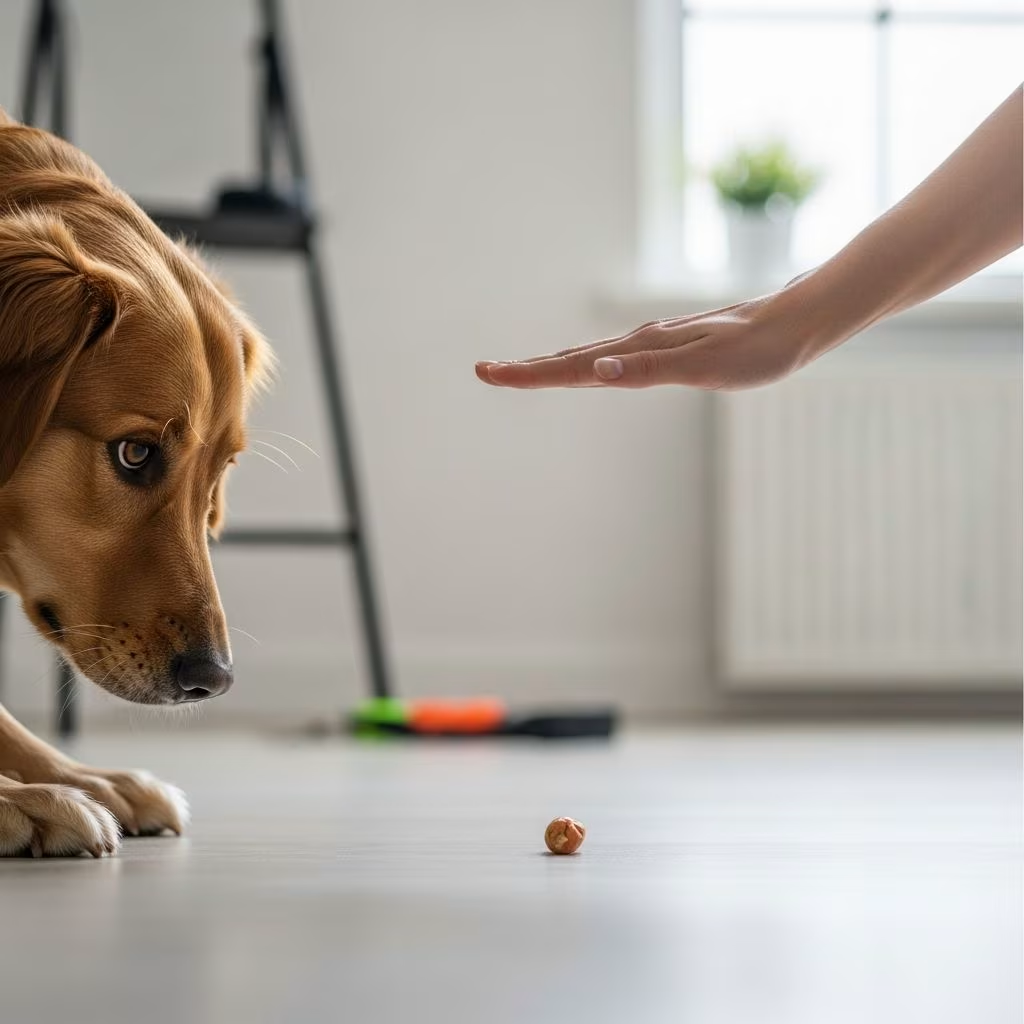
Progress to placing a low-value treat directly on the floor or a low table surface, then cover it with your hand. Say “leave it” and allow your dog to approach and sniff your covering hand. Wait until your dog stops attempting to retrieve the treat and looks up at you. The moment they make eye contact, mark with “yes!” or your clicker, remove the bait from the floor, and reward with a high-value treat from your other hand. This teaches your dog that looking at you when you say “leave it” is the winning strategy. Repeat this stage at least forty times to build confidence and reliability.
Stage Five: Uncovered Treats on the Floor
Once your dog consistently ignores treats under your hand, remove your hand coverage and place the low-value treat directly on the floor. Say “leave it” as you approach. If your dog attempts to grab the treat, use your foot to cover it quickly, preventing success. Wait for your dog to disengage and look at you, then mark and reward with a high-value treat. If your dog successfully ignores the bait from the start, mark immediately and reward enthusiastically. Practice this stage multiple times before progressing.
Stage Six: Walking Past Treats
With your dog on a leash, place several low-value treats in a row along the ground, spacing them several feet apart. Bring your leashed dog into view and say “leave it” as you walk past each treat. Mark and reward your dog with a high-value treat for ignoring each floor treat. Don’t attempt the entire row at once; work through treats one at a time initially. If your dog tries to eat a floor treat, quickly cover it with your foot and use the leash to prevent access without yanking. Once your dog ignores each treat individually, gradually progress to walking past the entire row. Celebrate successful completion with an extra-special reward like a game of tug or a favorite chew toy.
Building Reliability Across Environments
Change Locations Regularly
Dogs don’t automatically generalize training from one environment to another. Practice the “leave it” command in multiple locations including your yard, neighborhood sidewalks, parks, and other areas your dog frequents. Each new location presents different distractions and stimuli, requiring your dog to apply the command in varied contexts. This environmental variety is essential for developing genuine reliability.
Introduce Real-World Distractions
As your dog progresses, gradually incorporate realistic distractions like other dogs, cats, bicycles, or interesting scents. Start at a distance where your dog can focus on you, then slowly decrease the distance as their reliability improves. Always keep your dog on a leash during distraction training to prevent them from breaking command and practicing non-compliance. Maintain high-value rewards during distraction training to keep motivation strong.
Common Training Mistakes to Avoid
Inconsistent Practice
Consistency is the cornerstone of successful dog training. Practice the command regularly, ideally several times daily, to build strong neural pathways. Inconsistent training confuses your dog and slows progress significantly. Create a training schedule and stick to it.
Using the Cue Prematurely
Don’t use the “leave it” command if you’re uncertain your dog will respond. When dogs practice ignoring your commands successfully, they learn that the command doesn’t require compliance. If your dog isn’t responding reliably and reacts to a distraction, return to earlier training stages before attempting that particular distraction again.
Allowing Self-Rewarding Behavior
Never let your dog successfully retrieve forbidden items during training. If your dog manages to get the bait before you can prevent it, you’ve inadvertently rewarded the wrong behavior. Always cover the treat with your hand or foot if needed, or choose easier distances and situations until your dog is ready.
Overlooking the Reward Marker
The timing between desired behavior and reward is critical. Use your marker word or clicker immediately when your dog performs correctly, then quickly deliver the reward. This immediate feedback creates a clear connection between the behavior and the positive consequence.
Training Timeline and Expectations
Most dogs begin showing basic understanding of “leave it” within two to three weeks of consistent daily practice. However, complete reliability in all situations typically requires four to eight weeks or longer. Your dog’s age, temperament, prior training experience, and consistency of practice all influence the timeline. Puppies may learn quickly but need frequent reminders, while older dogs might take slightly longer but may retain the command more reliably. Patience and persistence are essential; this command is absolutely worth the time investment.
Advanced Leave It Training
Proofing with High-Value Items
Once your dog reliably responds to the basic command, challenge them with high-value items they find genuinely tempting. This might include their favorite toy, a piece of meat, or even a cat toy if you have feline housemates. The stronger the temptation, the more impressive their obedience becomes.
Multi-Dog Leave It Scenarios
If you have multiple dogs, practice “leave it” with all dogs present. This adds significant distraction and teaches each dog that the command applies regardless of their canine companions’ behavior. Use sufficient space and reward all compliant dogs to maintain motivation.
Frequently Asked Questions
At what age can puppies learn the leave it command?
Puppies as young as eight weeks can begin learning basic “leave it” training. However, young puppies have limited attention spans and impulse control, so keep sessions very brief and use high-value rewards. Most puppies show more consistent learning around four to six months of age.
My dog still tries to grab items despite training. What should I do?
This indicates your dog isn’t ready for that particular level of difficulty. Return to earlier training stages with lower-value treats and closer supervision. Your dog may also benefit from increased distance from the temptation. Never progress too quickly; steady incremental improvement is better than rushing and allowing failures.
Can senior dogs learn the leave it command?
Absolutely. Dogs of any age can learn new commands with patient, positive training methods. Senior dogs may progress at a slightly different pace than younger dogs, but they’re certainly capable of learning and successfully following “leave it” commands.
How often should I practice leave it training?
Practice at least once daily, ideally multiple times daily in short five to ten-minute sessions. Consistency matters more than length; brief, regular sessions are more effective than occasional long training periods.
What if my dog is highly food motivated?
Highly food-motivated dogs can actually excel at this training because the reward-based system is meaningful to them. Use their food motivation as an advantage by offering especially enticing high-value rewards for successful “leave it” responses. You might also conduct training sessions before regular meals when your dog is slightly hungrier.
Should I use punishment if my dog doesn’t respond?
No. Punishment-based training is ineffective and can create fear or anxiety around the command. Positive reinforcement—rewarding correct behavior—is far more effective and maintains your dog’s enthusiasm for learning. If your dog isn’t responding, the training simply needs to regress to an easier stage.
References
- Learning the “Leave It” Command — American Kennel Club (AKC). 2024. https://www.akc.org/expert-advice/training/learning-the-leave-it-command/
- Leave It – Canine Life Skills — Positively.com. 2024. https://positively.com/dog-training/article/canine-life-skills-leave-it
- Teaching Your Dog the Leave It Command — Best Friends Animal Society. 2024. https://bestfriends.org/pet-care-resources/how-teach-dog-leave-it
- How to Train Your Dog to Leave Something Alone — RSPCA UK. 2024. https://www.rspca.org.uk/adviceandwelfare/pets/dogs/training/leave
- Teaching Your Pup the Leave It Command — Buddy and Friends Dog Day Care. 2024. https://buddyandfriendsdd.com/teaching-leave-it-command/



