

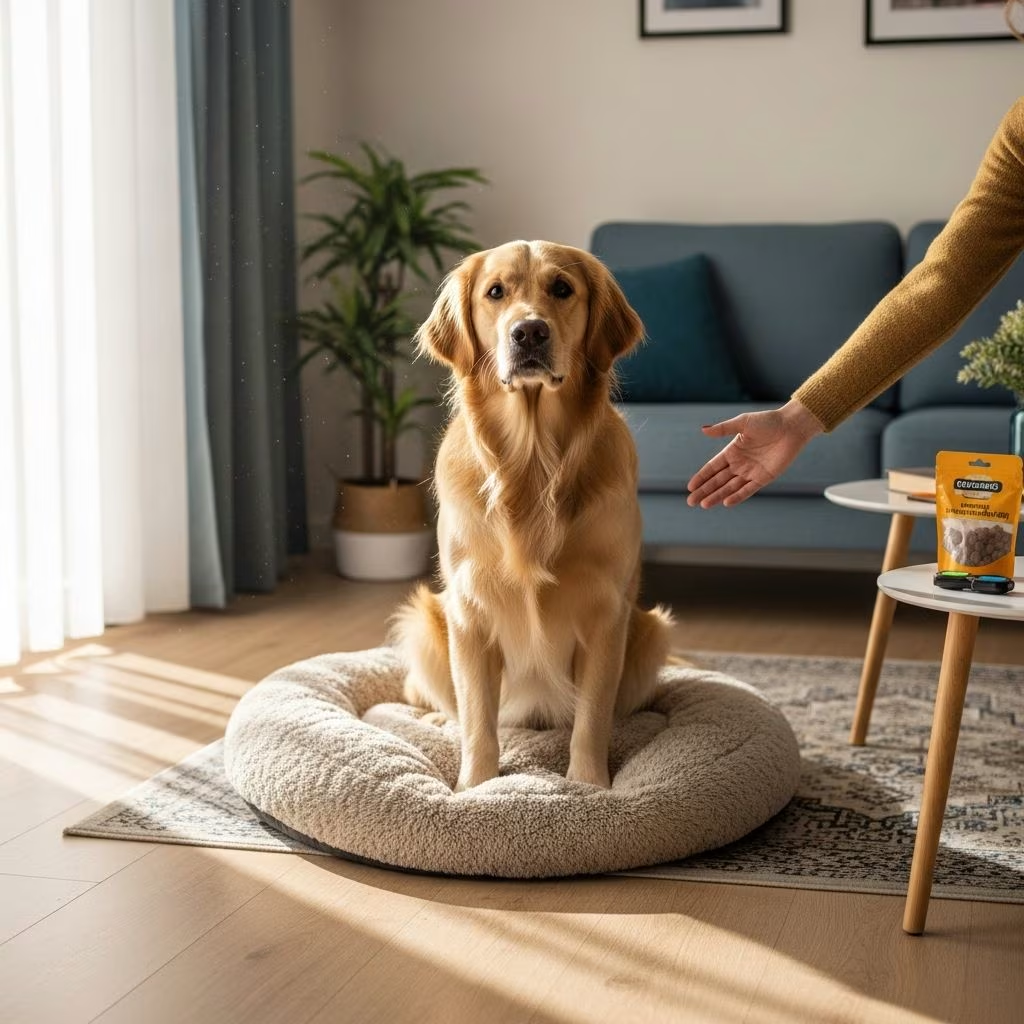
How to Teach Your Dog to Go to Their Place: A Complete Training Guide
One of the most valuable commands you can teach your dog is the “place” command. Whether you’re managing a hectic household, welcoming guests, or simply need your dog to stay calm during specific situations, the place command offers a practical solution. This command teaches your dog to settle in a designated spot and remain there until released, promoting impulse control and creating a sense of calm throughout your home.
The place command differs from other obedience commands in that it gives your dog a specific job to do—one that replaces unwanted behaviors like jumping, barking, or rushing toward the door. By redirecting your dog’s energy toward a positive behavior, you’re setting them up for success and creating a more harmonious living environment.
Understanding the Place Command
The place command is fundamentally about teaching your dog to go to a designated area—such as a dog bed, mat, or crate—and stay there in a calm, settled state until you give them a release word. Unlike the “stay” command, which requires your dog to maintain their exact position, the place command allows your dog flexibility within a defined boundary. Your dog can sit, lie down, or move slightly as long as they remain within the designated area.
This command serves multiple purposes in everyday life. It teaches your dog impulse control, focus, and the ability to relax on cue. More importantly, it provides you with a reliable way to manage your dog’s behavior in situations that might otherwise trigger anxiety or unwanted actions. When your dog understands their place, they develop confidence and security knowing exactly what’s expected of them.
Why the Place Command Matters
The place command is one of the most practical tools in your dog training arsenal. It provides an immediate solution for numerous behavioral challenges and everyday situations. Consider the following scenarios where the place command becomes invaluable:
Managing Guests and Visitors: When the doorbell rings or guests arrive, instead of having your dog jump, bark, or rush the door, you can simply ask them to go to their place. This keeps them safe, prevents jumping, and allows you to greet your visitors without interruption.
Creating Boundaries: The place command helps establish clear boundaries in your home. Your dog learns that certain areas are their space and they can feel secure there, which reduces anxiety and unwanted roaming behaviors.
Preventing Problem Behaviors: By giving your dog a designated job, you replace problematic behaviors like begging at the dinner table, excessive barking, or counter surfing with a calm, controlled alternative.
Building Confidence: Dogs that understand their place develop greater confidence and security. They know what’s expected and can rely on their training to navigate situations successfully.
Preparing for Success: What You Need
Before you begin teaching the place command, gather the necessary materials and set up an ideal training environment. Success depends on proper preparation and creating conditions where your dog can learn effectively.
Choosing the Right “Place”: Select a comfortable, safe area where your dog will establish their designated spot. Popular options include a dog bed, yoga mat, towel, or crate. The location should be:
– Large enough for your dog to lie down comfortably- Positioned in a safe area away from high-traffic zones- Somewhere your dog feels secure and relaxed- Distinct enough that your dog can easily identify it
Gathering Training Tools: You’ll need high-value treats that your dog loves, a clicker (optional but helpful), and lots of patience. Choose treats that are small enough for quick rewards but valuable enough to motivate your dog.
Setting Up Your Training Space: Start in a quiet, low-distraction environment like your living room or bedroom. This allows your dog to focus on learning without overwhelming distractions. As your dog progresses, you’ll gradually introduce more challenging environments.
Step-by-Step Training Process
Step 1: Establish Your Release Word
Before teaching the place command itself, introduce your dog to the release word. This is crucial because it tells your dog when they can leave their place. The release word should be a command you don’t use in everyday conversation. Common choices include “okay,” “free,” “break,” or “release.” Avoid words like “okay” if you use them frequently in normal speech, as your dog will become confused.
To establish the release word, practice it during regular interactions. When your dog is sitting calmly, say your release word and immediately give them a treat or toy. Repeat this until your dog associates the word with permission to move or do something fun. This foundation makes the place command infinitely more effective.
Step 2: Introduce the Mat and Build Association
Now it’s time to help your dog understand that the mat or bed is special and worthy of attention. Start by showing your dog the mat and rewarding any interaction with it—sniffing, stepping on it, or even just looking at it. Use your clicker or say “yes!” when your dog shows interest, then immediately reward.
Place treats directly on the mat during these early sessions to build a strong association between the location and positive outcomes. Your dog should begin to see the mat as a place where good things happen. Repeat this process multiple times over several sessions until your dog naturally gravitates toward the mat.
Step 3: Add Your Verbal Command and Lure Your Dog to Place
Once your dog shows interest in the mat, it’s time to introduce the verbal command. Choose a word like “place,” “bed,” or “mat”—whatever feels most natural to you—and use it consistently. Hold a treat and guide your dog toward the mat while saying your command. As soon as all four paws are on the mat, mark the behavior with a clicker or “yes!” and reward generously.
Repeat this process multiple times in short training sessions (10-15 minutes maximum). Your dog will begin to associate the word “place” with the action of moving to and standing on the mat. Consistency is key—always use the same command word and reward immediately when your dog complies.
Step 4: Introduce the Down Position
Once your dog reliably goes to their mat on command, teach them to settle into a down position once they’re on it. You can do this by:
– Luring your dog into a down with a treat held low and toward their chest- Using a verbal cue or hand signal if they already know the “down” command- Waiting for them to naturally lie down and rewarding that behavior
When your dog lies down on the mat, reward immediately and then use your release word to let them know they can get up. This teaches your dog that the place command involves both going to the mat AND settling down in a relaxed position.
Step 5: Build Duration and Consistency
Now comes the critical phase of extending how long your dog stays in place. Begin with very short durations—just a few seconds—and gradually increase the time before releasing your dog. This process should happen gradually over multiple training sessions:
– Weeks 1-2: 5-10 seconds- Weeks 3-4: 15-30 seconds- Weeks 5-6: 30-60 seconds- Weeks 7+: Continue building as your dog improves
Throughout this process, occasionally reward your dog while they’re still on their mat to reinforce the behavior. Use your release word consistently each time you want them to leave, and make sure your releases are rewarding.
Step 6: Add Distance and Distractions
Once your dog comfortably stays on their mat for extended periods, begin increasing the difficulty by adding distance and distractions. Start by taking a single step away from your dog while they’re on their mat. If they stay, reward them enthusiastically. Gradually increase the distance over multiple sessions until you can move to another room while your dog remains on their place.
Introduce distractions gradually and strategically:
– Walk around the room while your dog remains on their mat- Open and close doors- Have family members walk past- Ring the doorbell or create other household sounds- Have someone knock on the door
Each distraction should be introduced separately and at low intensity initially. Only add new distractions after your dog successfully handles the previous level.
Step 7: Master the Release Cue
Ensure your dog understands that they can only leave their place when you give your specific release word. Never allow your dog to leave on their own initiative. This teaches them that the command remains in effect until you explicitly release them, even if you stop paying attention or distractions occur.
If your dog tries to leave before the release word, gently guide them back to their place and reward them for returning. This reinforces that leaving requires your permission.
Practical Applications in Daily Life
Once your dog masters the place command, integrate it into your daily routine for maximum benefit. The following situations represent ideal opportunities to use this command:
When Guests Arrive: Ask your dog to go to their place when the doorbell rings or visitors arrive. This prevents jumping and allows you to greet guests properly.
During Mealtimes: Send your dog to their place during family meals to prevent begging and counterfeiting behaviors.
When You Need to Focus: Use the place command when you need to work, take a phone call, or attend to tasks without interruption.
Managing Multiple Dogs: If you have more than one dog, teaching each the place command helps manage pack dynamics and prevents conflicts.
Reducing Anxiety: For dogs with separation anxiety or stress-related behaviors, their designated place becomes a safe haven where they can relax.
Common Challenges and Solutions
Your Dog Won’t Stay on the Mat: This usually means you’re progressing too quickly. Return to shorter durations and fewer distractions. Make sure your release word is clearly distinct from other words you use.
Your Dog Leaves Before the Release Word: Never let this slide. Calmly and consistently guide your dog back to their place. The consistency of this correction teaches your dog that leaving requires permission.
Your Dog Gets Bored: Vary your training locations and occasionally practice the place command in new environments. Keep sessions short and end on a positive note.
Limited Progress: Ensure you’re using high-value rewards and that training sessions aren’t too long. Dogs learn better in multiple short sessions than in one long session.
Training Timeline and Expectations
Most dogs can learn the basic place command within 2-4 weeks of consistent training. However, mastering the command with duration, distance, and distractions takes longer—typically 8-12 weeks. Keep in mind that every dog learns at their own pace. Some dogs may progress faster, while others need more time. Patience and consistency matter far more than speed.
Frequently Asked Questions
Q: What’s the difference between “place” and “stay”?
A: The “stay” command requires your dog to maintain their exact position without moving. The “place” command allows your dog flexibility within a designated boundary—they can sit, lie down, or shift positions as long as they remain on their mat or bed.
Q: How long should training sessions be?
A: Keep initial training sessions to 10-15 minutes maximum. Short, focused sessions are more effective than lengthy ones, especially when dogs are learning new behaviors.
Q: Can I use the place command with puppies?
A: Yes, puppies can learn the place command, though their attention spans are shorter. Use even briefer training sessions with puppies and be extra patient with their progress.
Q: What if my dog already knows other commands?
A: Dogs that already know “down” or other commands often progress faster. You can use these established commands to facilitate learning the place command more quickly.
Q: How do I prevent my dog from leaving the place on their own?
A: Consistency is essential. Never allow your dog to break the place command on their own. Always use your release word, and gently guide them back if they attempt to leave prematurely.
Q: Can I use a crate as the “place”?
A: Absolutely. Crates work well as a designated place. The process is identical—teach your dog to enter the crate on command and wait for the release word.
Q: What rewards work best?
A: Use small, high-value treats that your dog loves. The reward should be something they’re motivated to work for. Some dogs also respond well to praise, petting, or play.
References
- Dog Obedience Training: 6 Easy Steps to Teach the Place Command — Ridgeside K9 Winchester. 2024. https://ridgesidek9winchester.com/dog-obedience-training-6-easy-steps-to-teach-the-place-command-why-you-need-it/
- How to Teach Place to a Dog and Make It Stick — Outward Hound. 2024. https://outwardhound.com/furtropolis/dogs/how-to-teach-place-to-a-dog
- How To Teach Your Dog To Go to Their Place — American Kennel Club. 2024. https://www.akc.org/expert-advice/training/teaching-go-to-your-place/
- The Place Command: Have Your Dog Relax on Cue — Long Haul Trekkers. 2024. https://longhaultrekkers.com/the-place-command/
- Puppy Training: How to Teach Your Dog the Go to Bed Command — Upstate Canine Academy. 2024. https://www.upstatecanine.com/blog/how-to-teach-your-dog-the-go-to-bed-command/



