

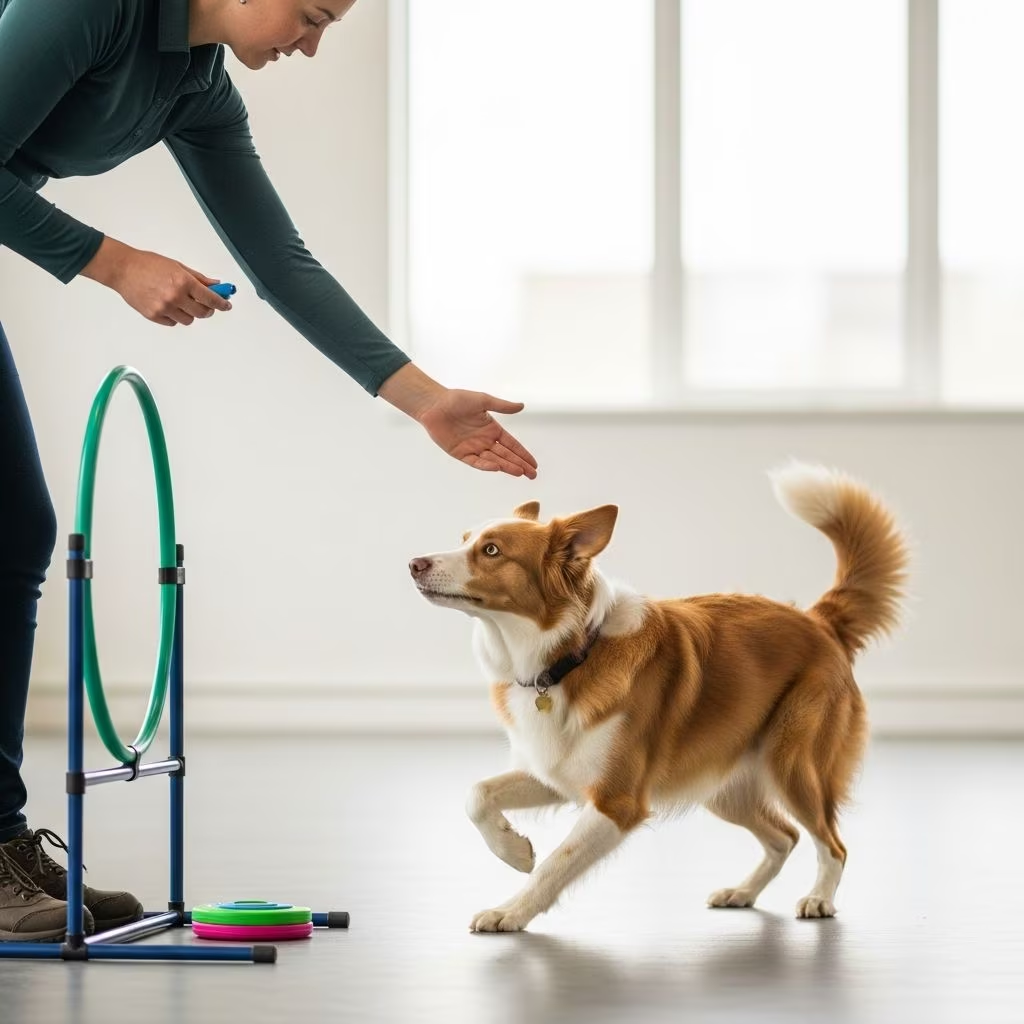
How to Teach Your Dog a Fixed Behavior Chain
Behavior chains represent one of the most effective yet often misunderstood training methodologies in dog obedience and performance sports. A behavior chain is a sequence of discrete behaviors performed in a specific order, with each behavior serving as both a conditioned reinforcer for the previous action and a discriminative stimulus (or cue) for the next behavior. Understanding how to teach your dog a fixed behavior chain opens doors to training complex sequences that form the foundation of competitive obedience, agility, and service dog work.
Understanding Behavior Chains: The Foundation
Before diving into training techniques, it’s essential to understand what a behavior chain truly is. A behavior chain is fundamentally a string of discrete behaviors combined to create a finished sequence. Unlike training individual behaviors in isolation, chaining creates a linked progression where each behavior triggers the next through learned associations rather than constant trainer intervention.
Technical Chains vs. Common Chains
Behavior chains fall into two primary categories: technical chains and common chains, each with distinct characteristics and training applications.
Technical chains represent the purest form of behavior chaining. In a technical chain, the trainer provides a single cue at the beginning and delivers reinforcement only at the end of the entire sequence. All intermediate cues and reinforcers are built into the chain itself, with each behavior naturally flowing to the next without additional trainer input. For example, when teaching a dog to fetch and return, one cue initiates the chain—but the sight of the thrown ball cues the chase, the ball in mouth cues the return, and the proximity to the handler cues the drop. Only the final behavior receives a primary reinforcer from the trainer.
Common chains, by contrast, involve trainer cuing at both the beginning and multiple points throughout the sequence. In a typical agility run, the handler continuously cues the dog through obstacles while reserving primary reinforcement for the end of the entire sequence. This approach has been documented in practical training literature for over a hundred years, with references appearing in Frank C. Bostock’s 1903 book on circus animal training.
Why Building Fluent Individual Behaviors Matters
The most critical prerequisite for successful behavior chain training is ensuring that each individual behavior is trained to fluency before attempting to link behaviors together. Fluency means the dog reliably performs the behavior on cue, regardless of environmental distractions or context changes. If your dog doesn’t thoroughly understand how to be correct in individual behaviors, attempting to chain them will only create confusion and frustration.
Many trainers make the mistake of rushing into chain training with partially trained behaviors. This approach inevitably leads to broken chains, inconsistent performance, and often the accidental reinforcement of incorrect variations. Taking the time to build solid foundational behaviors prevents these problems downstream and creates faster overall training progress.
The Building Blocks of Fixed Behavior Chains
Fixed behavior chains follow a predictable structure that trainers must understand and respect. Each unit within the chain consists of three components: an antecedent (A), behavior (B), and consequence (C).
Consider a practical example: teaching a dog to fetch a ball and return it to your feet. The chain breaks down into these sequential units:
- Unit 1: Your throw cues the dog to run forward (A1 → B1) and the opportunity to catch the ball reinforces running (C1)
- Unit 2: The caught ball cues the dog to turn around (A2 → B2) and the ability to run back reinforces catching (C2)
- Unit 3: Proximity to you cues dropping the ball (A3 → B3) and the opportunity to drop reinforces running back (C3)
- Unit 4: Your positioning cues the final drop at your feet (A4 → B4) and your marker and treat reinforce the entire chain (C4)
The crucial element is that only the trainer delivers reinforcement at the very end. All other cues and reinforcers naturally occur within the chain itself, creating a seamless flow from one behavior to the next without trainer intervention between individual components.
Step-by-Step Training Protocol
Step 1: Identify Your Goal Chain
Begin by clearly defining the complete sequence you want to teach. Break it down into individual, discrete behaviors that can stand alone before chaining. Write out each behavior and consider the logical order. For example, if teaching a sit-stay-come chain, you need a solid sit, a strong stay at various durations, and a reliable come response.
Step 2: Train Each Behavior to Fluency
Work on each behavior separately until your dog responds reliably on cue in various environments and situations. Use high-value reinforcement and maintain consistency. Each behavior should be so well-established that your dog can perform it without hesitation. This phase typically requires weeks of dedicated training for each behavior, depending on complexity.
Step 3: Introduce Behaviors in Sequence
Once individual behaviors are fluent, begin combining two behaviors together. Present the first cue, mark and reinforce the completion of both behaviors together. For instance, if training sit and down, cue sit, and immediately cue down. Only reinforce after the down is completed. This teaches the dog that the first behavior naturally leads to the second.
Step 4: Extend the Chain Gradually
Add one behavior at a time to your growing chain. Never add a new behavior until the current chain is running smoothly and consistently. A three-behavior chain should feel automatic before introducing a fourth behavior. This gradual expansion prevents confusion and builds confidence.
Step 5: Fade Intermediate Cues
As the chain becomes fluid, begin reducing explicit cues for intermediate behaviors. The dog should be responding to the natural environmental cues within the chain rather than waiting for handler direction. This transition from common chain (with multiple cues) toward technical chain (with minimal trainer cuing) represents real progress.
Step 6: Proof the Chain
Practice the chain in varied environments, at different times, with various distractions present. Proof for duration if the chain involves sustained behaviors like stays. Proof for distance if behaviors occur in different locations. Thorough proofing ensures the chain remains reliable regardless of context.
Common Mistakes in Behavior Chain Training
Accidental Behavior Chains
One of the most significant challenges in dog training involves accidentally creating unwanted behavior chains. This occurs when handlers repeatedly allow dogs to perform an incorrect behavior before stepping in to correct it, then reinforce the corrected version. This pattern—wrong thing, right thing, reward—unintentionally chains the error with the correct behavior.
For example, if a dog fails to sit on a contact obstacle but the handler cues “Hit it!” and the dog then performs correctly and is rewarded, the dog has learned a chain: miss the contact, then fix it for reinforcement. With repetition, the dog may continue missing the contact because it’s now part of the established chain pattern leading to reward.
Inconsistent Criteria
Another critical error involves accepting varying performances within a chain. If you sometimes accept a sloppy sit and sometimes demand precision, you’ve created flexibility where none should exist. Fixed behavior chains require fixed standards for each component. The dog must understand that the chain only earns reinforcement when performed exactly as trained.
Training With Incomplete Behaviors
Attempting to chain behaviors that aren’t yet fluent is a setup for failure. Incomplete behaviors create weak links in the chain, leading to inconsistent performance and making it impossible to identify where the chain breaks down. Always ensure fluency before chaining.
Over-Reliance on Treats During Chaining
Delivering treats between chain segments teaches the dog to stop and wait for reinforcement rather than flowing seamlessly through the sequence. Reserve primary reinforcement for chain completion. Intermediate rewards should be built into the chain itself through opportunity and access (like access to a thrown toy during a fetch chain).
Using Reinforcement Strategically
The placement and timing of reinforcement fundamentally shapes chain behavior. In a properly constructed technical chain, reinforcement comes only at the end, effectively rewarding the entire chain rather than individual components. This teaches the dog that the complete sequence—performed in the correct order—earns the reward.
Timing is critical: mark and reinforce the completion of the chain within a fraction of a second. This precision teaches the dog exactly which sequence earned the reinforcer. Delayed reinforcement creates confusion about what behavior actually earned the reward.
As chains become well-established, you can vary the reinforcement type and schedule. A dog that has learned a rock-solid chain can now be reinforced on variable schedules—sometimes food, sometimes play, sometimes just release and the opportunity to repeat. This variation strengthens motivation and prevents satiation.
Practical Applications and Examples
Obedience Competition Chains
Competitive obedience relies heavily on fixed behavior chains. A “Heel” command combined with a sit, down, and come creates a chain. In formal obedience, handlers must learn to execute their own behavior chain in perfect synchronization with their dog’s chain.
Agility Course Sequences
An agility course is essentially a behavior chain where the dog must navigate obstacles in a specific sequence. Each obstacle completion serves as both a consequence for the previous obstacle and a cue for the next one. The handler’s directional cues may supplement this, creating what trainers call a “common chain” with handler involvement throughout.
Service Dog Tasks
Service dogs perform complex chains of behaviors. For example, a dog trained to retrieve medication might execute: go to location, identify container, retrieve container, return to handler, and deliver. Each behavior seamlessly flows into the next through learned associations.
Troubleshooting Chain Problems
When fixed behavior chains begin breaking down, the issue typically stems from one of these sources:
- A weak link: One behavior in the chain isn’t sufficiently fluent, causing the dog to hesitate or fail at that point
- Inconsistent reinforcement: The dog isn’t confident about what exactly earns the reinforcer
- Environmental changes: The chain breaks in new environments or with increased distractions
- Handler error: Handler timing, positioning, or cuing has become inconsistent
- Accidental reward of incomplete chains: The dog has learned it gets reinforced even without perfect completion
To troubleshoot, return to basics. Practice the entire chain in a controlled environment. Identify which specific behavior in the chain is failing. Go back and retrain that individual behavior to absolute fluency. Only when that behavior is rock-solid again should you begin rebuilding the full chain.
Frequently Asked Questions
Q: How long does it take to teach a fixed behavior chain?
A: The timeframe depends on the chain complexity and your dog’s prior training. Simple two-behavior chains might take weeks, while complex competition chains can require months or longer. The key is ensuring each behavior reaches fluency before chaining.
Q: Can puppies learn behavior chains?
A: Yes, but puppies should first master individual behaviors before chaining. Puppies have shorter attention spans and less impulse control, so building strong foundational behaviors is especially important before attempting chains.
Q: What’s the difference between a behavior chain and a sequence?
A: A sequence typically refers to behaviors performed in order but with trainer cuing throughout. A behavior chain involves natural flow between behaviors with minimal trainer intervention after the initial cue.
Q: Should I use verbal cues or visual cues for chaining?
A: This depends on your goal. Competition obedience typically uses verbal cues. Agility may rely more on directional hand signals. What matters most is consistency—whichever cue system you choose, maintain it throughout training and proofing.
Q: How do I know when a chain is ready to proof?
A: A chain is ready to proof when your dog performs it perfectly at least 90% of the time in your training environment with no external distractions. Performance should be smooth and automatic, with minimal hesitation between behaviors.
Q: Can older dogs learn new behavior chains?
A: Absolutely. Older dogs can learn chains just as effectively as younger dogs, provided they’re physically capable of performing the required behaviors. Their experience with previous training may actually accelerate the learning process.
References
- Behavior Chains – Untangling the Confusion — The Ranch Clicker Training. 2025. https://theranch.clickertraining.com/behavior-chains-untangling-the-confusion/
- Understanding Behavior Chains — Fenzi Dog Sports Academy. 2014. http://www.fenzidogsportsacademy.com/images/pdf/UnderstandingBehaviorChains.pdf
- Agility is a Behavior Chain — Crossbones Dog Academy. 2025. https://crossbonesdog.com/agility-is-a-behavior-chain/
- Accidental Behavior Chains: Are You Training What You Think You Are? — Dr. Jen’s Dog Blog. 2025. https://www.drjensdogblog.com/accidental-behavior-chains-are-you-training-what-you-think-you-are/



