

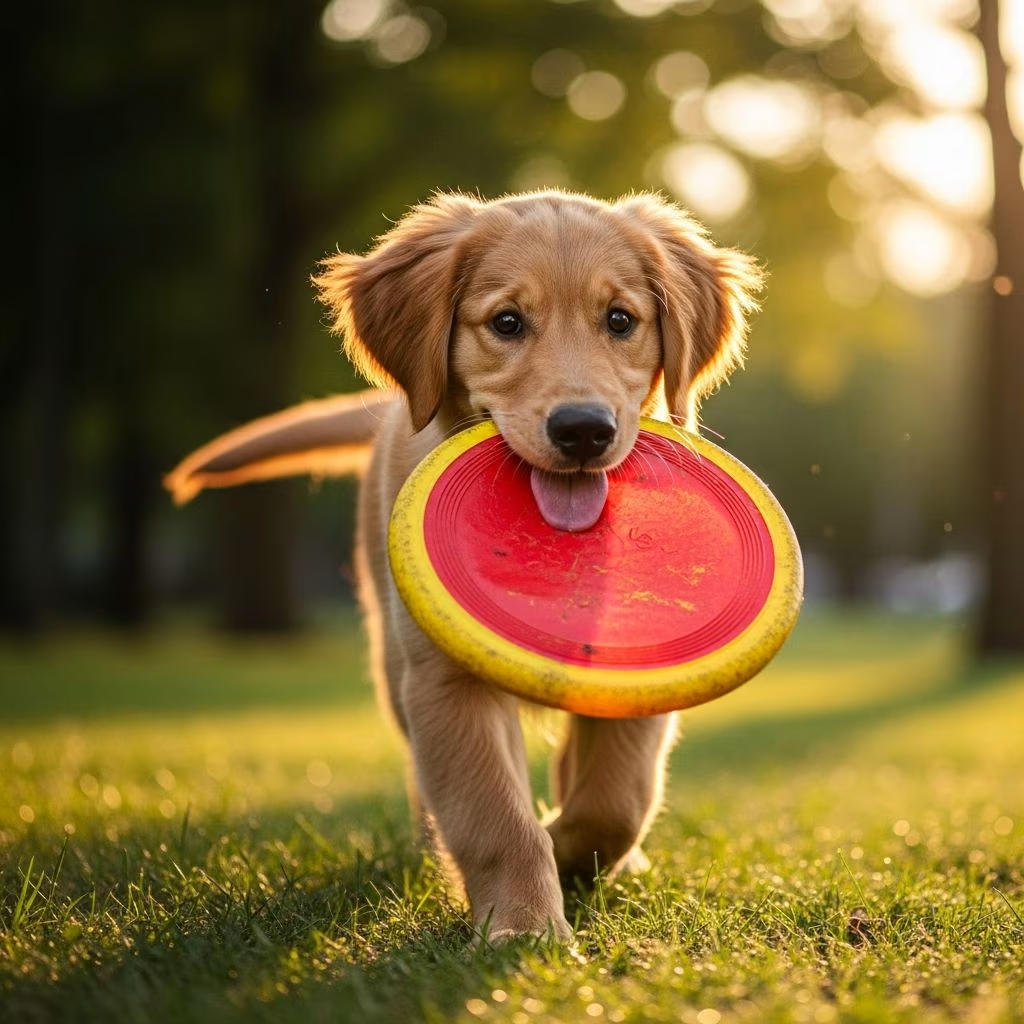
The game of fetch stands out as one of the most rewarding activities you can share with your canine companion. Not only does it provide excellent exercise without requiring you to exert significant physical effort, but it also serves as an effective way to teach your dog the crucial skill of dropping objects on cue. Beyond these practical benefits, fetch is fundamentally interactive and enjoyable, making it an ideal bonding activity that strengthens the relationship between you and your pup.
For many dog owners, teaching fetch seems like a natural, instinctive behavior that all dogs should enjoy. However, the reality is quite different. Some dogs don’t naturally gravitate toward retrieving objects, and they require patient, thoughtful instruction to develop this skill. The good news is that with the right approach tailored to your individual dog’s personality and preferences, virtually any dog can learn to enjoy fetch.
Why Fetch Is Beneficial for Your Dog
Fetch offers multiple benefits that make it an invaluable addition to your dog’s daily routine. First and foremost, it provides robust physical exercise, which helps maintain a healthy weight and supports cardiovascular health. Regular play sessions can tire out your dog in a healthy way, reducing excess energy that might otherwise manifest as destructive behavior or hyperactivity around the house.
Beyond physical benefits, fetch engages your dog’s mind. The game requires focus, decision-making, and the development of increasingly complex behaviors. Additionally, post-training play sessions may extend your dog’s memory of previously learned behaviors by up to a year, making fetch an excellent complement to your overall training regimen. This means that interactive games like fetch can actually enhance the effectiveness of any obedience training you’re doing with your dog.
Perhaps most importantly, fetch strengthens your bond with your dog. The interactive nature of the game creates positive associations between you and your pup, building trust and deepening your relationship through shared enjoyable experiences.
Preparing to Teach Fetch: Starting Indoors
One of the most counterintuitive but essential tips for teaching fetch is to begin the training indoors, not outdoors. While playing fetch inside the house might seem impractical, it’s only a temporary training phase that sets your dog up for success.
Indoor environments have a crucial advantage: fewer distractions. When your dog is learning to fetch, they need to focus entirely on the toy and the game mechanics. Outdoor environments present numerous competing stimuli—other dogs, wildlife, interesting smells, and sounds—that can easily derail your training progress. By starting indoors, you’re removing these distractions and making it significantly easier for your dog to concentrate on what you’re trying to teach them.
Select an area of your home with enough space to safely toss a toy a few feet. A hallway, living room, or basement works well. Start with short training sessions of just five to ten minutes to keep your dog engaged and prevent frustration for both of you.
Choosing the Right Toy
The toy you select plays a significant role in your dog’s motivation to participate in fetch. For the sake of simplicity, most trainers refer to a “ball,” but fetch can actually be played with any toy your dog finds appealing. The key is choosing something that captures and maintains your dog’s interest.
Ideally, select a toy that you and your dog can play with interactively. If your dog enjoys tug games, start with their favorite tug toy. This dual-purpose approach makes the game more rewarding because your dog understands that bringing the toy back to you results in continued play. Over time, as your dog becomes more proficient at fetching, you can gradually reduce the frequency of the tug rewards while still offering them occasionally to maintain interest.
Different dogs have different preferences. Some might be more motivated by squeaky toys, others by soft plush toys, and still others by hard rubber balls. Observe what your dog naturally gravitates toward and use that as your starting point. You can always transition to other toys once your dog has mastered the basic fetch behavior.
Step-by-Step Training Method
Step 1: Generate Interest in the Toy
Begin by playing with the ball or toy yourself for a few moments in front of your dog. Bounce it a couple of times, toss it in the air and catch it, or wave it around in an enticing manner. Your enthusiasm for the toy is contagious, and watching you enjoy the toy makes it more attractive to your dog. Dogs are naturally curious creatures, and demonstrating that something is fun piques their interest.
Step 2: Interactive Play with Tug Toys
If your dog likes to tug, incorporate their favorite tug toy into the training. Play with them using the tug toy, then gently toss it just one or two feet away. If your dog retrieves it and brings it back, resume the tug game for a bit before tossing it again. This creates a positive association: bringing the toy back equals more playtime and fun.
As your dog becomes increasingly reliable at bringing the tug toy back to you, you won’t need to play tug after every retrieve. However, offering occasional tug rewards is an excellent way to maintain their enthusiasm and prevent the game from becoming boring.
Step 3: Food-Based Motivation Method
For dogs that aren’t naturally motivated by toy play, incorporating treats can be transformative. Create a modified toy by stuffing it with high-value treats—small pieces of cheese, chicken, or special dog treats that your dog rarely gets otherwise. The food inside makes the toy itself rewarding.
Toss the toy just a few feet away. When your dog investigates and brings it to you, take the toy back and remove some of the treats, rewarding your dog immediately. This teaches them that bringing the toy back results in valuable rewards. Once your dog understands this connection, you can remove the toy and instead offer treats from your pocket when they bring the toy to you.
Some dogs who begin learning fetch this way develop genuine enjoyment of more standard fetch games over time. While they may initially view the game as an “active dinner,” the fun and engagement of the activity eventually becomes rewarding in itself.
Step 4: Unpredictable Throws
As your dog becomes more skilled at fetching, make the game more challenging and exciting by throwing toys in unpredictable directions. Rather than always throwing straight ahead, alternate between left, right, and forward throws. This keeps your dog engaged and prevents them from anticipating where the toy will go until you actually throw it.
Important note: If your dog doesn’t chase the object and instead continues running away from you in random directions, stop the game and try again later. Stopping the game teaches them that running away from you in an attempt to initiate chase results in playtime ending—which discourages this behavior while reinforcing that bringing toys to you is the path to continued fun.
The Shaping Method: Building Fetch Through Successive Approximations
Another effective approach to teaching fetch is through a method called shaping, which involves reinforcing successive approximations of the behavior you eventually want to develop. This method works particularly well for dogs who are initially uninterested in toys or retrieving.
With shaping, you begin by offering treats for any interest in the toy. For some dogs, “interest” might be as minimal as poking it with their nose. For others, it might be walking toward the toy or even just looking at it. Once your dog learns that this initial behavior earns treats, you gradually require them to do more to earn subsequent rewards.
The complete series of steps might include:
- Touching the ball or toy
- Nudging it
- Taking it in their mouth
- Picking it up
- Walking a step with it
- Taking it in your general direction
- Taking it part-way to you
- Bringing it all the way to you
- Dropping it
Some dogs who learn fetch through shaping develop a genuine love for the game and want to play regularly. However, it’s important to note that some dogs will happily perform fetch as a trained trick but won’t necessarily develop an intrinsic motivation or love for fetching for its own sake. Both outcomes are perfectly acceptable; you’ve still achieved the goal of teaching your dog this useful behavior.
Teaching Your Dog Fetch Requires Patience
Success in teaching your dog to fetch ultimately depends on patience, flexibility, and understanding your individual dog’s personality and motivations. Every dog is unique, and what works brilliantly for one dog might not resonate with another. The key is to remain open-minded about training methods and choose approaches that best suit your particular dog.
Several strategies can significantly improve your success rate:
- Move away from your dog: When you want them to bring the toy to you, back away from them and move in the opposite direction. This naturally encourages them to chase and follow you, making retrieval more appealing.
- Reinforce approximations: Celebrate and reward anything that looks like progress toward the final behavior. If your dog picks up the toy even momentarily, that’s worth rewarding.
- Resist the urge to chase: Don’t allow your dog to teach you to play “chase the dog around the yard.” If they run away with the toy and you chase them, you’ve just reinforced the wrong behavior. Instead, make yourself the one worth coming back to.
- Keep sessions short and fun: End on a positive note while your dog is still interested and successful.
- Be consistent: Regular, brief training sessions are more effective than occasional long sessions.
Managing Expectations and Common Challenges
Not all dogs are natural retrievers, and some take considerably longer to learn fetch than others. If your dog isn’t showing immediate interest, don’t despair. With patience and the right approach, you can develop fetching skills in virtually any dog.
Dogs who are reluctant to use their mouths present particular challenges, but these dogs can still learn to fetch through careful training. Starting with the shaping method and using high-value treats can be particularly effective for these dogs.
Remember that fetch should always be a positive experience. Forcing your dog to play or becoming frustrated during training sessions can create negative associations with the game. Keep things light, fun, and pressure-free.
The Long-Term Benefits of Teaching Fetch
Once your dog reliably fetches, you’ll reap the rewards for years to come. A dog who retrieves can be kept easily exercised and entertained with extended fetch sessions in the backyard or even indoors during bad weather. This is particularly valuable for high-energy dogs or those living in climates with challenging weather conditions.
Beyond exercise, fetch becomes a bonding ritual—a special activity that you and your dog enjoy together. The game strengthens your relationship while providing mental stimulation and physical activity that contributes to overall health and wellbeing.
Frequently Asked Questions
Q: At what age should I start teaching my dog to fetch?
A: You can begin introducing fetch concepts to puppies as early as 8-12 weeks old, though they’ll have limited attention spans. Keep sessions extremely brief and use highly motivating toys or treats. Most dogs are developmentally ready for more serious fetch training around 6 months of age.
Q: What if my dog picks up the toy but won’t bring it back?
A: This is a common issue. Start by tossing toys just 1-2 feet away and immediately move backward away from your dog, which encourages them to chase you. Alternatively, use the food-based motivation method where you reward them heavily for any movement toward you with the toy. You’re building the “return” behavior separately from the “chase” behavior.
Q: Can adult dogs learn to fetch?
A: Absolutely. Older dogs can definitely learn fetch, though they may require more patience and longer training periods than puppies. Use whichever method most closely matches your dog’s existing interests and motivations.
Q: How long should fetch training sessions last?
A: Keep initial training sessions to 5-10 minutes. As your dog becomes more skilled and enthusiastic, you can gradually extend sessions, but always end while your dog is still engaged and interested.
Q: Is fetch safe for all dogs?
A: Most healthy dogs can safely play fetch, but certain breeds and individual dogs may have limitations. Dogs with joint problems, very large breeds prone to orthopedic issues, or dogs with heart conditions should have fetch activities approved by your veterinarian first.
Q: Can I teach fetch using different toys?
A: Yes, once your dog understands the fetch behavior with one toy, you can transfer the skill to other toys. Start with toys similar to the original, then gradually introduce different shapes, sizes, and textures.
References
- How to Teach a Dog to Fetch — Kinship. 2024. https://www.kinship.com/dog-behavior/dog-training-teach-your-dog-fetch
- Teaching a Dog to Play Fetch — Whole Dog Journal. https://www.whole-dog-journal.com/training/teaching-a-dog-to-play-fetch/
- Playing With Dogs Improves Their Training Success — Kinship. 2024. https://www.kinship.com/dog-behavior/play-improves-dog-training-success



