

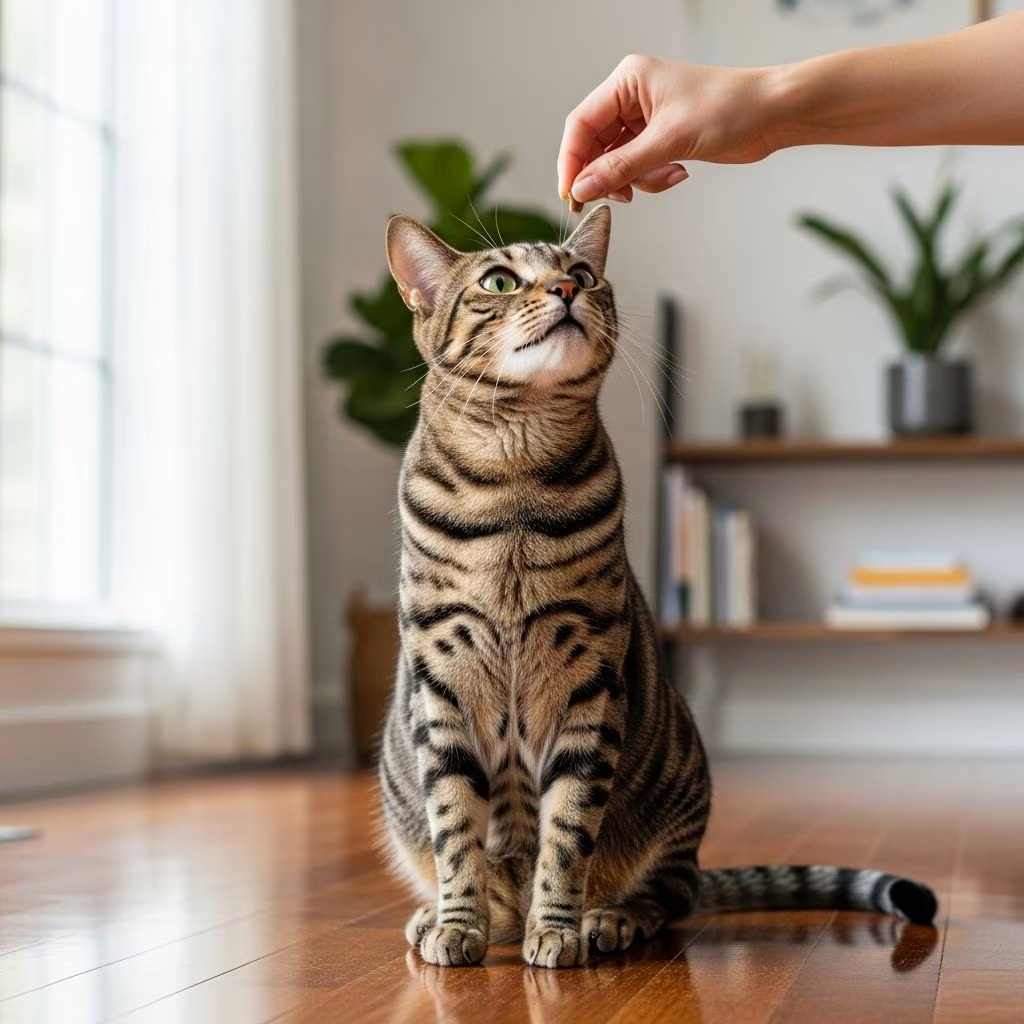
How to Teach a Cat to Sit: Step-by-Step Guide
Many people believe that cats cannot be trained to respond to commands the way dogs can. However, this is a common misconception. With patience, the right approach, and some tasty treats, you can successfully teach your cat to sit and respond to various commands. Teaching your cat to sit is not only an enjoyable activity but also serves as the foundation for more advanced behaviors such as “stay,” “high-five,” and “shake hands.” This valuable skill becomes a crucial tool in your pet care toolkit, making it easier to manage grooming sessions, handle your cat during feeding times, and establish better communication with your feline companion.
Why Teaching Your Cat to Sit Is Important
Training your cat to sit offers numerous practical benefits beyond simple entertainment. This foundational command can be instrumental in introducing grooming routines, helping your cat become accustomed to handling, and keeping them still while you prepare their meals. When your cat understands and responds to the sit command, you gain better control during veterinary visits, grooming appointments, and other situations where you need your pet to remain calm and stationary. Additionally, training sessions provide mental stimulation for your cat, strengthen your bond, and boost their confidence. The process itself is rewarding for both you and your feline friend, creating positive interactions that enhance your relationship.
Preparation: Setting Up for Success
Before you begin teaching your cat to sit, proper preparation is essential to ensure a smooth learning experience. Start by identifying what motivates your cat most effectively. While food is the most effective motivator for most cats, not all felines respond equally to treats. If your cat is not particularly food motivated, consider using a small toy or another object that captures their attention. Rubbing a tiny bit of catnip on the toy can help increase their interest, though it’s important to note that not all cats respond to catnip.
Choose a quiet, distraction-free environment for your training sessions. Remove other pets, toys, and loud noises that might divert your cat’s focus. This dedicated training space helps your cat concentrate on learning the new behavior. Ensure that your cat is in a calm, alert state before beginning, and choose a time when they’re not overly tired or overstimulated.
Step-by-Step Instructions for Teaching Your Cat to Sit
Step 1: Gather Your Materials
The most important tool you’ll need is a high-value treat that your cat loves. Hold the treat between your index finger and thumb. If your cat is overly food motivated and tries to grab the treat immediately, try closing it loosely in your palm so they can smell it but cannot grab it. This technique prevents your cat from becoming too eager and helps maintain control during the training process.
Step 2: Position Yourself Correctly
Stand or kneel in front of your cat, whichever position is most comfortable for both of you. The key is to avoid leaning over your cat, as this can make them uncomfortable. Some cats prefer that you sit or kneel to be at their eye level. Position the treat one to two inches (or one to two centimeters) from your cat’s nose. This distance allows them to focus on the treat without becoming frustrated or overwhelmed.
Step 3: Lift the Treat Upward
Slowly lift the treat two to three inches upward from your cat’s nose. Your cat should instinctively follow the treat with their gaze, looking upwards. This upward movement is crucial because it naturally positions your cat’s body in preparation for sitting. Avoid raising the treat too high, as this may cause your cat to go up on their hind legs instead of sitting down, which is not the desired behavior.
Step 4: Move the Treat Backward
Once your cat is following the treat upward, slowly move your hand backward toward your cat’s tail while keeping the treat at a consistent height. As your cat follows the treat with their gaze, their natural instinct will be to shift their weight backward and sit down. This doesn’t always happen immediately, especially when your cat is first learning. If your cat doesn’t sit right away, try repeating the movement more slowly or not going quite as far back initially. Patience is essential during this phase.
Step 5: Mark and Reward the Behavior
The moment your cat’s backside touches the ground, immediately say “Yes!” in an enthusiastic, encouraging tone and give them the treat. This immediate reinforcement creates a strong association between the sitting behavior and the reward. Timing is critical—the reward must come within a split second of the desired behavior to ensure your cat understands what they did correctly. If your cat is good at following treats, you can throw the treat a short distance away after the reward, allowing them to move and naturally reset their position for the next repetition.
Step 6: Repeat and Practice
Repeat steps one through five multiple times during your training session. Consistency is key to helping your cat clearly understand the behavior you want and that performing this behavior will earn them a reward. Most cats catch on to the concept quite quickly, but the number of repetitions needed varies by individual. Some cats may need only a few repetitions, while others may require more practice before they reliably sit on command.
Step 7: Introduce a Verbal Cue
Once your cat consistently sits in response to the treat lure, you can add a verbal cue to the behavior. Choose any word you like as your cue—it doesn’t have to be “sit.” Your cat will respond to the sound, not the meaning, so you could use “sit,” “down,” “bottom,” or any other word that’s easy for you to remember and say clearly. Approximately one second before you give your hand signal with the treat, say your chosen cue word. Continue marking the behavior with “Yes!” and rewarding immediately when your cat sits. After repeating this process multiple times, your cat will begin to associate the sound with the sitting behavior and may start to sit in anticipation of the hand signal.
Step 8: Add a Hand Signal
You can teach a hand signal in addition to or instead of the verbal cue. The standard hand signal involves starting with your forearm at a 90-degree angle from your body with your palm facing upward. Then move your palm toward your shoulder while saying “sit” at the same time. This combination of verbal and visual cues gives your cat multiple ways to understand the command. Over time, you can fade the verbal cue, allowing your cat to respond to the hand signal alone.
Step 9: Increase Distance and Duration
Once your cat responds consistently to the verbal cue and/or hand signal for sitting, gradually increase the distance between yourself and your cat before asking them to sit. Start with a few feet away and progressively increase the distance as your cat demonstrates reliable response. You can also encourage your cat to sit for longer periods before offering the reward. Begin by asking them to sit and waiting just a second or two before rewarding, then gradually extend the duration as they become more comfortable with the behavior.
Training Tips for Success
Keep Training Sessions Short
Most cats have relatively short attention spans, so it’s important to keep training sessions brief. Initially, start with sessions lasting less than one minute. As your cat becomes more engaged and skilled, you can gradually increase session length to as much as five minutes. Many trainers recommend doing three three-minute sessions throughout the day rather than one long session. This approach helps prevent boredom and fatigue while maximizing learning efficiency.
Consider Using a Clicker
Clicker training is highly effective for cats and can enhance your training results significantly. If your cat has already learned that the click sound equals a reward, you can use the clicker to mark the exact moment your cat sits. The clicker provides precise timing that can help your cat understand exactly which behavior earned the reward. To introduce clicker training, you’ll first need to condition your cat by clicking the device and immediately offering a reward several times, until your cat associates the click with something positive.
Choose the Right Rewards
Experiment with different treat types to find what motivates your cat most effectively. Some cats are highly food motivated, while others respond better to toys or play. High-value treats are those your cat absolutely loves and doesn’t get during regular feeding times. Reserve these special treats exclusively for training sessions to maintain their appeal and motivating power. If your cat loses interest in the reward midway through training, switch to a different treat or toy to re-engage them.
Practice Patience and Consistency
Every cat learns at their own pace. Some cats may master sitting within a few days, while others may require weeks of consistent practice. Avoid becoming frustrated if progress seems slow. Patience, combined with consistent daily training, will eventually yield results. Celebrate small wins and progress, even if your cat isn’t yet responding perfectly to commands.
Progression: Beyond the Basics
Intermittent Reinforcement
Once your cat consistently sits on command, you can start rewarding intermittently. This means gradually decreasing the number of treats given so your cat doesn’t receive a reward every single time they sit. However, continue responding with “Yes!” to let them know they’re doing what you’ve asked. Over time, verbal praise and interaction become as rewarding as the treat, solidifying the behavior.
Building on the Sit Command
The sit command serves as an excellent foundation for teaching additional behaviors. Once your cat has mastered sitting, you can use this command to teach “stay,” “high-five,” “shake hands,” and other tricks. The training process for these advanced behaviors builds on the principles and patterns your cat has already learned with the sit command.
Common Challenges and Solutions
| Challenge | Solution |
|---|---|
| Cat not responding to treats | Try different treat types or use toys instead. Rub a tiny bit of catnip on the toy to increase interest. |
| Cat goes up on hind legs instead of sitting | Lower the treat height slightly. You want your cat to move backward, not upward. |
| Cat loses interest during training | Keep sessions shorter, use higher-value rewards, or train during a different time of day when your cat is more alert. |
| Cat doesn’t sit immediately | This is normal, especially at first. Move the treat more slowly and don’t go as far back. Patience is key. |
| Cat seems stressed or uncomfortable | Stop training, let your cat relax, and try again later in a quieter environment. |
Training Timeline
With consistent practice of three short training sessions per day, most cats can learn to sit in response to a verbal cue within seven days. However, this timeline varies significantly based on your individual cat’s personality, motivation level, and previous training experience. Some cats may progress faster, while others may need additional time. Remember that consistency matters far more than speed—daily practice with short sessions produces better results than occasional longer sessions.
Frequently Asked Questions
Q: Can all cats be trained to sit?
A: Almost any cat can be trained to sit, regardless of breed, age, or body type. From stocky Persians to athletic Siamese cats, all felines have the physical ability to sit on command. The main factors are finding the right motivator and having patience and consistency in your training approach.
Q: What’s the best age to start training a cat to sit?
A: Cats can be trained at any age, from kittens to senior cats. Younger cats may pick up the behavior faster due to their natural curiosity and energy, but older cats can absolutely learn new commands. Adjust your expectations and training intensity based on your cat’s age and energy level.
Q: How often should I train my cat?
A: For best results, conduct three short training sessions daily, each lasting no more than three to five minutes. This frequent, brief practice schedule is more effective than occasional longer sessions and helps maintain your cat’s interest and motivation.
Q: What should I do if my cat isn’t food motivated?
A: Not all cats are motivated by treats. Try using small toys, string, or feather toys instead. Some cats respond well to playtime or petting as rewards. Experiment with different motivators to find what excites your specific cat.
Q: How long does it take to teach a cat to sit?
A: Most cats can learn to sit in response to a verbal cue within seven days with consistent daily training. However, some cats may take longer. Patience is important, as every cat learns at their own pace.
Q: Can I train my cat without treats?
A: While treats are highly effective, you can use other motivators like toys, catnip, or petting. However, treats tend to be the most reliable motivator for most cats during the initial learning phase.
Q: What’s the difference between a clicker and verbal marking?
A: Both serve the same purpose—marking the exact moment your cat performs the desired behavior. A clicker provides a distinct, consistent sound that many cats respond well to, while “Yes!” is verbal. Choose whichever your cat responds to best.
Conclusion
Teaching your cat to sit is an achievable goal that requires minimal equipment and maximum patience. By following these step-by-step instructions, maintaining consistent daily practice, and adapting your approach to your individual cat’s needs and preferences, you’ll successfully train your feline companion. Remember that training is not just about teaching commands—it’s about building a stronger bond with your cat, providing mental stimulation, and establishing positive communication. Start today, keep your sessions short and positive, and celebrate every small success along the way.
References
- How to Train a Cat to Sit — Zoetis Petcare. 2024. https://www.zoetispetcare.com/blog/article/how-to-train-a-cat-to-sit
- Train Your Cat to Sit on Command — Cats Protection. 2024. https://www.cats.org.uk/cats-blog/how-to-train-your-cat-to-sit-on-command
- Teach Your Cat to Sit Up & Beg — ShowCatsOnline. https://showcatsonline.com/teach-your-cat-to-sit-up-on-command/
- How to Train Your Cat: Vet-Approved Cat Training Guide — Catster. 2024. https://www.catster.com/cat-health-care/how-to-train-your-cat/



