

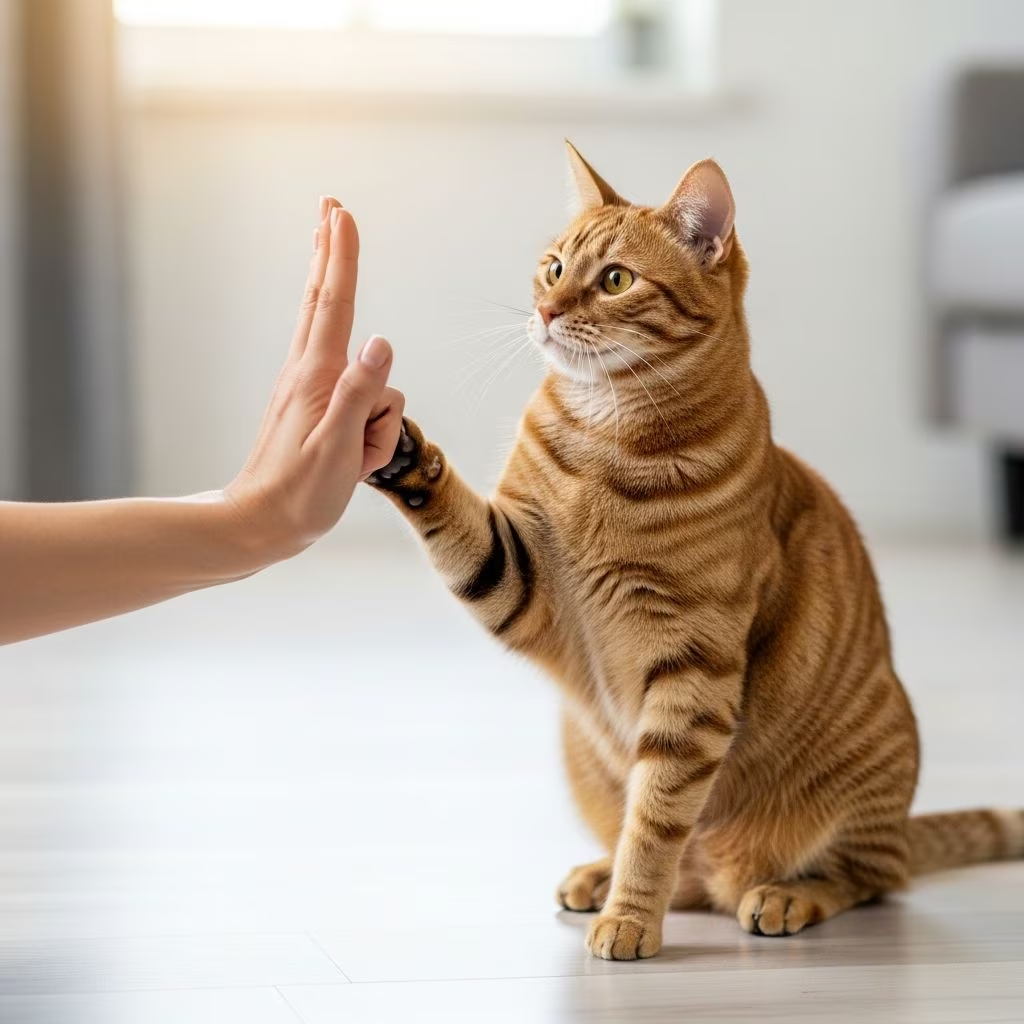
Teaching your cat to high five is an engaging and rewarding activity that strengthens the bond between you and your feline friend. Cats are intelligent creatures capable of learning tricks just like dogs, and high fiving is one of the easiest and most impressive behaviors to teach. Using positive reinforcement methods such as clicker training, you can have your cat confidently offering their paw in a high five position within a few short sessions. This guide draws from proven techniques to provide a complete roadmap, ensuring success even for first-time trainers.
Why Teach Your Cat to High Five?
High fiving isn’t just a cute party trick; it offers numerous benefits for your cat’s well-being and your relationship. Firstly, it provides essential mental stimulation. Cats are natural hunters who thrive on challenges, and training sessions serve as interactive enrichment that tires them out mentally faster than physical play alone. Regular training can reduce boredom-related behaviors like excessive scratching or meowing.
Additionally, teaching tricks builds trust and communication. Your cat learns to look to you for fun and rewards, fostering a deeper connection. It’s also a great way to practice handling their paws, which can make future grooming or vet visits less stressful. Studies on animal behavior highlight how positive reinforcement enhances learning and reduces stress in cats, making them happier companions.
- Mental enrichment: Drains energy and prevents destructive habits.
- Bonding tool: Improves trust and interaction quality.
- Practical skills: Desensitizes cats to paw handling.
- Impress guests: A fun, shareable trick for social settings.
Benefits of Clicker Training for Cats
Clicker training is the gold standard for teaching cats tricks like high fiving because it’s precise and humane. A clicker is a small device that makes a distinct ‘click’ sound, which you pair with treats to mark the exact moment your cat performs the desired behavior. This creates a clear association: click means treat, and treat means good job.
Unlike verbal praise, which can vary in tone, the clicker is consistent and immediate, accelerating learning. It’s especially effective for cats, who respond best to short, positive sessions. Begin by ‘charging’ the clicker: simply click and treat repeatedly without asking for any behavior, until your cat perks up at the sound.
Key advantages include:
- Precision marking of behaviors.
- Faster learning curve than luring alone.
- Reduces frustration by clarifying expectations.
- Works for all ages and temperaments.
What You’ll Need to Train Your Cat
Gathering the right tools sets you up for success. Keep sessions equipped and ready to maintain momentum.
- Clicker: Affordable ($5 or less online); use a consistent word like ‘YES!’ if preferred.
- High-value treats: Soft, smelly options like tuna bits or commercial treats your cat adores—reserve for training only.
- Quiet space: Distraction-free indoor area where your cat feels secure.
- Optional aids: Target stick (pencil), small cup, or sticky note for shaping behavior.
- Treat bag: For quick access during sessions.
Before You Start Training
Preparation is key to enjoyable sessions. Cats learn best when hungry but not starving—time training before meals. Keep sessions short: 3-5 minutes, 2-3 times daily, to match their attention span. Watch body language: dilated pupils or tail flicking signal overload; let them disengage freely.
Choose a comfortable, familiar spot without toys or other pets. Be patient and positive—end on a high note. Consistency in cues (e.g., always say ‘high five’ the same way) builds reliability.
Step-by-Step Guide: How to Teach Your Cat to High Five
This method combines shaping (rewarding successive approximations) with luring, adaptable via clicker or verbal markers. Expect 3-7 days for mastery, depending on your cat.
Step 1: Teach or Cue a Sit Position
Start with your cat sitting, as it stabilizes them for paw lifting. If they don’t know ‘sit,’ lure with a treat above their nose, clicking as their butt touches down. Practice until they sit on cue.
Step 2: Lure Paw Lift with a Treat in Hand
With cat sitting, hold a treat in your open palm at nose level. Use your other hand to point at it. As their paw lifts off the ground—even slightly—click and reward immediately. Repeat 5-10 times per session, praising small efforts to build momentum. Not all cats paw right away; some sniff first—reward any lift.
Step 3: Add the ‘High Five’ Cue
Once paw lifts reliably, introduce the phrase as you present your hand: ‘High five!’ Click and treat on contact. Repeat until they associate the words with the action. Sessions of 5 reps suffice.
Step 4: Transition to Open Palm High Five
Raise your empty hand palm-up at shoulder height, say ‘high five,’ and click/treat paw touches. If they hesitate, briefly return to treat-luring. Practice until consistent from various positions.
Alternative Methods for Stubborn Cats
Target Stick Method: Use a pencil eraser as target. Click nose touches, then raise for paw bats. Fade stick, cue ‘high five.’
Cup Method: Place treat in upside-down cup. Reward paw taps on cup, gradually shift to hand position, then fade cup.
| Method | Best For | Pros | Cons |
|---|---|---|---|
| Luring | Beginners | Simple, no props | Slower for some cats |
| Target Stick | Visual learners | Precise shaping | Requires prop |
| Cup | Food-motivated | Fun, easy start | May frustrate novices |
Tips for Success and Common Mistakes to Avoid
Success hinges on patience and positivity. Use high-value treats exclusively for training to heighten motivation. Sessions must end before boredom sets in—better undertrained than frustrated.
Avoid these pitfalls:
- Pushing paws physically—forces erode trust.
- Long sessions—cats zone out after 5 minutes.
- Inconsistent cues—vary timing or words confuses them.
- Low-value rewards—use something irresistible.
- Ignoring body language—stressed cats won’t learn.
Pro tips: Train when hungry, vary hand positions early, chain with other tricks like fist bump (lower hand) or low five (floor target).
Troubleshooting: What If Your Cat Isn’t Getting It?
If progress stalls:
- No paw lift: Reward tiniest movements; lower criteria.
- Sniffing only: Wait for paw; don’t reward nose.
- Frustration: Shorten sessions, increase treat value.
- Forgets cue: Backtrack one step; rebuild association.
- Kittens/elders: More reps needed; celebrate micro-wins.
Some cats prefer verbal ‘yes!’ over clickers—test both. Multi-cat homes: Train individually.
Fun Variations Once They Master High Five
Expand the trick repertoire:
- Fist bump: Hold loose fist; cue ‘bump.’
- Low five: Lower hand to floor level.
- High ten: Both paws up.
- Sticky paw: Place paw on target and hold.
These build on high five, using fading techniques for seamless progression.
Frequently Asked Questions (FAQs)
Can any cat learn to high five?
Yes, most cats can with patience. Kittens learn fastest, but adults and seniors succeed too. Shy cats may take longer.
How long does it take to teach?
3-10 sessions for basics; full reliability in 1-2 weeks with daily practice.
What if my cat doesn’t like treats?
Use toys, play, or affection as rewards. Find their ‘high value’ motivator.
Is clicker training safe for cats?
Absolutely—it’s positive reinforcement, endorsed by animal behaviorists for welfare.
My cat paws aggressively—how to fix?
Click only gentle touches; withhold rewards for rough paws to shape softly.
Conclusion
Mastering high five transforms routine interactions into joyful moments. Consistent, fun training yields a polite paw-offering cat ready to impress. Start today and watch your bond grow!
References
- Teach Cat to High Five with Clicker Training — Outdoor Bengal. 2023. https://www.outdoorbengal.com/blogs/clicker-training-cats/teach-cat-to-high-five-with-clicker-training
- How to teach your cat to high five — Blue Cross UK. 2024-01-15. https://www.bluecross.org.uk/advice/cat/behaviour-and-training/how-to-teach-your-cat-to-high-five
- National High Five Day – How to Teach Your Cat to High Five — Hartz. 2023. https://www.hartz.com/national-high-five-day-is-april-21st-how-to-teach-your-cat-to-high-five/
- PAW TRICKS to teach your cat (high five, low five, fist bump) — Cat School (YouTube). 2021-11-07. https://www.youtube.com/watch?v=xKaq3OEvp4c
- Cat Pawsitive | How to Train Your Cat to High-Five! — Feline Foster. 2023. https://felinefoster.org/cat-pawsitive-how-to-train-your-cat-to-high-five/



