

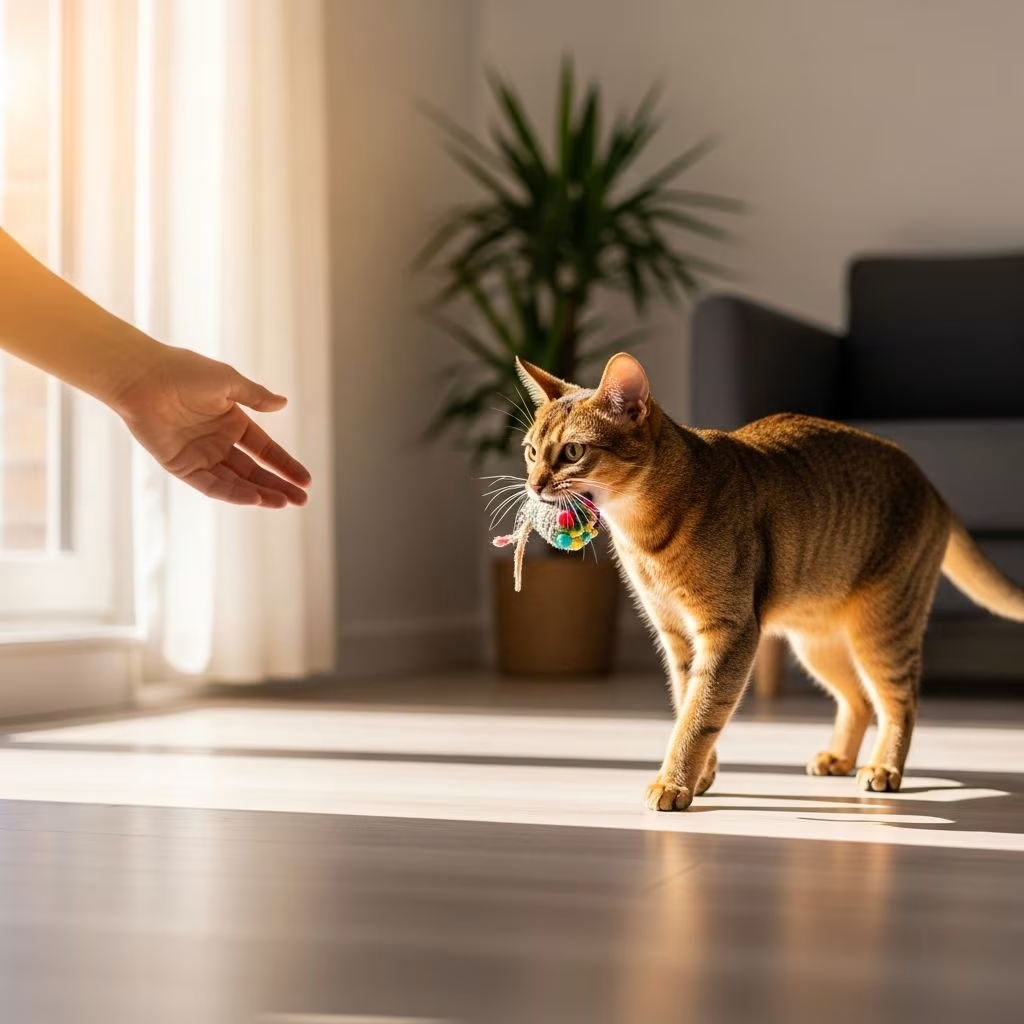
Teaching a cat to fetch might sound like a dog trick, but many cats can learn this engaging game with patience and positive reinforcement. This skill not only provides mental stimulation and physical exercise but also strengthens the bond between you and your feline friend. Whether your cat is playful or more reserved, fetch can become a favorite interactive activity.
Can Cats Play Fetch?
Yes, cats can absolutely play fetch, contrary to common misconceptions that this is solely a canine behavior. Cats are intelligent, agile creatures capable of learning complex behaviors through consistent training. Fetch involves a chain of actions: picking up an object, carrying it back, and dropping it, which taps into their natural hunting instincts. Many cat owners report success, with some felines even initiating the game themselves after training.
Observational evidence from trainers shows cats enjoying fetch as a rewarding game. For instance, clicker-trained cats often purr during sessions, indicating pleasure in the challenge. This activity mimics stalking and retrieving prey, making it instinctively appealing. While not all cats will master it equally, most can learn basic versions with tailored approaches.
What Breeds of Cats Are Easiest to Train to Fetch?
Certain breeds exhibit traits that make fetch training more straightforward due to their high energy, intelligence, and playfulness. These breeds often have strong hunting backgrounds or sociable personalities.
- Abyssinian: Known for their curiosity and athleticism, Abyssinians love interactive games and learn quickly.
- Siamese: Vocal and social, Siamese cats thrive on attention and excel in trick training.
- Bengal: Energetic and dog-like in behavior, Bengals often fetch naturally and eagerly.
- Oriental Shorthair: Playful and intelligent, they respond well to positive reinforcement.
- Burmese: Affectionate and active, Burmese cats enjoy bonding through play like fetch.
Mixed-breed cats can also succeed; breed is less important than individual personality and early exposure to training. High-energy cats or kittens are ideal starters.
Tools and Toys You Will Need to Teach Your Cat to Fetch
Selecting the right equipment sets the foundation for successful training. Use small, lightweight toys that are easy for cats to carry in their mouths.
- Clicker or Marker Word: A clicker provides precise timing for rewards; alternatively, use a consistent “Yes!”
- High-Value Treats: Tiny, soft treats like freeze-dried chicken or tuna flakes motivate without overfilling.
- Fetch Toys: Small balls, pom poms, or soft toys (1-2 inches diameter); avoid strings or anything swallowable.
- Training Space: A quiet, enclosed area like a hallway or room to minimize distractions.
- Target Stick (Optional): Helps guide movement in advanced steps.
Start with toys your cat already loves to build interest. Assemble a kit beforehand for seamless sessions.
How to Teach Your Cat to Fetch: Step-by-Step Guide
Fetch is a behavior chain, requiring mastery of individual links before combining them. Use clicker training or marker words for clarity. Sessions should last 5-10 minutes, 2-3 times daily, ending on a positive note.
Step 1: Build Interest in the Toy
Roll or toss the toy short distances (1-2 feet). Click or say “Yes!” the instant your cat touches or picks it up, then reward immediately. Repeat until they consistently grab it. This associates the toy with rewards.
Step 2: Encourage Returning to You
Once picking up is reliable, call your cat’s name as they hold the toy. Mark and reward any movement toward you—even a head turn or step. Gradually require more steps until they return fully. Praise verbally to reinforce.
Step 3: Teach Dropping into Your Hand
Hold your open hand near their mouth. Mark when the toy touches your palm. Fade your hand closer, making them position it. For stubborn cats, place a treat in the toy’s webbing to encourage mouthing, then fade it out.
Step 4: Increase Distance and Add a Cue
Toss farther (3-5 feet), cue with “Fetch!” Mark full returns and drops. Practice until fluent, then vary distances. Introduce the full chain: toss, retrieve, drop.
Step 5: Generalize to Other Toys and Locations
Test with new toys or rooms to proof the behavior. Reward heavily at first, then intermittently for reliability.
Pro Tip: If stuck on forward movement, use a target stick with treats to lure steps.
Tips and Tricks for Teaching Your Cat to Fetch
- Keep Sessions Short: Prevent fatigue; end before interest wanes.
- Use High Motivation: Reserve special treats for training only.
- Train When Hungry: Schedule before meals for peak focus.
- Be Patient and Positive: Never punish; frustration stalls progress.
- Combine with Play: Transition to toy-only rewards for maintenance.
- Track Progress: Video sessions to note improvements.
Troubleshooting: Why Won’t My Cat Fetch?
Common hurdles arise, but most are solvable with adjustments.
| Problem | Solution |
|---|---|
| Cat ignores toy | Increase toy appeal with catnip or movement; try different toys. |
| Won’t return | Shorten distance; reward tiny efforts; use enticing calls. |
| Drops toy early | Practice hand drops first; lure with target. |
| Loses interest | Shorten sessions; vary routine; ensure rewards are exciting. |
| Overexcited/bats toy | Teach calm mouthing; reward gentle pickups. |
Assess if your cat enjoys training—some prefer other games. Consult a vet for underlying issues like pain.
How Long Does It Take to Teach a Cat to Fetch?
Timeline varies: motivated kittens may learn basics in 1-2 weeks, adults in 4-6 weeks with daily practice. Full fluency takes 1-3 months. Consistency is key; weak chain links cause regressions. Celebrate small wins to maintain momentum.
Frequently Asked Questions
Can any cat learn to fetch?
Most cats can learn with patience, though kittens, high-energy breeds, and clicker-trained cats progress fastest. Assess your cat’s interest first.
What’s the best age to start?
Kittens (8-16 weeks) absorb quickly, but adults succeed too. Start anytime with positive methods.
Do I need a clicker?
Clickers offer precision, but a marker word like “Yes!” works if consistent.
What if my cat fetches but won’t drop it?
Practice hand trades; reward drops specifically. Use two toys for swaps.
Can fetch replace other exercise?
It supplements play; combine with climbing, chasing for full fitness.
My cat fetches alone—how to involve me?
Model by “fetching” yourself; reward returns to you specifically.
Fetch training enriches your cat’s life, curbs boredom, and boosts health. Persistent practice yields a playful partner.
References
- Cat School Clicker Training: How I Trained My Cat To Fetch — Cat School. 2022-01-02. https://www.youtube.com/watch?v=zrDskEObBs8
- How to Teach a Cat to Fetch — Zoetis Petcare. Accessed 2026. https://www.zoetispetcare.com/blog/article/how-teach-cat-fetch
- How to Teach a Cat to Fetch — PetMD. Accessed 2026. https://www.petmd.com/cat/behavior/how-teach-cat-fetch
- Do Cats Play Fetch? Trainable Breeds & Useful Tips — Catster. Accessed 2026. https://www.catster.com/cat-behavior/do-cats-play-fetch-can-they-be-trained/
- How to Teach a Cat to Fetch — Hill’s Pet. Accessed 2026. https://www.hillspet.com.au/cat-care/training/how-to-teach-a-cat-to-fetch



