

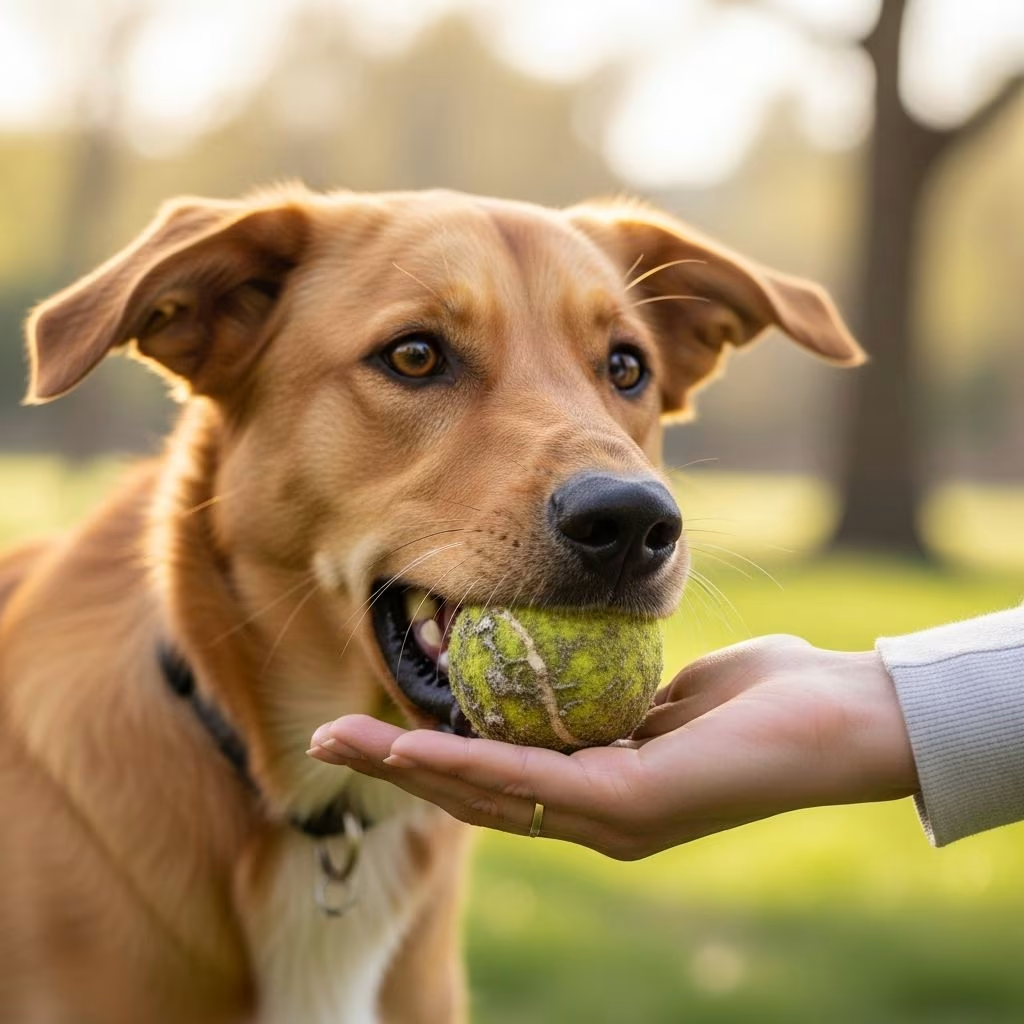
How to Teach a Dog to Drop It
One of the most important commands you can teach your dog is “drop it.” Whether your dog picks up a dangerous object, food from the ground, or something they shouldn’t have in their mouth, the ability to cue them to release it immediately could literally save their life. Teaching your dog to drop it gives you control over potentially dangerous situations and helps prevent destructive behavior, aggression, or health hazards. This command is essential for responsible dog ownership and should be part of every dog’s foundational training.
Why Teaching “Drop It” Is Critical for Your Dog’s Safety
Dogs are naturally curious creatures that explore their environment by sniffing and putting things in their mouths. Unfortunately, many items they encounter pose serious health risks. Dropped medications, toxic foods, sharp objects, and contaminated items found on the sidewalk can all cause injury or illness if your dog consumes them.
Beyond safety concerns, the drop it command prevents behavioral issues like resource guarding and food aggression. When your dog understands that releasing objects leads to positive outcomes, they become less likely to run away with items or guard what they’ve found. This makes your dog easier to manage in public settings, during walks, and around the house.
The drop it command is particularly valuable for:
- Preventing your dog from eating dangerous substances or toxic foods
- Retrieving important items like medications or small objects that could cause choking
- Managing resource guarding and food aggression behaviors
- Creating a safer environment for children and other pets in your home
- Reducing anxiety and stress associated with your dog having forbidden items
- Building trust and communication between you and your dog
Understanding the Psychology Behind the Drop It Cue
Before teaching the drop it command, it’s important to understand how dogs think about this behavior. The most effective training methods condition your dog to believe that hearing “drop it” predicts something wonderful is coming. Rather than associating the command with loss or punishment, your dog learns that releasing objects results in rewards that are even better than what they’re holding.
This positive association is crucial because it prevents the command from becoming scary or threatening. If a dog feels threatened when you ask them to drop something, they’re more likely to run away with the object or become defensive—the opposite of what you want. By making the drop it cue happy and rewarding, your dog will eagerly comply every time.
Step-by-Step Guide to Teaching Drop It
Teaching your dog to drop it should be done gradually, building the behavior step by step. This method works for puppies and adult dogs of any age.
Step 1: Condition the Drop Cue Without an Object
Begin by conditioning your dog to the word “drop” without requiring them to actually drop anything. This builds a positive association with the cue itself. Say “drop” in a happy, upbeat tone, then immediately scatter high-value treats on the ground. Wave your hand through the treats for a moment to draw your dog’s attention to them. Repeat this process multiple times in short training sessions.
The key to this step is timing: you must say “drop” before you show or reach for the treats. Your dog needs to learn that the word “drop” predicts treats are coming. This separation of events is essential for proper conditioning. Your dog will begin to anticipate something good when they hear the cue, and they’ll naturally start opening their mouth in preparation for eating.
Step 2: Introduce Objects to Drop
Once your dog shows clear anticipation when you say “drop”—perhaps by looking at the ground, perking up their ears, or positioning their mouth—you can start introducing objects. Begin with low-value or neutral items your dog doesn’t particularly care about, such as a rubber toy or wooden stick. Give your dog the object to hold or chew on briefly, then say “drop” and scatter treats on the ground as you did in step one.
Your dog may initially need to drop the object very quickly for the treats to appear. This is fine—go at your dog’s pace and celebrate every success. Gradually, as your dog begins to understand the connection between the cue and the reward, you can introduce higher-value items like tennis balls or toys they love more.
Step 3: Build a Pause After the Cue
As your dog becomes more reliable with the drop it command, you can increase the difficulty by creating a brief pause between saying “drop” and scattering the treats. This teaches your dog to actually drop the object on their own rather than waiting for the treats to appear. If your dog has been well-conditioned to the cue, they may drop the object because they expect food is coming and they need to open their mouth to eat it.
When your dog drops the object during this pause, mark the behavior immediately with “yes” or a clicker, then scatter the treats. If your dog doesn’t drop it right away, simply scatter the treats without marking. Continue practicing with this pause, gradually extending it as your dog becomes more successful.
Step 4: Practice With Various Objects and Locations
Once your dog consistently drops objects on cue with a pause, begin practicing with different items of increasing value. Work through toys, balls, sticks, and other objects your dog might realistically encounter. Change your training location frequently—practice indoors, then outdoors, in your yard, on walks, and in different environments where your dog might find objects.
Each new location or object type may initially feel harder for your dog. Be patient and return to easier versions of the exercise if needed. The goal is for your dog to drop it reliably regardless of what they’re holding or where you are.
Maintaining the Drop It Behavior Long-Term
Teaching drop it doesn’t mean you can stop reinforcing the behavior once your dog learns it. Consistent reinforcement keeps the behavior strong and maintains your dog’s enthusiasm for complying. Dogs who understand that dropping items leads to rewards will perform the behavior faster and more reliably than dogs who rarely get reinforced.
As your dog improves, you can vary the type of reinforcement. While treats are effective during initial training, you can eventually use alternative rewards such as:
- Playing tug with a toy
- Throwing a ball or toy for your dog to chase
- Praise and physical affection (petting, scratches)
- Allowing your dog to chase you
- Access to a preferred activity or toy
- A combination of the above
The key is finding what genuinely excites your individual dog and using it as a reward. Some dogs are food-motivated, while others would rather play with a toy or run. By varying your rewards and keeping the behavior reinforced, you maintain the positive association with the drop it cue.
The Importance of Your Tone and Delivery
How you say “drop it” matters as much as what you’re doing with treats and toys. Your voice tone should always be positive and happy. Many trainers use a higher-pitched voice when saying “drop” because it’s nearly impossible to sound angry or threatening in a high pitch. This makes it harder to accidentally teach your dog that the cue is scary.
This is especially important if you’re the type of person who might panic when your dog finds something dangerous. If you condition your dog to a positive, upbeat tone of voice, they’ll respond well even if the situation feels urgent to you. Conversely, if you usually scream “drop it” in an angry tone when your dog actually picks up something dangerous, your dog will learn to fear the cue and may run away with the object instead of complying.
Practice saying “drop” in a happy voice during training sessions. Say it enthusiastically and with genuine enthusiasm. Your dog will pick up on your tone and respond accordingly.
Common Mistakes to Avoid
When teaching drop it, several common errors can hinder progress or create negative associations with the command.
Using an angry or threatening tone: Never scold your dog while teaching drop it. This creates fear around the cue and makes your dog less likely to comply in real situations.
Chasing your dog to get the object: Chasing makes the object more valuable and turns the interaction into a game of keep-away. Instead, calmly offer treats or rewards and let your dog come to you.
Inconsistent training: Reinforce the drop it behavior consistently, especially during the early learning stages. Random reinforcement can weaken the command.
Confusing drop it with wait: These are different commands with different meanings. “Wait” means your dog should pause before engaging with something (like food in their bowl), while “drop it” means the item is permanently off-limits.
Practicing only in one location: Dogs don’t generalize well, so practice in multiple environments to ensure your dog will respond reliably everywhere.
Real-World Application and Emergency Scenarios
Once your dog reliably knows drop it, the behavior becomes invaluable in real-world situations. If your dog picks up a dropped medication, toxic food, sharp object, or anything dangerous during a walk, you can immediately cue drop it and keep them safe. This command can literally prevent a veterinary emergency or worse.
The stronger your foundation with this command, the more reliable it will be when you need it most. This is why consistent reinforcement throughout your dog’s life is worthwhile. You’re not just teaching a cute trick—you’re establishing a lifesaving behavior.
Frequently Asked Questions About Teaching Drop It
Q: At what age should I start teaching drop it?
A: You can begin teaching drop it to puppies as young as 8-12 weeks old. Start with very simple steps using low-value objects and keep sessions short. Adult dogs can learn this command at any age, so it’s never too late to teach it.
Q: What if my dog has already developed resource guarding issues?
A: Dogs with resource guarding or food aggression may require additional support from a certified professional trainer. The basic drop it training can still work, but a trainer can help you address the underlying behavior safely.
Q: How long does it usually take for a dog to learn drop it?
A: With consistent daily practice, most dogs can learn the basics of drop it within 2-4 weeks. However, building reliability across different locations and objects may take several months of ongoing practice.
Q: Can I teach drop it without using treats?
A: While treats are the most effective reinforcement initially, you can eventually use other rewards like toys or praise. However, starting with treats creates a stronger foundation because most dogs are highly motivated by food.
Q: What should I do if my dog won’t drop something they’re really interested in?
A: Return to easier steps with lower-value objects. Don’t force the issue. Make sure you’re using truly high-value rewards that are more appealing than what your dog is holding. Practice more in controlled environments before attempting with highly desirable items.
Q: Is drop it the same as come or recall?
A: No, drop it is different from recall. While recall asks your dog to come to you, drop it asks them to release what they’re holding. Both are important commands, but they serve different purposes.
Q: How often should I practice drop it once my dog learns it?
A: Continue reinforcing drop it regularly throughout your dog’s life. Even if your dog knows the command well, periodic practice keeps the behavior strong and maintains your dog’s enthusiasm for complying.
References
- How to Master the “Leave It” Cue — Kinship. May 01, 2025. https://www.youtube.com/watch?v=7TWEGVEqWY4
- Training Tutorial: How to Teach Your Dog to Drop It — Tails of Connection. https://www.tailsofconnection.com/trendingblog/how-to-teach-a-puppy-to-drop
- Nine Useful Tricks to Teach Your Dog — Kinship. https://www.kinship.com/dog-behavior/useful-tricks-teach-your-dog



