

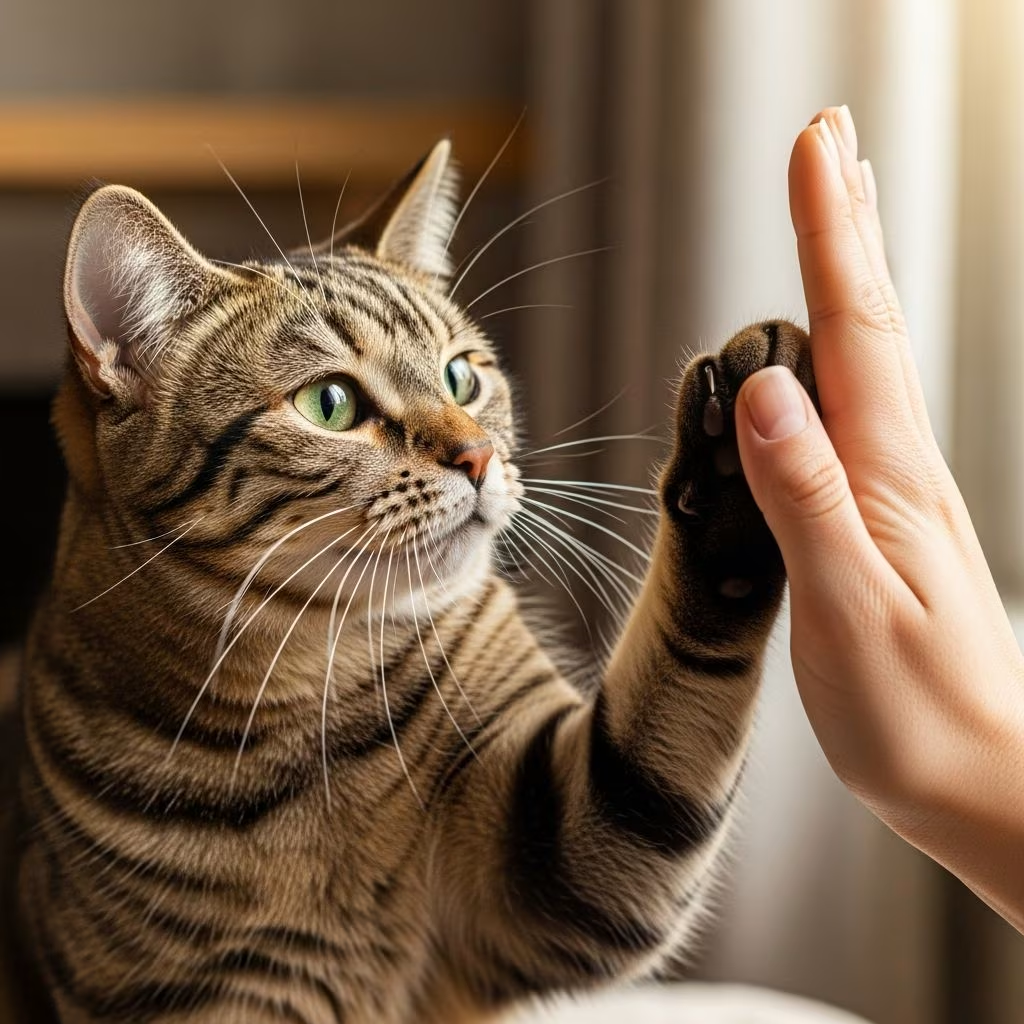
How to Teach a Cat to High-Five: A Complete Training Guide
Teaching your cat to high-five is more than just a cute trick—it’s an engaging way to bond with your feline companion and provide mental enrichment. While many people assume cats cannot be trained like dogs, the reality is that cats are intelligent, capable learners who respond exceptionally well to the right training methods. With patience, consistency, and the proper techniques, almost any cat can master the high-five trick. This comprehensive guide will walk you through every step of the process, from laying the foundation to perfecting the final trick.
Understanding Cat Training Fundamentals
Before you begin teaching your cat to high-five, it’s essential to understand the core principles of effective cat training. Cats learn differently than dogs, and recognizing these differences will dramatically improve your success rate. The foundation of all successful cat training is positive reinforcement, a scientifically-backed method that relies on rewarding desired behaviors rather than punishing unwanted ones.
Positive reinforcement works by creating a clear connection between the behavior your cat performs and the reward that follows. When your cat does something right and receives an immediate reward—typically a high-quality treat—their brain registers that this behavior leads to something good. This makes them significantly more likely to repeat that behavior in the future. Conversely, if something doesn’t work, no negative consequence occurs; your cat simply gets another opportunity to try.
The key to leveraging positive reinforcement effectively is understanding that training is a teaching process, not a correcting one. You’re not punishing your cat for mistakes; you’re showing them what works. This requires patience and consistency from the trainer. Both you and your cat are learning together, and it’s important to extend grace to yourself and your feline student as you work through the process.
Essential Tools and Supplies
Before starting your high-five training journey, gather the following materials to ensure success:
- High-quality treats: Choose small, soft treats that your cat loves and can consume quickly. These should be more appealing than regular daily food to maintain motivation during training sessions.
- Sticky notes: These serve as crucial visual targets and guides for your cat’s paws throughout the training process.
- A clicker (optional but recommended): A clicker is a small device that makes a distinctive clicking sound. It serves as a marker to precisely identify the exact moment your cat performs the desired behavior, creating a clear communication bridge between you and your cat.
- A quiet training space: Choose a distraction-free environment where your cat can focus on learning without background noise or other pets interfering.
- Patience and consistency: While not physical tools, these are perhaps the most important elements of successful cat training.
Training Session Structure
How you structure your training sessions significantly impacts your cat’s ability to learn and your overall success. Cats have a different attention span than dogs and learn more effectively with frequent, short training sessions rather than occasional long ones.
The ideal approach is to conduct multiple short training sessions throughout the day, each lasting just one to two minutes. This might mean training your cat three to five times daily in very brief bursts. This frequency keeps your cat engaged, prevents boredom, and allows for better retention of new skills. Short sessions also help maintain your cat’s motivation because they don’t have time to become frustrated before the session ends.
During each session, keep things fun and engaging. Consider rotating through different treats or introducing new, higher-value treats at the start of training sessions to maintain enthusiasm. This variety can significantly boost your cat’s motivation and engagement level, making them more eager to participate in the next training opportunity.
Step-by-Step Guide to Teaching Your Cat to High-Five
The journey from a cat that has never touched a sticky note to one that confidently high-fives your open hand involves five distinct steps. Each step builds upon the previous one, and it’s crucial not to rush through the progression. Move to the next step only when your cat demonstrates reliable mastery of the current level.
Step 1: Target the Sticky Note
The first step may not look like a high-five at all, but it’s laying the essential foundation for the entire trick. Start by having your cat sit in front of you. Show them a treat, place it on the floor, and then cover it with a sticky note. Your cat will naturally investigate and attempt to access the treat underneath the sticky note. When they use their paw to move the sticky note or paw at it, immediately give them the treat as a reward.
During this phase, be generous with treats to ensure your cat understands exactly what behavior you’re rewarding. Every time they successfully use their paw to interact with the sticky note, they receive immediate positive feedback. This repetition strengthens the neural pathways associated with the behavior, making it more likely to occur again. Practice this step until your cat reliably paws at the sticky note without hesitation.
Step 2: Raise the Target Gradually
Once your cat is confidently pawing at the sticky note on the floor, it’s time to introduce the concept of height. Place the sticky note on the palm of your hand and hold it on the ground in front of your cat. Every time your cat paws at the sticky note on your hand, reinforce that behavior with a treat—either immediately or after clicking if you’re using a clicker.
Continue this step until your cat is consistently successful at this height. Then, gradually raise your hand a few inches off the ground and repeat. In each training session, work at the level your cat is currently comfortable with. If they’re performing really well at that height, raise your hand a bit higher. This gradual progression is critical—moving up too quickly can confuse your cat and cause them to lose confidence. The goal is a slow, steady climb toward a true high-five position.
Step 3: Change Hand Position
An important transition occurs when you shift from the paw-reaching behavior to an actual high-five. This transformation involves two key changes: continued height increase and a crucial alteration to your hand position. Up until now, your hand has been relatively parallel to the floor. For a proper high-five, your hand needs to be upright, with your fingers facing toward the ceiling.
Place the sticky note on your palm and hold your hand so your fingers point upward. Present this hand to your cat in the high-five position. When they paw at the sticky note, reward them with a treat to reinforce this new orientation. Repeat this step until your cat will reliably high-five your hand with the sticky note present. Some cats may find this transition challenging because the hand position is different from what they’ve been practicing. Be patient and return to the previous step if your cat becomes confused.
Step 4: Fade the Sticky Note
Once your cat confidently high-fives your hand with the sticky note in place, begin the process of removing this training aid. Tear the sticky note in half and place one of the remaining halves on your palm. Present your hand to your cat to high-five. When they successfully high-five you, give them a treat.
Continue this process, progressively making the sticky note smaller and smaller. Cut it into quarters, then eighths, and continue reducing it to tiny scraps. Throughout this process, reinforce every successful high-five with a treat. Only advance to a smaller piece of sticky note when your cat is really good at high-fiving you with the current size. This gradual fading process is essential because it prevents your cat from becoming confused about what behavior you’re rewarding.
Step 5: Complete the Trick
The final step is removing the sticky note entirely and achieving a clean high-five with your bare hand. Present your hand to your cat without any sticky note. When your cat touches your hand with their paw, immediately give them a treat for that high-five.
Continue practicing without the sticky note so your cat becomes really skilled at giving you a high-five. Once your cat demonstrates consistent success, you can begin showing off this amazing trick to friends and family. Keep practicing regularly to maintain your cat’s skill and confidence with the behavior.
Common Training Problems and Solutions
Training doesn’t always progress smoothly, and understanding how to troubleshoot common issues will keep you moving forward. Here are the most frequently encountered challenges and effective solutions:
Nose Instead of Paw
Some cats will attempt to touch the sticky note with their nose instead of their paw, especially when you start raising your hand. This is a natural behavior for cats but not the trick you’re teaching. If this happens, lower your hand back down and practice at that lower height more extensively. Then raise the hand more gradually than you were doing previously. This slower progression helps your cat understand that the behavior you want involves their paw, not their nose.
Lack of Motivation
If your cat seems uninterested in training, the treats you’re using may not be high-value enough. Experiment with different treat options—perhaps introducing a new treat that your cat finds irresistible. Additionally, ensure you’re keeping training sessions short and fun. Longer sessions can lead to boredom and decreased motivation.
Inconsistent Performance
If your cat performs the trick sometimes but not consistently, they may not have fully mastered that particular step. Rather than moving forward, return to the previous step and practice more extensively before advancing again. Consistency is built through repetition and thorough mastery of each level.
Alternative Training Approaches
While the sticky note method is highly effective, some trainers use alternative approaches. The clicker training method involves using a clicking sound to mark the exact moment your cat performs a desired behavior, followed immediately by a treat reward. This method works exceptionally well for cats and provides very clear communication about which exact behavior is being rewarded.
Some trainers also use target cups or other objects for cats to paw, which can work similarly to the sticky note method. The key principle remains the same regardless of method: breaking the trick into tiny, achievable steps and rewarding successful completion of each step.
Building the Bond Through Training
Beyond the obvious benefit of having a cat that can high-five, the training process itself strengthens your relationship with your feline companion. Training provides mental enrichment, which is essential for your cat’s overall wellbeing. It creates positive interactions between you and your cat and allows you to communicate in a language your cat understands. Many cats actually enjoy the training process and look forward to training sessions because they associate them with treats, attention, and fun.
Frequently Asked Questions
Q: How old does a cat need to be to learn to high-five?
A: Most cats can begin learning tricks around 8-12 weeks of age when they’re old enough to focus on training. However, cats of any age can learn new tricks with proper motivation and patience.
Q: What if my cat doesn’t like treats?
A: All cats have some form of reward they’re motivated by. If traditional treats don’t work, try using small pieces of cooked chicken, fish, or other foods your cat loves. Some cats are also motivated by playtime or attention instead of food.
Q: How long does it take to teach a cat to high-five?
A: The timeline varies depending on your cat’s personality and training frequency. With daily training sessions, many cats can learn the basic trick within 2-4 weeks, though some may take longer.
Q: Can indoor cats and outdoor cats both learn this trick?
A: Yes, both indoor and outdoor cats can learn to high-five. The key is finding an appropriate training environment and rewards that motivate your individual cat.
Q: Should I use a clicker for training?
A: While not absolutely necessary, a clicker is highly recommended because it precisely marks the exact moment your cat performs the desired behavior, making communication clearer and training more effective.
Q: What if my cat gets frustrated during training?
A: If your cat shows signs of frustration, take a break and end the session on a positive note. Return to an easier step where your cat can succeed, build confidence, and then progress more gradually next time.
References
- How to Teach a Cat to High-Five: Tips and Techniques — Kinship. 2024. https://www.kinship.com/cat-behavior/how-to-teach-a-cat-to-high-five
- Cat School Clicker Training: Paw Tricks Tutorial — Julie Posluns, Cat School. 2021. https://www.youtube.com/watch?v=xKaq3OEvp4c



